
The 2026 lettings market presents an unprecedented challenge for property professionals. With tenant demand surging while landlord supply remains constrained, rental disputes have reached record levels. Expert Witness Roles in 2026 Lettings Market Disputes: Navigating Tenant Demand Surge and Landlord Constraints have become critical to resolving conflicts in this volatile environment. As rental prices climb and regulatory changes reshape the landscape, expert witnesses must adapt their evidence strategies to meet the demands of tribunals and courts.

The current market conditions have created a perfect storm. RICS data indicates that tenant demand continues to outpace available rental properties, driving price increases and intensifying disputes over valuations, dilapidations, and lease terms[2]. Meanwhile, the ripple effects of the Renters' Rights Act are transforming how landlords and tenants interact, creating new areas of contention that require expert testimony.
For property professionals serving as expert witnesses, understanding these market dynamics is no longer optional—it's essential. The ability to provide credible, data-driven evidence in lettings disputes can mean the difference between a fair resolution and a costly legal battle.
Key Takeaways
✅ Expert witnesses must leverage current RICS data showing tenant demand surges and supply constraints to provide credible market valuations in 2026 lettings disputes
✅ The Renters' Rights Act has created new dispute categories requiring expert testimony on property conditions, dilapidations, and fair rental values
✅ RICS accreditation standards remain rigorous with approximately 75% pass rates, ensuring only qualified professionals serve as expert witnesses[4]
✅ Evidence preparation must be tribunal-ready with comprehensive documentation, comparable property analysis, and impartial assessment methodologies
✅ Buy-to-let valuation disputes require experts to navigate complex market dynamics including interest rate impacts and regulatory compliance issues
Understanding Expert Witness Roles in 2026 Lettings Market Disputes
The Foundation of Expert Witness Testimony
An expert witness in lettings disputes serves a fundamentally different role than an advocate or advisor. According to RICS professional standards, expert witnesses must maintain integrity, impartiality, and operate strictly within their areas of expertise[2]. This distinction becomes crucial in 2026's heated rental market, where emotions run high and financial stakes are significant.
The role encompasses several key responsibilities:
- Providing independent, unbiased opinions on property valuations, market rents, and property conditions
- Preparing tribunal-ready evidence that withstands cross-examination and scrutiny
- Explaining complex market dynamics in accessible terms for judges, arbitrators, and tribunals
- Maintaining professional standards as outlined in RICS guidance documents
Expert witnesses in lettings disputes typically address questions such as:
| Dispute Type | Expert Witness Role | Key Evidence Required |
|---|---|---|
| Rental Valuation | Determine fair market rent | Comparable properties, market analysis, location factors |
| Dilapidations | Assess property damage and repair costs | Property inspections, cost estimates, photographic evidence |
| Lease Renewals | Evaluate appropriate rental increases | Market trends, demand data, property improvements |
| Deposit Disputes | Determine fair deductions | Condition reports, repair quotes, wear-and-tear standards |
RICS Standards and Accreditation in 2026
The RICS Expert Witness Accreditation Service maintains stringent requirements for professionals entering this specialized field. With pass rates hovering around 75% in 2026[4], the certification process ensures that only qualified surveyors provide expert testimony.
The February 2023 update to RICS's "Surveyors Acting As Expert Witnesses" standard continues to serve as the authoritative framework governing expert witness conduct[2]. This guidance emphasizes:
🔍 Duty to the tribunal takes precedence over duty to the instructing party
📊 Evidence must be based on verifiable data and sound methodology
⚖️ Impartiality is non-negotiable regardless of who pays the expert's fees
📝 Written reports must be comprehensive and include all relevant information
For those considering becoming an expert witness, understanding what surveyors do provides essential context for the broader professional landscape.
The 2026 Market Context: Demand Surge and Supply Constraints
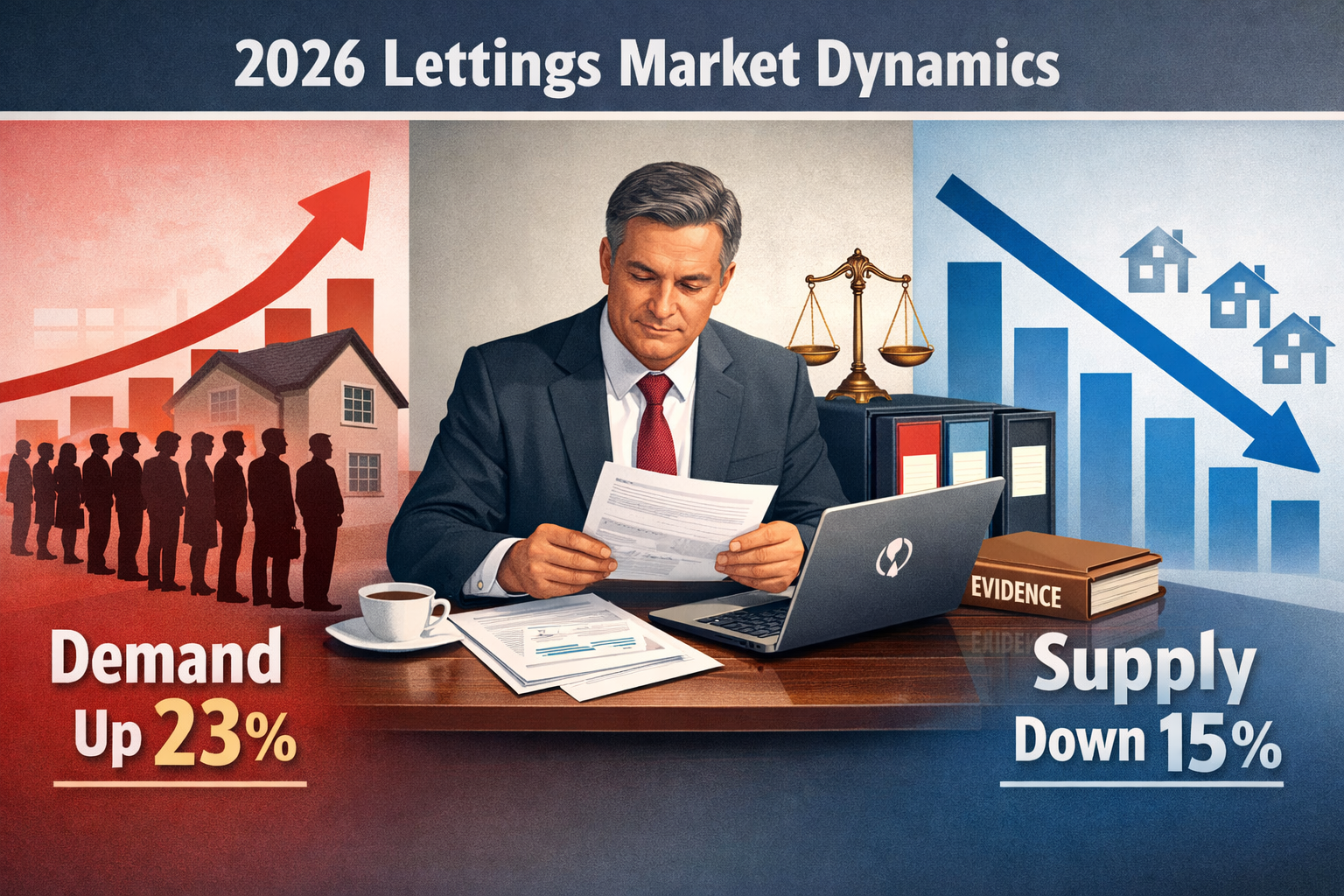
The lettings market in 2026 operates under unique pressures that shape every dispute. Tenant demand has surged while landlord supply remains constrained, creating a seller's market that drives rental price increases and intensifies conflicts[3].
Several factors contribute to this dynamic:
Supply-Side Constraints:
- Regulatory compliance costs discouraging smaller landlords
- Energy efficiency requirements creating financial barriers
- Tax changes reducing buy-to-let investment appeal
- Property sales reducing available rental stock
Demand-Side Pressures:
- Population growth in urban centers
- Delayed home ownership among younger demographics
- Immigration and workforce mobility
- Student accommodation shortages
These market conditions mean expert witnesses must provide current, data-driven analysis rather than relying on historical patterns. A valuation based on 2024 market conditions may be irrelevant in 2026's transformed landscape.
Navigating Tenant Demand Surge: Evidence Strategies for Expert Witnesses
Quantifying Market Demand in Expert Reports
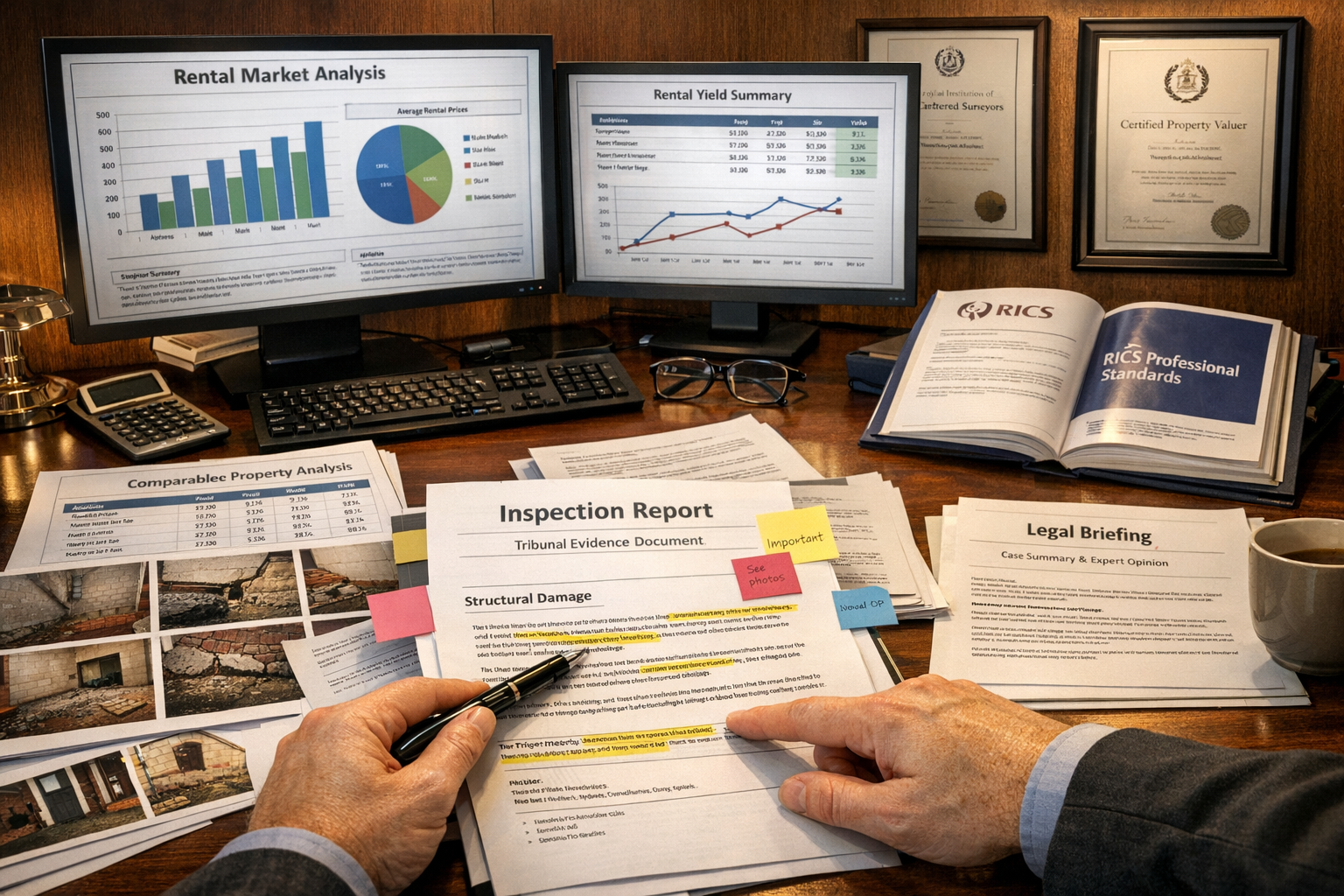
When preparing evidence for lettings disputes, expert witnesses must demonstrate how tenant demand impacts specific properties and rental valuations. This requires more than anecdotal observations—it demands rigorous data collection and analysis.
Effective evidence strategies include:
1. Comparable Property Analysis
Expert witnesses should compile data on similar properties in the same locality, including:
- Time on market before letting
- Number of viewing requests received
- Final agreed rental prices versus asking prices
- Tenant application volumes per property
2. Market Trend Documentation
Demonstrating broader market patterns strengthens individual property assessments:
- Rental price indices for the specific area
- Vacancy rate trends over 12-24 months
- Seasonal demand fluctuations
- Demographic shifts affecting tenant profiles
3. Digital Evidence Collection
Modern expert witnesses leverage technology to support their testimony:
- Property portal analytics showing view counts and enquiry rates
- Social media data indicating area popularity
- Transport and amenity developments affecting desirability
- Employment hub proximity and commuter demand patterns
💡 Pro Tip: Expert witnesses should maintain a database of comparable properties updated quarterly to ensure evidence reflects current market conditions rather than outdated information.
Addressing Landlord Constraints in Valuation Disputes
The supply-side constraints affecting landlords in 2026 create unique challenges for expert witnesses. When landlords argue for higher rents to offset increased costs, or tenants contest valuations as excessive, experts must navigate competing interests while maintaining impartiality.
Key considerations for expert witnesses:
Regulatory Compliance Costs
Landlords face significant expenses meeting current standards:
- Energy Performance Certificate (EPC) improvements
- Electrical safety certification requirements
- Gas safety annual inspections
- Smoke and carbon monoxide detector installations
Expert witnesses must determine whether these costs justify rental increases while considering market realities. A property requiring £15,000 in EPC upgrades doesn't automatically command proportionally higher rent if market demand won't support it.
Interest Rate Impact Analysis
With mortgage rates affecting landlord profitability, expert witnesses may need to address whether financing costs influence fair market rent. The answer typically is: market rent is determined by supply and demand, not landlord costs. However, understanding these pressures provides context for dispute resolution.
For complex valuation scenarios, experts might reference approaches used in buy-to-let valuation disputes where similar market dynamics apply[3].
Preparing Tribunal-Ready Evidence
The quality of evidence preparation often determines the outcome of lettings disputes. Expert witnesses must present information that is:
✅ Comprehensive – covering all relevant factors affecting the dispute
✅ Clear – accessible to non-specialists including judges and arbitrators
✅ Credible – supported by verifiable data and sound methodology
✅ Compliant – meeting RICS standards and legal requirements
Essential components of tribunal-ready reports:
- Executive Summary – concise overview of key findings and opinions
- Property Description – detailed specifications, location, condition assessment
- Methodology Statement – explaining analytical approach and data sources
- Market Analysis – comprehensive review of comparable properties and trends
- Photographic Evidence – documenting property condition and relevant features
- Calculations and Assumptions – transparent presentation of valuation methodology
- Professional Declaration – confirming independence and RICS compliance
Expert witnesses should also prepare for cross-examination by anticipating challenges to their methodology, data sources, and conclusions. Maintaining detailed working papers and documentation supports credibility under scrutiny.
The Renters' Rights Act Ripple Effects on Expert Witness Testimony
New Dispute Categories Requiring Expert Input
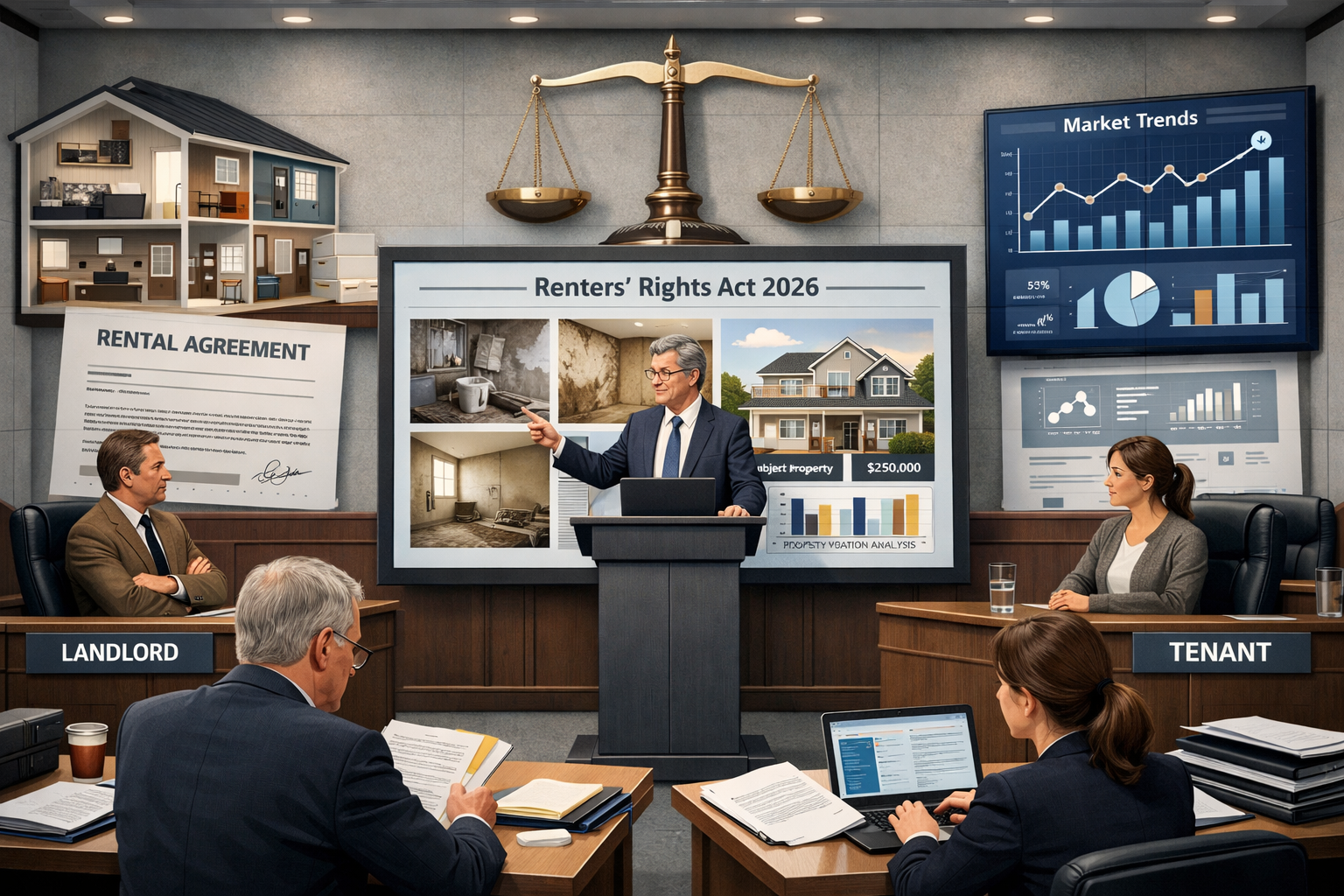
The Renters' Rights Act has fundamentally reshaped the lettings landscape, creating new areas where expert witness testimony proves essential. These regulatory changes have introduced dispute categories that didn't exist or were less common in previous years.
Emerging dispute types in 2026:
Property Condition Standards
The Act's enhanced property condition requirements mean disputes over whether properties meet minimum standards have increased. Expert witnesses must assess:
- Structural integrity and safety compliance
- Damp, mold, and ventilation adequacy
- Heating system efficiency and reliability
- Overall habitability standards
These assessments require technical expertise beyond basic property knowledge, often necessitating collaboration with chartered surveyors who specialize in building condition analysis.
Dilapidations and End-of-Tenancy Disputes
With longer tenancies becoming more common, dilapidations disputes have grown more complex. Expert witnesses must distinguish between:
- Fair wear and tear – acceptable deterioration over time
- Tenant damage – deterioration beyond normal use
- Pre-existing conditions – issues present before tenancy began
- Landlord maintenance failures – deterioration due to inadequate upkeep
The schedule of dilapidations approach provides a structured framework for these assessments.
Rent Review and Increase Justifications
The Act's provisions on rent increases require landlords to demonstrate market justification. Expert witnesses provide critical evidence on:
- Comparable property rental values in the immediate area
- Market movement since the last rent review
- Property improvements justifying increases
- Local demand and supply dynamics
Balancing Impartiality Amid Regulatory Change
The Renters' Rights Act creates an inherent tension for expert witnesses: how to remain impartial while operating within a regulatory framework designed to protect tenants. This challenge requires careful navigation.
Maintaining professional objectivity:
🎯 Focus on facts, not advocacy – Expert witnesses must resist pressure to interpret regulations favorably for either party. The role is to explain what regulations require and how properties measure against those standards, not to argue for particular outcomes.
📋 Document regulatory context – Reports should clearly state relevant regulatory requirements without editorializing about their fairness or appropriateness.
⚖️ Apply standards consistently – Whether instructed by landlord or tenant, the same assessment criteria and methodology must apply.
💬 Communicate limitations – When regulations are ambiguous or subject to interpretation, expert witnesses should acknowledge uncertainty rather than overstating certainty.
This approach aligns with RICS guidance emphasizing that duty to the tribunal supersedes duty to the instructing party[2]. Even when a landlord pays for the expert's services, the expert's obligation is to provide truthful, unbiased testimony.
Evidence Requirements Under New Regulatory Framework
The regulatory changes have elevated evidence standards in lettings disputes. Courts and tribunals expect more rigorous documentation and analysis than in previous years.
Enhanced evidence requirements include:
Photographic and Video Documentation
Visual evidence has become standard in property condition disputes:
- Time-stamped photographs showing property state
- Video walkthroughs documenting overall condition
- Comparative images showing deterioration over time
- Close-up documentation of specific defects
Regulatory Compliance Certificates
Expert witnesses must verify and present:
- Current EPC ratings and recommendations
- Electrical Installation Condition Reports (EICR)
- Gas Safety Certificates
- Smoke and carbon monoxide alarm certifications
- HMO licensing documentation where applicable
Market Data Substantiation
Rental valuation opinions require robust supporting data:
- Minimum three comparable properties let within three months
- Adjustment explanations for differences between comparables and subject property
- Market trend data from recognized sources (property portals, RICS indices)
- Local authority housing data where available
For professionals seeking to strengthen their evidence preparation skills, understanding approaches used in property disputes provides valuable cross-applicable insights.
Practical Guidance for Expert Witnesses in 2026 Lettings Disputes
Building Credibility Through RICS Compliance
Credibility forms the foundation of effective expert witness testimony. In 2026's contentious lettings market, establishing and maintaining credibility requires meticulous attention to professional standards.
Key credibility-building practices:
Maintain Current RICS Accreditation
With pass rates around 75%[4], RICS Expert Witness Accreditation demonstrates commitment to professional excellence. This certification signals to tribunals that the expert meets rigorous standards.
Continuing Professional Development (CPD)
Expert witnesses should document ongoing education in:
- Current lettings market trends and data analysis
- Regulatory changes and compliance requirements
- Legal developments affecting property disputes
- Evidence presentation and cross-examination techniques
Professional Indemnity Insurance
Adequate insurance coverage protects both the expert and instructing parties, demonstrating professional responsibility.
Transparent Methodology
Credibility depends on explaining not just conclusions but the process used to reach them. Expert reports should detail:
- Data sources and their reliability
- Analytical methods and why they were chosen
- Assumptions made and their justification
- Limitations of the analysis
Common Pitfalls and How to Avoid Them
Even experienced property professionals can stumble when serving as expert witnesses. Understanding common mistakes helps avoid credibility-damaging errors.
⚠️ Pitfall #1: Advocacy Rather Than Objectivity
The Problem: Allowing the instructing party's interests to influence opinions and evidence presentation.
The Solution: Regularly review RICS guidance on impartiality. Before finalizing reports, ask: "Would my opinion change if instructed by the opposing party?" If the answer is yes, reassess the analysis.
⚠️ Pitfall #2: Insufficient Comparable Evidence
The Problem: Basing rental valuations on too few comparables or outdated market data.
The Solution: Establish minimum standards for evidence (e.g., at least three comparables from the past three months). Maintain a regularly updated database of local market transactions.
⚠️ Pitfall #3: Overstepping Expertise Boundaries
The Problem: Offering opinions on matters outside one's area of qualification (e.g., legal interpretations, structural engineering issues).
The Solution: Clearly define expertise scope in reports. When questions arise outside that scope, recommend instructing appropriate specialists.
⚠️ Pitfall #4: Poor Report Structure and Clarity
The Problem: Producing reports that are difficult to understand or navigate, reducing their effectiveness in tribunal settings.
The Solution: Use clear headings, executive summaries, and visual aids. Have non-specialist colleagues review reports for clarity before submission.
⚠️ Pitfall #5: Inadequate Preparation for Cross-Examination
The Problem: Failing to anticipate challenges to methodology, data, or conclusions during testimony.
The Solution: Conduct mock cross-examinations with colleagues. Maintain comprehensive working papers supporting all report statements.
Leveraging Technology and Data in Evidence Preparation
Modern expert witnesses must embrace technology to provide the most compelling evidence in 2026 lettings disputes.
Technology tools enhancing expert witness effectiveness:
📊 Property Data Analytics Platforms
- Rightmove and Zoopla commercial data subscriptions
- Land Registry price paid data analysis
- Local authority housing statistics portals
- RICS Residential Market Survey data
📱 Digital Inspection Tools
- Tablet-based inspection apps with integrated photography
- Thermal imaging for property condition assessment
- Laser measuring devices for accurate floor plans
- Drone photography for external condition documentation
💻 Evidence Presentation Software
- Professional report templates ensuring consistency
- Data visualization tools for market trend presentation
- Comparative analysis spreadsheets with automated calculations
- Video conferencing platforms for remote testimony
🔐 Secure Document Management
- Cloud-based storage with version control
- Encrypted communication channels for sensitive information
- Digital signature platforms for report authentication
- Audit trails documenting evidence handling
The integration of technology doesn't replace professional judgment—it enhances the expert's ability to gather, analyze, and present evidence effectively.
Collaboration with Legal Teams and Other Experts
Expert witnesses rarely work in isolation. Effective collaboration with solicitors, barristers, and other experts strengthens the overall case presentation.
Best practices for professional collaboration:
Early Engagement with Legal Teams
Instructing solicitors should involve expert witnesses early in dispute resolution. This allows:
- Identification of key issues requiring expert evidence
- Strategic planning of evidence gathering
- Cost-effective scoping of expert work
- Timeline coordination for report delivery
Clear Instructions and Scope Definition
Written instructions should specify:
- Questions the expert should address
- Documents and information available for review
- Timeline for report delivery
- Budget constraints and fee arrangements
Multi-Disciplinary Coordination
Complex lettings disputes may require multiple experts:
- Building surveyors for structural issues
- Valuation surveyors for rental assessments
- Specialist engineers for mechanical systems
- Quantity surveyors for dilapidations costing
When multiple experts are involved, coordination ensures consistent evidence without duplication. For instance, understanding party wall surveyor roles can inform how different specialists contribute to property disputes.
Joint Expert Meetings
Courts and tribunals increasingly encourage joint meetings between opposing experts to:
- Identify areas of agreement and disagreement
- Narrow issues requiring tribunal determination
- Produce joint statements summarizing positions
- Potentially resolve disputes without full hearings
These meetings require diplomatic skills alongside technical expertise, as experts must engage constructively while maintaining their independent positions.
Strategic Approaches to Different Lettings Dispute Types
Rental Valuation Disputes
Rental valuation disputes represent the most common category requiring expert witness testimony in 2026's volatile market. The surge in tenant demand coupled with supply constraints creates significant disagreement over appropriate rental levels.
Expert witness approach to rental valuations:
Step 1: Define the Valuation Date and Basis
Clarity on timing is essential—market conditions change rapidly in 2026. Specify whether valuing:
- Current market rent (as of today)
- Historical rent (as of a specific past date)
- Prospective rent (future date for lease renewal)
Step 2: Identify Comparable Properties
Quality comparables should be:
- Similar in size – within 15% of subject property floor area
- Comparable location – same neighborhood or equivalent area
- Similar condition – accounting for refurbishment differences
- Recent – let within past 3-6 months maximum
- Arm's length transactions – excluding family lettings or special arrangements
Step 3: Make Appropriate Adjustments
No two properties are identical. Expert witnesses must adjust comparable rents for differences:
| Adjustment Factor | Typical Impact on Rent |
|---|---|
| Additional bedroom | +15-20% |
| Parking space included | +£50-150/month (location dependent) |
| Garden vs. no garden | +10-15% |
| Recently refurbished | +10-20% |
| Ground floor vs. upper floor | -5-10% (ground floor typically lower) |
Step 4: Consider Market Momentum
In 2026's rising market, even three-month-old comparables may understate current values. Expert witnesses should:
- Reference rental growth indices for the area
- Apply appropriate time adjustments to older comparables
- Explain the basis for any momentum adjustments
- Acknowledge uncertainty where market direction is unclear
This analytical rigor ensures valuations withstand cross-examination and tribunal scrutiny.
Dilapidations and Property Condition Disputes
Dilapidations disputes require expert witnesses to assess property condition and quantify repair costs—a process complicated by the need to distinguish various types of deterioration.
Framework for dilapidations assessment:
Initial Property Inspection
Comprehensive inspection should document:
- Overall property condition with room-by-room assessment
- Specific defects with photographic evidence
- Age and condition of fixtures and fittings
- Comparison with check-in inventory/condition report
Categorizing Deterioration
Expert witnesses must classify issues as:
🔹 Fair Wear and Tear – Normal deterioration expected from reasonable use over the tenancy period. Examples: carpet wear in high-traffic areas, minor scuff marks on walls, faded paintwork.
🔹 Tenant Damage – Deterioration beyond normal use requiring remedy. Examples: holes in walls, broken fixtures, stained carpets beyond normal wear, damaged appliances.
🔹 Pre-existing Conditions – Issues present before the tenancy began. These should be documented in check-in reports but may require expert assessment if disputed.
🔹 Landlord Maintenance Failures – Deterioration due to inadequate maintenance or inherent defects. Examples: damp from structural issues, boiler failure due to lack of servicing.
Quantifying Repair Costs
Cost estimates should be:
- Based on contractor quotes or industry-standard pricing guides
- Proportionate to remaining lease term (in commercial settings)
- Adjusted for betterment where repairs improve beyond original condition
- Clearly itemized with unit costs and quantities
The schedule of condition approach provides a structured methodology for these assessments.
Lease Renewal and Rent Review Disputes
Lease renewals and rent reviews in 2026's market create particular challenges as landlords seek to capture rental growth while tenants resist significant increases.
Expert witness considerations for rent reviews:
Contractual Terms Review
Before opining on appropriate rent, experts must understand:
- Rent review clause wording and methodology specified
- Whether review is to "market rent" or uses another basis
- Assumptions and disregards specified in the lease
- Frequency and timing of reviews
Market Rent Determination
Similar to rental valuation disputes, but with additional considerations:
- Tenant's occupation and any goodwill value
- Lease terms impact on market rent (length, break clauses, repairing obligations)
- Improvements made by tenant (typically disregarded)
- Market conditions at review date vs. original letting
Negotiation Context
While experts provide independent opinions, understanding the commercial context helps:
- Landlord's motivation (maximize income vs. retain good tenant)
- Tenant's alternatives (comparable properties available)
- Market trends (rising, stable, or falling rents)
- Relationship history and future prospects
Expert witnesses should provide opinions on market rent while acknowledging that actual agreed rent may reflect commercial negotiation beyond pure market assessment.
Future-Proofing Expert Witness Practice in the Lettings Sector
Adapting to Regulatory Evolution
The regulatory landscape governing lettings continues to evolve. Expert witnesses who anticipate changes and adapt their practice accordingly maintain relevance and credibility.
Emerging regulatory trends affecting expert witness work:
Enhanced Energy Efficiency Requirements
Future regulations will likely mandate higher EPC ratings for rental properties. Expert witnesses should:
- Understand EPC assessment methodology and improvement options
- Quantify costs and rental value impacts of efficiency upgrades
- Assess market acceptance of properties with lower ratings
- Provide evidence on comparable properties' energy performance
Digital Tenancy Management
Technology is transforming how tenancies are managed, creating new evidence sources:
- Digital check-in and check-out reports with timestamped photos
- Smart home data on property usage and condition
- Electronic rent payment records and arrears tracking
- Digital communication trails between landlords and tenants
Expert witnesses must understand how to evaluate and present digital evidence effectively.
Tenant Rights Expansion
Ongoing tenant protection initiatives may introduce:
- Longer notice periods for landlord possession
- Restrictions on rent increase frequency and magnitude
- Enhanced property condition standards
- Expanded grounds for tenant complaints
Staying informed about legislative developments ensures expert opinions reflect current legal frameworks.
Building a Sustainable Expert Witness Practice
For property professionals considering expert witness work as a practice area, sustainability requires strategic planning.
Practice development strategies:
Specialization vs. Generalization
Consider whether to:
- Specialize in specific dispute types (e.g., dilapidations only) to develop deep expertise
- Generalize across lettings disputes to maximize instruction opportunities
- Hybrid approach with core specialization plus complementary areas
Marketing and Reputation Building
Expert witnesses gain instructions through:
- Recommendations from solicitors and barristers
- RICS Expert Witness Directory listings
- Professional networking and speaking engagements
- Published articles and thought leadership
- Track record of successful tribunal outcomes
Fee Structure and Business Model
Sustainable practices require:
- Hourly rates reflecting expertise level and market positioning
- Clear engagement terms and fee estimates
- Efficient processes minimizing time per instruction
- Diversified income sources (not over-reliant on single instructing firm)
Professional Development Investment
Ongoing investment in skills and knowledge:
- RICS CPD requirements and beyond
- Legal updates and case law monitoring
- Technology skills for evidence preparation
- Presentation and communication training
For those exploring different types of surveyors and career paths, expert witness work offers a specialized and intellectually rewarding direction.
Ethical Considerations in High-Stakes Disputes
The financial stakes in lettings disputes can be substantial, creating ethical pressures that expert witnesses must navigate carefully.
Ethical challenges and responses:
Pressure to Favor Instructing Party
Despite RICS standards, subtle pressure may exist to present evidence favorably. Response: Regularly review the principle that duty to the tribunal supersedes all other obligations. Document independent analysis processes.
Fee Contingency Temptations
Linking fees to case outcomes creates obvious conflicts. Response: Never accept contingency fee arrangements. Charge for time and expertise regardless of outcome.
Scope Creep and Advocacy
Instructing solicitors may request opinions beyond expertise scope. Response: Clearly define and maintain expertise boundaries. Recommend other specialists when appropriate.
Confidentiality and Conflicts
Prior knowledge of properties or parties may create conflicts. Response: Disclose potential conflicts immediately. Decline instructions where impartiality might reasonably be questioned.
Evidence Selectivity
Temptation to emphasize favorable evidence while downplaying contrary information. Response: Present complete evidence including information that may not support instructing party's position. Acknowledge limitations and uncertainties.
These ethical principles aren't merely aspirational—they're essential to maintaining the credibility that makes expert witness testimony valuable.
Conclusion
Expert Witness Roles in 2026 Lettings Market Disputes: Navigating Tenant Demand Surge and Landlord Constraints represent a critical function in resolving the unprecedented conflicts arising from current market conditions. As tenant demand continues to outpace supply and regulatory frameworks evolve, the need for credible, impartial expert testimony has never been greater.
The key to effective expert witness practice lies in maintaining rigorous professional standards while adapting to changing market dynamics. This means:
✅ Staying current with RICS guidance and maintaining accreditation standards that ensure only qualified professionals provide expert testimony[2][4]
✅ Leveraging comprehensive market data to support rental valuations and property assessments in a rapidly evolving market[3]
✅ Understanding the ripple effects of the Renters' Rights Act and other regulatory changes on dispute types and evidence requirements
✅ Maintaining absolute impartiality despite the financial stakes and pressure inherent in contentious disputes
✅ Preparing tribunal-ready evidence that withstands cross-examination and meets the heightened expectations of courts and arbitrators
For property professionals considering expert witness work, the opportunities in 2026's lettings market are substantial. However, success requires more than technical property knowledge—it demands commitment to professional ethics, continuous learning, and the ability to communicate complex information clearly and credibly.
Actionable Next Steps
For those seeking to engage expert witnesses or develop expert witness capabilities:
If You Need an Expert Witness:
- Engage early in the dispute resolution process to maximize value
- Provide clear written instructions specifying questions to address
- Ensure the expert holds current RICS accreditation
- Verify the expert's specific experience in lettings disputes
- Contact qualified chartered surveyors with proven expert witness credentials
If You're Developing Expert Witness Skills:
- Pursue RICS Expert Witness Accreditation to establish credibility
- Build a database of local market comparables and transaction data
- Develop report writing and evidence presentation skills
- Network with legal professionals who instruct expert witnesses
- Stay informed about regulatory changes affecting the lettings sector
- Consider specializing in specific dispute types to develop deep expertise
The lettings market in 2026 presents challenges, but also opportunities for expert witnesses who bring professionalism, impartiality, and rigorous analytical skills to dispute resolution. By maintaining the highest standards and adapting to evolving market conditions, expert witnesses serve a vital function in ensuring fair outcomes for all parties in lettings disputes.
References
[1] When Might You Need A Property Expert Witness – https://www.vailwilliams.com/when-might-you-need-a-property-expert-witness/
[2] Surveyors Acting As Expert Witnesses – https://www.rics.org/profession-standards/rics-standards-and-guidance/sector-standards/dispute-resolution-standards/surveyors-acting-as-expert-witnesses
[3] Expert Witness Essentials For Buy To Let Valuation Disputes Navigating 2026 Rental Regulation Shifts – https://nottinghillsurveyors.com/blog/expert-witness-essentials-for-buy-to-let-valuation-disputes-navigating-2026-rental-regulation-shifts
[4] Expert Witness Challenges In 2026 Interest Rate Volatility Disputes Rics Data Driven Preparation – https://nottinghillsurveyors.com/blog/expert-witness-challenges-in-2026-interest-rate-volatility-disputes-rics-data-driven-preparation
