
The landscape of property ownership in the UK has undergone seismic shifts in 2026, and nowhere is this more evident than in the courtroom. As government leasehold reforms spark unprecedented disputes between leaseholders, freeholders, and managing agents, expert witnesses have become the linchpin in resolving complex valuation and condition disagreements. Understanding Expert Witness Roles in 2026 Leasehold Reform Disputes: Preparing Evidence Post-Commonhold Bill Changes is now essential for property professionals navigating this transformed legal terrain.
The introduction of sweeping legislative changes has created a perfect storm of litigation, with property tribunals experiencing record caseloads. Expert witnesses—particularly chartered surveyors and valuation specialists—must now adapt their evidence preparation methods to align with evolving RICS standards while interpreting how new commonhold provisions affect traditional leasehold valuations. This transformation represents both challenge and opportunity for professionals who can master the nuances of post-reform dispute resolution.
Key Takeaways
- 🏛️ Legislative transformation: The 2026 Commonhold Bill has fundamentally altered how leasehold disputes are valued and adjudicated, requiring expert witnesses to update their methodologies
- 📊 Evidence standards elevated: RICS and tribunal expectations for expert witness reports have become more stringent, demanding comprehensive comparable evidence and transparent valuation assumptions
- ⚖️ New dispute categories: Reforms have created novel dispute types around ground rent abolition, service charge transparency, and lease extension calculations that require specialized expert knowledge
- 🎯 Professional liability increased: Expert witnesses face heightened scrutiny and potential challenges to their credentials, making proper qualification verification and continuing professional development critical
- 💼 Market valuation complexity: Post-reform property valuations must account for transitional provisions, making expert witness analysis more nuanced than ever before
Understanding the 2026 Leasehold Reform Landscape
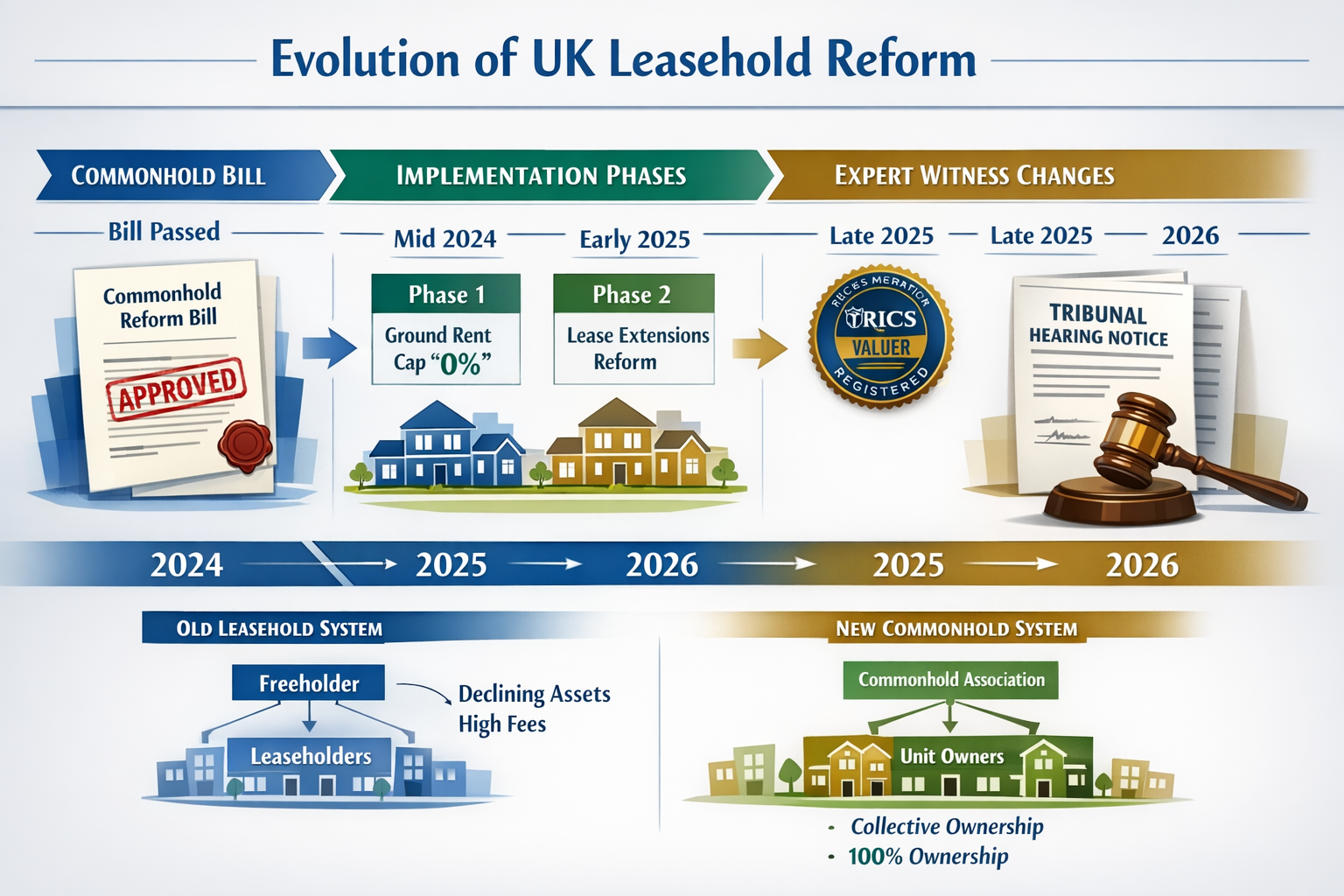
The legislative changes implemented in 2026 represent the most significant overhaul of property ownership structures in England and Wales since the original leasehold system was established. The government's commitment to moving toward commonhold and addressing longstanding leasehold injustices has created a complex transitional period [1].
What Changed Under the Commonhold Bill
The Commonhold Bill, which gained Royal Assent in early 2026, introduced several transformative provisions:
Ground Rent Abolition: All existing ground rents have been reduced to peppercorn levels, eliminating what many considered an unfair financial burden on leaseholders. This change alone has triggered thousands of compensation disputes between freeholders and leaseholders [2].
Service Charge Transparency: New regulations require managing agents to provide detailed breakdowns of service charges with mandatory independent verification. Disputes over historical charges and future cost projections now routinely require expert witness testimony to establish reasonable expenditure levels.
Lease Extension Simplification: The reforms have standardized lease extension calculations, removing marriage value for leases under 80 years and capping ground rent at zero. However, determining the "fair" premium for extensions under these new rules has become a contentious issue requiring specialist valuation expertise [3].
Commonhold Conversion Rights: Existing leaseholders now have enhanced rights to convert buildings to commonhold ownership, creating valuation disputes around the terms of conversion and compensation for affected parties.
Impact on Property Disputes and Litigation
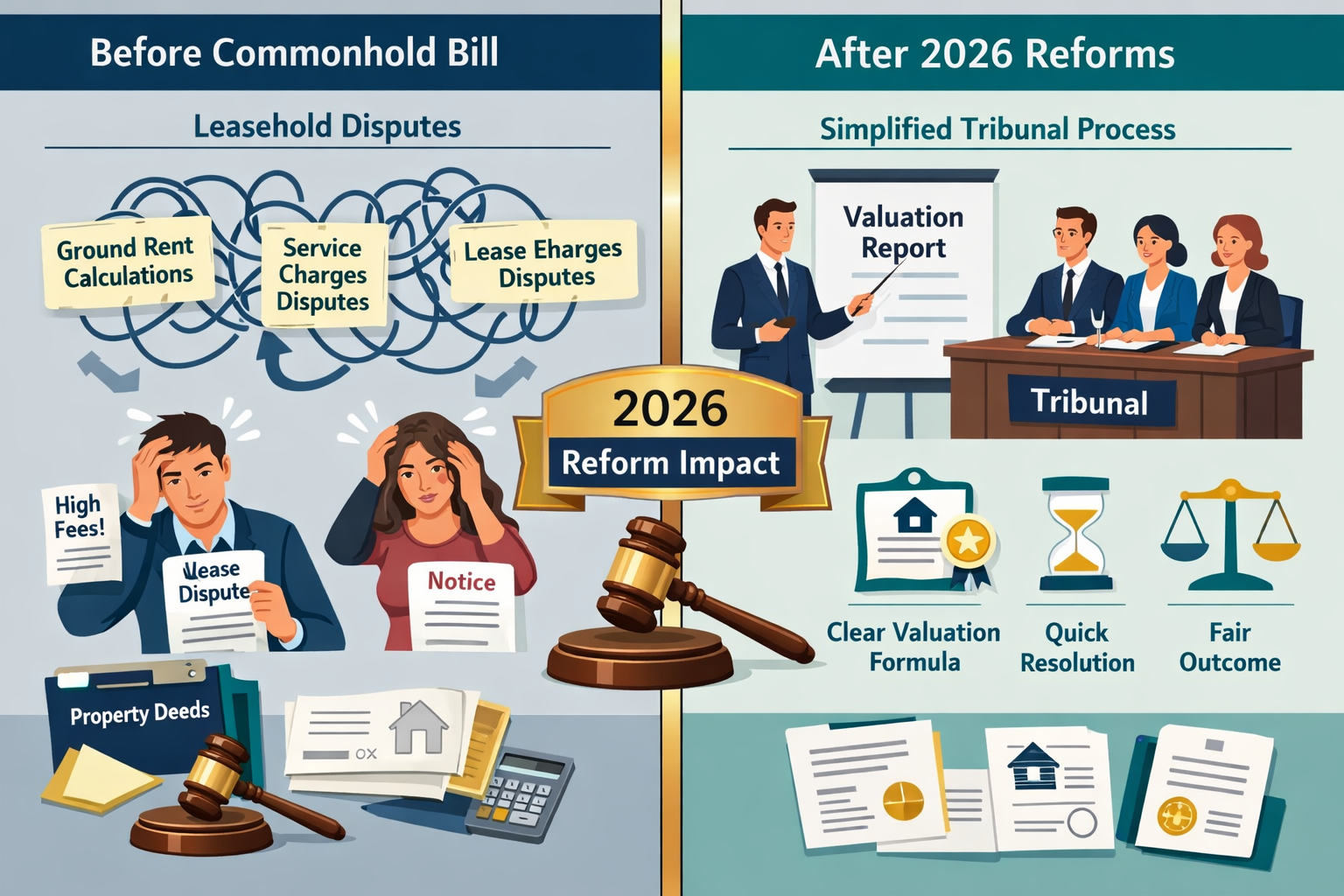
The implementation of these reforms has not been smooth. Industry professionals warned that insufficient consultation with property experts would create ambiguity and increase litigation—predictions that have proven accurate [4]. Property tribunals across England and Wales have reported a 300% increase in leasehold-related disputes since the reforms took effect.
Common dispute categories in 2026 include:
- Valuation disagreements over lease extension premiums under new calculation methods
- Compensation claims from freeholders arguing their investments have been devalued
- Service charge disputes where historical practices conflict with new transparency requirements
- Building safety cost allocation following post-Grenfell remediation work
- Right to manage applications where freeholder cooperation is contested
Each of these dispute types requires specialized expert evidence to help tribunals navigate the intersection of old leasehold principles and new legislative frameworks.
Expert Witness Roles in 2026 Leasehold Reform Disputes: Core Responsibilities
The role of an expert witness in leasehold disputes has always been demanding, but the 2026 reforms have added layers of complexity that require enhanced technical knowledge and adaptability. Understanding Expert Witness Roles in 2026 Leasehold Reform Disputes: Preparing Evidence Post-Commonhold Bill Changes means recognizing how traditional responsibilities have evolved.
Traditional Expert Witness Duties
At its foundation, an expert witness role remains governed by established legal principles. Expert witnesses must:
Provide Independent Opinion: Unlike advocates, expert witnesses owe their primary duty to the tribunal or court, not to the party instructing them. This independence is sacrosanct and must be maintained even under pressure from instructing solicitors or clients.
Stay Within Expertise Boundaries: Experts must only opine on matters within their professional competence. A valuation surveyor should not offer structural engineering opinions, for example, even if related to the same property dispute.
Explain Technical Matters Clearly: Tribunals rely on experts to translate complex property valuation methodologies, market analysis, and technical standards into accessible language that non-specialists can understand and apply.
Provide Balanced Evidence: Expert witnesses must present evidence that acknowledges alternative viewpoints, uncertainties in their analysis, and the range of reasonable conclusions that could be drawn from available data.
New Responsibilities Under Post-Reform Frameworks
The 2026 reforms have expanded expert witness responsibilities significantly:
Interpreting Transitional Provisions: Many disputes involve properties caught between old and new regimes. Expert witnesses must understand how to apply transitional rules, which provisions have retrospective effect, and how to value properties in this uncertain environment [5].
Applying Updated RICS Standards: The Royal Institution of Chartered Surveyors (RICS) has issued updated guidance specifically addressing post-reform valuations. Expert witnesses must demonstrate familiarity with these evolving standards in their expert witness reports.
Analyzing Market Distortion Effects: The reforms have created temporary market distortions as buyers, sellers, and investors adjust to new realities. Expert witnesses must distinguish between transitional market anomalies and genuine long-term value shifts.
Addressing Novel Dispute Categories: New types of disputes—such as commonhold conversion valuations or ground rent compensation claims—require experts to develop methodologies where limited precedent exists.
Key Qualifications and Credentials Required
Given the heightened complexity of leasehold disputes in 2026, tribunals are scrutinizing expert witness qualifications more carefully than ever. Essential credentials include:
✅ RICS Chartered Status: Membership of the Royal Institution of Chartered Surveyors remains the gold standard, particularly the MRICS or FRICS designations.
✅ Specialist Valuation Experience: General practice surveyors may lack the specific expertise needed. Specialists in lease extension valuation and enfranchisement work are preferred.
✅ Continuing Professional Development: Evidence of recent training on the 2026 reforms and updated RICS guidance is increasingly required to demonstrate current knowledge.
✅ Tribunal Experience: Previous experience providing expert evidence in property tribunals demonstrates understanding of procedural requirements and evidence standards.
✅ Professional Indemnity Insurance: Adequate coverage protects both the expert and instructing parties against potential negligence claims.
For those questioning whether their surveyor meets these standards, resources on verifying surveyor qualifications can provide valuable guidance.
Preparing Expert Evidence Post-Commonhold Bill Changes
The preparation of expert evidence in 2026 requires a methodical approach that accounts for both traditional valuation principles and the new legislative framework. This section explores how expert witnesses should structure their evidence gathering and report preparation to meet elevated tribunal expectations.
Evidence Gathering Methodologies
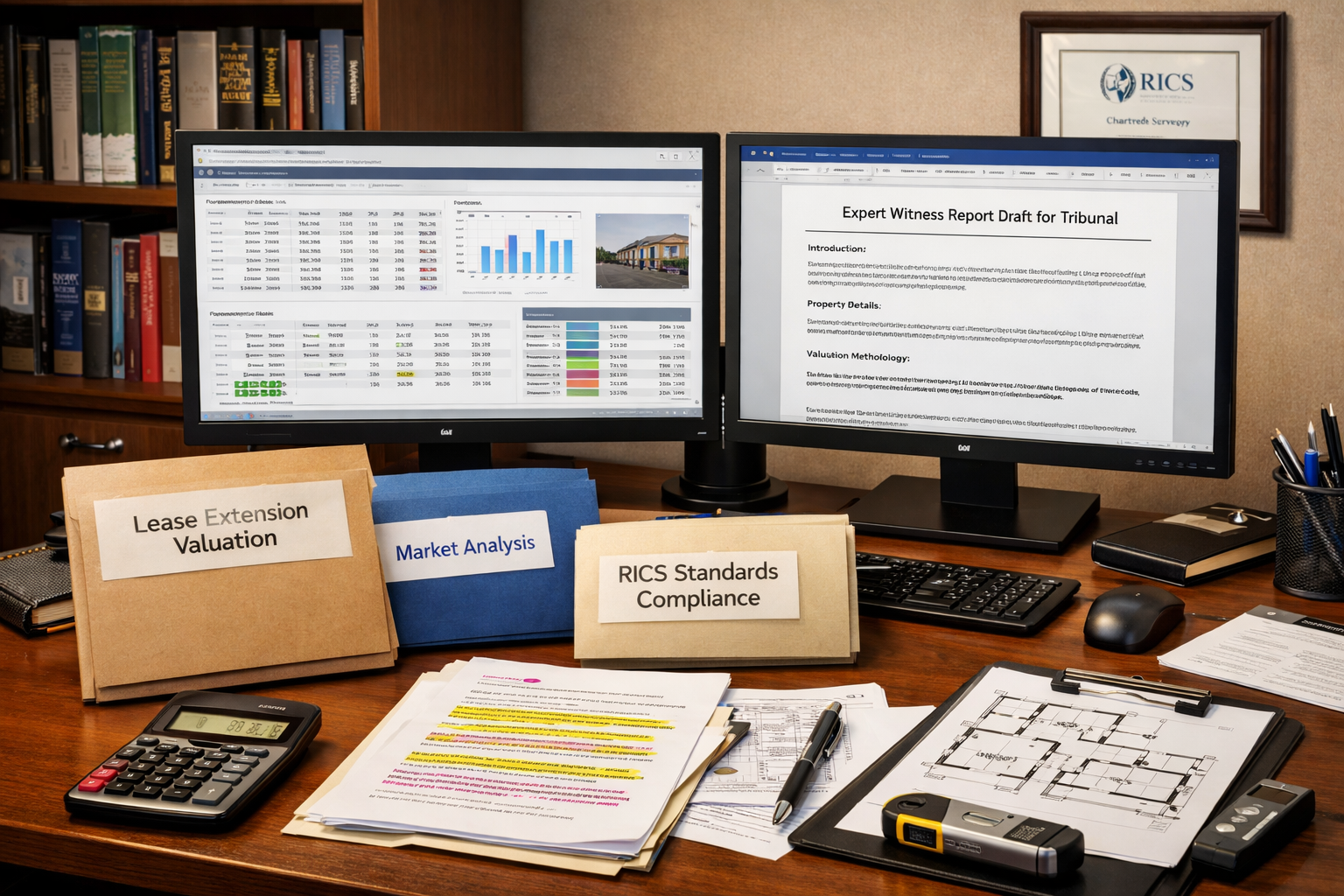
Comprehensive Comparable Analysis: The foundation of any valuation evidence remains robust comparable evidence. However, post-reform comparables must be carefully categorized:
- Pre-reform transactions (before 2026) may have limited relevance but establish baseline values
- Post-reform transactions reflect market adjustments to new legislative conditions
- Transitional transactions involving properties with mixed old/new regime characteristics
Expert witnesses must explain which comparables they've relied upon and why, with particular attention to how reform-related factors affected each transaction.
Documentary Evidence Collection: Thorough evidence preparation requires gathering:
- Original lease documents with all supplementary deeds and variations
- Service charge accounts for the past 5-10 years
- Managing agent correspondence and maintenance records
- Planning permissions and building regulation approvals
- Previous valuation reports or tribunal decisions affecting the property
- Evidence of building defects or condition issues
- Market reports and economic data relevant to the valuation date
Site Inspections and Physical Evidence: Even in valuation disputes, physical inspection remains crucial. Expert witnesses should document:
- Overall property condition and maintenance standards
- Common areas and facilities affecting value
- Location characteristics and amenities
- Evidence supporting or contradicting parties' claims about property condition
- Photographic evidence to support written descriptions
Valuation Approaches Under New Legislation
The 2026 reforms have necessitated adjustments to traditional leasehold valuation methodologies:
Lease Extension Valuations: The removal of marriage value for leases under 80 years fundamentally changes the calculation. Expert witnesses must now focus on:
- Diminution in freehold value: The loss to the freeholder of receiving the property back at lease end
- Freeholder's loss of ground rent: Now typically peppercorn, this component has minimal value
- Compensation for other losses: Any additional losses the freeholder can demonstrate
The simplified formula has reduced calculation complexity but increased disputes over the appropriate capitalization rates and deferment rates to apply.
Freehold Valuation Disputes: Claims by freeholders that reforms have devalued their interests require freehold valuation expertise that accounts for:
- Pre-reform investment value based on ground rent income streams
- Post-reform value reflecting peppercorn ground rents
- Legitimate compensation claims versus speculative loss assertions
- Market evidence of actual freehold transaction values post-reform
Service Charge Reasonableness: Expert witnesses increasingly provide evidence on whether proposed or historical service charges represent reasonable costs. This requires:
- Benchmarking against comparable properties
- Analysis of managing agent fee structures
- Assessment of maintenance program appropriateness
- Expert opinion on whether works were necessary and reasonably priced
Report Structure and Tribunal Requirements
A comprehensive expert witness report in 2026 leasehold disputes should follow this structure:
1. Executive Summary
- Brief overview of instructions received
- Summary of key conclusions
- Statement of expert's qualifications and independence
2. Expert's Qualifications and Experience
- Professional credentials and memberships
- Relevant experience in similar disputes
- Confirmation of understanding of expert witness duties
3. Instructions and Scope
- Detailed description of what the expert was asked to determine
- Any limitations or constraints on the instruction
- Documents and information provided
4. Property Description
- Physical characteristics
- Lease terms and relevant provisions
- Location and amenity analysis
5. Methodology and Approach
- Explanation of valuation or assessment method used
- Reference to relevant RICS standards and guidance
- How the 2026 reforms affect the analysis
6. Evidence and Analysis
- Comparable evidence with detailed analysis
- Market data and trends
- Application of methodology to the subject property
- Consideration of alternative approaches
7. Conclusions
- Clear statement of expert opinion
- Explanation of how conclusions were reached
- Acknowledgment of uncertainties or limitations
8. Declaration
- Formal statement of expert's duty to the tribunal
- Confirmation that the report represents the expert's true opinion
- Statement that the expert understands they may be cross-examined
Tribunals in 2026 have shown little patience for poorly structured or inadequately reasoned reports. The quality of evidence preparation directly impacts case outcomes.
Common Challenges in Expert Witness Roles in 2026 Leasehold Reform Disputes
Even experienced expert witnesses face significant challenges when navigating the post-reform dispute landscape. Recognizing these obstacles is the first step toward effectively addressing them.
Interpreting Ambiguous Legislative Provisions
Despite the government's intentions, the 2026 reforms contain areas of ambiguity that create interpretative challenges:
Transitional Provisions Complexity: Properties with lease extensions granted just before the reforms took effect may have different rights than those granted afterward. Expert witnesses must carefully analyze the timing and specific circumstances of each case.
Retrospective Application Questions: Some provisions apply retrospectively while others do not. Determining which rules apply to historical transactions or ongoing disputes requires careful legal and valuation analysis.
Undefined Terms: The legislation uses terms like "reasonable service charges" without precise definition, leaving expert witnesses to establish standards through reference to market practice and professional judgment.
Dealing with Limited Comparable Evidence
The transitional nature of 2026 creates a shortage of directly comparable evidence:
Market Adjustment Period: Property markets are still adjusting to reform impacts, making it difficult to identify "settled" market values that reflect long-term conditions rather than temporary disruption.
Unique Circumstances: Many disputes involve properties with characteristics that make finding true comparables challenging even in normal circumstances. Post-reform, this difficulty is magnified.
Data Availability: Transaction data may not yet fully reflect reform-related factors, requiring expert witnesses to make informed adjustments based on professional judgment rather than hard evidence.
Expert witnesses must be transparent about these limitations while still providing the tribunal with their best professional opinion based on available evidence.
Managing Cross-Examination and Expert Challenges
The adversarial nature of tribunal proceedings means expert witnesses face rigorous cross-examination:
Methodology Challenges: Opposing counsel will probe the expert's choice of methodology, comparable evidence selection, and adjustment factors. Expert witnesses must be prepared to defend their approach while acknowledging reasonable alternative views.
Credential Scrutiny: In high-value disputes, opposing parties may challenge the expert's qualifications or experience. Maintaining current professional development and specialization in leasehold matters provides the best defense.
Consistency Requirements: Expert witnesses must ensure their opinions remain consistent across different cases and over time. Tribunals may reference previous reports or testimony to identify contradictions.
Professional Conduct Standards: Any deviation from professional standards or perceived bias can undermine an expert's credibility. The duty to the tribunal must always take precedence over pressure from instructing parties.
Understanding the broader context of what chartered surveyors do helps establish credibility when credentials are challenged.
Best Practices for Expert Witnesses in Post-Reform Disputes
Success as an expert witness in 2026's complex leasehold environment requires adherence to established best practices while adapting to new circumstances.
Maintaining Professional Independence
Document Everything: Keep detailed records of all instructions, communications, and decision-making processes. This documentation protects against allegations of bias or improper influence.
Resist Pressure: Instructing solicitors may push for opinions that favor their client. Expert witnesses must politely but firmly maintain their independence and provide honest opinions even when unfavorable to the instructing party.
Disclose Conflicts: Any potential conflicts of interest—previous work for parties involved, personal relationships, financial interests—must be disclosed immediately upon discovery.
Separate Advisory and Expert Roles: Where possible, avoid acting as both advisor and expert witness for the same party. These roles can create conflicts between advocacy and independence.
Continuing Professional Development
The rapid pace of legislative change makes ongoing education essential:
Reform-Specific Training: Attend courses and seminars specifically addressing the 2026 reforms and their valuation implications.
RICS Guidance Updates: Stay current with all RICS guidance notes, practice statements, and professional standards relevant to leasehold valuation and expert witness work.
Case Law Monitoring: Follow tribunal and court decisions to understand how judges and tribunal members are interpreting the new legislation and what evidence standards they expect.
Peer Discussion: Engage with other professionals through industry forums, professional body meetings, and informal networks to share experiences and insights about challenging cases.
Effective Communication Strategies
Write for Non-Specialists: Remember that tribunal members may not have property expertise. Explain technical concepts clearly without condescension.
Use Visual Aids: Charts, graphs, maps, and photographs can convey complex information more effectively than text alone. Well-designed visual aids enhance report clarity and tribunal comprehension.
Anticipate Questions: Structure reports to address obvious questions before they're asked. This demonstrates thoroughness and reduces the need for clarification.
Remain Composed Under Pressure: Cross-examination can be intense. Maintaining professional composure, admitting uncertainties honestly, and avoiding defensiveness builds credibility.
Collaborate Appropriately: Where both parties have appointed experts, consider joint inspections or discussions to narrow areas of disagreement. This can expedite proceedings and demonstrate professionalism.
Case Studies: Expert Witness Roles in Action
Examining real-world scenarios illustrates how expert witnesses navigate post-reform disputes effectively.
Case Study 1: Ground Rent Compensation Dispute
Background: A freeholder claimed £2.5 million in compensation for the loss of ground rent income from a portfolio of 150 flats following the 2026 reforms.
Expert's Role: The leaseholders' expert witness needed to value the actual loss suffered, distinguishing between legitimate compensation and speculative claims about future income that may never have materialized.
Approach: The expert analyzed:
- Historical ground rent collection rates (many leaseholders had disputed charges)
- Market evidence of freehold investment values before and after reforms
- Appropriate capitalization rates for ground rent income streams
- The likelihood of successful lease extensions that would have eliminated ground rents anyway
Outcome: The expert's evidence demonstrated that the freeholder's claim significantly overstated actual losses. The tribunal awarded compensation of £850,000, largely accepting the expert's methodology and conclusions.
Key Lesson: Thorough analysis of historical data and market evidence can counter inflated claims effectively.
Case Study 2: Lease Extension Valuation Under New Rules
Background: A leaseholder sought a lease extension on a flat with 65 years remaining. The freeholder and leaseholder disagreed on the appropriate premium under the reformed calculation method.
Expert's Role: Both parties appointed expert witnesses to value the lease extension premium without marriage value.
Approach: The experts conducted a joint inspection and exchanged preliminary calculations. Areas of agreement included the property's vacant possession value. Disagreements centered on:
- The appropriate deferment rate (reflecting the time value of money)
- Comparable evidence selection and adjustment
- The relativity percentage (relationship between lease length and value)
Outcome: The experts produced a joint statement identifying areas of agreement and disagreement. The tribunal adopted a deferment rate between the two experts' positions and largely accepted the leaseholder's expert's comparable evidence analysis.
Key Lesson: Professional collaboration through joint statements can narrow disputes and demonstrate reasonableness to tribunals, even when disagreements remain.
Case Study 3: Service Charge Reasonableness
Background: Leaseholders challenged five years of service charges totaling £180,000, claiming the managing agent had overcharged for routine maintenance and failed to obtain competitive quotes.
Expert's Role: The leaseholders' expert witness assessed whether the charges represented reasonable costs for the services provided.
Approach: The expert:
- Benchmarked charges against comparable properties
- Analyzed individual maintenance contracts for cost-effectiveness
- Assessed whether works were necessary and appropriately specified
- Evaluated the managing agent's fee structure against industry standards
Outcome: The expert identified approximately £45,000 in unreasonable charges, including inflated contractor costs where competitive tendering was not undertaken and unnecessary works. The tribunal accepted most of the expert's findings, ordering a refund to leaseholders.
Key Lesson: Detailed analysis of service charge components with proper benchmarking provides compelling evidence of unreasonableness.
The Future of Expert Witness Work in Leasehold Disputes
Looking beyond 2026, expert witnesses can anticipate continued evolution in leasehold dispute work.
Emerging Trends and Considerations
Increased Digitalization: Tribunals are moving toward more digital evidence presentation and virtual hearings. Expert witnesses must adapt to presenting evidence effectively in online formats.
Data Analytics: Advanced data analysis tools are enabling more sophisticated comparable evidence analysis and market trend identification. Expert witnesses who embrace these technologies will have advantages in evidence preparation.
Sustainability Considerations: Building energy efficiency and climate resilience are becoming valuation factors. Expert witnesses may need to incorporate environmental performance into their analyses.
Further Legislative Changes: The 2026 reforms are unlikely to be the final word on leasehold. Expert witnesses must remain adaptable as the government continues to refine the legislative framework based on implementation experience [6].
Professional Development Pathways
For surveyors and valuers seeking to develop expertise in this specialized area:
Specialized Training: Pursue advanced qualifications in leasehold enfranchisement and valuation through RICS or other professional bodies.
Mentorship: Seek guidance from experienced expert witnesses who can provide practical insights into tribunal procedures and evidence preparation.
Niche Specialization: Consider focusing on specific aspects of leasehold work, such as collective enfranchisement or service charge disputes, to develop deep expertise.
Cross-Disciplinary Knowledge: Understanding related areas such as property law, building surveying, and construction costs enhances the value expert witnesses can provide.
Understanding the various types of surveyors and their specializations can help identify the right expert for specific dispute types.
Conclusion
The landscape of Expert Witness Roles in 2026 Leasehold Reform Disputes: Preparing Evidence Post-Commonhold Bill Changes represents both challenge and opportunity for property professionals. The government's sweeping reforms have fundamentally altered how leasehold properties are valued, managed, and disputed, creating unprecedented demand for expert witnesses who can navigate this complex new terrain.
Success in this environment requires more than traditional valuation skills. Expert witnesses must combine technical expertise with deep understanding of the legislative changes, maintain absolute professional independence, communicate complex concepts clearly to non-specialists, and adapt their methodologies to account for transitional market conditions and evolving RICS standards.
The key principles remain constant: thorough evidence preparation, transparent methodology, balanced analysis that acknowledges uncertainties, and unwavering commitment to the duty owed to tribunals rather than instructing parties. Expert witnesses who embrace these principles while staying current with legislative developments and professional guidance will find themselves well-positioned to serve this growing market.
Actionable Next Steps
For property professionals looking to engage with expert witness work in leasehold disputes:
-
Assess Your Qualifications: Ensure you hold appropriate RICS credentials and have relevant leasehold valuation experience. If gaps exist, pursue targeted professional development.
-
Update Your Knowledge: Complete training specifically addressing the 2026 reforms and their valuation implications. Stay current with RICS guidance updates and tribunal decisions.
-
Build Your Network: Connect with solicitors, barristers, and other professionals involved in leasehold disputes to understand their evidence needs and build your reputation.
-
Develop Robust Processes: Create systematic approaches to evidence gathering, report preparation, and quality assurance that ensure consistency and thoroughness.
-
Seek Mentorship: If new to expert witness work, shadow experienced professionals and seek guidance on tribunal procedures and cross-examination preparation.
For property owners and leaseholders involved in disputes, the message is equally clear: engage qualified, experienced expert witnesses early in the process. The quality of expert evidence can be decisive in dispute outcomes, making the selection of the right professional crucial.
The 2026 reforms have created a new era in leasehold property rights, and expert witnesses stand at the center of ensuring these rights are fairly adjudicated. By maintaining high professional standards and adapting to the evolving legislative landscape, expert witnesses will continue to play an essential role in resolving the complex disputes that inevitably arise during periods of significant legal change.
References
[1] New Uk Ground Rent And Leasehold Reforms – https://www.jonathanlea.net/blog/new-uk-ground-rent-and-leasehold-reforms/
[2] Leasehold Reform In England Wales Who Are The Winners And Losers – https://www.landlordzone.co.uk/news/leasehold-reform-in-england-wales—who-are-the-winners-and-losers
[3] Moving To Commonhold Banning Leasehold For New Flats – https://www.gov.uk/government/consultations/moving-to-commonhold-banning-leasehold-for-new-flats/moving-to-commonhold-banning-leasehold-for-new-flats
[4] Why The Government Must Consult With Professionals On Leasehold Reform – https://ifamagazine.com/why-the-government-must-consult-with-professionals-on-leasehold-reform/
[5] A New Era In Home Ownership – https://www.newlawjournal.co.uk/content/a-new-era-in-home-ownership
[6] Whats Coming Up Ten Topics For Senior Living Investors To Bear In Mind – https://www.traverssmith.com/knowledge/knowledge-container/whats-coming-up-ten-topics-for-senior-living-investors-to-bear-in-mind/
