
Understanding the Difference Between Level 2 and Level 3 Survey: Your Complete Guide
When purchasing a property in 2025, one of the most crucial decisions you’ll face is choosing the right type of survey. The difference between level 2 and level 3 survey options can significantly impact your understanding of a property’s condition and your future financial commitments. Making the wrong choice could leave you exposed to costly surprises or paying for unnecessary detailed inspections.
Key Takeaways
• Level 2 surveys are ideal for conventional properties in reasonable condition, offering a good balance of detail and cost-effectiveness
• Level 3 surveys provide comprehensive structural analysis and are essential for older, unusual, or significantly altered properties
• Cost differences typically range from £400-800 for Level 2 surveys to £800-1,500+ for Level 3 surveys
• Timeline variations see Level 2 surveys completed in 2-4 hours versus 4-8 hours for Level 3 surveys
• Report depth varies dramatically, with Level 3 surveys providing detailed structural analysis and repair cost estimates
What Are Property Surveys? 🏠
Property surveys are professional assessments conducted by qualified surveyors to evaluate a building’s condition, structure, and potential issues. These inspections provide crucial information that helps buyers make informed decisions about their property purchase.
In the UK, the Royal Institution of Chartered Surveyors (RICS) has standardized survey types to ensure consistency and quality across the industry. The two most common residential survey options are Level 2 (HomeBuyer Report) and Level 3 (Building Survey) inspections.
Professional building surveyors in London play a vital role in protecting property buyers from unexpected structural issues and costly repairs.
Level 2 Survey: The HomeBuyer Report
What Is a Level 2 Survey?
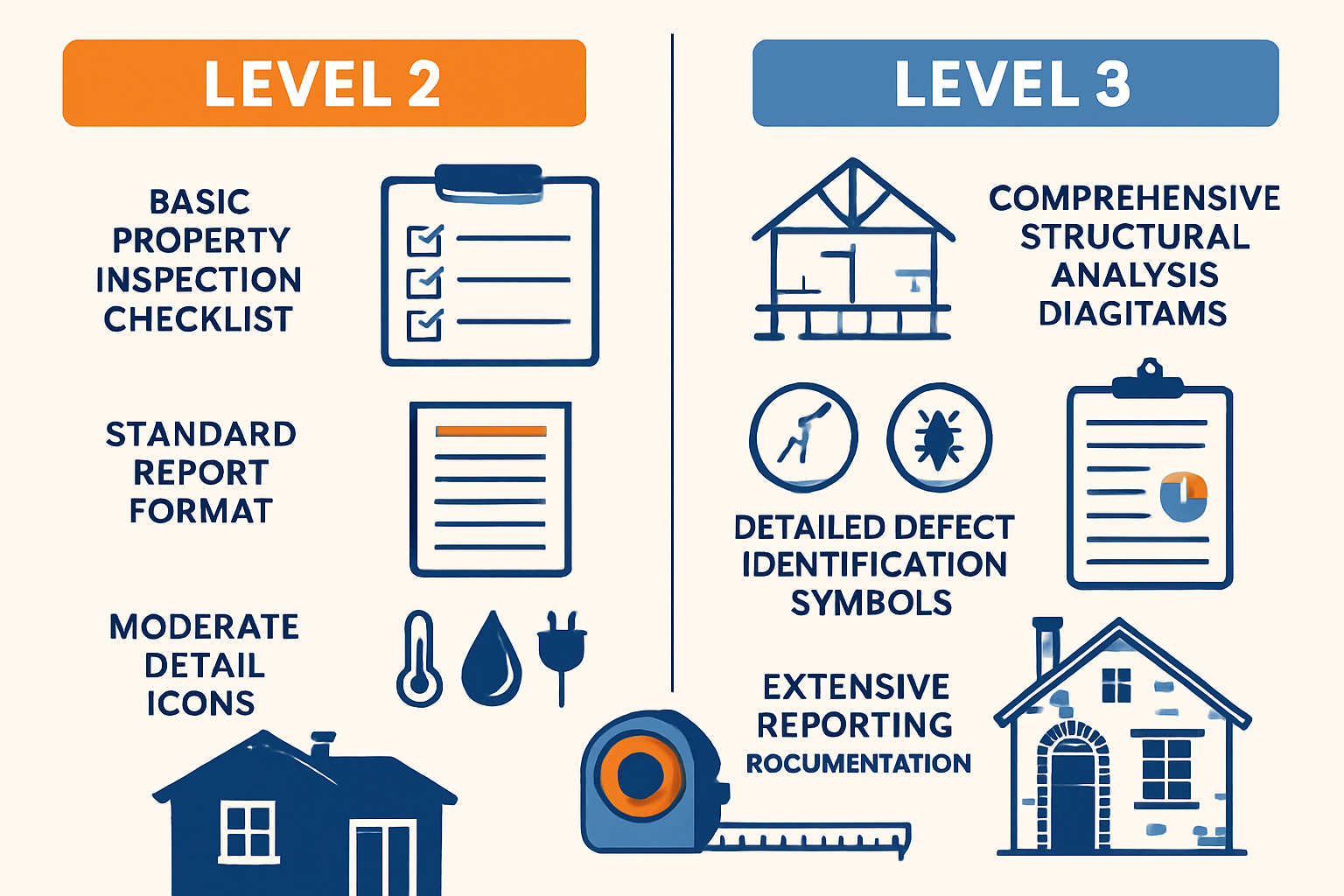
A Level 2 survey, officially known as a HomeBuyer Report, is a mid-level property inspection designed for conventional properties built from common materials and in reasonable condition. This survey type strikes a balance between cost and detail, making it the most popular choice among UK property buyers.
Key Features of Level 2 Surveys
Scope of Inspection:
- Visual examination of accessible areas
- Assessment of main building elements
- Identification of urgent defects
- Basic structural evaluation
- Services overview (heating, plumbing, electrical)
What’s Included:
- Traffic light system for defect severity
- Market valuation and insurance rebuild cost
- Legal issues identification
- Accessibility limitations clearly stated
- Advice on further investigations needed
Typical Duration:
Level 2 surveys usually take 2-4 hours to complete on-site, with reports delivered within 5-10 working days.
When to Choose a Level 2 Survey
Level 2 surveys are most suitable for:
- Modern properties built within the last 50 years
- Conventional construction using standard materials and methods
- Properties in good condition with no obvious structural concerns
- Standard layouts without significant alterations
- Budget-conscious buyers seeking essential information without extensive detail
Understanding what surveyors look for during a Level 2 inspection can help you prepare for the process and understand the report findings.
Level 3 Survey: The Building Survey
What Is a Level 3 Survey?
A Level 3 survey, also called a Building Survey or Full Structural Survey, represents the most comprehensive property inspection available. This detailed assessment provides in-depth analysis of a building’s condition, structure, and potential issues.
Key Features of Level 3 Surveys
Comprehensive Scope:
- Detailed structural analysis
- Extensive defect identification and description
- Construction methods assessment
- Materials condition evaluation
- Detailed services inspection
- Accessibility to roof spaces, cellars, and outbuildings
Detailed Reporting:
- Descriptive format with technical explanations
- Photographic evidence of defects
- Repair prioritization and cost estimates
- Maintenance recommendations
- Future planning advice
Extended Duration:
Level 3 surveys typically require 4-8 hours on-site, with comprehensive reports delivered within 7-14 working days.
When to Choose a Level 3 Survey
Level 3 surveys are essential for:
- Period properties over 50 years old
- Listed buildings with historical significance
- Unusual construction methods or materials
- Significantly altered or extended properties
- Properties in poor condition with visible defects
- Commercial conversions to residential use
- High-value properties where detailed analysis justifies the cost
Level 3 building surveys provide the comprehensive analysis needed for complex property purchases.
The Key Difference Between Level 2 and Level 3 Survey Options
Depth of Investigation
Level 2 Limitations:
- Surface-level visual inspection only
- No access to concealed areas
- Limited structural analysis
- Basic defect identification
Level 3 Advantages:
- Detailed structural examination
- Access to roof spaces and cellars where possible
- Comprehensive defect analysis
- Technical construction assessment
Report Format and Detail
| Aspect | Level 2 Survey | Level 3 Survey |
|---|---|---|
| Format | Standardized template | Descriptive narrative |
| Length | 15-25 pages | 30-60+ pages |
| Defect Rating | Traffic light system | Detailed descriptions |
| Photos | Limited selection | Extensive photographic evidence |
| Recommendations | Basic advice | Detailed repair guidance |
Cost Implications
Level 2 Survey Costs:
- Standard properties: £400-600
- Larger properties: £600-800
- London/Southeast: 20-30% premium
Level 3 Survey Costs:
- Standard properties: £800-1,200
- Large/complex properties: £1,200-2,000+
- Listed/unusual properties: £1,500-3,000+
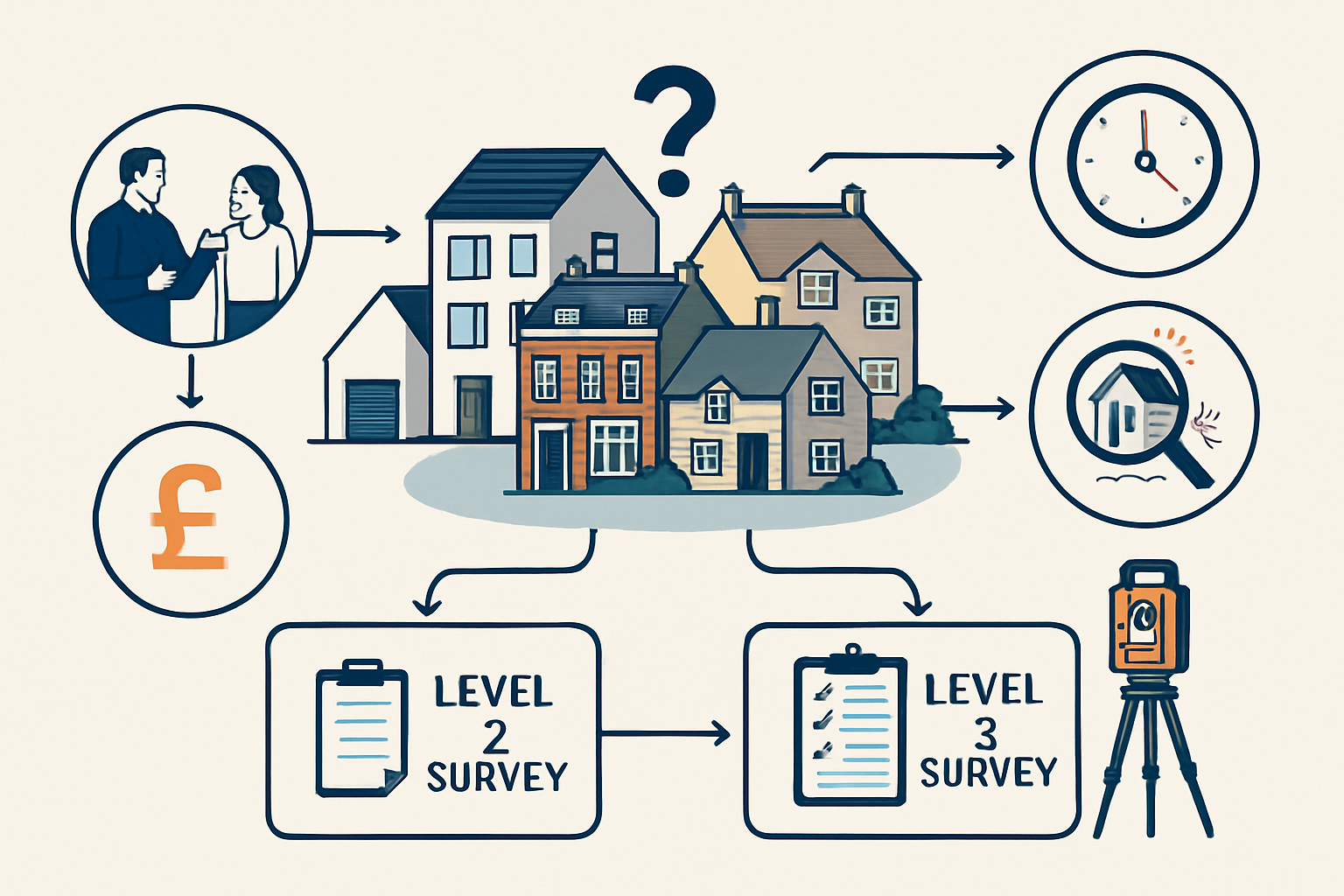
The full structural survey cost varies significantly based on property size, complexity, and location.
Timeline Differences
Level 2 Survey Timeline:
- Booking to completion: 1-2 weeks
- On-site inspection: 2-4 hours
- Report delivery: 5-10 working days
Level 3 Survey Timeline:
- Booking to completion: 2-3 weeks
- On-site inspection: 4-8 hours
- Report delivery: 7-14 working days
How long surveys take depends on various factors including property complexity and surveyor availability.
Making the Right Choice: Level 2 vs Level 3
Decision Framework
Choose Level 2 If:
✅ Property built after 1970
✅ Standard construction methods
✅ Good visible condition
✅ No major alterations
✅ Budget constraints
✅ Straightforward purchase
Choose Level 3 If:
✅ Property built before 1970
✅ Listed or period building
✅ Visible structural concerns
✅ Major extensions or alterations
✅ Unusual construction
✅ High-value investment
✅ Planning future renovations
Risk Assessment Considerations
Level 2 Risks:
- May miss concealed defects
- Limited structural analysis
- Potential for unexpected repair costs
- Less detailed guidance for negotiations
Level 3 Benefits:
- Comprehensive defect identification
- Detailed repair cost estimates
- Strong negotiation position
- Future maintenance planning
- Peace of mind for complex properties
Professional Guidance
Consulting with qualified surveyors can help you make the right choice based on your specific circumstances. Professional advice considers factors like:
- Property age and construction type
- Your renovation plans
- Risk tolerance
- Budget constraints
- Market conditions
Understanding Survey Limitations
What Surveys Cannot Do
Both Level 2 and Level 3 surveys have limitations:
- Cannot access sealed or inaccessible areas
- Won’t move furniture or stored items
- Cannot test electrical or gas systems
- Won’t identify every minor defect
- Cannot predict future problems with certainty
Additional Specialist Surveys
Sometimes, standard surveys reveal the need for specialist inspections:
- Asbestos surveys for pre-1980s properties
- Structural engineer reports for serious structural concerns
- Electrical condition reports for outdated wiring
- Drainage surveys for suspected drainage issues
- Damp and timber surveys for moisture problems
Maximizing Your Survey Investment
Preparing for the Survey
Before the Survey:
- Ensure access to all areas
- Provide relevant property information
- Discuss specific concerns with the surveyor
- Arrange utility meter readings if needed
During the Survey:
- Be present if possible to ask questions
- Point out any specific concerns
- Take notes of verbal observations
- Request clarification on access limitations
Using Survey Results Effectively
For Negotiations:
- Use significant defects to justify price reductions
- Request seller remediation of urgent issues
- Factor repair costs into your budget
- Consider walking away if problems are too severe
For Future Planning:
- Prioritize urgent repairs
- Budget for recommended maintenance
- Plan major renovations around structural findings
- Maintain detailed records for insurance purposes
Understanding whether surveys are worth it helps you maximize the value of your investment in professional property assessment.
Common Survey Findings and Their Implications
Typical Level 2 Survey Findings
Green (No Issues):
- Modern construction in good condition
- Recent maintenance and updates
- No visible structural concerns
Amber (Monitor/Investigate):
- Minor maintenance required
- Age-related wear and tear
- Areas requiring future attention
Red (Urgent Action):
- Structural movement or damage
- Serious damp or timber issues
- Unsafe electrical or gas installations
Typical Level 3 Survey Findings
Detailed Structural Analysis:
- Foundation condition assessment
- Roof structure evaluation
- Wall construction analysis
- Floor and ceiling condition
Comprehensive Defect Reporting:
- Detailed descriptions of all issues found
- Photographic evidence
- Repair method recommendations
- Cost estimation guidance
Future Maintenance Planning:
- Lifecycle predictions for building elements
- Preventive maintenance schedules
- Upgrade recommendations
- Energy efficiency improvements
The Impact of Property Age on Survey Choice
Modern Properties (Post-1980)
Characteristics:
- Standardized construction methods
- Modern materials and techniques
- Building regulation compliance
- Generally good condition
Recommended Survey: Level 2 usually sufficient unless specific concerns exist.
Post-War Properties (1945-1980)
Characteristics:
- Some non-standard construction
- Potential for defective materials
- Variable build quality
- May require updates
Recommended Survey: Level 2 for standard properties, Level 3 if unusual construction or visible issues.
Pre-War Properties (Pre-1945)
Characteristics:
- Traditional construction methods
- Potential structural movement
- Outdated services
- Heritage considerations
Recommended Survey: Level 3 recommended for comprehensive assessment.
Victorian and Earlier (Pre-1900)
Characteristics:
- Solid wall construction
- Potential structural issues
- Listed building considerations
- Complex renovation requirements
Recommended Survey: Level 3 essential for proper assessment.
Regional Considerations and Market Factors
London and Southeast England
Market Characteristics:
- High property values
- Mix of period and modern properties
- Competitive market conditions
- Premium surveyor costs
Survey Implications:
- Higher stakes justify comprehensive surveys
- Period properties common, favoring Level 3
- Fast-moving market requires quick decisions
Regional Markets
Considerations:
- Lower property values may influence survey choice
- Different construction types prevalent
- Varying surveyor availability and costs
- Local building characteristics
Professional surveyors understand local market conditions and property characteristics that influence survey recommendations.
Future Trends in Property Surveying
Technology Integration
Modern Survey Techniques:
- Thermal imaging for insulation assessment
- Moisture meters for damp detection
- Digital photography and documentation
- 3D scanning for complex properties
Digital Reporting:
- Interactive online reports
- Video explanations of findings
- Real-time updates during inspection
- Mobile-friendly formats
Sustainability Focus
Environmental Considerations:
- Energy efficiency assessments
- Sustainability recommendations
- Carbon footprint evaluation
- Green renovation guidance
Market Evolution
Industry Changes:
- Standardized reporting improvements
- Enhanced professional training
- Technology adoption
- Consumer protection enhancements
Conclusion
Understanding the difference between level 2 and level 3 survey options is crucial for making informed property purchase decisions in 2025. While Level 2 surveys provide excellent value for modern, conventional properties in good condition, Level 3 surveys offer the comprehensive analysis essential for older, unusual, or complex properties.
The choice between these survey types should be based on careful consideration of property characteristics, your risk tolerance, budget constraints, and future plans. Remember that the cost of a thorough survey is minimal compared to the potential expense of undiscovered structural issues or major repairs.
Next Steps:
- Assess your property against the criteria outlined in this guide
- Consult with qualified surveyors to discuss your specific situation
- Budget appropriately for both the survey cost and potential repairs identified
- Schedule your survey early in the purchase process to allow time for negotiations
- Review the report thoroughly and seek clarification on any unclear points
- Use findings strategically in purchase negotiations and future planning
Whether you choose a Level 2 or Level 3 survey, investing in professional property assessment provides invaluable protection and peace of mind for one of life’s most significant purchases. The right survey choice, properly executed, can save you thousands of pounds and years of unexpected problems.
