
The Complete Guide to Damp and Timber Report Cost in 2025
When purchasing a property or dealing with moisture concerns, understanding damp and timber report cost can save thousands in unexpected repairs and provide crucial peace of mind. These specialized surveys have become increasingly essential as UK property buyers face rising concerns about hidden structural issues that could devastate both finances and health.
Key Takeaways
• Average damp and timber report cost ranges from £200-£800 depending on property size, location, and survey complexity
• Regional variations significantly impact pricing, with London and Southeast England commanding premium rates
• Property type and age directly influence inspection requirements and associated costs
• Additional services like moisture mapping and timber treatment recommendations can increase overall expenses
• Professional qualifications of surveyors affect both cost and report quality, making credential verification essential
Understanding Damp and Timber Reports
What Are Damp and Timber Reports? 🏠
Damp and timber reports are comprehensive assessments conducted by qualified surveyors to identify moisture-related issues, fungal decay, and insect infestations within properties. These detailed inspections examine:
- Moisture penetration through walls, roofs, and foundations
- Rising damp from ground-level water absorption
- Condensation issues caused by poor ventilation
- Timber decay including wet rot and dry rot
- Insect damage from woodworm and other pests
- Structural implications of identified problems
Professional building surveyors utilize specialized equipment including moisture meters, thermal imaging cameras, and endoscopes to detect hidden issues invisible to untrained eyes.
When Do You Need These Reports?
Several scenarios warrant commissioning damp and timber assessments:
Property Purchase Situations:
- Older properties (pre-1960s construction)
- Properties showing visible signs of moisture damage
- Buildings in flood-prone areas
- Properties with basement or cellar spaces
Existing Property Concerns:
- Musty odors or visible mold growth
- Peeling paint or wallpaper
- Warped wooden floors or skirting boards
- Increased heating costs suggesting poor insulation
Insurance and Legal Requirements:
- Mortgage lender requirements
- Insurance claim investigations
- Pre-renovation assessments
- Landlord safety obligations
Understanding what surveyors look for helps property owners prepare for comprehensive evaluations.
Factors Affecting Damp and Timber Report Cost
Property Size and Complexity 📏
Property dimensions significantly influence inspection time and associated costs:
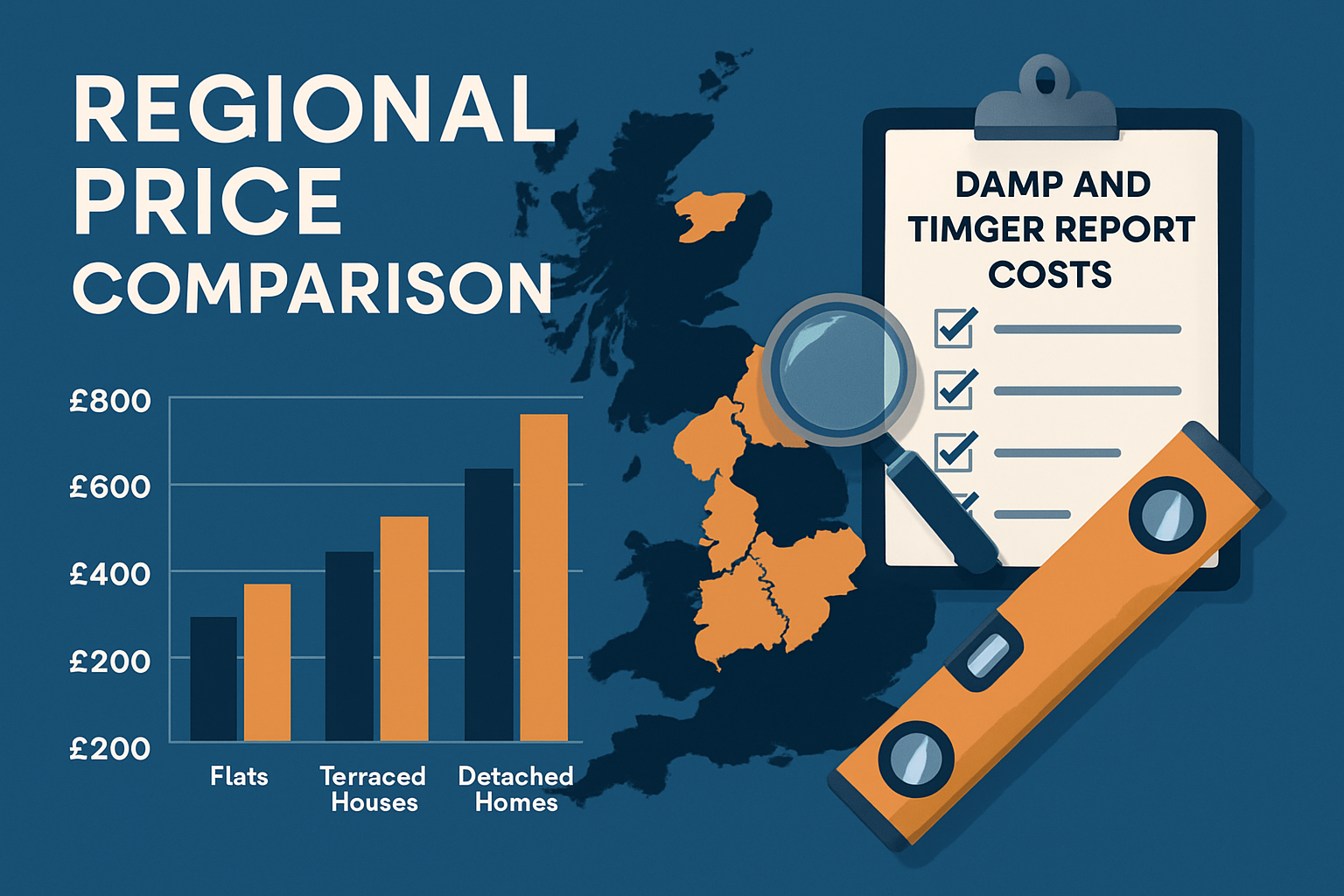
| Property Type | Typical Cost Range | Inspection Duration |
|---|---|---|
| Studio/1-bed flat | £200-£350 | 2-3 hours |
| 2-3 bedroom house | £300-£500 | 3-4 hours |
| 4-5 bedroom house | £450-£650 | 4-6 hours |
| Large detached home | £600-£800+ | 6+ hours |
Structural complexity adds additional considerations:
- Multiple levels requiring separate assessment
- Converted properties with unusual layouts
- Period features requiring specialist knowledge
- Outbuildings and attached structures
Geographic Location Impact 🗺️
Regional pricing variations reflect local market conditions and surveyor availability:
Premium Locations:
- London and Southeast: £400-£800+
- Major cities (Manchester, Birmingham, Edinburgh): £300-£600
- Affluent suburban areas: £350-£650
Standard Pricing Regions:
- Northern England: £200-£450
- Wales and Scotland: £250-£500
- Rural areas: £200-£400
Travel and accessibility factors include:
- Distance from surveyor’s base
- Parking availability and restrictions
- Property accessibility challenges
- Local competition among qualified professionals
Surveyor Qualifications and Experience 👨🔬
Professional credentials directly impact both cost and report quality:
RICS Chartered Surveyors:
- Highest qualification level
- Premium pricing (typically 20-30% above standard rates)
- Comprehensive insurance coverage
- Recognized expertise for legal proceedings
Specialist Damp Surveyors:
- Focused expertise in moisture-related issues
- Competitive pricing for specialized knowledge
- Advanced equipment and techniques
- Industry-specific certifications
General Building Surveyors:
- Broader knowledge base
- Competitive pricing options
- May require additional specialist consultation
- Suitable for routine assessments
Verifying surveyor qualifications ensures professional standards and appropriate expertise.
Detailed Breakdown of Damp and Timber Report Cost
Standard Survey Components and Pricing 💰
Basic Damp and Timber Survey (£200-£400):
- Visual inspection of accessible areas
- Moisture meter readings
- Basic timber assessment
- Written report with findings
- General recommendations
Comprehensive Assessment (£400-£600):
- Detailed moisture mapping
- Thermal imaging analysis
- Invasive timber testing
- Laboratory analysis of samples
- Detailed remediation specifications
Premium Investigation (£600-£800+):
- Advanced diagnostic equipment
- Multiple site visits
- Specialist consultations
- Detailed CAD drawings
- Comprehensive treatment proposals
Additional Services and Costs 🔧
Optional Enhancements:
- Rush service (48-hour turnaround): +£100-£200
- Weekend/evening appointments: +£50-£150
- Additional property visits: £100-£200 per visit
- Laboratory testing: £50-£150 per sample
- Treatment quotations: Usually included or £50-£100
Specialized Equipment Usage:
- Thermal imaging cameras: Often included in premium surveys
- Endoscope investigations: £100-£200 additional
- Core sampling: £150-£300 depending on extent
- Hygrometer monitoring: £200-£400 for extended monitoring
Hidden Costs and Considerations ⚠️
Potential Additional Expenses:
- Access equipment for high-level inspections
- Specialist consultations for unusual findings
- Follow-up visits for seasonal variations
- Legal documentation for insurance claims
Cost-Saving Strategies:
- Combine with other surveys for package discounts
- Off-peak scheduling for reduced rates
- Multiple property discounts for landlords
- Annual maintenance contracts for ongoing monitoring
Understanding comprehensive survey options helps optimize investment in property assessments.
Regional Variations in Damp and Timber Report Cost
London and Southeast England Pricing 🏙️
Premium Market Factors:
- High surveyor demand and limited availability
- Elevated operational costs and overheads
- Complex property types requiring specialist knowledge
- Stringent regulatory requirements
Typical London Pricing:
- Central London: £500-£900
- Greater London: £400-£700
- Home Counties: £350-£600
- Coastal areas: £300-£550
Southeast Considerations:
- Historic properties requiring conservation expertise
- Flood-prone areas needing detailed moisture analysis
- High-value properties demanding comprehensive assessment
- Insurance requirements for premium coverage
Northern England and Scotland 🏴
Market Characteristics:
- Competitive pricing due to surveyor availability
- Focus on traditional construction methods
- Climate-related moisture challenges
- Cost-effective service delivery
Regional Pricing Patterns:
- Manchester/Liverpool: £250-£450
- Leeds/Sheffield: £200-£400
- Newcastle/Sunderland: £200-£350
- Rural areas: £180-£300
Scottish Specific Factors:
- Traditional stone construction requiring specialist knowledge
- Climate considerations affecting moisture patterns
- Different building regulations influencing assessment criteria
- Island properties with additional travel costs
Wales and Rural Areas 🏔️
Unique Challenges:
- Travel time affecting overall costs
- Limited surveyor availability in remote areas
- Traditional building methods requiring specialist knowledge
- Agricultural buildings needing specific expertise
Pricing Considerations:
- Cardiff and urban areas: £250-£450
- Rural Wales: £200-£350
- Remote locations: £300-£500 (including travel)
- Farm buildings: £150-£300 per structure
Choosing the Right Professional for Your Damp and Timber Report
Essential Qualifications and Credentials 🎓
Professional Body Memberships:
- RICS (Royal Institution of Chartered Surveyors): Gold standard qualification
- RPSA (Residential Property Surveyors Association): Specialist residential focus
- CSRT (Confederation of Specialist Roofing Contractors): For roof-related issues
- PCA (Property Care Association): Damp and timber specialists
Verification Process:
- Check professional registers online
- Verify insurance coverage (minimum £1 million professional indemnity)
- Review recent training and continuing professional development
- Confirm specialist equipment availability and calibration
Questions to Ask Potential Surveyors 🤔
Technical Expertise:
- “What specific damp and timber qualifications do you hold?”
- “How many similar properties have you assessed this year?”
- “What equipment will you use for the inspection?”
- “Can you provide recent client references?”
Service Delivery:
- “What is included in your standard report?”
- “How long will the inspection take?”
- “When will I receive the final report?”
- “Do you offer follow-up consultations?”
Cost Transparency:
- “What is your total fee including all potential extras?”
- “Are there any circumstances that might increase costs?”
- “Do you offer payment plans or staged payments?”
- “What happens if additional visits are required?”
Red Flags to Avoid ❌
Warning Signs:
- Unusually low quotes suggesting inexperience or hidden costs
- Pressure for immediate decisions without proper consultation
- Lack of professional insurance or credential verification
- Vague scope of work without detailed specifications
Professional Standards:
- Written quotations with clear terms and conditions
- Transparent pricing with no hidden extras
- Professional communication and timely responses
- Appropriate equipment and modern techniques
For comprehensive guidance on selecting qualified professionals, explore party wall surveyor selection criteria which apply similar principles.
Getting Value for Money from Your Damp and Timber Report
Maximizing Report Utility 📊
Comprehensive Documentation:
- Detailed photographs of all identified issues
- Moisture readings with specific locations and measurements
- Priority rankings for remedial work requirements
- Cost estimates for recommended treatments
Long-term Benefits:
- Insurance claim support with professional documentation
- Negotiation leverage in property transactions
- Maintenance planning for ongoing property care
- Legal protection through professional assessment
Understanding Report Limitations ⚠️
Scope Restrictions:
- Accessible areas only – hidden problems may remain undetected
- Point-in-time assessment – conditions may change seasonally
- Visual inspection focus – not all issues require invasive investigation
- Recommendations only – not guaranteed treatment specifications
Follow-up Requirements:
- Seasonal monitoring for variable moisture conditions
- Post-treatment verification to confirm effectiveness
- Regular maintenance to prevent recurrence
- Professional updates for changing building conditions
Cost-Saving Strategies and Tips 💡
Timing and Scheduling Optimization
Seasonal Considerations:
- Winter assessments may reveal heating-related moisture issues
- Summer inspections can identify poor ventilation problems
- Post-rainfall surveys highlight water penetration routes
- Dry periods allow accurate baseline moisture readings
Scheduling Benefits:
- Off-peak appointments (weekdays) often cost less
- Combined surveys with other property assessments
- Annual contracts for multiple properties or ongoing monitoring
- Group bookings for neighboring properties
Preparation and Access
Property Preparation:
- Clear access to all areas requiring inspection
- Remove furniture from walls and corners
- Provide property history including previous treatments
- Gather relevant documentation (warranties, previous reports)
Information Gathering:
- Utility bills showing unusual consumption patterns
- Insurance claims history for moisture damage
- Previous survey reports for comparison
- Maintenance records for heating and ventilation systems
For additional insights on property survey preparation, review house survey anxiety management strategies.
What to Expect During the Inspection Process
Pre-Inspection Preparation 📋
Surveyor Requirements:
- Property access for 3-6 hours depending on size
- Electrical supply for equipment operation
- Clear pathways to all areas requiring assessment
- Property information including age, construction type, and known issues
Homeowner Preparation:
- Arrange time off or flexible working to be present
- Secure pets in safe areas away from inspection zones
- Document current concerns with photographs and descriptions
- Prepare questions about findings and recommendations
During the Inspection 🔍
Typical Process:
- Initial consultation discussing concerns and property history
- External assessment of building envelope and drainage
- Internal inspection using moisture meters and visual examination
- Specialized testing with thermal imaging or invasive techniques
- Preliminary findings discussion and explanation
Equipment Usage:
- Moisture meters for accurate humidity readings
- Thermal imaging cameras revealing temperature variations
- Endoscopes for cavity and void inspection
- Hygrometers measuring atmospheric moisture levels
Post-Inspection Process 📝
Report Delivery:
- Initial findings summary within 24-48 hours
- Full written report within 5-10 working days
- Photographic evidence supporting all conclusions
- Detailed recommendations with priority rankings
Follow-up Services:
- Clarification consultations for report interpretation
- Treatment quotations from approved contractors
- Progress monitoring during remedial work
- Completion verification ensuring effective treatment
Understanding Your Damp and Timber Report
Report Structure and Content 📄
Executive Summary:
- Key findings overview with risk assessments
- Immediate concerns requiring urgent attention
- Long-term recommendations for ongoing maintenance
- Cost implications for identified treatments
Detailed Findings:
- Room-by-room analysis with specific moisture readings
- Photographic evidence clearly labeled and referenced
- Technical explanations of identified problems
- Cause analysis explaining moisture sources and pathways
Recommendations Section:
- Priority ranking from urgent to routine maintenance
- Treatment specifications with material and method details
- Cost estimates for recommended work
- Timeframe guidance for completion scheduling
Acting on Report Findings ⚡
Immediate Actions:
- Safety concerns requiring immediate professional attention
- Temporary measures to prevent further damage
- Insurance notifications for potential claims
- Contractor consultations for urgent repairs
Planning Considerations:
- Budget allocation for recommended treatments
- Contractor selection based on specialist requirements
- Scheduling coordination to minimize disruption
- Warranty arrangements for completed work
For broader context on property survey interpretation, explore Level 3 building survey guidance.
Making Informed Decisions About Damp and Timber Surveys
When Professional Assessment Is Essential 🚨
High-Risk Scenarios:
- Visible mold growth or persistent musty odors
- Structural timber damage including sagging floors or beams
- Insurance claim requirements for moisture-related damage
- Pre-purchase due diligence for significant property investments
Cost-Benefit Analysis:
- Survey costs (£200-£800) versus potential repair costs (£2,000-£20,000+)
- Early detection preventing extensive structural damage
- Professional documentation supporting insurance claims
- Peace of mind for major financial decisions
DIY Assessment Limitations ❌
Equipment Constraints:
- Consumer moisture meters lack professional accuracy
- Visual inspection missing hidden moisture sources
- Limited access to cavity walls and structural voids
- Interpretation challenges without technical expertise
Professional Advantages:
- Calibrated equipment providing accurate measurements
- Technical expertise identifying subtle indicators
- Comprehensive assessment including hidden areas
- Legal standing for insurance and warranty purposes
Conclusion
Understanding damp and timber report cost empowers property owners to make informed decisions about essential building assessments. With prices ranging from £200-£800 depending on property size, location, and survey complexity, these professional inspections provide invaluable protection against costly moisture-related damage.
Key investment considerations include:
- Regional pricing variations significantly affecting total costs
- Surveyor qualifications directly impacting report quality and legal validity
- Property-specific factors influencing inspection requirements and duration
- Long-term value through early problem detection and professional documentation
Immediate next steps:
- Assess your property for visible signs of moisture or timber damage
- Research qualified surveyors in your area with appropriate credentials
- Obtain detailed quotations comparing scope, timing, and total costs
- Schedule your inspection allowing adequate time for thorough assessment
- Plan follow-up actions based on professional recommendations
For comprehensive property assessment services and expert guidance, contact professional surveyors who can provide tailored solutions for your specific requirements. Remember, investing in professional damp and timber reports today can prevent thousands in unexpected repair costs tomorrow while ensuring the safety and integrity of your property investment.
The cost of professional assessment pales in comparison to the potential expense of undetected moisture damage, making damp and timber reports an essential component of responsible property ownership and investment strategy.
