
{"cover":"Professional landscape format (1536×1024) hero image with bold text overlay 'Building Survey Protocols for Professional Landlord Acquisitions: Assessing Yields in 2026's Bullish Buy-to-Let Recovery' in extra large 72pt white sans-serif font with dark shadow and semi-transparent navy overlay box, positioned in upper third center. Background shows professional chartered surveyor in hard hat examining multi-unit residential property with clipboard and laser measuring device, modern brick apartment building facade, architectural blueprints visible, warm afternoon lighting. Color scheme: navy blue, white, gold accents. Magazine cover quality, editorial style, high contrast, professional real estate investment aesthetic","content":["Landscape format (1536×1024) detailed infographic showing comprehensive building survey protocol checklist for buy-to-let properties. Split-screen composition: left side displays structural inspection points with annotated property cross-section highlighting foundation, damp course, roof structure, electrical systems; right side shows yield calculation formula with sample numbers, ROI percentages, and rental income projections. Modern clean design with icons for structural integrity, compliance certificates, EPC ratings. Color scheme: professional blue, green, white with data visualization elements, charts showing 2026 market recovery trends","Landscape format (1536×1024) professional scene of RICS chartered surveyor conducting detailed Level 3 building survey inside period conversion property. Wide-angle interior shot showing surveyor using thermal imaging camera to detect damp issues, moisture meter readings displayed on wall, clipboard with detailed condition report visible. Background shows Victorian-era features, high ceilings, original cornicing. Equipment includes laser level, crack monitoring devices. Natural window lighting, professional documentation setup, institutional investment quality assessment atmosphere, technical precision focus","Landscape format (1536×1024) sophisticated financial analysis workspace showing yield assessment for buy-to-let portfolio. Overhead flat-lay composition featuring laptop displaying property valuation spreadsheet with rental yield calculations, gross and net yield formulas, regional comparison data for 2026 UK markets. Surrounding elements include property survey reports, EPC certificates, rental demand statistics charts, calculator, architectural floor plans, investment analysis documents. Color-coded regional heat map showing North East 8% rental inflation versus London 1.1%. Professional desk setup, natural lighting, investment strategy aesthetic"]"}
The UK buy-to-let market is experiencing a remarkable transformation in 2026. After years of regulatory pressures and economic uncertainty, professional landlords now face a unique opportunity: rental supply remains 23% below pre-pandemic levels while demand stabilizes at sustainable levels.[3] This creates an ideal environment for strategic acquisitions—but only for those who implement rigorous Building Survey Protocols for Professional Landlord Acquisitions: Assessing Yields in 2026's Bullish Buy-to-Let Recovery. The difference between a profitable portfolio addition and a financial drain often comes down to the thoroughness of pre-acquisition surveying and yield assessment.
Unlike traditional homebuyers, institutional investors and professional landlords require survey protocols that go far beyond identifying structural defects. Today's sophisticated acquisition strategies demand comprehensive assessments that integrate structural integrity, regulatory compliance, energy performance, and precise yield calculations. With 40% of homes for sale now offering mortgage payments lower than local rental costs,[2] the competition for high-yield properties has intensified dramatically.

Key Takeaways
- Comprehensive survey protocols must address structural integrity, regulatory compliance, energy performance, and tenant safety standards to protect institutional buy-to-let investments
- Regional yield variations remain significant in 2026, with the North East showing 8.0% rental inflation compared to London's 1.1%, requiring location-specific assessment strategies[1]
- Supply constraints continue despite 11% year-on-year increases, with rental stock still 23% below pre-pandemic levels, supporting sustainable yield projections[3]
- Integrated due diligence combining building surveys with financial modeling delivers superior acquisition decisions compared to traditional residential survey approaches
- Professional survey investments typically represent 0.3-0.8% of property value but can prevent losses exceeding 15-20% through early identification of structural and compliance issues
Understanding the 2026 Buy-to-Let Landscape for Professional Acquisitions
The current market dynamics present a compelling case for strategic buy-to-let acquisitions, but success requires understanding the nuanced regional variations and supply-demand fundamentals that will drive yields through 2026 and beyond.
Current Market Fundamentals
Rental demand has moderated from the frenetic pace of 2024-2025, now sitting 14% lower year-on-year and at its lowest level in six years.[3] However, this represents a normalization rather than a collapse. The primary driver has been reduced migration levels, which has brought the market into healthier equilibrium after years of acute shortage.
Rental inflation has cooled significantly, with annual growth for new lets standing at just 1.9% across the UK,[3] down from 3.5-4.0% in late 2025.[1] This moderation creates opportunities for professional landlords to acquire properties at more reasonable valuations while still benefiting from sustained rental income.
The supply situation tells an encouraging story for long-term investors. While the number of homes available for rent has increased 11% year-on-year,[3] the market remains fundamentally undersupplied, with rental stock still 23% below pre-pandemic levels. This structural shortage will continue supporting rent growth and minimizing void periods for well-selected properties.
Regional Variation and Yield Opportunities
Perhaps the most critical factor for professional landlord acquisitions in 2026 is the dramatic regional variation in rental performance. The North East leads with 8.0% annual private rent inflation, while London records just 1.1%.[1] Average private rents stand at £1,367 nationally but reach £2,253 in London.[1]
| Region | Annual Rent Inflation | Average Monthly Rent | Yield Opportunity |
|---|---|---|---|
| North East | 8.0% | £850-950 | High |
| Yorkshire | 6.5% | £900-1,050 | High |
| Wales | 5.8% | £875-975 | Medium-High |
| Scotland | 4.2% | £950-1,150 | Medium |
| London | 1.1% | £2,253 | Low-Medium |
| South East | 2.3% | £1,450-1,650 | Medium |
This regional disparity creates distinct acquisition strategies. Northern markets offer superior gross yields (often 6-8%) with stronger rental growth, while southern markets provide capital appreciation potential with lower immediate yields (3-5%).
For institutional investors developing comprehensive building survey protocols, understanding these regional dynamics is essential for calibrating yield expectations and risk assessments.
Establishing Comprehensive Building Survey Protocols for Professional Landlord Acquisitions
Professional landlord acquisitions require survey protocols that extend far beyond the standard residential approach. While homebuyers primarily focus on identifying defects that might affect their enjoyment of the property, institutional investors need surveys that assess investment viability, regulatory compliance, ongoing maintenance costs, and tenant safety obligations.
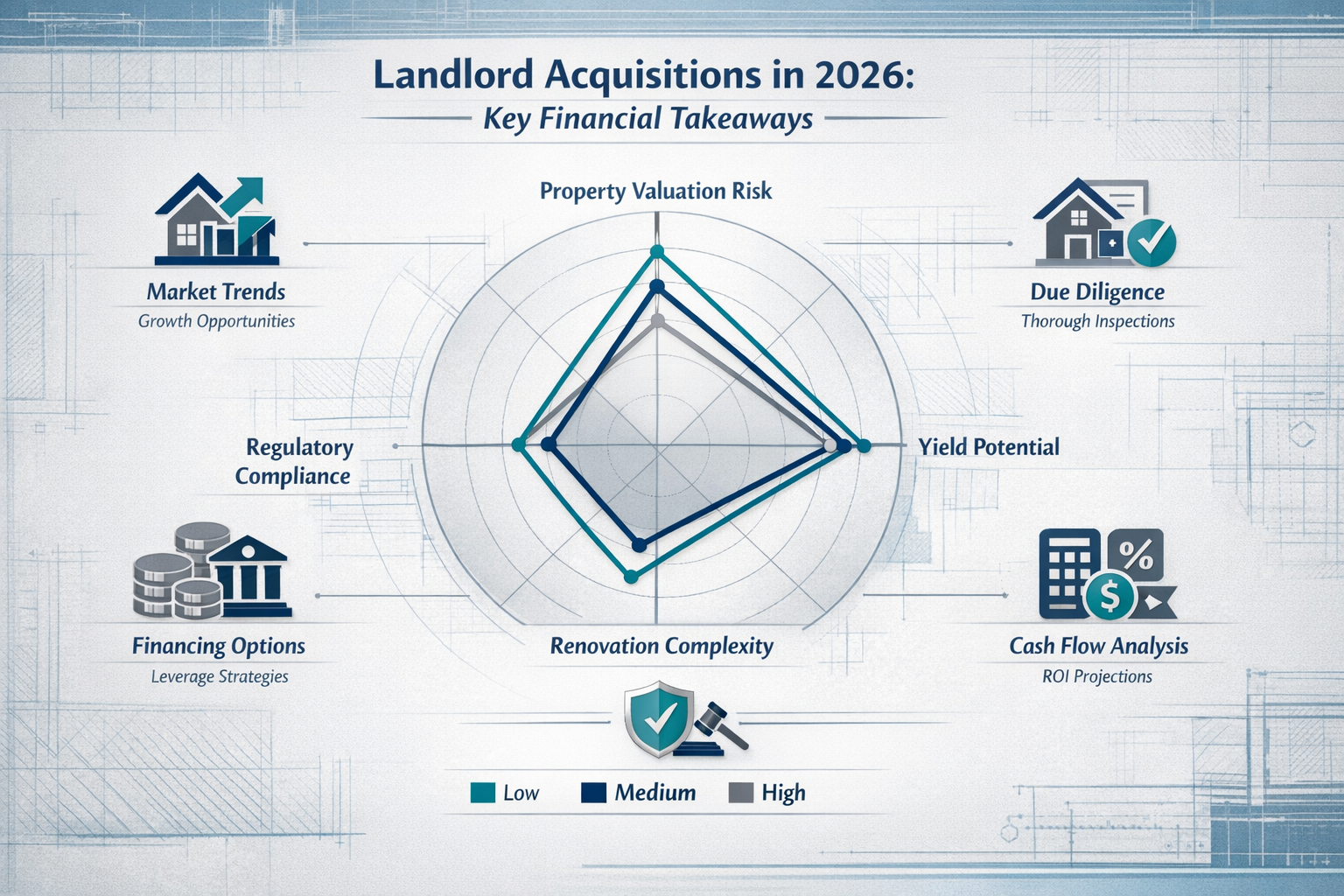
Level 3 Building Surveys: The Foundation of Professional Due Diligence
For buy-to-let acquisitions, a Level 3 building survey represents the minimum acceptable standard. These comprehensive inspections provide the detailed structural analysis necessary for accurate financial modeling and risk assessment.
Key components of a professional landlord-focused Level 3 survey include:
- Structural integrity assessment covering foundations, load-bearing walls, roof structure, and floor systems
- Building envelope analysis examining weatherproofing, damp penetration, thermal performance, and ventilation
- Services evaluation of electrical installations, plumbing, heating systems, and drainage
- Regulatory compliance review against current building regulations, fire safety standards, and HMO requirements
- Maintenance forecasting with 5-10 year capital expenditure projections
- Tenant safety considerations including gas safety, electrical safety, fire detection, and carbon monoxide protection
Professional surveys should explicitly address the property's suitability for rental purposes, not merely its structural condition. This distinction is crucial for institutional acquisitions.
Specialized Survey Considerations for Multi-Unit Properties
When acquiring properties with multiple rental units or HMO (House in Multiple Occupation) potential, survey protocols must expand to address additional regulatory and operational considerations.
🏢 Multi-unit survey enhancements should include:
- Fire safety compliance assessment against current regulations, including compartmentation, fire doors, detection systems, and escape routes
- Sound insulation testing to verify compliance with building regulations and minimize tenant disputes
- Individual unit condition assessment to identify maintenance backlogs and refurbishment requirements
- Common area evaluation of shared facilities, access routes, and communal services
- Utility infrastructure capacity analysis for multiple occupancies
For properties in London and other high-value markets, engaging qualified chartered surveyors with specific HMO and multi-unit experience is essential. The regulatory landscape has become increasingly complex, with non-compliance potentially resulting in substantial fines and rental income restrictions.
Energy Performance and Sustainability Assessments
Energy performance has evolved from a peripheral consideration to a central element of professional landlord acquisitions. Current regulations require rental properties to achieve a minimum EPC rating of E, with strong political momentum toward requiring C ratings in the near future.
Energy-focused survey protocols should evaluate:
- Current EPC rating and factors limiting improvement
- Cost-benefit analysis of potential energy efficiency upgrades
- Insulation quality in walls, roofs, and floors
- Window and door thermal performance
- Heating system efficiency and upgrade pathways
- Renewable energy installation potential (solar PV, heat pumps)
- Future-proofing against anticipated regulatory changes
Properties requiring significant energy efficiency investments should have these costs explicitly factored into yield calculations. A property purchased at an attractive price but requiring £15,000-25,000 in EPC improvements may deliver lower net yields than initially apparent.
Integrating Specialist Surveys Into Acquisition Protocols
Depending on property characteristics and initial findings, professional acquisition protocols should incorporate specialist surveys where appropriate:
🔍 Specialist survey types for buy-to-let acquisitions:
- Damp surveys using moisture meters and thermal imaging to identify penetrating damp, rising damp, and condensation issues
- Subsidence surveys for properties showing cracking or movement, particularly in clay soil areas
- Roof surveys providing detailed condition assessments and remaining lifespan estimates
- Electrical condition reports (EICR) verifying compliance with current wiring regulations
- Drainage surveys using CCTV inspection to identify defects in underground drainage systems
- Asbestos surveys for pre-2000 properties, particularly those requiring refurbishment
The cost of comprehensive survey protocols typically represents 0.3-0.8% of the property purchase price—a modest investment that can prevent losses exceeding 15-20% of property value through early identification of major defects or compliance issues.
For commercial building surveys or mixed-use properties, additional considerations around business rates, commercial lease obligations, and change-of-use planning requirements must be integrated into the assessment protocol.
Assessing Yields in 2026's Bullish Buy-to-Let Recovery: Financial Modeling and Risk Analysis
Accurate yield assessment represents the critical link between survey findings and acquisition decisions. Professional landlords must integrate structural condition, regulatory compliance costs, and maintenance projections into sophisticated financial models that reflect true investment returns.

Gross vs. Net Yield Calculations for Professional Portfolios
While gross yield provides a useful initial screening metric, professional acquisition decisions must be based on net yield calculations that incorporate all ownership costs and survey-identified expenditures.
Gross Yield Formula:
Gross Yield = (Annual Rental Income / Property Purchase Price) × 100
Net Yield Formula:
Net Yield = [(Annual Rental Income - Annual Costs) / Total Investment] × 100
Annual costs should include:
- Property management fees (8-12% of rental income for full management)
- Maintenance and repairs (typically 10-15% of rental income)
- Insurance (buildings, contents, landlord liability)
- Safety compliance (gas safety certificates, EICR, EPC)
- Void periods (typically 4-6 weeks annually)
- Letting fees and tenant finding costs
- Accountancy and professional fees
- Ground rent and service charges (leasehold properties)
Total investment should include:
- Purchase price
- Stamp Duty Land Tax (SDLT) including 3% surcharge
- Survey and legal fees
- Refurbishment and compliance costs identified in surveys
- Initial furnishing and preparation costs
Incorporating Survey Findings Into Yield Projections
Survey findings have direct financial implications that must be integrated into yield calculations. A detailed Level 3 survey might identify:
Immediate remedial works (required before letting):
- Electrical rewiring: £3,500-6,000
- Boiler replacement: £2,000-3,500
- Damp treatment: £1,500-4,000
- Fire door installation (HMO): £400-600 per door
Medium-term capital expenditure (3-7 years):
- Roof replacement: £8,000-15,000
- Window replacement: £6,000-12,000
- Bathroom/kitchen renewal: £4,000-8,000 each
These costs significantly impact net yields and must be factored into acquisition decisions. Consider two scenarios:
Scenario A: Surface-level assessment
- Purchase price: £200,000
- Annual rent: £14,400 (£1,200/month)
- Gross yield: 7.2%
- Estimated net yield: 4.5%
Scenario B: Survey-informed assessment
- Purchase price: £200,000
- Immediate works: £12,000
- Total investment: £212,000
- Annual rent: £14,400
- Additional annual maintenance (older systems): £1,800
- Actual net yield: 3.8%
The survey-informed approach reveals a 0.7 percentage point yield reduction—potentially making the difference between a viable and unviable acquisition.
Regional Yield Benchmarking for 2026
Understanding regional yield benchmarks is essential for assessing whether a potential acquisition offers competitive returns. Based on current market conditions,[1][2] professional landlords should target the following net yield ranges:
Northern England & Midlands:
- Target net yield: 5.5-7.5%
- Strong rental growth potential: 5-8% annually
- Lower purchase prices: £100,000-180,000
- Higher management intensity
Wales & Scotland:
- Target net yield: 5.0-6.5%
- Moderate rental growth: 4-6% annually
- Competitive purchase prices: £120,000-200,000
- Additional regulatory considerations (Scotland)
Southern England (excluding London):
- Target net yield: 3.5-5.0%
- Moderate rental growth: 2-4% annually
- Higher purchase prices: £250,000-400,000
- Capital appreciation focus
London:
- Target net yield: 2.5-4.0%
- Lower rental growth: 1-3% annually
- Premium purchase prices: £350,000-600,000+
- Capital appreciation primary driver
These benchmarks should be adjusted based on property type, condition, and specific location characteristics. Properties requiring significant survey-identified works should be acquired at prices that maintain yields within or above these ranges after accounting for all remedial expenditure.
Risk-Adjusted Return Analysis
Professional acquisition protocols must extend beyond simple yield calculations to incorporate risk-adjusted return analysis. Survey findings directly inform risk assessment across multiple dimensions:
📊 Risk factors identified through comprehensive surveys:
- Structural risk: Major defects requiring substantial capital expenditure
- Regulatory risk: Non-compliance with current or anticipated regulations
- Obsolescence risk: Energy performance, layout, or amenity standards below market expectations
- Maintenance risk: Building systems nearing end-of-life requiring replacement
- Tenant risk: Property characteristics affecting tenant quality and retention
Properties with higher risk profiles should deliver correspondingly higher yields to justify acquisition. A property with an aging roof (£12,000 replacement in 3-5 years) and poor energy performance (£8,000 upgrade required) requires a yield premium of 0.5-1.0 percentage points compared to a property in excellent condition.
Leveraging Professional Survey Expertise for Competitive Advantage
The quality of survey intelligence directly impacts acquisition success. Professional landlords should prioritize working with RICS-qualified surveyors who understand investment property requirements and can provide commercially-focused reporting.
Key attributes of investment-focused surveyors:
- Experience with rental properties and landlord-specific regulations
- Ability to provide cost estimates for identified remedial works
- Understanding of yield implications and investment decision-making
- Knowledge of regional rental markets and tenant expectations
- Familiarity with HMO regulations and multi-unit properties
The incremental cost of engaging highly qualified surveyors (typically £100-300 more than basic services) delivers substantial value through more accurate cost projections, identification of yield-enhancing opportunities, and reduced acquisition risk.
Strategic Implementation: Building Survey Protocols Into Acquisition Workflows
Successful professional landlords integrate comprehensive survey protocols into systematic acquisition workflows that balance thoroughness with efficiency. In competitive markets where properties receive multiple offers, the ability to conduct rapid but rigorous due diligence provides significant competitive advantage.
Pre-Offer Preliminary Assessment
Before committing to formal survey costs, professional acquisition workflows should include preliminary assessment stages:
🔎 Initial screening criteria:
- Desktop valuation and gross yield calculation
- Energy Performance Certificate review
- Planning history and building control records check
- Local authority licensing requirements (HMO, selective licensing)
- Flood risk assessment
- Local rental market analysis
- Title review for restrictions or unusual covenants
This preliminary work, typically requiring 2-4 hours, can eliminate unsuitable properties before incurring survey costs. Properties passing initial screening proceed to formal survey commissioning.
Survey Commissioning and Timeline Management
Professional acquisition workflows require coordinated survey commissioning that balances comprehensiveness with transaction timelines:
Typical survey timeline for buy-to-let acquisitions:
- Day 1-2: Commission Level 3 building survey and specialist surveys (if required)
- Day 3-7: Survey inspection conducted
- Day 8-12: Survey report delivered
- Day 13-15: Financial modeling incorporating survey findings
- Day 16-18: Renegotiation or acquisition decision
- Day 19-28: Legal completion (if proceeding)
For properties in high-demand areas like Central London or West London, expedited survey services may be necessary to maintain competitive positioning. Many professional surveyors offer accelerated reporting for premium fees.
Negotiation Strategies Based on Survey Findings
Survey findings provide objective evidence supporting price renegotiation. Professional landlords should approach renegotiation strategically:
Minor issues (total remedial costs <5% of purchase price):
- Generally absorbed into original offer
- May request seller completion of specific items
- Minimal renegotiation leverage
Moderate issues (remedial costs 5-10% of purchase price):
- Strong basis for price reduction
- Typical negotiation outcome: 50-75% of remedial costs deducted
- Alternative: seller completes works before completion
Major issues (remedial costs >10% of purchase price):
- Substantial price reduction justified
- Consider withdrawal if issues fundamentally affect investment case
- Renegotiation typically achieves 70-100% of remedial costs deducted
Documentation from qualified surveyors carries significant weight in negotiations. Sellers and their agents recognize that institutional buyers have access to alternative properties and will walk away from problematic acquisitions.
Portfolio-Level Survey Intelligence
Professional landlords managing substantial portfolios should develop systematic approaches to capturing and utilizing survey intelligence across multiple properties:
📈 Portfolio survey intelligence systems:
- Centralized database of survey findings across all properties
- Maintenance forecasting aggregated at portfolio level
- Identification of common issues requiring systematic attention
- Benchmarking of property condition against portfolio standards
- Proactive capital expenditure planning and budgeting
This systematic approach transforms surveys from transaction-specific exercises into strategic portfolio management tools. Patterns identified across multiple surveys might reveal:
- Specific property types or eras requiring enhanced due diligence
- Common defects in particular geographic areas
- Optimal timing for proactive maintenance interventions
- Surveyor performance and reliability comparisons
Regulatory Compliance and Tenant Safety: Survey Protocols for 2026 Standards
The regulatory environment for private rented property has intensified significantly, making compliance assessment a critical component of professional survey protocols. Non-compliance can result in substantial fines, rent repayment orders, and criminal prosecution.
Current Regulatory Requirements
Professional landlord acquisitions in 2026 must address multiple overlapping regulatory frameworks:
⚖️ Essential compliance areas:
- Energy Performance: Minimum EPC rating E (likely C from 2027-2028)
- Electrical Safety: EICR every 5 years, remedial works completed
- Gas Safety: Annual gas safety certificate for all gas appliances
- Fire Safety: Smoke alarms on each floor, carbon monoxide detectors
- HMO Licensing: Mandatory licensing for larger HMOs, selective licensing in designated areas
- Right to Rent: Tenant immigration status verification
- Deposit Protection: Tenancy deposit schemes for assured shorthold tenancies
- Homes (Fitness for Human Habitation) Act: Property must be fit for habitation throughout tenancy
Survey protocols must explicitly verify compliance with each requirement and identify remedial works necessary to achieve full compliance.
HMO-Specific Survey Requirements
Properties intended for HMO use require enhanced survey protocols addressing the additional regulatory standards:
HMO survey enhancements:
- Minimum room sizes (6.51m² for single occupancy, 10.22m² for double)
- Kitchen facilities adequacy (cooking facilities, food storage, refuse storage)
- Bathroom/WC provision ratios (typically 1:5 for bathrooms, 1:5 for WCs)
- Fire safety standards including 30-minute fire doors, emergency lighting, fire detection
- Means of escape compliance with local authority standards
- Electrical installation capacity for multiple occupants
- Security provisions (locks, entry systems)
Many local authorities maintain specific HMO standards that exceed national minimum requirements. Survey protocols should incorporate local authority guidance for the specific property location.
Anticipating Future Regulatory Changes
Professional acquisition strategies must consider not only current compliance but likely future regulatory developments. Properties acquired in 2026 will be held for 5-15+ years, during which regulatory standards will inevitably tighten.
Likely regulatory developments 2026-2031:
- Minimum EPC rating C for all rental properties (high probability by 2028)
- Enhanced fire safety requirements following building safety legislation
- Stricter HMO standards and expanded licensing schemes
- Electrical installation condition reports every 3 years (possible)
- Periodic property inspections by local authorities (expanding)
- Tenant safety obligations expanded to include water safety (Legionella)
Survey protocols should assess the cost and feasibility of achieving anticipated future standards, not merely current minimum requirements. Properties that cannot economically achieve EPC rating C, for example, face significant obsolescence risk and should be avoided or heavily discounted.
Technology Integration: Modern Survey Tools for Professional Landlord Acquisitions
The surveying profession has embraced technological advancement, with modern tools providing enhanced accuracy, comprehensive documentation, and improved client communication. Professional landlords should prioritize surveyors utilizing current technology platforms.
Advanced Survey Technologies
Modern survey tools enhancing acquisition due diligence:
- Thermal imaging cameras: Detect heat loss, moisture ingress, and insulation defects invisible to visual inspection
- Moisture meters: Quantify dampness levels and track remediation effectiveness
- Laser measuring devices: Provide accurate room dimensions for HMO compliance and space planning
- Drone surveys: Inspect roofs and high-level elements without scaffolding costs
- 3D scanning: Create detailed property models for renovation planning
- Digital reporting platforms: Deliver interactive reports with photographs, annotations, and cost estimates
These technologies improve survey accuracy while providing superior documentation for financial modeling and contractor briefing.
Digital Survey Reports and Financial Integration
Modern survey reports should integrate seamlessly with financial modeling and portfolio management systems. Professional landlords should request:
📱 Digital report features:
- Exportable data on identified defects and cost estimates
- Photographic evidence linked to specific findings
- Priority ratings for remedial works (immediate, short-term, medium-term, long-term)
- Maintenance forecasting with year-by-year expenditure projections
- Digital floor plans with annotations
- Mobile-accessible formats for on-site reference
The most sophisticated survey providers offer API integration with property management systems, enabling automated population of maintenance schedules and capital expenditure forecasts.
Case Studies: Survey Protocols Driving Acquisition Success in 2026
Examining real-world acquisition scenarios illustrates how comprehensive survey protocols drive superior investment outcomes.
Case Study 1: Northern City Centre Apartment Block
Property: 6-unit Victorian conversion, Manchester city centre
Purchase price: £420,000
Initial gross yield: 7.1%
Survey findings:
- Roof requiring replacement within 2-3 years: £18,000
- Communal electrical installation non-compliant: £4,500
- Individual flat EPC ratings D/E, requiring upgrades: £12,000
- Fire door non-compliance: £3,600
- Damp issues in two ground floor flats: £3,500
Total remedial works: £41,600
Acquisition decision: Renegotiated purchase price to £390,000, reflecting major remedial works. Completed urgent electrical and fire safety works (£8,100) before first letting. Scheduled roof replacement for year 2. Achieved net yield of 5.8% after all costs—above regional benchmark.
Outcome: Comprehensive survey protocol enabled evidence-based negotiation and accurate yield forecasting, preventing acquisition at inflated price.
Case Study 2: Southern Market Town House
Property: 4-bedroom detached house, Surrey commuter town
Purchase price: £485,000
Initial gross yield: 5.2%
Survey findings:
- Property in excellent structural condition
- Recently replaced roof and windows
- New boiler installed 2024
- EPC rating C
- Minimal maintenance backlog
Total remedial works: £2,400 (minor decoration and garden clearance)
Acquisition decision: Proceeded at full asking price due to exceptional condition and minimal capital expenditure requirements over 5-7 year horizon. Achieved net yield of 3.9%—at upper end of regional benchmark for property type.
Outcome: Survey protocol confirmed property quality justified premium pricing, providing confidence for full-price acquisition in competitive market.
Conclusion: Building Survey Protocols for Professional Landlord Acquisitions in 2026's Recovery Market
The buy-to-let market recovery of 2026 presents exceptional opportunities for professional landlords who approach acquisitions with institutional rigor. While rental demand has moderated from pandemic-era peaks, fundamental supply constraints—with rental stock still 23% below pre-pandemic levels[3]—ensure sustained demand and stable yields for well-selected properties.
Success in this environment requires comprehensive Building Survey Protocols for Professional Landlord Acquisitions: Assessing Yields in 2026's Bullish Buy-to-Let Recovery that integrate:
✅ Thorough structural assessment through Level 3 building surveys addressing investment-specific concerns
✅ Rigorous regulatory compliance evaluation covering current and anticipated future standards
✅ Accurate financial modeling incorporating all survey-identified costs and maintenance projections
✅ Regional market intelligence recognizing the dramatic yield variations across UK markets
✅ Technology-enabled due diligence leveraging modern survey tools and digital reporting platforms
✅ Strategic negotiation using survey findings to achieve appropriate pricing
The investment in comprehensive survey protocols—typically representing 0.3-0.8% of property value—delivers returns far exceeding its cost through improved acquisition decisions, accurate yield forecasting, and reduced ownership risk.
Actionable Next Steps for Professional Landlords
For landlords seeking to capitalize on 2026's market recovery:
- Establish standardized survey protocols for your acquisition criteria, incorporating Level 3 building surveys as minimum standard
- Develop relationships with investment-focused surveyors in your target markets who understand landlord-specific requirements
- Create financial modeling templates that systematically integrate survey findings into yield calculations
- Build survey intelligence databases capturing findings across your portfolio for proactive maintenance planning
- Stay informed on regulatory developments affecting rental property standards and compliance requirements
- Focus acquisition activity on regions offering optimal risk-adjusted returns based on current market dynamics
The professional landlords who will thrive in 2026's recovery market are those who recognize that acquisition success begins not with property selection, but with the comprehensive due diligence protocols that enable confident, evidence-based investment decisions.
With rental inflation stabilizing at sustainable levels,[1][3] supply-demand fundamentals remaining favorable, and 40% of properties now offering superior economics versus renting,[2] the conditions for profitable buy-to-let investment are as attractive as they've been in years. The key to capturing these opportunities lies in the disciplined application of professional survey protocols that transform property acquisition from speculation into calculated investment strategy.
References
[1] March 2026 Uk Property Market Update – https://www.alterandcope.co.uk/landlords/march-2026-uk-property-market-update/
[2] Uk Property March 2026 – https://www.garrington.co.uk/market-review/uk-property-march-2026/
[3] Uk Rental Market Report March 2026 – https://assets.ctfassets.net/2zc2pc2uwamh/4ytGOrzcBHJCz2biMu14Ea/aead7412968a18fcf1123c37e8ece446/UK_Rental_Market_Report_March_2026.pdf
