
Over 4.6 million households in England rent privately — and a significant proportion live in homes with hazards that regulators now consider legally unacceptable. Awaab's Law, which began reshaping social housing obligations in 2023, is now extending its reach. From 2026, excess cold, fire, electrical, and structural hazards fall within its expanded scope, with serious implications for private landlords who have historically operated under lighter-touch enforcement [1]. Building Surveys for Excess Cold and Fire Hazards in PRS Post-Awaab's Law 2026: Protocols for Private Landlord Compliance are no longer optional paperwork — they are the frontline defence against enforcement action, civil liability, and reputational damage.
This guide cuts through the complexity, providing landlords, letting agents, and surveyors with a clear, practical framework for what the law now demands and how professional building assessments must respond.
Key Takeaways 📋
- Awaab's Law Phase 2 (from 2026) expands hazard response obligations to include excess cold, heat, fire, electrical issues, and structural collapse — with plans to extend to the private rented sector (PRS) [1][2].
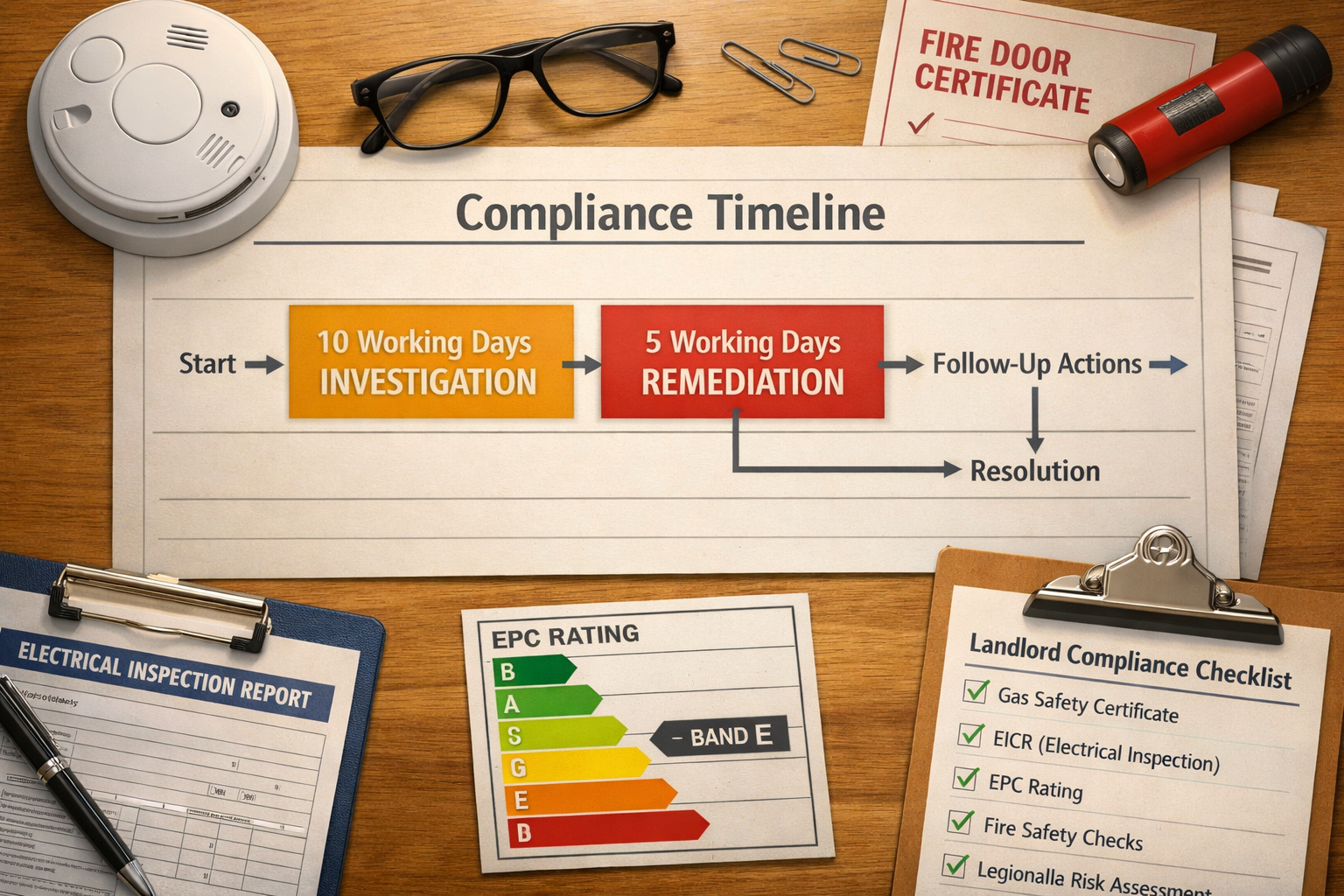
- Strict investigation timelines apply: significant hazards must be investigated within 10 working days, with safety works completed within 5 working days [1].
- Person-centred hazard assessment means tenant vulnerability — not just HHSRS scores — determines risk classification [1].
- Specialist building surveys targeting cold and fire hazards are now a core compliance tool, not a reactive measure.
- Valuation implications are real: properties with unresolved Category 1 hazards face reduced market value and mortgage lender scrutiny.
What Awaab's Law Phase 2 Actually Means for Private Landlords
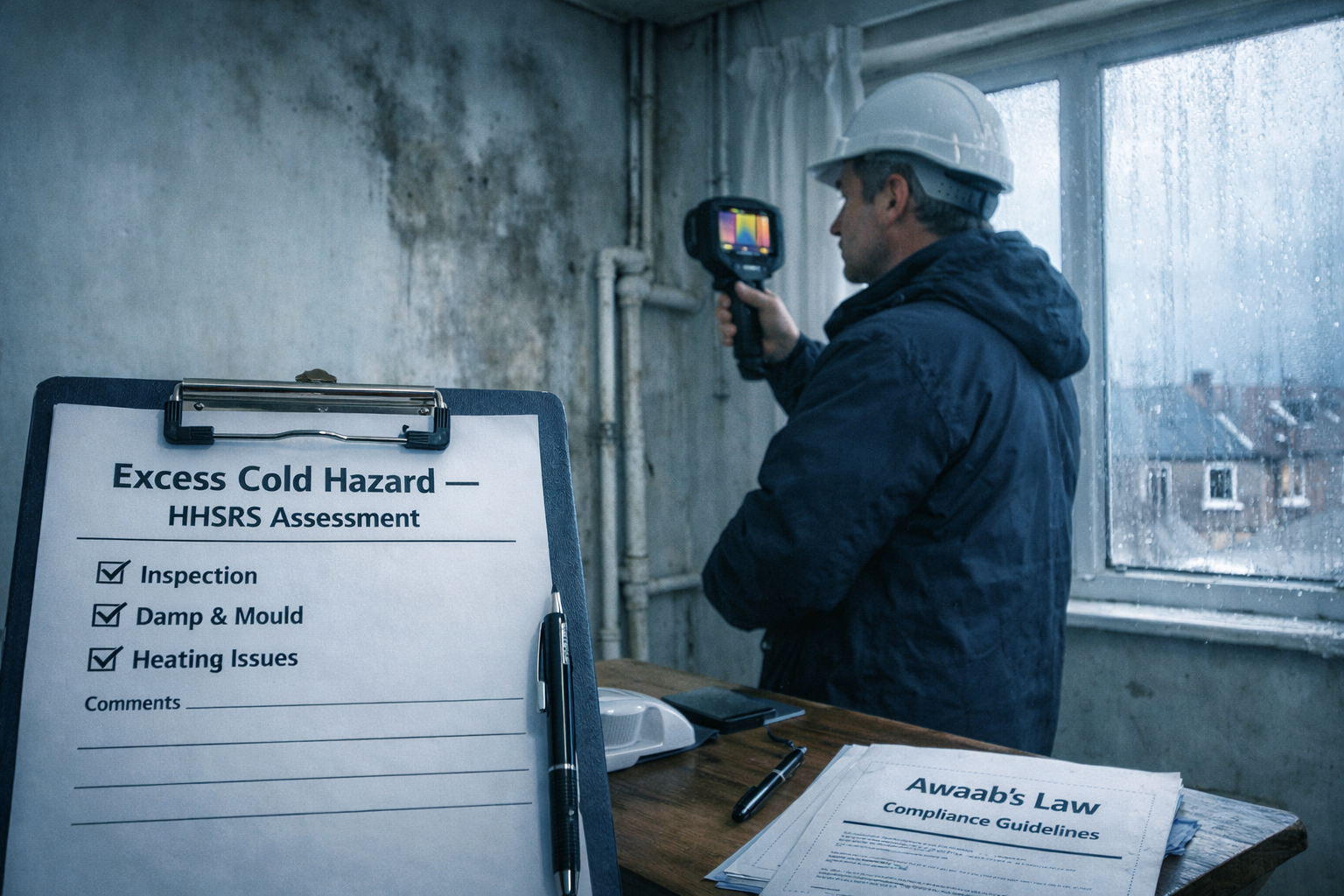
Named after Awaab Ishak — the two-year-old boy who died in 2020 from prolonged mould exposure in a social housing flat — Awaab's Law (Section 42 of the Social Housing (Regulation) Act 2023) initially focused on damp and mould. Phase 2, scheduled from 2026, dramatically widens the net [1].
💬 "There are also plans for this law to extend to the private rented sector too." — ARM Environments [2]
While the precise legislative timetable for PRS extension remains subject to government confirmation, the direction of travel is unambiguous [2]. Landlords who wait for final statutory guidance before acting risk being caught unprepared when enforcement begins.
The Expanded Hazard Categories
Phase 2 brings the following hazards into scope [1]:
| Hazard Category | Examples |
|---|---|
| Excess Cold | Inadequate heating, poor insulation, draughty windows |
| Excess Heat | Overheating in top-floor flats, lack of ventilation |
| Fire | Faulty wiring, missing smoke alarms, blocked escape routes |
| Electrical | Outdated consumer units, unsafe installations |
| Structural Collapse | Subsidence, failing lintels, unsafe roof structures |
The Timeline That Changes Everything
Under the expanded framework, landlords face legally binding response windows [1]:
- 🔴 Emergency hazards — immediate action required
- 🟠 Significant hazards — investigation within 10 working days
- 🟡 Safety works — completed within 5 working days of investigation
These timelines are tighter than many landlords currently manage even for routine maintenance. Without a pre-existing survey baseline, identifying, categorising, and remediating hazards within these windows becomes extremely difficult.
Person-Centred Assessment: A Critical Shift
One of the most important — and least-discussed — aspects of Phase 2 is the move away from pure HHSRS scoring. Hazard severity is now assessed based on individual tenant circumstances [1]. An elderly tenant, a child under five, or a resident with a respiratory condition elevates the risk classification of an excess cold hazard that might score lower for a healthy adult. Surveyors and landlords must document tenant vulnerability as part of any compliant assessment.
Building Survey Protocols for Excess Cold and Fire Hazard Compliance
Building Surveys for Excess Cold and Fire Hazards in PRS Post-Awaab's Law 2026: Protocols for Private Landlord Compliance require a structured, methodical approach that goes well beyond a standard visual inspection. Below is a practical framework aligned with current best practice and emerging regulatory expectations.
Excess Cold Hazard: Survey Checklist
Excess cold is one of the most prevalent Category 1 hazards in the PRS. A compliant survey must assess:
🌡️ Thermal Performance
- U-values of walls, roof, and floor (or proxy assessment via EPC data)
- Window type and condition — single glazing is a red flag
- Draught-proofing at doors, letterboxes, and loft hatches
- Thermal bridging at junctions (use thermal imaging camera where possible)
🔥 Heating System Assessment
- Boiler age, condition, and output capacity relative to property size
- Radiator sizing and distribution — are all habitable rooms adequately served?
- Controls: programmable thermostats, TRVs, and zone controls
- Evidence of heating system breakdowns or inadequate repair history
🏠 Insulation Review
- Loft insulation depth (minimum 270mm recommended)
- Cavity wall insulation status — check for voids or moisture ingress
- Underfloor insulation where applicable
- Pipe lagging in unheated spaces
🌬️ Ventilation
- Background ventilation via trickle vents
- Intermittent extract fans in kitchens and bathrooms
- Whole-house ventilation systems where fitted
⚠️ Important: A property with an EPC rating of F or G is almost certain to contain excess cold hazards. However, an E-rated property can still harbour significant cold risks depending on tenant vulnerability [1].
For a deeper understanding of what professional surveyors examine during a property inspection, the complete guide to what surveyors look for in a house survey provides useful context.
Fire Hazard: Survey Checklist
Fire hazards in PRS properties require assessment across three interconnected areas:
🔌 Electrical Safety
- Age and condition of consumer unit (fuse box) — older rewirable fuse boards are high risk
- Evidence of recent Electrical Installation Condition Report (EICR) — mandatory in PRS since 2020
- Overloaded circuits, DIY wiring, or non-compliant additions
- Socket and switch condition throughout
🚨 Detection and Suppression
- Smoke alarm on every floor (mandatory)
- Carbon monoxide alarm in rooms with solid fuel appliances (mandatory)
- Heat detectors in kitchens
- Fire extinguisher and fire blanket in HMOs
🚪 Means of Escape
- Clear, unobstructed escape routes from all habitable rooms
- Fire door compliance in HMOs (FD30 minimum)
- Self-closing mechanisms on fire doors
- Emergency lighting in shared areas (HMOs)
🏗️ Structural Fire Resistance
- Condition of party walls and fire stops
- Roof void compartmentalisation
- Intumescent seals around penetrations through fire-rated elements
Landlords managing older stock should consider a Level 3 building survey — the most comprehensive assessment available — to capture structural fire risks that a standard inspection might miss.
Documentation Standards for Compliance Evidence
A survey report produced for Awaab's Law compliance purposes must include:
- Property identification — full address, tenure type, construction date
- Hazard identification — each hazard described, located, and photographed
- HHSRS scoring — with notes on tenant vulnerability adjustments [1]
- Remediation recommendations — prioritised by urgency
- Timeline mapping — which works fall within the 5 or 10 working day windows [1]
- Surveyor credentials — RICS membership or equivalent professional body
Valuation Implications and Market Caution in 2026

The compliance dimension of Building Surveys for Excess Cold and Fire Hazards in PRS Post-Awaab's Law 2026: Protocols for Private Landlord Compliance does not exist in isolation from property value. In 2026, the market is responding to regulatory pressure in measurable ways.
How Hazards Affect Property Valuation
Mortgage lenders and valuers are increasingly flagging properties with unresolved Category 1 hazards. The consequences include:
- Retention of mortgage funds until hazards are remediated
- Reduced valuation reflecting remediation costs and regulatory risk
- Unmarketability in some cases — particularly for HMOs with fire safety deficiencies
Understanding the full cost implications of a structural or compliance survey is essential for landlords planning acquisition or refinancing. The full structural survey cost guide for UK properties outlines what to budget for comprehensive assessments.
The PRS Investment Landscape in 2026
Many private landlords are already navigating the Renters' Rights Act, EPC upgrade requirements, and rising mortgage costs. Awaab's Law extension adds another compliance layer that is reshaping investment decisions:
- Institutional investors are pricing compliance risk into PRS acquisitions
- Individual landlords with older stock face the highest remediation exposure
- Letting agents are increasingly requiring compliance surveys before taking on new instructions
💬 "Proactive compliance is no longer a differentiator — it is the baseline expectation."
Landlords who commission specialist surveys before enforcement begins are better positioned to manage costs, demonstrate good faith to tenants and regulators, and protect asset value.
Choosing the Right Survey Type
Not all surveys are equal for Awaab's Law compliance purposes. The table below helps landlords select the appropriate level:
| Survey Level | Best For | Awaab's Law Suitability |
|---|---|---|
| Level 2 (Homebuyer Report) | Modern, standard properties | ⚠️ Limited — may miss hidden defects |
| Level 3 (Building Survey) | Older, complex, or HMO properties | ✅ Recommended for full compliance |
| Specialist Hazard Survey | Targeted cold or fire assessment | ✅ Ideal for focused compliance evidence |
| Thermal Imaging Survey | Insulation and cold bridge identification | ✅ Excellent supplementary tool |
For landlords uncertain about which level of assessment their portfolio requires, the comparison of Level 2 vs Level 3 surveys provides a clear breakdown of scope and cost differences.
Properties with suspected damp issues — which often accompany excess cold hazards — should also be assessed through a specialist damp survey to ensure all interconnected risks are captured in a single compliance record.
Practical Steps for Private Landlords: Building a Compliance Framework
Compliance with Awaab's Law in the PRS context is not a single event — it is an ongoing process. Here is a practical roadmap for 2026:
Step 1: Audit Your Portfolio 🗂️
Commission a baseline survey of every property, prioritising:
- Pre-1980 construction (higher cold and fire risk)
- HMOs (complex fire safety obligations)
- Properties with known tenant vulnerability
Step 2: Establish a Hazard Register 📊
Create a documented record for each property including:
- Identified hazards and their HHSRS category
- Tenant vulnerability notes
- Remediation status and target completion dates
Step 3: Build Contractor Relationships 🔧
The 5 and 10 working day timelines [1] are only achievable with pre-qualified contractors on standby. Establish relationships with:
- Gas Safe registered heating engineers
- NICEIC or NAPIT registered electricians
- Insulation and draught-proofing specialists
Step 4: Review Tenancy Documentation 📄
Ensure tenancy agreements, Section 11 obligations, and repair reporting procedures are clearly documented and communicated to tenants.
Step 5: Schedule Annual Re-Surveys 🔄
Hazard profiles change as buildings age and tenant circumstances shift. Annual or biennial surveys maintain the compliance baseline and demonstrate proactive management.
Landlords managing properties across London and the South East can access chartered surveyors across multiple locations to ensure consistent survey standards across a geographically spread portfolio.
For properties where structural concerns compound fire or cold risks, a structural engineer's report may be required alongside the building survey to provide a complete picture for compliance and valuation purposes.
Conclusion: Act Before Enforcement Catches Up
The regulatory landscape for private landlords in 2026 is the most demanding it has ever been. Awaab's Law's extension to excess cold, fire, and electrical hazards — with its strict investigation and remediation timelines — means that reactive property management is no longer a viable strategy [1][2].
Building Surveys for Excess Cold and Fire Hazards in PRS Post-Awaab's Law 2026: Protocols for Private Landlord Compliance represent the most effective tool available to landlords who want to stay ahead of enforcement, protect their tenants, and preserve the value of their assets.
Actionable Next Steps ✅
- Commission a Level 3 building survey on any pre-1980 or complex property in your portfolio immediately.
- Request thermal imaging as a survey add-on to identify excess cold hazards invisible to the naked eye.
- Obtain an up-to-date EICR for every property — this is already a legal requirement and forms the foundation of fire hazard compliance.
- Document tenant vulnerability at the start of every tenancy and review annually.
- Engage a RICS-qualified surveyor who understands HHSRS methodology and can produce reports suitable for regulatory scrutiny.
The landlords who treat compliance as an investment rather than a cost will be the ones still operating profitably when enforcement ramps up. The time to act is now — not when a complaint lands on a council officer's desk.
References
[1] Awaabs Law Is Here The Surveyors Guide For Compliance – https://www.surventrix.com/blog/awaabs-law-is-here-the-surveyors-guide-for-compliance
[2] Awaabs Law Technical Compliance Hvac Ventilation – https://www.arm-environments.com/resources/awaabs-law-technical-compliance-hvac-ventilation
