
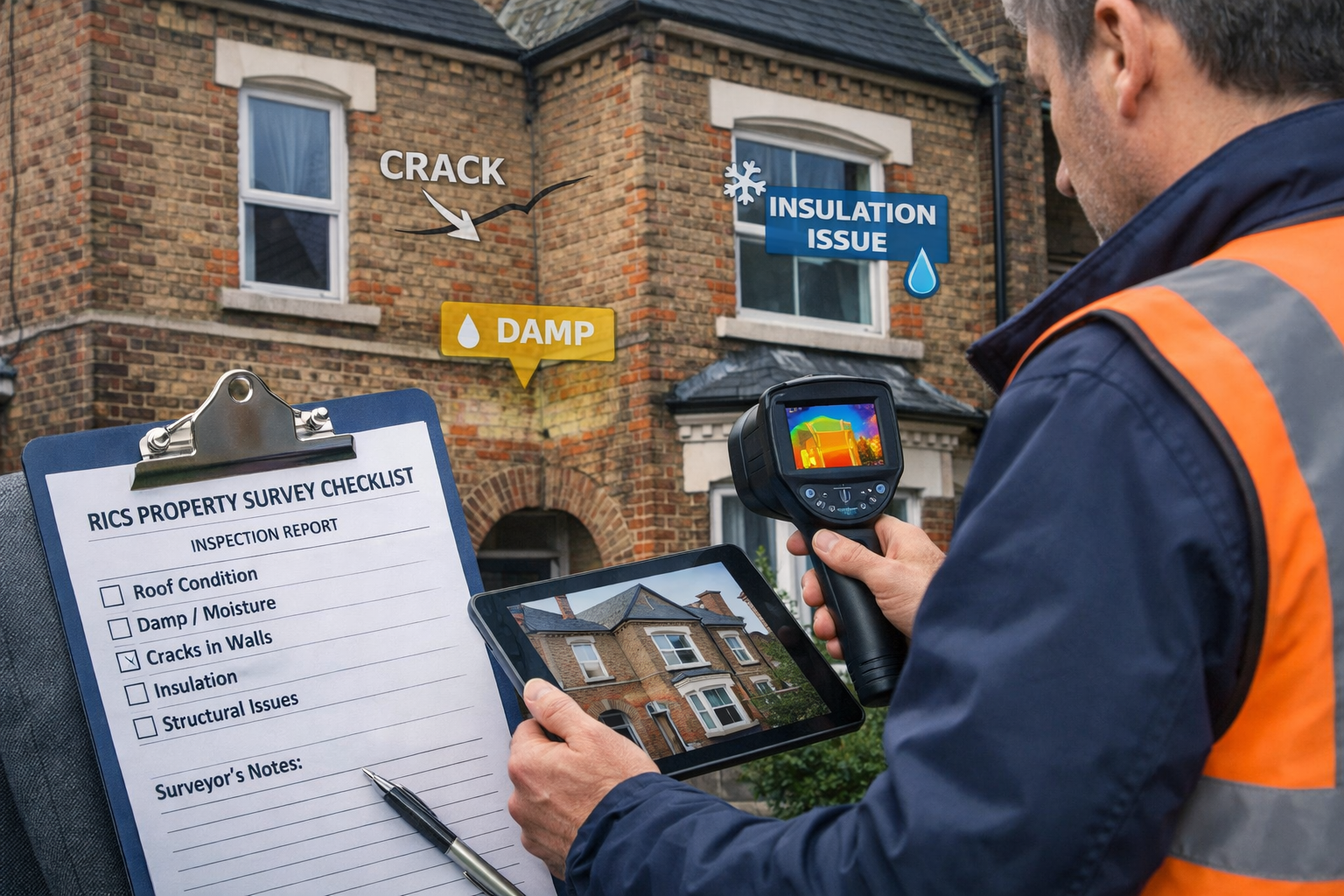
The UK government's consultation on mandatory upfront property condition assessments has closed, leaving the surveying sector in a state of anticipation as 2026 unfolds. While no definitive implementation timeline has been announced, the proposed Homebuying Process Reforms 2026: Impact on Early Building Surveys and Valuation Timing could fundamentally reshape how properties change hands across England and Wales. With RICS advising that any reforms require a minimum 24-month implementation window, surveyors face both unprecedented opportunity and operational challenges.[2]
The consultation, which closed on December 31, 2025, proposed making property condition assessments a standard upfront requirement—a change that would shift surveys from optional buyer-initiated investigations to mandatory seller-provided documentation. This transformation promises to accelerate transactions, reduce fall-through rates, and increase transparency, but it also demands significant capacity building across the surveying profession.
Key Takeaways
- No confirmed implementation date: The UK government has not announced when homebuying reforms will take effect, with consultation feedback still under review as of 2026.[2]
- Mandatory upfront assessments proposed: Property condition surveys could become standard seller requirements, dramatically increasing early-stage survey demand.[1]
- 24-month minimum implementation period: RICS has formally advised the government that reforms require at least two years for proper capacity building and standards development.[2]
- Sector capacity challenges ahead: Surveyors must prepare for retraining, talent pipeline development, and service model adaptation to meet anticipated demand increases.[1]
- Positive 2026 market outlook: Despite reform uncertainty, the surveying sector expects increased volumes across lending and survey activity throughout 2026.[1]
Understanding the Proposed Homebuying Process Reforms 2026
The proposed reforms represent the most significant overhaul to England and Wales' property transaction system in decades. At their core, these changes aim to address long-standing inefficiencies that have plagued the homebuying process, including lengthy transaction times, high fall-through rates, and information asymmetry between buyers and sellers.
What the Consultation Proposed
The government consultation explored several key reforms:
Upfront Information Requirements 📋
- Mandatory property condition assessments conducted before marketing
- Standardized information packs provided to prospective buyers
- Title documentation and legal searches completed pre-sale
- Energy performance certificates and material information upfront
Transaction Timeline Acceleration ⏱️
- Reduced time between offer acceptance and exchange
- Earlier identification of property defects and issues
- Decreased fall-through rates due to better information
- More predictable completion schedules
Increased Transparency 🔍
- Buyers receive comprehensive property information before viewing
- Reduced risk of post-offer surprises
- Clearer understanding of property condition early in process
- Standardized assessment frameworks across the market
The consultation specifically focused on whether property condition assessments should become mandatory and, if so, what standards and qualifications would apply to those conducting them.[2]
Current Status and Implementation Uncertainty
As of 2026, the government continues reviewing feedback from the consultation that closed December 31, 2025. No definitive timeline for implementation has been announced, leaving the surveying sector in a planning phase without concrete deadlines.[2]
Several factors contribute to this uncertainty:
| Factor | Impact on Timeline |
|---|---|
| Further consultation needs | Additional rounds may be required for specific elements |
| Primary legislation requirements | Some reforms may need parliamentary approval |
| Sector capacity assessment | Government evaluating whether sufficient surveyor capacity exists |
| Standards development | New assessment frameworks and qualifications must be created |
| Technology infrastructure | Digital platforms for information sharing need development |
RICS has been clear in its guidance to government: a minimum 24-month implementation period is essential for successful reform delivery.[2] This timeline allows for:
- Development of standardized assessment methodologies
- Creation of comprehensive guidance for surveyors
- Retraining and upskilling of existing professionals
- Attraction and qualification of new talent
- Technology platform development and testing
- Pilot program implementation and refinement
For homebuyers currently navigating the property market, understanding whether you need a survey when buying a house remains crucial, as current practices continue unchanged until reforms are formally implemented.
Impact on Early Building Surveys Under Homebuying Process Reforms 2026
The proposed shift to mandatory upfront property condition assessments represents a fundamental change in when, how, and who commissions building surveys. This transformation will affect every stakeholder in the property transaction chain.
From Buyer-Initiated to Seller-Provided Surveys
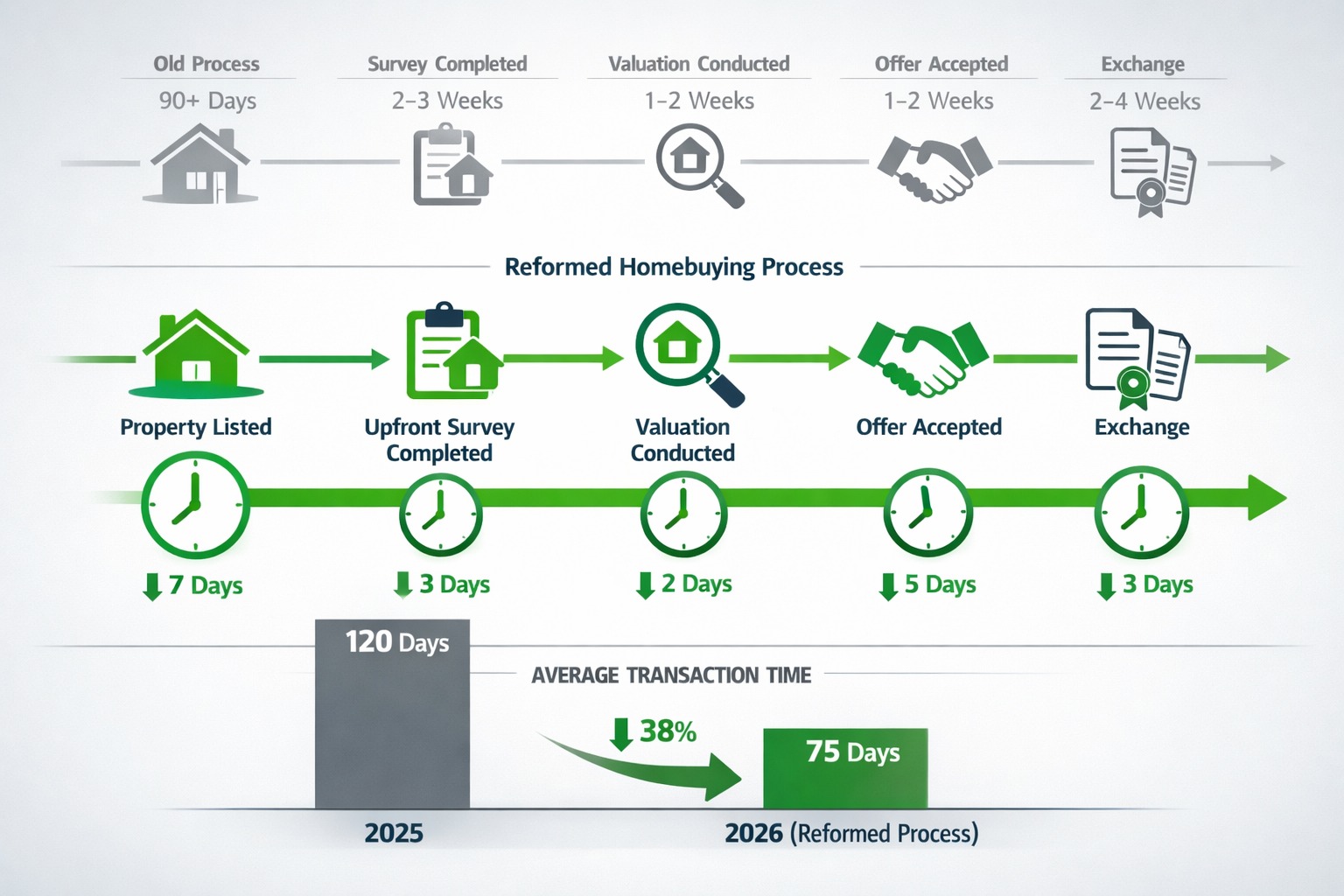
Currently, most building surveys are commissioned by buyers after an offer has been accepted—often weeks into the transaction process. The proposed reforms would flip this model entirely:
Traditional Model (Current Practice)
- Property listed without condition assessment
- Buyer views property and makes offer
- Offer accepted (subject to survey and contract)
- Buyer commissions survey (often 2-4 weeks after offer)
- Survey reveals issues, leading to renegotiation or withdrawal
- Transaction proceeds or collapses
Reformed Model (Proposed)
- Seller commissions condition assessment before listing
- Property marketed with assessment report available
- Buyers review condition information before viewing
- Informed offers made with full knowledge of property condition
- Reduced need for buyer surveys (though still possible)
- Faster progression to exchange
This shift has profound implications for survey timing and demand. Instead of surveys occurring mid-transaction, they would become a prerequisite for marketing properties—similar to the Energy Performance Certificate requirement introduced in 2008.
Increased Demand for Early-Stage Surveys
The surveying sector anticipates a significant uplift in survey volumes if reforms are implemented. Industry analysis suggests several demand drivers:[1]
Volume Increase Factors 📈
- Universal coverage: Every property sale would require an assessment
- Repeat assessments: Properties remaining unsold may need updated reports
- Buyer supplementary surveys: Some buyers may still commission additional Level 3 surveys for peace of mind
- Commercial opportunities: Sellers seeking competitive advantage through comprehensive assessments
The sector already expects positive momentum in 2026, with many lenders forecasting increased volumes and a strong start to the year.[1] If reforms are implemented, this growth could accelerate substantially.
However, this increased demand creates capacity challenges. The UK currently has approximately 20,000 qualified building surveyors, but not all specialize in residential condition assessments. Meeting universal survey requirements would necessitate:
- Rapid expansion of surveyor workforce
- Retraining of professionals from adjacent specialisms
- Development of streamlined assessment methodologies
- Technology adoption to increase efficiency
- Clear qualification pathways for new entrants
Changes to Survey Scope and Standards
Mandatory upfront assessments would likely differ from current discretionary surveys in several ways:
Standardization Requirements
- Consistent assessment frameworks across all properties
- Defined minimum inspection standards
- Standardized reporting templates
- Clear qualification requirements for assessors
- Quality assurance mechanisms
Scope Considerations
- Balance between comprehensiveness and cost-effectiveness
- Differentiation between basic condition assessments and detailed surveys
- Treatment of inaccessible areas and limitations
- Liability frameworks for assessors
- Validity periods for pre-sale assessments
The question of scope is particularly important. Would mandatory assessments be equivalent to current Level 2 surveys, or would they represent a more basic condition statement? This distinction affects both cost and utility.
For properties with specific concerns, buyers might still commission specialized investigations such as subsidence surveys or assessments of non-standard construction, even with seller-provided reports available.
Understanding how long surveys take becomes even more critical when sellers must factor survey completion into their marketing timeline.
Valuation Timing Changes and Lender Requirements
The Homebuying Process Reforms 2026: Impact on Early Building Surveys and Valuation Timing extends beyond building surveys to affect mortgage valuations—a critical component of most property transactions.
Current Valuation Process and Pain Points
Under the existing system, mortgage valuations typically occur after:
- Buyer submits mortgage application
- Lender instructs valuer (usually 1-2 weeks after application)
- Valuation inspection conducted
- Report submitted to lender
- Mortgage offer issued
This sequential process means valuations often happen 4-6 weeks after offer acceptance, creating several problems:
❌ Transaction delays: Waiting for valuations extends completion timelines
❌ Down-valuation risk: Properties valued below offer price cause renegotiation or collapse
❌ Duplicate inspections: Separate building survey and valuation visits are inefficient
❌ Information gaps: Valuers may lack comprehensive condition information
How Reforms Could Streamline Valuation Timing
With upfront property condition assessments available from the outset, the valuation process could be fundamentally restructured:
Potential New Valuation Model
- Pre-marketing assessment available: Comprehensive condition information exists before listing
- Informed buyer offers: Offers reflect known property condition
- Accelerated lender valuation: Valuers access existing condition data
- Reduced inspection scope: Valuations focus on market value with condition already documented
- Faster mortgage offers: Lenders process applications more quickly
This streamlined approach could reduce the time from offer to mortgage offer from 4-6 weeks to potentially 2-3 weeks, significantly accelerating transactions.
Lender Adaptation and Requirements
Mortgage lenders will need to adapt their processes and requirements to accommodate reforms:
Lender Considerations
- Acceptance criteria: Which pre-sale assessments will lenders accept?
- Surveyor qualifications: What credentials must assessors hold?
- Report validity: How long are pre-sale assessments considered current?
- Supplementary inspections: When will lenders require additional valuations?
- Risk assessment: How do reforms affect lending risk profiles?
Some lenders may continue requiring their own valuations for risk management, while others might accept comprehensive seller-provided assessments that meet specific standards. The industry will likely see differentiation in lender requirements during any transition period.
For specialized properties or lending scenarios, such as Help to Buy valuations or RICS reinstatement cost valuations, bespoke assessments will likely remain necessary regardless of upfront condition reports.
Surveyor Capacity Building and Professional Adaptation
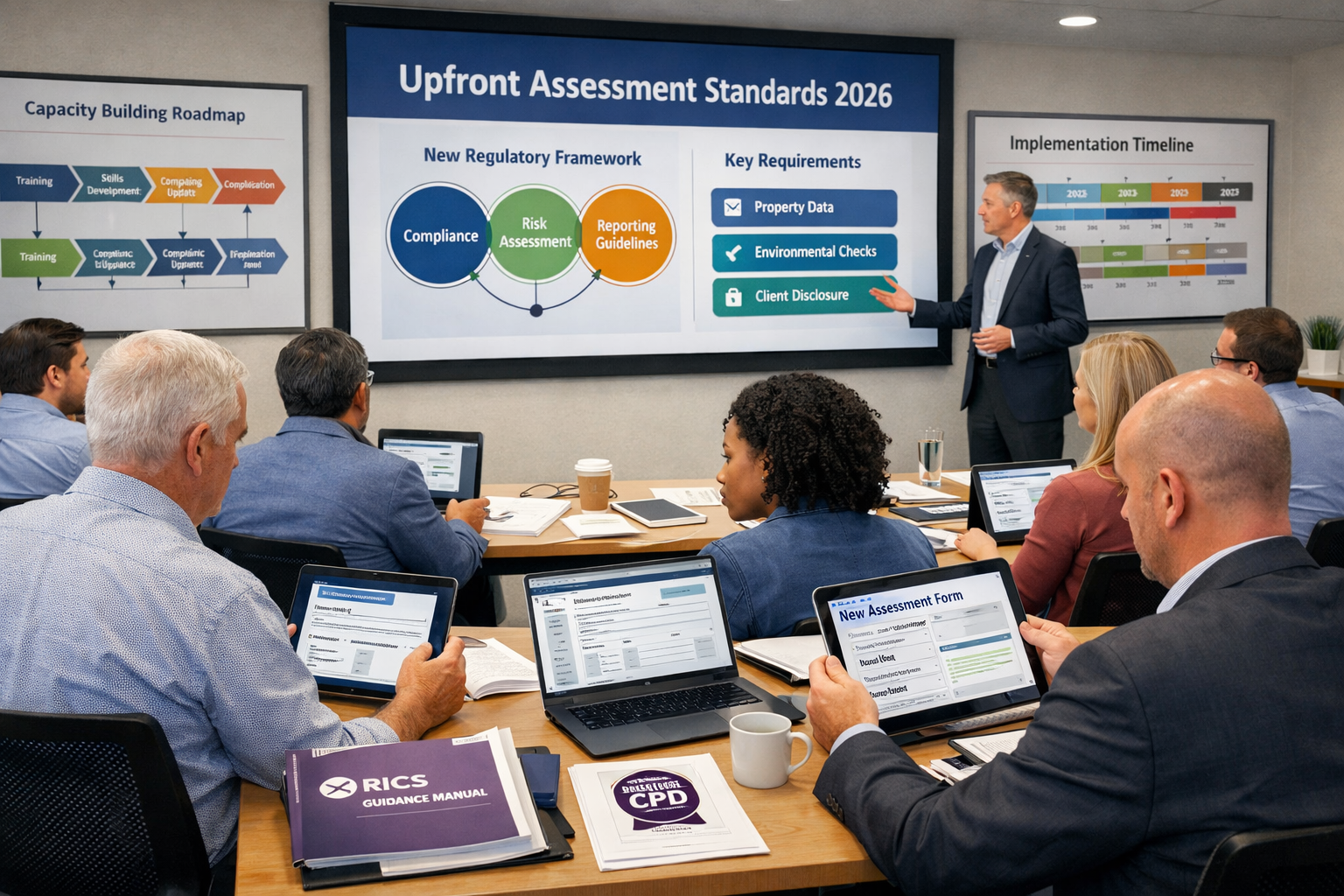
The success of any homebuying reforms hinges on the surveying profession's ability to scale capacity and adapt service delivery models. This represents both a significant challenge and substantial opportunity for the sector.
Current Capacity Constraints
The UK surveying sector faces several capacity challenges that would be amplified by mandatory upfront assessments:[1]
Workforce Limitations
- Limited number of qualified residential building surveyors
- Geographic concentration in major urban areas
- Aging demographic of current professionals
- Lengthy qualification pathways for new entrants
- Competition from other surveying specialisms
Operational Constraints
- Traditional inspection methodologies are time-intensive
- Report writing processes often manual and lengthy
- Scheduling challenges during peak transaction periods
- Quality assurance requirements limit throughput
- Insurance and liability considerations affect capacity
If reforms create universal survey requirements, the sector would need to conduct potentially 1-1.5 million additional assessments annually (based on typical UK residential transaction volumes). This represents a capacity increase of 200-300% over current discretionary survey levels.
RICS Guidance on Service Model Adaptation
RICS has been actively working with government and the profession to prepare for potential reforms. Key guidance areas include:[2]
Standards Development
- Creating standardized assessment methodologies
- Defining minimum competency requirements
- Establishing quality assurance frameworks
- Developing clear reporting templates
- Setting validity periods for assessments
Professional Development
- Enhancing CPD platforms with improved digital tools
- Launching new member app for knowledge sharing
- Creating clearer pathways for graduates to gain qualifications
- Developing specialized training for upfront assessments
- Building cross-specialism competencies
Technology Integration
- Encouraging adoption of digital inspection tools
- Promoting standardized reporting software
- Supporting remote assessment capabilities where appropriate
- Facilitating data sharing platforms
- Enabling quality assurance through technology
The professional body recognizes that retraining existing surveyors will be essential if reforms proceed.[1] Many surveyors currently focus on commercial property, building control, or other specialisms and would need upskilling to conduct residential condition assessments at scale.
Talent Pipeline Development
Attracting the next generation of surveyors is critical for meeting future demand. The sector is focusing on:[1]
📚 Education Pathways
- University partnerships to promote surveying careers
- Apprenticeship schemes for alternative entry routes
- Graduate recruitment programs at major firms
- Clear career progression frameworks
- Competitive compensation to attract talent
🎯 Qualification Streamlining
- Clearer routes to RICS qualification
- Reduced barriers to entry where appropriate
- Recognition of prior learning and experience
- Modular qualification approaches
- Support for career changers entering the profession
🚀 Technology-Enabled Efficiency
- Training in modern inspection technologies
- Digital-native reporting platforms
- Mobile-first workflows for field surveyors
- AI-assisted defect identification
- Automated report generation tools
For those considering entering the profession or commissioning surveys, understanding what surveyors look for in a house survey provides valuable insight into the assessment process.
Service Model Innovation
Forward-thinking surveying practices are already adapting their service models in anticipation of reforms:
Emerging Service Models
- Tiered assessment packages: Basic, standard, and comprehensive options
- Subscription services: Regular assessments for property portfolios
- Hybrid digital-physical inspections: Combining remote and in-person elements
- Rapid-turnaround services: Express assessments for time-sensitive transactions
- Bundled transaction services: Surveys combined with legal searches and documentation
The buy-to-let sector, where institutional and professional landlords remain bullish on investment, continues to value proper surveys and provides sustained demand that helps build capacity.[1] This commercial activity supports the infrastructure needed for broader residential market reforms.
Strategic Implications for Buyers, Sellers, and Industry Professionals
The Homebuying Process Reforms 2026: Impact on Early Building Surveys and Valuation Timing will affect every participant in the property market differently, requiring strategic adaptation from all stakeholders.
For Property Buyers
Current Strategy (2026)
Until reforms are implemented, buyers should continue following established best practices:
✅ Commission appropriate surveys: Choose between Level 2 and Level 3 surveys based on property type and condition
✅ Time surveys strategically: Understand how long surveys take to plan transaction timelines
✅ Review seller information: Request any existing condition reports or documentation
✅ Engage qualified professionals: Work with RICS-qualified surveyors for reliable assessments
✅ Consider property-specific needs: Assess whether new build surveys or specialist inspections are necessary
Future Strategy (Post-Reform)
When reforms are implemented, buyer strategies will shift:
- Leverage seller-provided assessments: Review upfront condition reports before viewing
- Identify gaps in standard assessments: Determine if supplementary investigations are needed
- Negotiate from informed position: Use condition information in offer formulation
- Reduce survey costs: Potentially avoid duplicate assessments
- Accelerate decision-making: Move faster with comprehensive information available
For Property Sellers
Preparing for Reforms
Sellers should begin considering how mandatory assessments might affect their strategy:
Pre-Reform Preparation
- Conduct voluntary condition assessments to identify issues early
- Complete remedial works before marketing to maximize value
- Gather comprehensive property documentation
- Consider timing of sale relative to reform implementation
- Budget for mandatory assessment costs in selling expenses
Post-Reform Obligations
- Commission qualified assessors before listing
- Provide comprehensive condition reports to prospective buyers
- Update assessments if property remains unsold beyond validity period
- Ensure compliance with standardized reporting requirements
- Factor assessment costs and timing into marketing plans
Sellers of properties with complex issues may benefit from proactive specific defect reports that address concerns comprehensively before marketing.
For Surveying Professionals
The profession faces both challenges and opportunities requiring strategic positioning:
Capacity Building Priorities
- Invest in technology: Adopt digital tools to increase efficiency
- Expand workforce: Recruit and train additional surveyors
- Develop standardized processes: Create scalable assessment methodologies
- Build geographic coverage: Ensure service availability across all regions
- Enhance quality assurance: Implement robust checking and review processes
Service Development Opportunities
- Create tiered assessment products for different market segments
- Develop rapid-turnaround services for time-sensitive needs
- Offer bundled transaction support services
- Provide seller advisory services for pre-marketing preparation
- Establish ongoing monitoring services for property portfolios
Professional Development Focus
- Complete CPD on emerging assessment standards
- Gain qualifications in specialized assessment areas
- Develop expertise in digital inspection technologies
- Build knowledge of reformed regulatory frameworks
- Enhance client communication and advisory skills
For practices looking to position themselves advantageously, offering comprehensive RICS building surveys and homebuyer surveys that exceed minimum standards can create competitive differentiation.
For Lenders and Conveyancers
Lender Adaptation Requirements
- Develop acceptance criteria for seller-provided assessments
- Revise valuation instruction processes and timelines
- Update risk assessment models for reformed transactions
- Train valuation panels on new information sources
- Create differentiated products for various assessment levels
Conveyancer Preparation
- Integrate condition assessments into transaction workflows
- Develop expertise in reviewing and advising on condition reports
- Adjust timeline expectations and client communication
- Create standardized processes for reformed transactions
- Build relationships with assessment providers for seamless coordination
Timeline Expectations and Planning Considerations
Understanding realistic implementation timelines is crucial for all stakeholders planning their strategies around the Homebuying Process Reforms 2026: Impact on Early Building Surveys and Valuation Timing.
Realistic Implementation Timeline
Based on RICS guidance and government consultation processes, a realistic timeline might look like:[2]
2026: Consultation Review and Decision Phase
- Q1-Q2: Government reviews consultation feedback
- Q2-Q3: Policy decisions finalized and announced
- Q3-Q4: Draft legislation prepared (if primary legislation required)
- Q4: Further targeted consultations on specific elements
2027: Standards Development and Preparation Phase
- Q1-Q2: RICS develops detailed assessment standards
- Q2-Q3: Qualification frameworks and training programs created
- Q3-Q4: Technology platforms and reporting systems developed
- Q4: Pilot programs launched in selected regions
2028: Implementation Phase
- Q1-Q2: Pilot program results evaluated and refined
- Q2-Q3: National rollout begins with phased approach
- Q3-Q4: Full implementation across all regions
- Q4: Monitoring and adjustment period begins
This timeline assumes no significant delays and aligns with RICS's advised minimum 24-month implementation period from policy finalization to full rollout.[2]
Monitoring Reform Progress
Stakeholders should monitor several key indicators of reform progress:
Official Channels 📢
- Government housing ministry announcements
- RICS policy updates and guidance publications
- Industry body communications and consultations
- Parliamentary proceedings on housing legislation
- Regulatory body statements and requirements
Market Indicators 📊
- Surveyor capacity building initiatives
- Technology platform developments
- Lender policy changes and announcements
- Professional qualification program launches
- Pilot program announcements and results
Planning Recommendations by Stakeholder
For Buyers Planning to Purchase in 2026-2027
- Proceed with current best practices
- Monitor reform announcements for timing implications
- Consider timing of purchase relative to potential reform implementation
- Budget for surveys under current discretionary model
- Maintain flexibility in transaction timelines
For Sellers Planning to Market in 2026-2027
- Consider voluntary pre-marketing assessments
- Monitor reform timelines to optimize listing timing
- Complete property improvements before potential mandatory assessment requirements
- Gather comprehensive property documentation
- Budget conservatively for potential assessment costs
For Industry Professionals
- Begin capacity building initiatives immediately
- Invest in technology and training proactively
- Participate in pilot programs if opportunities arise
- Develop service models for reformed market
- Build partnerships and networks for scaled delivery
Conclusion: Navigating the Transition to Reformed Homebuying
The Homebuying Process Reforms 2026: Impact on Early Building Surveys and Valuation Timing represent a pivotal moment for the UK property market. While implementation timelines remain uncertain, the direction of travel is clear: toward greater transparency, earlier information provision, and faster, more reliable transactions.
Key Takeaways for Moving Forward
The proposed shift to mandatory upfront property condition assessments will fundamentally reshape when and how building surveys are conducted. Sellers will commission assessments before marketing, buyers will access comprehensive condition information from the outset, and valuations will benefit from existing condition data—potentially reducing transaction times from months to weeks.
However, successful implementation depends on careful preparation. The surveying sector must build substantial additional capacity through workforce expansion, technology adoption, and process innovation. RICS's guidance that reforms require a minimum 24-month implementation period reflects the scale of preparation needed.[2]
For 2026, the sector anticipates positive momentum regardless of reform timing, with increased survey volumes expected across both lending and residential transactions.[1] This growth provides an opportunity to build the infrastructure and capacity that reforms will eventually require.
Actionable Next Steps
For Property Buyers:
- Continue commissioning appropriate surveys under current practices
- Review our complete guide to house surveys to understand your options
- Use our house survey checklist to prepare for inspections
- Monitor reform announcements to adjust strategy as needed
- Work with qualified professionals for reliable assessments
For Property Sellers:
- Consider voluntary pre-marketing condition assessments
- Complete property improvements to maximize value
- Gather comprehensive documentation and certificates
- Budget for potential mandatory assessment costs
- Stay informed about reform implementation timelines
For Surveying Professionals:
- Invest in digital inspection technologies and reporting platforms
- Participate in CPD focused on emerging assessment standards
- Build workforce capacity through recruitment and training
- Develop scalable service models for increased demand
- Engage with RICS guidance and pilot program opportunities
For All Stakeholders:
- Monitor official channels for reform announcements
- Maintain flexibility in transaction planning
- Build relationships with qualified professionals
- Stay informed about sector capacity developments
- Prepare for transition while operating effectively under current rules
The homebuying reforms of 2026 promise to create a more efficient, transparent, and reliable property market. By understanding the proposed changes, preparing strategically, and adapting proactively, buyers, sellers, and professionals can navigate this transition successfully and capitalize on the opportunities it creates.
For expert guidance on building surveys and valuations during this period of change, contact our team of RICS-qualified surveyors who stay at the forefront of industry developments and best practices.
References
[1] Surveying In 2026 Reform Recovery And Renewed Demand – https://www.lrg.co.uk/news-and-insights/surveying-in-2026-reform-recovery-and-renewed-demand/
[2] Home Buying And Selling Reform Hub – https://www.rics.org/news-insights/current-topics-campaigns/home-buying-and-selling-reform-hub
