
The UK property market stands on the brink of its most significant transformation in decades. As 2026 approaches, homebuying reform impacts on building surveys are set to reshape how properties change hands across the nation. The government's proposed mandatory upfront condition assessments represent a fundamental shift that will place building surveys at the very beginning of the sales process—rather than as an optional buyer's afterthought.
For building surveyors, estate agents, sellers, and buyers alike, understanding the homebuying reform impacts on building surveys: preparing for mandatory upfront condition assessments in 2026 is no longer optional—it's essential. The reforms aim to tackle the £1.5 billion annual cost of failed property transactions[1] while fundamentally changing who pays for surveys, when they're conducted, and how the industry must scale to meet unprecedented demand.
Key Takeaways
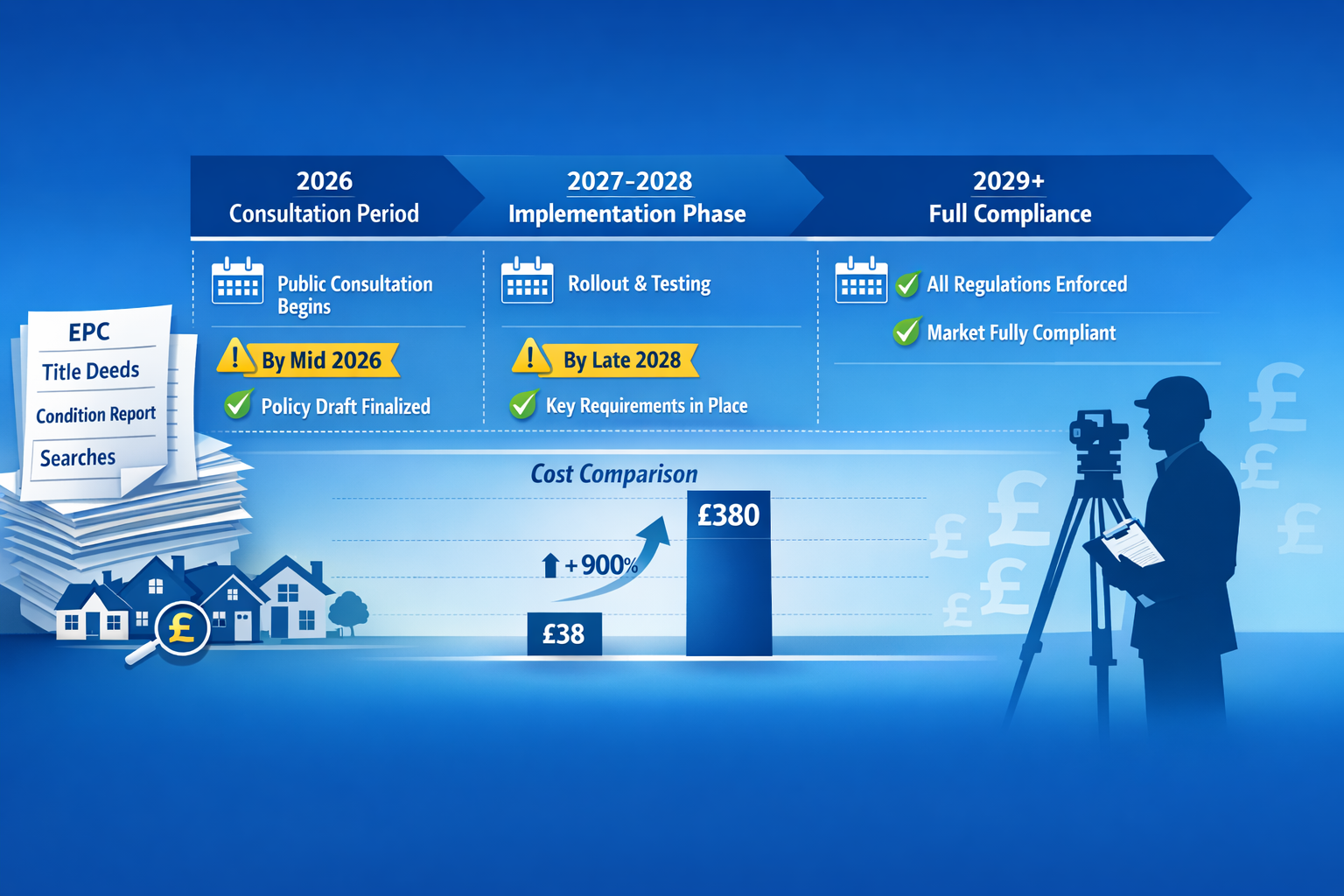
- 🏠 Mandatory upfront surveys will require sellers to commission property condition assessments before listing, shifting costs from buyers to sellers (average increase from £38 to £380)[4]
- 📊 Industry capacity challenges are significant, with surveyors needing to scale operations dramatically to handle front-loaded demand across all property sales
- ⚖️ Binding contracts option could halve failed transactions, reducing the current £1.5 billion annual economic impact[1]
- 📋 Standardized information packs will include 15+ mandatory data points from EPC ratings to building safety certificates, all professionally validated[2]
- 🎓 Professional qualifications for estate agents and enhanced surveyor training requirements will become mandatory as part of the reform package[1]
Understanding the 2026 Homebuying Reform Framework
What's Changing in the UK Property Market?
The UK Government's comprehensive homebuying reform package introduces a radical "upfront information" model designed to increase transparency and reduce transaction failures. At its core, the reform mandates that sellers and estate agents provide complete property information before listings go live[2].
This information pack must include:
| Information Category | Required Details |
|---|---|
| Property Basics | Tenure, council tax band, property type, floor plans |
| Legal Documentation | Title information, leasehold terms, planning consents |
| Safety & Condition | EPC rating, building safety data, property condition assessment |
| Financial Information | Service charges, ground rent, management fees |
| Environmental Data | Flood risk assessments, standard searches |
| Transaction Status | Chain status, seller timeline |
The most significant change for surveyors? Property condition assessments transition from optional buyer-commissioned reports to mandatory seller-provided documents. This fundamentally alters the surveying business model and market dynamics.
Why These Reforms Are Necessary
The current UK homebuying process suffers from critical inefficiencies:
- High failure rates: Approximately one-third of property transactions fall through after significant time and money investment[3]
- Economic waste: £1.5 billion lost annually to failed transactions[1]
- Information asymmetry: Buyers often discover critical property issues late in the process
- Emotional and financial stress: Families left "heartbroken and out of pocket" when deals collapse[1]
The government's consultation explicitly acknowledges these problems, stating that the current system allows too many transactions to proceed without adequate early-stage information, leading to late withdrawals when surveys reveal unexpected issues[2].
For those wondering whether you need a survey when buying a house, the answer in 2026 will be fundamentally different—the survey will already be done before you even view the property listing.
Homebuying Reform Impacts on Building Surveys: What Surveyors Need to Know
The Shift from Buyer-Commissioned to Seller-Commissioned Surveys
This represents the single biggest change in the surveying profession's relationship with property transactions. Traditionally, buyers commission surveys after making offers, using findings to negotiate price reductions or withdraw from purchases. Under the new framework:
Before 2026:
- Buyer decides whether to commission survey
- Survey occurs after offer acceptance
- Buyer bears all costs (£400-£1,000+ depending on survey level)
- Survey findings used as negotiation leverage
After 2026 Reforms:
- Seller must commission condition assessment before listing
- Survey completed before property marketed
- Seller bears upfront costs (projected £380 average)[4]
- Survey findings disclosed to all potential buyers
This shift has profound implications for surveying practices, as explored in our guide on comprehensive condition survey reports.
Cost Implications and Market Impact
The financial burden shift is substantial. Research indicates average seller costs will increase from £38 to £380—a tenfold increase representing the new mandatory survey requirement[4].
However, the overall market impact may be economically positive:
✅ Potential Benefits:
- Reduced wasted buyer expenditure on failed transactions
- Earlier price discovery reflecting true property condition
- Decreased chain collapse rates
- More informed buyer decisions from the outset
⚠️ Potential Challenges:
- Increased barrier to entry for sellers with limited cash flow
- Possible delay in properties reaching market
- Questions about survey validity period and refresh requirements
- Concerns about survey "shopping" if sellers commission multiple assessments
Survey Standards and Scope Requirements
A critical question remains: What level of survey will satisfy the mandatory condition assessment requirement?
The government consultation doesn't prescribe specific survey levels but emphasizes that condition assessments must be:
- Professionally conducted by qualified surveyors
- Standardized in format for easy comparison
- Validated and reliable, not merely seller declarations[2]
- Comprehensive enough to inform buyer decisions
Most industry experts anticipate the requirement will align with Level 2 or Level 3 RICS surveys, though the exact specification awaits final guidance. Understanding what surveyors look for in a house survey becomes even more critical as these assessments gain mandatory status.
Preparing Your Surveying Practice for 2026: Compliance Checklist and Operational Strategies

Capacity and Capability: The Industry's Biggest Challenge
The UK Government's own consultation acknowledges a fundamental concern: "What steps should government take to ensure that conveyancing lawyers, estate agents and surveyors have the capacity and capability to implement this change?"[2]
This question reflects genuine industry anxiety. Consider the mathematics:
- Current UK property transactions: ~1 million annually
- Current buyer-commissioned surveys: ~40% of transactions
- Post-reform mandatory surveys: 100% of transactions
- Capacity increase needed: ~150% growth in survey volume
This dramatic surge in demand will stress existing surveying capacity, potentially creating bottlenecks that delay property listings and inflate survey costs through supply-demand imbalances.
Surveyor Retraining and Qualification Requirements
The reforms introduce mandatory professional qualifications for estate agents, letting agents, and managing agents[1], with parallel implications for surveyors conducting mandatory condition assessments.
Key Training Areas for Surveyors:
📚 Updated Technical Knowledge:
- New building safety regulations and certification requirements
- Enhanced EPC assessment integration
- Digital reporting standards and data formats
- Leasehold and Freehold Reform Act implications[2]
🔍 Regulatory Compliance:
- Understanding liability frameworks for mandatory assessments
- Data provenance and validation standards[2]
- Professional indemnity insurance considerations
- Quality assurance protocols
💻 Technology Integration:
- Digital survey platforms and standardized reporting formats
- Integration with property information pack systems
- Thermal imaging and advanced diagnostic equipment
- Mobile surveying applications for efficiency
Surveyors should verify their credentials meet evolving standards—our guide on how to verify surveyor qualifications in the UK provides essential information.
Compliance Checklist for Building Surveyors
Use this comprehensive checklist to prepare your practice for the 2026 reforms:
Immediate Actions (2026 Q1-Q2)
- Review current capacity and identify staffing gaps
- Assess technology infrastructure for digital reporting
- Evaluate professional indemnity insurance coverage for mandatory assessments
- Research standardized survey format requirements as guidance emerges
- Establish relationships with estate agents adapting to new workflows
- Review pricing models for seller-commissioned work
- Identify training needs for existing staff
Medium-Term Preparation (2026 Q3-Q4)
- Implement surveyor training programs on new standards
- Upgrade equipment for enhanced diagnostic capabilities
- Develop standardized reporting templates aligned with government requirements
- Create quality assurance protocols for mandatory assessments
- Establish partnerships or networks to handle overflow capacity
- Test digital integration with property information pack platforms
- Develop marketing materials targeting sellers rather than buyers
Long-Term Strategic Planning (2027+)
- Scale workforce to meet sustained increased demand
- Invest in advanced surveying technology and automation
- Build specialization in complex property types (leasehold, new builds, non-standard construction)
- Establish performance metrics for government transparency initiatives[1]
- Develop continuing professional development (CPD) programs
- Create strategic partnerships with conveyancers and estate agents
- Monitor and adapt to evolving regulatory requirements
Scaling Operations: Strategic Approaches
1. Workforce Expansion
- Recruit qualified surveyors from the existing talent pool
- Develop apprenticeship programs to build future capacity
- Utilize associate surveyor networks for overflow work
- Cross-train existing staff on standardized assessment protocols
2. Technology Investment
Modern surveying practices must embrace technology to handle increased volume efficiently:
- Digital survey platforms that streamline data collection and reporting
- Automated report generation for standardized sections
- Scheduling and workflow management systems
- Client portals for seamless seller communication
- Mobile inspection tools that improve field efficiency
3. Operational Efficiency
- Standardize processes to reduce per-survey time without compromising quality
- Batch scheduling in geographic clusters to minimize travel time
- Template libraries for common property types and issues
- Quality control checkpoints that catch errors early
- Continuous improvement based on performance metrics
4. Strategic Partnerships
- Estate agent networks for direct referral pipelines
- Conveyancer relationships for coordinated transaction management
- Specialist consultants (structural engineers, damp specialists) for complex issues
- Technology providers for cutting-edge surveying tools
For specialized assessments like structural surveys or damp surveys, consider developing dedicated teams with deep expertise.
Additional Reform Elements Impacting Surveyors
Binding Contracts and Transaction Security
The government proposes optional binding contracts that would legally commit buyers and sellers once agreed, with the potential to halve failed transaction rates[1]. This reform complements mandatory upfront surveys by:
- Increasing reliance on pre-contract condition assessments
- Raising stakes for survey accuracy and completeness
- Potentially reducing post-survey renegotiation opportunities
- Creating liability considerations for surveyors if binding decisions rest on their reports
Material Information Requirements
A separate Material Information Consultation under the Digital Markets, Competition and Consumers Act establishes explicit guidance on what estate agents must include in property listings[1]. This standardization directly impacts surveyors by:
- Defining minimum condition information standards
- Establishing data validation requirements
- Creating transparency around survey findings
- Potentially requiring surveyors to certify specific data points
Leasehold and Freehold Reform Integration
The Leasehold and Freehold Reform Act implementation aims to help homeowners "more quickly and affordably access property information necessary for selling"[2]. Surveyors working with leasehold properties must understand:
- Service charge documentation requirements
- Building safety certificate obligations
- Management company information disclosure
- Ground rent and lease extension implications
These elements should be integrated into comprehensive building surveys for leasehold properties.
Professional Performance Transparency
Perhaps most significantly for surveyors, the government plans to publish side-by-side performance data on estate agents and property lawyers to allow consumers to choose based on track record[1]. While not explicitly mentioned for surveyors in current proposals, this transparency trend may extend to surveying professionals, creating:
- Public performance metrics (completion rates, accuracy, timeliness)
- Client satisfaction scoring systems
- Comparative pricing transparency
- Quality benchmarking across the profession
Industry Perspectives and Concerns
Skepticism About Implementation
Industry voices express mixed reactions to the reforms. Jonathan Rolande, founder of the National Association of Property Buyers, notes: "A lot of the information the Government mentions is already required but getting it standardised and indisputable is good," while acknowledging that binding contract proposals require more detail[1].
This perspective highlights a key tension: many proposed information requirements exist in current practice, but standardization and enforcement represent the true reform challenge.
Timing and Phased Implementation
Critically, the government has indicated that mandatory property condition assessments "would not happen immediately" and committed to working with industry to understand timing and implementation methods[2]. This suggests:
- Gradual rollout rather than sudden enforcement
- Pilot programs in specific regions or property types
- Industry consultation on practical implementation details
- Flexibility in adapting requirements based on early feedback
This phased approach provides surveyors with time to prepare, but also creates uncertainty about exact timelines and requirements.
Cost and Accessibility Concerns
Critics worry that increased upfront costs may:
- Deter sellers with limited financial resources from listing properties
- Reduce market liquidity if sellers delay listing due to upfront investment
- Create inequality where wealthier sellers can afford comprehensive assessments while others cannot
- Inflate survey costs through increased demand without proportional capacity growth
However, proponents argue that these upfront costs are redistributed rather than new—buyers currently bear survey costs, and the reform simply shifts timing and responsibility.
Preparing Sellers and Buyers for the New Normal
Guidance for Property Sellers
As mandatory upfront condition assessments become reality, sellers should:
- Budget for survey costs when planning to sell (£300-£500 for standard properties, more for complex buildings)
- Commission surveys early to identify and address issues before marketing
- Consider pre-listing repairs if surveys reveal cost-effective improvements
- Understand disclosure obligations around survey findings
- Work with qualified surveyors who understand new standards—find chartered surveyors across London and surrounding areas
Guidance for Property Buyers
Buyers will experience a transformed process:
- Review provided surveys carefully rather than commissioning your own
- Understand survey limitations and consider additional specialist assessments if needed
- Factor condition information into initial offers rather than post-offer negotiations
- Verify survey currency and ask about refresh provisions
- Seek independent advice on interpreting provided condition assessments
For buyers of new build properties, understanding how mandatory assessments apply to newly constructed homes will be particularly important.
The Road Ahead: Timeline and Next Steps

Expected Implementation Timeline
While exact dates remain subject to consultation outcomes, the anticipated timeline includes:
2026 Q1-Q2: Consultation period concludes, final regulations published
2026 Q3-Q4: Industry preparation period, guidance materials released
2027 Q1: Potential pilot program launches in selected regions
2027 Q3-Q4: Phased mandatory implementation begins
2028+: Full national implementation and ongoing refinement
This timeline allows surveyors 12-18 months to prepare operations, train staff, and scale capacity.
Monitoring Regulatory Developments
Surveyors should actively monitor:
- Government consultation responses and final policy documents
- RICS guidance updates on mandatory assessment standards
- Industry association communications (RICS, RPSA, NAEA)
- Professional indemnity insurance requirement changes
- Technology platform developments for standardized reporting
Positioning for Success
Forward-thinking surveying practices will:
✅ Embrace the change as an opportunity for growth rather than a burden
✅ Invest early in capacity, technology, and training
✅ Build partnerships with estate agents and conveyancers
✅ Develop specializations in high-demand property types
✅ Focus on quality to build reputation in a more transparent market
✅ Engage with policymakers to shape implementation details
Conclusion
The homebuying reform impacts on building surveys: preparing for mandatory upfront condition assessments in 2026 represent a watershed moment for the UK property market. These changes will fundamentally transform how surveyors operate, shifting from a buyer-focused reactive model to a seller-focused proactive approach that places condition assessments at the very beginning of the sales process.
For building surveyors, the challenge is clear but manageable: scale capacity, enhance capabilities, and embrace standardization while maintaining the professional rigor that protects buyers and sellers alike. The reforms promise to reduce the £1.5 billion annual cost of failed transactions[1], increase market transparency, and create a more efficient property market—but only if the surveying profession successfully rises to meet unprecedented demand.
Actionable Next Steps
For Surveying Practices:
- Conduct a capacity assessment and develop a scaling plan
- Invest in surveyor training on emerging standards and technology
- Build relationships with estate agents preparing for reforms
- Review and enhance professional indemnity insurance coverage
- Monitor government guidance and participate in industry consultations
For Individual Surveyors:
6. Pursue continuing professional development in building safety and new regulations
7. Develop expertise in standardized reporting formats
8. Enhance technical skills with modern diagnostic equipment
9. Build knowledge of leasehold reforms and material information requirements
10. Position yourself as an expert in the new mandatory assessment framework
For Property Professionals:
11. Educate clients (sellers and buyers) about coming changes
12. Adjust business models to accommodate upfront survey requirements
13. Collaborate across the industry to ensure smooth implementation
14. Advocate for practical, workable regulations through consultation responses
The transformation ahead is significant, but it presents tremendous opportunity for surveyors who prepare strategically. By understanding the homebuying reform impacts on building surveys and taking proactive steps now, surveying practices can position themselves not just to survive the changes, but to thrive in a reformed, more transparent UK property market.
For expert guidance on building surveys and property assessments, contact our team of qualified surveyors who are actively preparing for the 2026 reforms and beyond.
References
[1] Uk Government Unveils Sweeping Reforms To Homebuying 507088 – https://evrimagaci.org/gpt/uk-government-unveils-sweeping-reforms-to-homebuying-507088
[2] Home Buying And Selling Reform – https://www.gov.uk/government/consultations/home-buying-and-selling-reform/home-buying-and-selling-reform
[3] Breaking Down The Home Buying Shake Up Key Reforms For Buyers Sellers And Agents – https://www.russell-cooke.co.uk/news-and-insights/news/breaking-down-the-home-buying-shake-up-key-reforms-for-buyers-sellers-and-agents
[4] Homebuying Process Reforms 2026 How Mandatory Upfront Surveys Will Transform Building Surveyor Workloads – https://nottinghillsurveyors.com/blog/homebuying-process-reforms-2026-how-mandatory-upfront-surveys-will-transform-building-surveyor-workloads
[5] How Government Reforms Could Reshape The Housing Market – https://sdlsurveying.co.uk/news/how-government-reforms-could-reshape-the-housing-market/
