
The UK housing market is showing tentative signs of recovery in 2026, with improved affordability and increased supply creating unprecedented opportunities for first-time buyers. As buyer enquiries climb and price growth stabilizes at a modest 2%, savvy purchasers are leveraging Building Surveys for 2026 First-Time Buyer Surge: RICS Tactics in a Buyer's Negotiation Market to secure better deals and negotiate from positions of strength. With the right RICS-accredited survey strategy, first-time buyers can identify hidden defects, calculate repair costs, and negotiate thousands off asking prices in this evolving buyer's market.

Key Takeaways
- 🏠 Market recovery signals: Buyer enquiries improved to -15% in January 2026, up from -29% in November, creating negotiation opportunities for first-time buyers[7]
- 💰 Strategic survey investment: RICS Level 2 surveys (£450-£800) and Level 3 surveys (£750-£1,500+) provide negotiating leverage worth thousands in price reductions[2]
- 📋 RICS standardization advantage: Updated Home Survey Standards ensure consistent, trustworthy reporting across all surveyors nationwide[3]
- 🔍 Defect identification power: Comprehensive building surveys reveal structural issues, damp problems, and repair costs that strengthen negotiation positions
- 📊 2% growth environment: Modest price increases create balanced conditions where informed buyers with survey evidence can negotiate effectively
Understanding the 2026 First-Time Buyer Market Landscape
The housing market dynamics in 2026 present a unique window of opportunity for first-time buyers. Recent data from RICS shows that new buyer enquiries have steadily improved, with the net balance rising from -29% in November to -15% in January 2026[7]. This upward trend signals growing confidence among purchasers, particularly those entering the market for the first time.
Why 2026 Favors Informed First-Time Buyers
Several factors converge to create favorable conditions:
Improved affordability metrics have emerged as mortgage rates stabilize and wage growth continues. The combination of modest 2% annual price growth forecasts and increased housing supply means first-time buyers face less competition than during the frenzied markets of previous years.
Increased negotiating power stems from sellers' realistic pricing expectations. Unlike seller's markets where properties received multiple offers within days, the current environment allows buyers time to conduct thorough due diligence through comprehensive building surveys and negotiate based on findings.
Better inventory selection provides first-time buyers with more choices across different property types, ages, and conditions. This variety makes it essential to understand which properties require which level of survey scrutiny.
The Role of Building Surveys in Buyer Negotiations
In a balanced market, information becomes currency. First-time buyers who invest in proper RICS surveys gain critical advantages:
- Evidence-based negotiation: Survey findings documenting repair costs provide concrete justification for price reductions
- Risk mitigation: Identifying structural issues, damp, or electrical problems before completion prevents costly surprises
- Purchase confidence: Comprehensive understanding of property condition enables informed decision-making
- Mortgage protection: Lenders may require survey evidence for older or non-standard properties
Understanding what surveyors look for in a house survey empowers buyers to ask the right questions and interpret findings effectively.
Building Surveys for 2026 First-Time Buyer Surge: Choosing the Right RICS Survey Level
The Royal Institution of Chartered Surveyors (RICS) provides standardized survey levels designed to match different property types and buyer needs. Selecting the appropriate survey level represents the first tactical decision in leveraging Building Surveys for 2026 First-Time Buyer Surge: RICS Tactics in a Buyer's Negotiation Market.
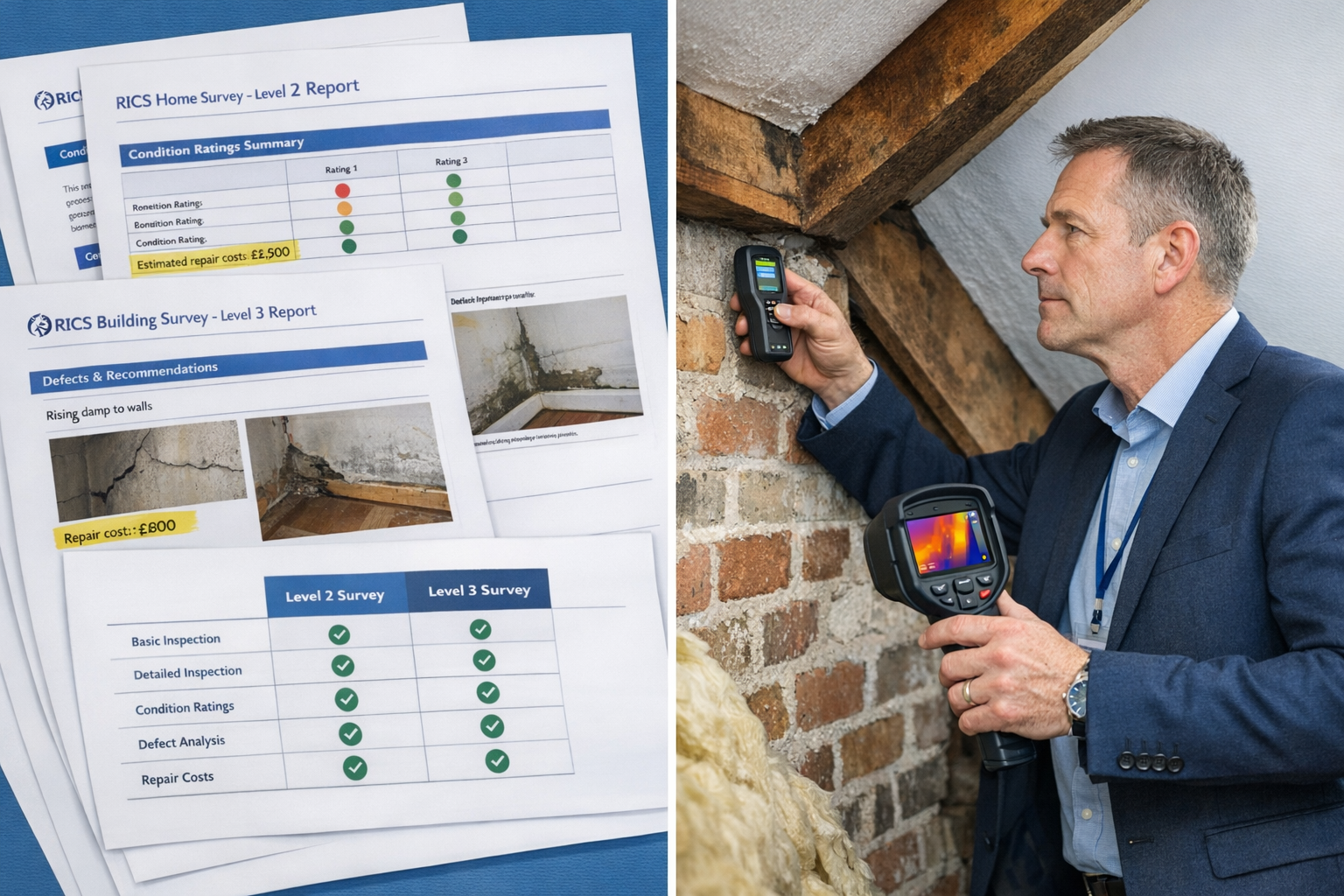
RICS Level 2 Survey (HomeBuyer Report)
The Level 2 HomeBuyer Report serves as the most popular choice for first-time buyers purchasing conventional properties in reasonable condition. Typically costing between £450-£800[2], this mid-tier survey provides excellent value for standard homes.
What Level 2 surveys include:
- Visual inspection of accessible areas without moving furniture or lifting carpets
- Traffic light condition ratings (1-3) for major elements
- Identification of urgent defects requiring immediate attention
- Advice on necessary repairs and ongoing maintenance
- Optional market valuation
Best suited for:
- Properties built after 1900 in conventional construction
- Homes in reasonable condition without obvious major defects
- Standard Victorian, Edwardian, or modern properties
- First-time buyers with limited budgets seeking good value
The Level 2 survey strikes a balance between cost and coverage, making it ideal for the majority of first-time buyer scenarios. Understanding how long a Level 2 survey takes helps buyers plan their purchase timeline effectively.
RICS Level 3 Survey (Building Survey)
The comprehensive Level 3 Building Survey represents the most thorough investigation available, costing £750-£1,500+ depending on property size and complexity[2]. This investment pays dividends when purchasing older, altered, or unusual properties.
What Level 3 surveys include:
- Detailed examination of all accessible areas
- Opening of windows, moving of furniture and curtains to inspect thoroughly[3]
- In-depth analysis of construction methods and materials
- Comprehensive defect descriptions with repair recommendations
- Detailed cost estimates for remedial works
- Advice on maintenance priorities and timescales
Best suited for:
- Pre-1900 properties or those with period features
- Homes that have undergone significant alterations or extensions
- Properties with visible defects or structural concerns
- Listed buildings or unusual construction types
- Buyers planning major renovations who need detailed condition information
The key differences between Level 2 and Level 3 surveys become critical when deciding which level provides optimal negotiating leverage for your specific property.
Specialist Surveys for Specific Concerns
Beyond standard RICS levels, first-time buyers may require targeted investigations:
| Survey Type | Purpose | Typical Cost | When Needed |
|---|---|---|---|
| Damp Survey | Moisture detection and diagnosis | £200-£400 | Visible damp patches, musty odors |
| Structural Survey | Crack analysis, subsidence assessment | £500-£1,000 | Visible cracks, movement concerns |
| Electrical Survey | Wiring safety and compliance | £150-£300 | Properties with old wiring systems |
| Drainage Survey | CCTV drain inspection | £250-£500 | Drainage issues, older properties |
| Timber Survey | Rot, woodworm, and beetle infestation | £200-£400 | Exposed timber, period properties |
These specialist surveys often follow initial RICS surveys when specific concerns require deeper investigation. They provide detailed evidence that strengthens negotiation positions significantly.
RICS Survey Tactics for Maximum Negotiation Leverage
Understanding how to strategically deploy Building Surveys for 2026 First-Time Buyer Surge: RICS Tactics in a Buyer's Negotiation Market transforms survey findings into tangible savings. The following tactical approaches maximize negotiating power in the current market environment.

Pre-Offer Survey Strategy
Timing considerations: While most buyers commission surveys after offers are accepted, savvy first-time buyers in competitive situations may conduct preliminary assessments earlier. This approach works particularly well when:
- Multiple properties meet your criteria and you need objective comparison data
- Auction purchases require pre-auction surveys for informed bidding
- Properties show obvious external defects visible during viewings
- You're considering properties at the upper limit of your budget
Cost-benefit analysis: Investing £500-£800 in a survey before making an offer may seem premature, but it prevents emotional attachment to problematic properties and enables confident, lower initial offers based on known issues.
Post-Offer Survey Negotiation Framework
The standard approach involves commissioning surveys after offer acceptance but before exchange of contracts. This timing provides maximum leverage while protecting your position.
Step 1: Rapid survey commissioning ⏱️
Book your RICS survey within 48 hours of offer acceptance. Most Level 2 surveys complete within 5-7 days, while Level 3 surveys may require 7-10 days depending on property complexity.
Step 2: Thorough report analysis 📊
When your survey arrives, systematically categorize findings:
- Category 1 (Green): No repair currently needed – use for future maintenance planning
- Category 2 (Amber): Defects requiring repair or replacement – calculate costs for negotiation
- Category 3 (Red): Serious defects requiring urgent attention – primary negotiation leverage
Create a spreadsheet documenting each Category 2 and 3 item with:
- Defect description from survey
- Surveyor's recommended action
- Estimated repair costs (obtain quotes if possible)
- Priority level (immediate, short-term, medium-term)
Step 3: Obtain repair quotations 💷
For significant defects, obtain written quotations from qualified tradespeople. This evidence transforms subjective survey opinions into concrete financial impacts:
- Structural repairs: Get quotes from structural engineers
- Damp remediation: Contact damp specialists
- Roofing work: Approach qualified roofers
- Electrical rewiring: Obtain electrician estimates
- Drainage repairs: Contact drainage specialists
Step 4: Construct negotiation proposal 📝
Present findings to the seller through your estate agent or solicitor with a structured proposal:
"The RICS survey has identified £12,500 in necessary repairs including £6,000 for roof repairs, £3,500 for rewiring, and £3,000 for damp remediation. We remain committed to purchasing the property but request a price reduction of £10,000 to reflect these costs, or alternatively, that the seller completes the essential works before completion."
Evidence-Based Negotiation Techniques
The 80% rule: Request price reductions covering approximately 80% of documented repair costs. This demonstrates reasonableness while acknowledging that buyers accept some property condition risk.
Priority-based approach: Focus negotiations on Category 3 (urgent) defects first. Sellers more readily accept reductions for serious structural issues than minor cosmetic concerns.
Alternative solutions: If sellers resist price reductions, propose alternatives:
- Seller completes essential repairs before completion
- Retention of funds in escrow until repairs complete
- Extended completion timeline allowing repairs
- Inclusion of appliances, fixtures, or furnishings as compensation
Market context framing: Reference the 2026 market conditions in negotiations: "Given the current buyer's market with modest 2% growth forecasts, properties with significant defects typically sell below asking price. The survey evidence supports a fair adjustment."
Knowing When to Walk Away
RICS surveys sometimes reveal defects so severe that negotiation becomes irrelevant. First-time buyers should consider withdrawing when:
- Structural issues exceed 15% of property value: Major subsidence, foundation failures, or extensive structural movement
- Undisclosed major alterations: Significant extensions or conversions without building regulations approval
- Severe damp or timber decay: Widespread wet rot, dry rot, or extensive damp affecting multiple areas
- Safety hazards: Dangerous electrical systems, asbestos, or other health risks
- Seller unwillingness to negotiate: Refusal to acknowledge legitimate survey findings
Remember: deciding whether you need a survey when buying a house isn't optional for first-time buyers—it's essential protection for your largest financial commitment.
RICS Home Survey Standard: Ensuring Quality and Consistency
The RICS Home Survey Standard, updated from its original 2021 introduction, provides the framework ensuring all chartered surveyors deliver consistent, high-quality inspections[3]. Understanding this standard helps first-time buyers maximize the value of Building Surveys for 2026 First-Time Buyer Surge: RICS Tactics in a Buyer's Negotiation Market.
Standardization Benefits for First-Time Buyers
Uniform reporting formats: All RICS surveyors use standardized templates and condition rating systems, making it easy to:
- Compare survey findings across multiple properties
- Understand defect severity through consistent traffic light ratings
- Benchmark repair priorities against industry standards
Mandatory inspection procedures: The standard requires surveyors to inspect specific elements systematically[3]:
- External walls, roofs, and chimneys
- Internal walls, floors, and ceilings
- Damp and moisture levels
- Heating, plumbing, and electrical systems
- Drainage and external grounds
- Windows, doors, and joinery
Quality assurance mechanisms: RICS-regulated surveyors must:
- Maintain professional indemnity insurance
- Participate in continuing professional development
- Adhere to RICS ethics and conduct standards
- Face disciplinary procedures for substandard work
What RICS Surveyors Must Inspect
The comprehensive checklist ensures nothing escapes scrutiny:
External elements:
- Roof coverings, flashings, and chimneys
- Rainwater goods (gutters and downpipes)
- External walls and rendering
- Windows and external doors
- Damp-proof courses and ventilation
- Boundaries, outbuildings, and grounds
Internal elements:
- Ceilings, walls, and decorative condition
- Floors and staircases
- Built-in fittings and joinery
- Fireplaces and chimney breasts
- Dampness and condensation
- Timber defects and infestations
Services and utilities:
- Heating systems and radiators
- Hot and cold water systems
- Electrical installations
- Drainage and sanitary fittings
- Ventilation systems
- Insulation provisions
Limitations and Exclusions
First-time buyers must understand what RICS surveys don't cover:
❌ Areas not inspected:
- Inaccessible spaces (under fitted carpets, behind furniture)
- Roof spaces without safe access
- Floors covered by fixed coverings
- Underground drainage (without specialist equipment)
- Areas requiring specialist access equipment
❌ Matters outside scope:
- Detailed analysis of specific defects (requires specialist surveys)
- Testing of electrical or gas installations
- Asbestos identification (requires specialist testing)
- Environmental contamination assessment
- Planning permission or building regulation compliance
Understanding these limitations helps buyers determine when additional specialist surveys become necessary.
Practical Survey Checklist for First-Time Buyers in 2026
Implementing Building Surveys for 2026 First-Time Buyer Surge: RICS Tactics in a Buyer's Negotiation Market requires systematic preparation and execution. This practical checklist guides first-time buyers through the survey process.
Before Commissioning Your Survey
✅ Research RICS chartered surveyors:
- Verify RICS membership and qualifications
- Check professional indemnity insurance coverage
- Read reviews and testimonials from previous clients
- Compare quotes from 3-5 surveyors
- Confirm local area knowledge and experience
✅ Determine appropriate survey level:
- Property age and construction type
- Visible condition and known issues
- Your budget constraints
- Future renovation plans
- Lender requirements
✅ Prepare property information:
- Full address and postcode
- Property type (detached, semi-detached, terraced, flat)
- Approximate age and any extension dates
- Number of bedrooms and floors
- Any known issues or concerns
During the Survey Process
✅ Consider attending the inspection:
While not always possible, attending allows you to:
- Ask questions about specific concerns
- Understand defect locations firsthand
- Receive preliminary verbal feedback
- Build rapport with your surveyor
✅ Provide property access details:
- Coordinate with estate agents or sellers
- Ensure all areas are accessible
- Request loft hatches be made accessible
- Arrange for pets to be secured
- Note any areas requiring special access
After Receiving Your Survey Report
✅ Systematic report review:
- Read the executive summary first for overview
- Review all Category 2 and 3 items in detail
- Note any recommendations for specialist surveys
- List all repair cost estimates provided
- Identify immediate safety concerns
✅ Seek clarification when needed:
- Contact your surveyor with questions (usually included in service)
- Request explanation of technical terms
- Ask for repair priority recommendations
- Discuss whether specialist surveys are necessary
✅ Obtain repair quotations:
- Contact qualified tradespeople for estimates
- Request written quotes referencing survey findings
- Obtain multiple quotes for expensive repairs
- Ask about timescales and disruption levels
✅ Prepare negotiation strategy:
- Calculate total documented repair costs
- Decide on acceptable price reduction
- Consider alternative negotiation approaches
- Set your walk-away threshold
Red Flags Requiring Immediate Action
Certain survey findings demand urgent attention or reconsideration:
🚨 Structural concerns:
- Significant cracks indicating movement
- Subsidence or settlement evidence
- Bulging or leaning walls
- Roof structure defects
🚨 Damp and timber issues:
- Extensive rising damp
- Wet or dry rot in structural timbers
- Widespread condensation and mold
- Failed damp-proof courses
🚨 Safety hazards:
- Dangerous electrical installations
- Gas safety concerns
- Asbestos materials in poor condition
- Structural instability risks
When these issues arise, consider commissioning specialist structural surveys before proceeding.
Maximizing Value: Survey Costs vs. Negotiation Savings
The return on investment from strategic survey deployment in Building Surveys for 2026 First-Time Buyer Surge: RICS Tactics in a Buyer's Negotiation Market typically far exceeds the initial cost. Understanding this value equation helps first-time buyers justify survey expenses.
Real-World Savings Examples
Case Study 1: Victorian Terrace – Level 2 Survey
- Property price: £325,000
- Survey cost: £650
- Findings: Roof repairs needed (£4,500), damp treatment required (£2,800), rewiring recommended (£3,200)
- Total repair costs: £10,500
- Negotiated reduction: £8,000
- Net benefit: £7,350 (11x survey cost)
Case Study 2: 1930s Semi-Detached – Level 3 Survey
- Property price: £285,000
- Survey cost: £950
- Findings: Subsidence evidence requiring monitoring, extensive timber decay, outdated heating system
- Total repair/monitoring costs: £18,500
- Buyer withdrew from purchase, avoiding catastrophic investment
- Net benefit: Immeasurable (prevented major financial loss)
Case Study 3: Modern Apartment – Level 2 Survey
- Property price: £245,000
- Survey cost: £550
- Findings: Minor issues only, property in good condition
- Negotiated reduction: £0
- Net benefit: Peace of mind and confident purchase decision
Cost-Benefit Analysis Framework
| Survey Investment | Typical Findings Value | Average Negotiation Success | ROI Multiple |
|---|---|---|---|
| £450-£800 (Level 2) | £5,000-£15,000 repairs identified | 60-80% of repair costs | 5-15x |
| £750-£1,500 (Level 3) | £10,000-£30,000 repairs identified | 60-80% of repair costs | 8-20x |
| £200-£500 (Specialist) | £3,000-£10,000 specific repairs | 70-90% of repair costs | 6-18x |
When Survey Investment Doesn't Yield Direct Savings
Even when surveys reveal no significant defects, the value remains substantial:
✅ Purchase confidence: Proceeding with complete knowledge of property condition
✅ Maintenance planning: Understanding future repair timescales and costs
✅ Insurance protection: Documented property condition at purchase
✅ Resale advantage: Survey available for future buyers when you sell
For first-time buyers wondering whether a homebuyers survey is worth it, the evidence overwhelmingly supports the investment.
Navigating the 2026 Market: Timing and Strategy
The specific market conditions of 2026 create unique opportunities for first-time buyers to leverage Building Surveys for 2026 First-Time Buyer Surge: RICS Tactics in a Buyer's Negotiation Market effectively. Strategic timing maximizes negotiation success.
Seasonal Considerations
Spring market (March-May):
- Highest inventory levels as sellers list properties
- More competition from other buyers
- Survey findings carry slightly less weight due to demand
- Strategy: Commission surveys quickly to maintain momentum
Summer market (June-August):
- Continued activity but holiday disruptions
- Moderate competition levels
- Good balance for negotiation leverage
- Strategy: Use survey evidence assertively while remaining reasonable
Autumn market (September-November):
- Renewed activity after summer lull
- Sellers motivated to complete before Christmas
- Strong negotiation environment
- Strategy: Emphasize survey findings with completion timeline pressure
Winter market (December-February):
- Lowest competition from other buyers
- Sellers often highly motivated
- Maximum negotiation leverage
- Strategy: Use survey evidence aggressively but fairly
Market Recovery Indicators to Monitor
The January 2026 data showing improved buyer enquiries (-15% vs. -29% in November)[7] suggests strengthening conditions. First-time buyers should monitor:
📈 Positive indicators for buyers:
- Increasing time on market for properties
- Growing inventory levels
- Stable or declining asking prices
- Rising buyer enquiry levels
- Mortgage rate stability
📉 Warning signs of shifting conditions:
- Rapid property sales (under 2 weeks)
- Multiple offer situations becoming common
- Rising asking prices month-over-month
- Declining inventory levels
- Increased mortgage rates
Coordinating Survey Timing with Purchase Timeline
Optimal timeline for survey-informed negotiations:
Week 1-2: Property search and viewings
Week 3: Submit offer based on comparable properties
Week 4: Offer accepted, immediately commission RICS survey
Week 5: Receive survey report, analyze findings
Week 6: Obtain repair quotations, prepare negotiation
Week 7: Submit renegotiation proposal to seller
Week 8-9: Finalize agreed price, proceed to exchange
Week 10-12: Complete purchase
This timeline balances thorough due diligence with maintaining transaction momentum—critical in the 2026 market where sellers expect reasonable progress.
Conclusion: Empowering First-Time Buyers Through Strategic Survey Deployment
The convergence of improved affordability, increased supply, and modest 2% price growth in 2026 creates an exceptional environment for first-time buyers to enter the property market with confidence. Building Surveys for 2026 First-Time Buyer Surge: RICS Tactics in a Buyer's Negotiation Market represents not merely a defensive measure but a proactive strategy for securing better property deals.
Key Strategic Takeaways
Investment in knowledge pays dividends: The £450-£1,500 investment in comprehensive RICS surveys typically returns 5-20 times the cost through negotiated price reductions or avoided problematic purchases. This ROI makes surveys one of the most valuable tools in the first-time buyer's arsenal.
Standardization provides confidence: The RICS Home Survey Standard ensures consistent, professional reporting across all chartered surveyors, giving first-time buyers reliable information regardless of which surveyor they choose[3]. This standardization eliminates variability and provides a solid foundation for negotiations.
Evidence trumps emotion: In a market showing early recovery signs, sellers respond to concrete evidence rather than subjective opinions. Survey reports documenting specific defects with estimated repair costs provide the objective basis needed for successful price negotiations.
Timing remains critical: With buyer enquiries improving from -29% to -15% over recent months[7], the window for maximum negotiation leverage may narrow as market conditions strengthen. First-time buyers should act decisively while current favorable conditions persist.
Actionable Next Steps for First-Time Buyers
Immediate actions (this week):
- Research RICS chartered surveyors in your target area
- Determine your survey budget (£450-£1,500 depending on property type)
- Understand survey level requirements for properties you're viewing
- Create a defect checklist to note concerns during viewings
Short-term actions (next month):
- Commission your RICS survey within 48 hours of offer acceptance
- Review the report systematically using the checklist provided
- Obtain repair quotations for all significant defects
- Prepare evidence-based negotiation proposal for the seller
Long-term strategy (throughout your purchase journey):
- Monitor market indicators to adjust negotiation tactics
- Maintain professional relationships with estate agents and sellers
- Set clear walk-away thresholds based on survey findings
- Plan for future maintenance using survey recommendations
The Competitive Advantage
First-time buyers who embrace strategic survey deployment gain substantial advantages over those who skip this crucial step or treat it as a formality. In the 2026 market environment, where information asymmetry between buyers and sellers narrows, comprehensive building surveys provide the detailed intelligence needed to negotiate confidently and secure properties at fair prices reflecting their true condition.
The RICS framework, standardized reporting, and professional surveyor expertise combine to create a powerful toolkit for first-time buyers navigating their first property purchase. By understanding survey types, interpreting findings strategically, and leveraging evidence in negotiations, first-time buyers transform from vulnerable novices into informed, empowered market participants.
As the 2026 market continues evolving with modest growth forecasts and improving buyer sentiment, those who invest in comprehensive building surveys position themselves to capitalize on opportunities, avoid costly mistakes, and negotiate from positions of strength. The surge in first-time buyer activity anticipated for 2026 will favor those who combine financial preparation with strategic information gathering through professional RICS building surveys.
Your property purchase represents likely your largest financial commitment. Protect it with professional survey intelligence, negotiate with evidence-based confidence, and enter the market empowered by knowledge. The modest investment in a comprehensive RICS building survey today prevents costly surprises tomorrow and delivers negotiation leverage that pays dividends for years to come.
References
[2] What Is A Rics Survey 2025 – https://surveymatch.co.uk/what-is-a-rics-survey-2025/
[3] The New Rics Home Survey Standard Explained – https://www.surveymerchant.com/blog/the-new-rics-home-survey-standard-explained
[7] Uk Resi Survey Jan 2026 Report Shows Early Signs Market Recovery Despite Caution – https://www.rics.org/news-insights/uk-resi-survey-jan-2026-report-shows-early-signs-market-recovery-despite-caution
