
The UK rental market has entered a pivotal transition phase in early 2026, presenting landlords and institutional investors with a complex landscape that demands strategic assessment protocols. While tenant demand has declined 14% year-on-year to its lowest level in six years, the interplay between reduced competition, increased supply, and slowing rent growth creates unique opportunities for those who understand Lettings Tenant Demand and Building Surveys: Protocols for High-Demand Rental Assessments in Q1 2026. For property portfolios seeking to maximize returns in this shifting market, comprehensive building surveys have become essential tools for evaluating rental viability and identifying properties that can capture remaining demand.
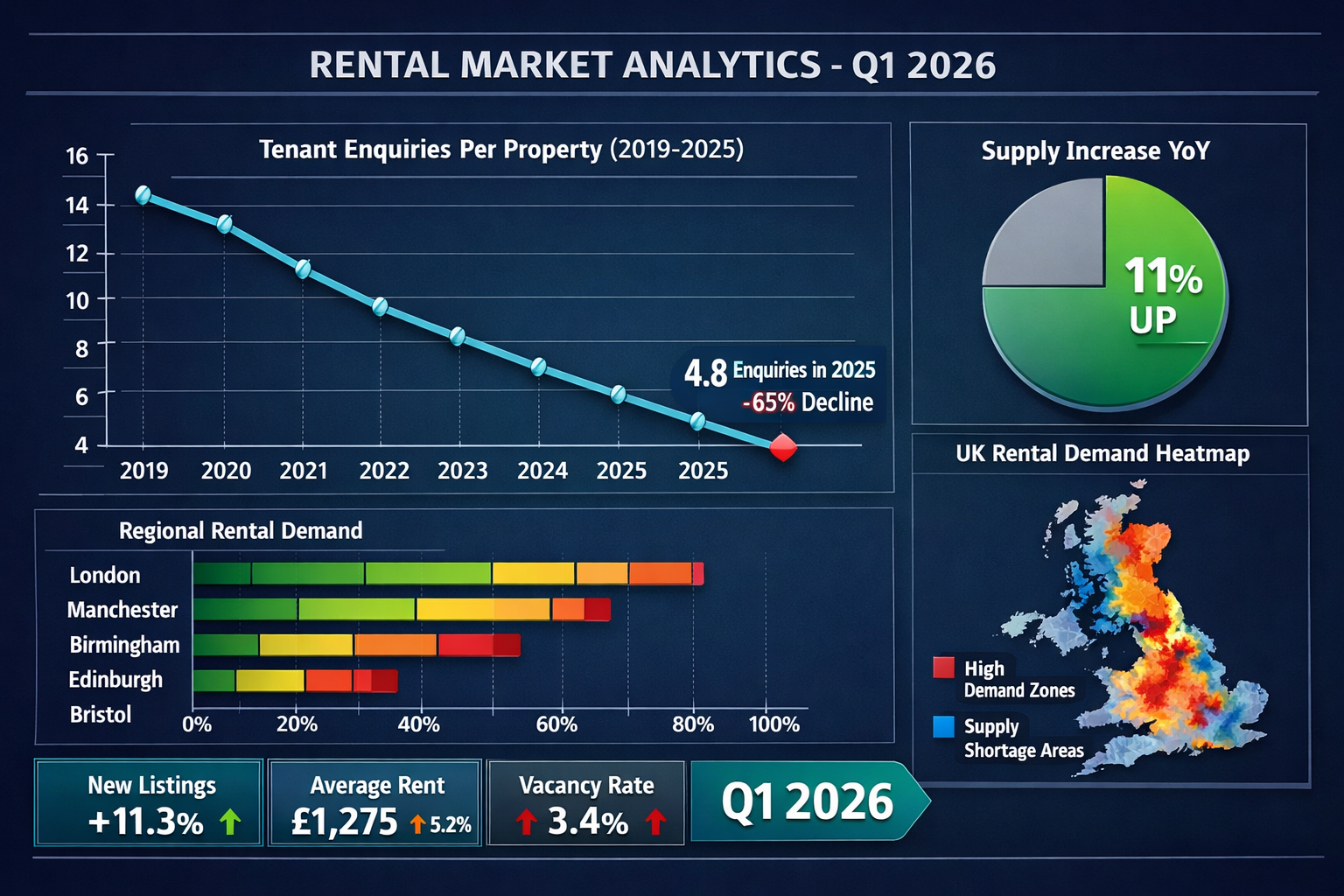
The current market presents a paradox: enquiries per property have fallen to just 4.8—the lowest recorded in six years—yet strategic pockets of high demand persist in urban employment hubs, university cities, and affordable regional markets [1]. This divergence requires sophisticated assessment protocols that combine traditional building surveys with tenant demand analytics to identify properties positioned for sustained occupancy and rental income growth.
Key Takeaways
✅ Market rebalancing creates opportunities: Tenant demand has declined 14% year-on-year, but supply has increased 11%, creating a more balanced market where quality properties with verified structural integrity command premium positioning [1].
✅ Building surveys are critical for rental viability: Comprehensive property assessments identify maintenance liabilities, structural defects, and upgrade requirements that directly impact tenant appeal and long-term portfolio performance.
✅ Regional demand variation requires targeted protocols: While national enquiries average 4.8 per property, high-demand zones in employment hubs and university cities require accelerated survey timelines and enhanced property standards.
✅ Rent growth forecasts remain positive: Despite cooling demand, rents are projected to increase 2-3% in 2026, with average monthly private rents reaching £1,423 in England, making property condition assessments vital for capturing growth [9].
✅ Integration of demand analytics with structural surveys: Modern rental assessment protocols combine traditional building surveys with tenant preference data, affordability metrics, and competitive positioning analysis.
Understanding the Q1 2026 Rental Market Landscape
Current Tenant Demand Dynamics
The rental market in Q1 2026 reflects a significant shift from the hyper-competitive conditions that characterized 2022-2024. Demand for rental homes stands 14% lower than the previous year, marking the weakest tenant interest recorded in six years [1]. This decline stems primarily from two structural factors: reduced net migration following policy changes and strengthened first-time buyer activity as mortgage conditions have improved.
However, this headline figure masks important regional and property-type variations. Enquiries per available property have stabilized at 4.8, compared to peaks exceeding 14 enquiries per property during 2024's most competitive periods [6]. This normalization means:
- Reduced bidding wars: Tenants face less competition, reducing pressure for above-asking rent offers
- Extended viewing periods: Properties remain available longer, averaging 20 days to secure tenants [1]
- Quality differentiation: Well-maintained properties with verified structural integrity attract disproportionate interest
Supply Dynamics and Market Rebalancing
The supply side presents a more encouraging picture for landlords who maintain quality portfolios. Available rental properties have increased 11% year-on-year, representing the first sustained supply growth since 2020 [1]. Despite this increase, total supply remains 23% below pre-pandemic levels, indicating the market hasn't returned to historical oversupply conditions.
This supply-demand rebalancing creates a critical window for strategic investors. Properties that undergo comprehensive Level 3 building surveys and address identified defects gain competitive advantages in tenant attraction and retention.
Rent Growth Trajectories
Annual rental inflation for new lettings has moderated to 1.9% in early 2026, down from 2.8% the previous year [1]. This deceleration reflects affordability constraints as tenant incomes struggle to keep pace with cumulative rent increases from previous years. However, forecasts remain constructive, with most analysts projecting 2-3% rent growth throughout 2026 [5][6].
The Office for National Statistics reported UK average monthly private rents at £1,423 in February 2026, representing 3.5% annual growth in England specifically [9]. This persistent upward trajectory, even amid cooling demand, underscores the importance of property condition in capturing available growth.
| Market Metric | Q1 2026 Value | Year-on-Year Change | 6-Year Context |
|---|---|---|---|
| Tenant Demand | 4.8 enquiries/property | -14% | Lowest in 6 years |
| Available Supply | +11% properties | +11% | Still 23% below pre-pandemic |
| Days to Let | 20 days average | +25% | Extended from peak demand |
| Rent Growth (new lets) | 1.9% annually | -0.9 percentage points | Moderating but positive |
| Average Monthly Rent (England) | £1,423 | +3.5% | Steady upward trajectory |
Building Survey Protocols for Rental Portfolio Assessment

Why Building Surveys Matter in Current Market Conditions
In a market where tenant competition has eased and properties take longer to let, structural integrity and property condition become primary differentiators. Prospective tenants now have time to compare options carefully, making properties with visible defects, maintenance backlogs, or uncertain structural conditions significantly less attractive.
For institutional investors and portfolio landlords, comprehensive building surveys serve multiple strategic functions:
🏗️ Risk mitigation: Identifying hidden structural defects, subsidence risks, damp issues, and aging building systems before they escalate into costly emergency repairs
📊 Rental pricing accuracy: Understanding true property condition enables realistic rent setting that reflects market positioning and avoids extended void periods
🔧 Maintenance planning: Survey findings inform strategic capital expenditure schedules, preventing reactive spending and optimizing cash flow
✅ Tenant satisfaction: Properties with verified structural soundness and addressed maintenance issues generate higher tenant retention rates, reducing turnover costs
⚖️ Regulatory compliance: Building surveys identify potential safety hazards, EPC rating limitations, and compliance gaps with evolving rental property standards
Survey Types and Application to Rental Properties
Understanding different types of surveys is essential for matching assessment depth to property characteristics and investment objectives:
Level 2 Surveys (RICS Home Survey) provide suitable assessments for modern rental properties in good condition, typically built post-1990 with conventional construction. These surveys identify visible defects and maintenance issues without invasive investigation. For standard buy-to-let portfolios in newer developments, Level 2 surveys offer cost-effective condition verification.
Level 3 Building Surveys represent the gold standard for rental portfolio assessment, particularly for:
- Period properties with complex construction histories
- Buildings showing visible structural movement or defects
- Properties requiring conversion or significant refurbishment
- High-value assets where comprehensive risk assessment justifies additional cost
Level 3 building surveys provide exhaustive analysis of structural elements, building systems, defects, and maintenance requirements. For institutional portfolios managing hundreds of properties, Level 3 surveys on representative samples establish baseline condition standards and inform portfolio-wide maintenance strategies.
Specialized Survey Protocols address specific risk factors:
- Subsidence surveys for properties in clay soil areas or showing structural movement
- Roof surveys for buildings with aging roof coverings approaching replacement cycles
- Stock condition surveys for large portfolios requiring standardized condition assessment and maintenance forecasting
Integration with Tenant Demand Analysis
Modern Lettings Tenant Demand and Building Surveys: Protocols for High-Demand Rental Assessments in Q1 2026 require integration of physical property assessment with market positioning analysis. This dual-track approach evaluates:
Physical Condition Factors:
- Structural integrity and visible defect severity
- Building systems functionality (heating, plumbing, electrical)
- Energy efficiency and EPC rating potential
- Damp, condensation, and ventilation performance
- External maintenance and curb appeal
Market Positioning Factors:
- Location relative to employment hubs, transport links, and amenities
- Property type alignment with local tenant demographics
- Rent positioning relative to comparable properties
- Competitive advantages (parking, outdoor space, modern finishes)
- Regulatory compliance status and upgrade requirements
By correlating survey findings with tenant demand metrics, investors can prioritize properties requiring minimal remediation in high-demand zones while identifying assets needing strategic investment to capture available tenant interest.
Survey Timing and Scheduling in Q1 2026 Market
The current market's extended letting periods—averaging 20 days compared to single-digit timelines during peak demand—create opportunities for thorough pre-letting surveys without sacrificing rental income. Optimal protocols include:
Pre-acquisition surveys: Conducted before portfolio expansion, ensuring new assets meet condition standards and avoiding value-destructive purchases
Cyclical condition assessments: Systematic surveys on 3-5 year rotations for established portfolios, identifying emerging maintenance requirements before they impact tenant satisfaction
Pre-marketing surveys: Assessments conducted 30-45 days before anticipated void periods, allowing remediation completion before tenant viewings commence
Tenant transition surveys: Detailed schedule of condition reports documenting property state at tenancy commencement and conclusion, protecting landlords from dilapidation disputes
Strategic Protocols for High-Demand Rental Assessments

Identifying High-Demand Rental Zones in Q1 2026
Despite overall demand decline, specific market segments maintain robust tenant interest. Strategic rental assessment protocols prioritize properties in:
Urban Employment Hubs: Cities with diverse employment bases, particularly technology, finance, and professional services sectors, sustain steady rental demand. London, Manchester, Birmingham, and Edinburgh continue attracting professional tenants despite reduced overall market activity [6].
University Cities: Student accommodation and young professional markets in university towns demonstrate resilience, with annual enrollment cycles creating predictable demand patterns. Properties within 2-3 miles of major campuses warrant prioritized survey investment.
Affordable Regional Markets: Areas offering rental costs 20-30% below national averages while maintaining employment opportunities attract tenants priced out of premium markets. These locations often show demand stability even as national metrics decline.
Transport-Connected Suburbs: Locations within 30-45 minutes of major employment centers via reliable public transport attract tenants seeking value without sacrificing accessibility. Survey protocols should assess properties in these zones for upgrade potential that enhances appeal to commuting professionals.
Portfolio-Level Assessment Frameworks
Institutional investors managing diverse rental portfolios require standardized assessment frameworks that enable comparative analysis and strategic capital allocation. Effective protocols include:
Risk Stratification Matrix: Categorizing properties by structural condition, demand positioning, and financial performance into red/amber/green classifications:
- Green tier: Properties in excellent condition in high-demand zones requiring only routine maintenance
- Amber tier: Properties with minor defects or moderate demand positioning requiring strategic investment
- Red tier: Properties with significant structural issues or weak demand positioning requiring major intervention or disposal consideration
Condition-Demand Scoring: Developing numerical scores (1-10 scale) for both physical condition and market demand positioning, enabling portfolio visualization and investment prioritization. Properties scoring 8+ on both dimensions become portfolio anchors, while those scoring below 5 on either dimension require strategic review.
Survey-Driven Maintenance Budgeting: Using aggregated survey findings to forecast portfolio-wide maintenance expenditure over 5-10 year horizons, enabling proactive capital planning and avoiding reactive spending spikes.
Regulatory Compliance and Future-Proofing
Q1 2026 rental assessment protocols must account for evolving regulatory requirements, particularly:
Energy Performance Standards: With ongoing discussions around minimum EPC requirements for rental properties, surveys should identify properties at risk of falling below future thresholds and quantify upgrade costs to achieve compliant ratings.
Safety Certification: Ensuring properties meet current electrical safety, gas safety, and fire safety standards, with survey protocols specifically checking compliance documentation and identifying remediation requirements.
Accessibility Considerations: As demographic trends shift toward older tenant populations, surveys should assess properties for potential accessibility modifications that enhance long-term marketability.
Technology Integration in Survey Protocols
Modern rental assessment protocols increasingly incorporate technology to enhance efficiency and accuracy:
Digital Survey Platforms: Tablet-based survey tools enable real-time data capture, photographic documentation, and instant report generation, reducing assessment timelines from weeks to days.
Thermal Imaging: Infrared cameras identify hidden moisture intrusion, insulation deficiencies, and heat loss patterns invisible to visual inspection, enabling targeted remediation.
Drone Surveys: Aerial photography and videography provide comprehensive roof and chimney assessments without expensive scaffolding or access equipment, particularly valuable for multi-story buildings.
Data Analytics: Aggregating survey data across portfolios enables pattern recognition, predictive maintenance modeling, and benchmarking against industry standards.
Cost-Benefit Analysis of Survey Investment
Survey costs represent strategic investments that deliver measurable returns through:
Void Period Reduction: Properties with verified condition and completed remediation let faster, reducing income loss. A property generating £1,500 monthly rent that lets 10 days faster saves £500 in void costs, often exceeding survey expenses.
Tenant Retention: Properties in excellent condition generate longer tenancy durations, reducing turnover costs including marketing, viewings, reference checks, and void periods. Average turnover costs of £1,000-£1,500 per tenancy make retention improvements highly valuable.
Maintenance Cost Avoidance: Identifying and addressing minor defects during planned surveys prevents escalation into emergency repairs costing 2-3x planned maintenance budgets.
Rental Premium Capture: Properties demonstrably superior in condition command 5-10% rent premiums in competitive markets, generating ongoing return on survey investment.
For a typical rental property generating £18,000 annual rent, a comprehensive Level 3 survey costing £800-£1,200 represents less than 7% of annual income while potentially preventing maintenance issues costing multiples of that amount.
Tenant Communication and Marketing Integration
Survey findings inform effective tenant communication strategies. Properties with recent comprehensive surveys can market:
- Verified structural integrity: Providing tenant confidence in building safety and stability
- Recent maintenance completion: Demonstrating landlord commitment to property standards
- Energy efficiency ratings: Appealing to environmentally conscious tenants and those seeking lower utility costs
- Proactive management: Differentiating from landlords who neglect property maintenance
Including survey-based condition statements in property listings enhances perceived value and attracts quality tenants willing to pay appropriate rents for well-maintained properties.
Conclusion
The Lettings Tenant Demand and Building Surveys: Protocols for High-Demand Rental Assessments in Q1 2026 landscape presents both challenges and opportunities for strategic property investors. While overall tenant demand has declined 14% to six-year lows, the market rebalancing creates advantages for landlords who prioritize property condition and strategic positioning [1].
Comprehensive building surveys have evolved from optional due diligence to essential portfolio management tools. In a market where properties take 20 days to let and tenant competition has eased, structural integrity, maintenance standards, and regulatory compliance become primary differentiators. Properties with verified condition through professional building surveys attract disproportionate tenant interest, achieve faster letting timelines, and command rental premiums.
The integration of traditional survey protocols with tenant demand analytics enables sophisticated assessment frameworks that identify high-potential properties, prioritize capital expenditure, and optimize portfolio performance. Whether managing single buy-to-let investments or institutional portfolios, understanding what surveyors look for in property assessments and applying those insights to rental market positioning creates sustainable competitive advantages.
Actionable Next Steps
For landlords and investors navigating Q1 2026 rental markets:
- Commission comprehensive surveys on existing portfolio properties to establish baseline condition assessments and identify maintenance priorities
- Develop risk stratification frameworks categorizing properties by condition and demand positioning to guide capital allocation
- Focus acquisition activity on high-demand zones with strong employment bases, transport connectivity, and tenant demographics aligned with property characteristics
- Integrate survey findings with tenant marketing strategies, emphasizing verified condition and proactive maintenance
- Establish cyclical assessment schedules ensuring regular condition monitoring and preventing maintenance backlogs
- Engage qualified professionals including RICS chartered surveyors who understand both building assessment and rental market dynamics
The rental market's evolution toward balanced supply-demand dynamics rewards quality over quantity. Properties backed by thorough survey assessment, strategic maintenance investment, and professional management will capture available tenant demand and deliver sustained returns throughout 2026 and beyond. By implementing robust Lettings Tenant Demand and Building Surveys: Protocols for High-Demand Rental Assessments in Q1 2026, investors position their portfolios for success in this transformed market landscape.
References
[1] UK Rental Market Report March 2026 – https://assets.ctfassets.net/2zc2pc2uwamh/4ytGOrzcBHJCz2biMu14Ea/aead7412968a18fcf1123c37e8ece446/UK_Rental_Market_Report_March_2026.pdf
[2] UK Real Estate Market Outlook Q1 2026 – https://www.aberdeeninvestments.com/en-gb/professional/insights-and-research/uk-real-estate-market-outlook-q1-2026
[5] UK Average Advertised Rents Up 2 In 2025 With 2 Rise Eyed In 2026 – https://www.morningstar.com/news/alliance-news/1768435319421453900/uk-average-advertised-rents-up-2-in-2025-with-2-rise-eyed-in-2026
[6] UK Rental Market Outlook 2026 National Trends North West Growth Analysis – https://www.farrellheyworth.co.uk/blog/uk-rental-market-outlook-2026-national-trends-north-west-growth-analysis/
[9] February2026 – https://www.ons.gov.uk/economy/inflationandpriceindices/bulletins/privaterentandhousepricesuk/february2026
