
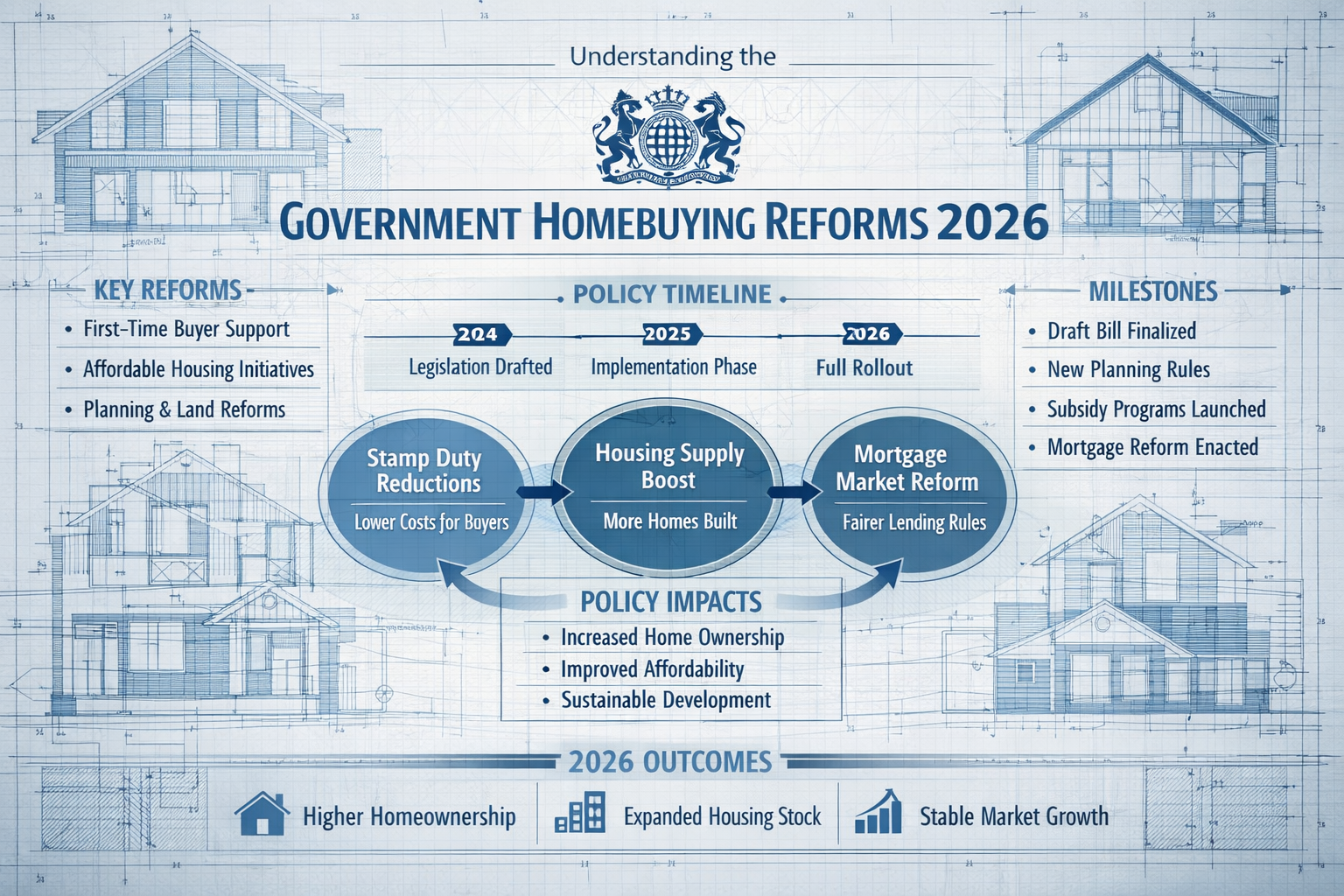
The UK property market stands at a crossroads in 2026. With government reforms poised to reshape how homes are bought and sold, building surveyors face unprecedented changes that will transform their operations from the ground up. The Government Homebuying Reforms 2026: Impact on Building Survey Demand and Workflows represents more than just policy adjustments—it signals a fundamental shift in when, how, and why property condition assessments occur.
Failed property transactions currently drain £1.5 billion annually from the UK economy[1]. The government's response? A bold plan to accelerate the homebuying process by four weeks while halving transaction failures through mandatory upfront property assessments[1]. For building surveyors, this means adapting to a surge in early-stage survey demand while navigating entirely new workflow patterns.

Key Takeaways
- 📋 Mandatory upfront assessments: Sellers must commission property condition surveys before listing, shifting surveyor engagement from buyer-driven to seller-initiated workflows
- ⏱️ Four-week acceleration target: Reforms aim to compress transaction timelines by one month, requiring surveyors to deliver faster turnaround times without compromising quality
- 💷 £14.1 billion economic opportunity: Smart data reforms supporting the homebuying overhaul could unlock significant economic value, creating growth opportunities for surveying firms[3]
- 🔄 Workflow transformation: The shift from reactive buyer surveys to proactive seller assessments demands new operational models, capacity planning, and service delivery approaches
- 📊 Phased implementation: While changes won't happen overnight, surveyors must prepare now for the coming transformation in survey demand patterns and client expectations
Understanding the Government Homebuying Reforms 2026
The Core Proposals Reshaping Property Transactions
The UK government has launched a comprehensive consultation on homebuying reforms designed to address longstanding inefficiencies in the property market[2]. At the heart of these proposals lies a radical concept: sellers must work with conveyancers and surveyors to complete searches and property condition assessments before listing their properties.
This represents a complete reversal of current practice. Today, most buyers commission building surveys only after making an offer—often weeks into the transaction process. Under the new framework, comprehensive property information would be available from day one.
The proposed standardized upfront information package includes[2]:
- Property type and construction details
- Condition assessment tailored to property age and type
- Tenure information
- Council tax band
- Energy Performance Certificate (EPC) rating
- Leasehold terms (where applicable)
- Building safety data
- Standard searches (local authority, drainage and water, environmental)
"The government consultation runs for 12 weeks, with a full roadmap to be published in winter 2025-2026. Victoria Latham, Deputy Director for Housing at MHCLG, expects the homebuying reform roadmap to be ready within 12 months with all stakeholders on board."[5]
Economic Drivers Behind the Reforms
The economic case for reform is compelling. Beyond the £1.5 billion lost annually to failed transactions[1], the government's March 2026 report identifies that smart data reforms supporting these changes could unlock £14.1 billion in economic value for the UK economy[3].
The Open Property Data Association is developing critical infrastructure including the Open Property Data Schema and Smart Property Data Trust Framework to enable secure, consistent, and reusable property information across the transaction journey[3]. This digital foundation will support surveyors in delivering standardized assessments that can be trusted by all parties.
The reforms also propose binding contracts to prevent buyers from walking away after months of negotiations[1]. This increased commitment from buyers makes the upfront investment in comprehensive property assessments more justifiable for sellers.
Government Homebuying Reforms 2026: Impact on Building Survey Demand
The Shift from Buyer-Initiated to Seller-Initiated Surveys
The most profound impact of the Government Homebuying Reforms 2026: Impact on Building Survey Demand and Workflows will be the timing shift in survey commissioning. This transformation affects multiple aspects of surveyor operations:
Volume and Timing Changes:
- 🏠 Every listed property potentially requires an upfront assessment, dramatically increasing total survey volume
- ⏰ Front-loading of demand: Survey work concentrates at the listing stage rather than being distributed throughout the transaction process
- 📈 Market-wide coverage: Properties that previously sold without surveys (due to buyer decisions) now enter the assessment pipeline
Client Relationship Dynamics:
| Traditional Model | Reformed Model |
|---|---|
| Buyer commissions survey | Seller commissions survey |
| Buyer selects surveyor | Seller/agent selects surveyor |
| Focus on buyer's concerns | Focus on transparent disclosure |
| Survey timing: post-offer | Survey timing: pre-listing |
| One survey per transaction attempt | One survey serves multiple potential buyers |
This shift fundamentally changes who surveyors work for and when they're engaged. Understanding the importance of survey reports becomes critical for both sellers and buyers in this new landscape.

Implications for Different Survey Types
The reforms will affect various survey levels differently:
Level 2 Surveys (HomeBuyer Reports):
These mid-tier assessments will likely see the greatest volume increase. For standard properties, a Level 2 home survey provides the balanced approach needed for upfront seller assessments—comprehensive enough to satisfy disclosure requirements without the extensive detail of Level 3 surveys.
Level 3 Building Surveys:
Older or more complex properties will still require comprehensive Level 3 building surveys. The government's proposal specifically mentions that condition assessments should be "tailored to property age and type"[2], acknowledging that one-size-fits-all approaches won't work.
Specialist Assessments:
Certain properties will require additional specialist surveys beyond basic condition assessments, including drainage surveys, roof surveys, and structural engineer reports.
Geographic and Market Segment Variations
The impact won't be uniform across all markets. Surveyors operating in different areas will experience varying demand patterns:
High-Volume Urban Markets 🏙️:
Areas like London, Central London, and surrounding regions including Hertfordshire and Berkshire will see substantial volume increases due to high transaction rates.
Leasehold-Heavy Markets:
Properties in areas like Battersea, Chelsea, and Fulham with significant leasehold stock will require additional complexity in assessments, as upfront information packages must include detailed leasehold terms and building safety data[2].
Workflow Transformations for Building Surveyors
Operational Changes Required
The Government Homebuying Reforms 2026: Impact on Building Survey Demand and Workflows demands fundamental operational restructuring:
1. Capacity Planning and Resource Allocation 📊
Surveyors must prepare for:
- Demand spikes when properties enter the market (traditionally spring and autumn)
- Increased baseline volume as every listing requires assessment
- Compressed turnaround expectations to avoid delaying property listings
Strategic responses include:
- Hiring additional qualified surveyors
- Cross-training staff for flexibility
- Implementing surge capacity protocols
- Developing partnerships with other surveying firms for overflow work
2. Technology Integration and Digital Workflows 💻
The smart data framework supporting reforms requires surveyors to adopt:
- Standardized reporting templates compatible with the Open Property Data Schema[3]
- Digital inspection tools for efficient data capture
- Cloud-based systems for report storage and sharing
- Client portals for seamless information delivery
Modern chartered surveyors must embrace technology to handle increased volumes while maintaining quality standards.
3. Quality Assurance in High-Volume Environments ✅
Maintaining standards while scaling operations requires:
- Robust quality control processes
- Peer review systems
- Continuing professional development programs
- Clear internal protocols and checklists
The question "do I need a home survey when buying a home" becomes less relevant when sellers provide upfront assessments, but buyers may still commission independent reviews for major purchases.
New Service Models and Business Opportunities
Forward-thinking surveying firms can capitalize on the reforms by developing innovative service offerings:
Seller-Focused Service Packages 📦:
- Pre-listing consultation services
- Staged assessment options (basic to comprehensive)
- Remediation advice and contractor coordination
- Re-inspection services after repairs
Estate Agent Partnerships 🤝:
Estate agents will need reliable surveyor networks to facilitate smooth listings. Establishing preferred provider relationships creates steady workflow channels.
Subscription and Retainer Models:
Property management companies and landlords with multiple properties could benefit from ongoing assessment arrangements, creating predictable revenue streams.
Value-Added Services:
- Energy efficiency recommendations aligned with EPC requirements
- Building safety compliance verification
- Maintenance planning advice
- Property improvement ROI analysis
Strategic Preparation for Surveying Firms
Immediate Actions for 2026
While the government acknowledges that mandatory property condition assessments "would not happen immediately" and will work with industry to determine timing[2], preparation should begin now:
Short-Term Priorities (Next 6-12 Months) ⏰:
- Engage with consultation process: Submit responses and participate in industry discussions
- Assess current capacity: Calculate how many additional surveys your firm could handle
- Evaluate technology stack: Identify gaps in digital capabilities
- Review pricing models: Consider how seller-initiated surveys might affect fee structures
- Strengthen quality systems: Ensure processes can scale without quality degradation
Medium-Term Preparations (12-24 Months) 📅:
- Recruit and train staff: Begin building surveyor capacity ahead of implementation
- Implement new technologies: Deploy digital tools and standardized reporting systems
- Develop partnerships: Establish relationships with estate agents and conveyancers
- Create standardized products: Develop tiered assessment offerings for different property types
- Build marketing materials: Position your firm for the reformed market
Financial Planning and Investment Considerations
The transition period requires careful financial management:
Investment Areas 💰:
- Staff recruitment and training (largest cost component)
- Technology infrastructure and software licenses
- Marketing and business development
- Professional indemnity insurance review (coverage for new service models)
- Working capital for growth phase
Revenue Projections:
Firms should model various scenarios:
- Conservative: 25-30% volume increase over 18 months
- Moderate: 40-50% volume increase over 12 months
- Aggressive: 60-75% volume increase over 6-9 months
The actual trajectory will depend on implementation timing and market response.
Risk Management and Compliance
New workflows bring new risks that require proactive management:
Professional Liability Considerations ⚠️:
- Seller-commissioned surveys create different liability profiles
- Multiple parties may rely on a single report
- Disclosure standards may become more stringent
- Insurance policies may need adjustment
Regulatory Compliance:
- RICS standards will likely evolve alongside reforms
- Data protection requirements for digital information sharing
- Quality assurance documentation for standardized assessments
- Professional conduct standards for seller-surveyor relationships
Quality Control Protocols:
Implementing robust systems prevents quality erosion during scaling:
- Mandatory peer review for complex properties
- Regular calibration sessions among surveyors
- Client feedback monitoring
- Complaint resolution procedures

Industry Perspectives and Stakeholder Responses
Conveyancing Sector Views
The conveyancing sector has expressed mixed reactions to the proposals. While supporting the goal of faster transactions, practitioners have raised concerns about implementation challenges[6]. Key considerations include:
- Coordination between surveyors, conveyancers, and estate agents
- Timing of information gathering and verification
- Liability for information accuracy
- Cost distribution among transaction parties
Surveyor Professional Bodies
RICS and other professional bodies are actively engaged in shaping the reforms to ensure:
- Appropriate standards for upfront assessments
- Adequate time for industry preparation
- Recognition of different property types requiring different assessment levels
- Protection of professional standards during volume increases
Market Recovery Context
These reforms arrive as the UK property market shows signs of recovery. The Spring Budget 2026 included measures supporting housing market stability[4], creating a favorable environment for implementing transformative changes.
The combination of:
- Improving market conditions
- Government reform momentum
- Technology infrastructure development
- Economic incentives (£14.1 billion opportunity)[3]
…creates a unique window for successful implementation.
Preparing for the Four-Week Acceleration Target
Timeline Compression Challenges
The government's goal of speeding up homebuying by four weeks[1] places significant pressure on all transaction participants, including surveyors:
Current Timeline Reality:
- Typical transaction: 12-16 weeks from offer to completion
- Survey commissioning: Usually 1-2 weeks after offer accepted
- Survey completion: 5-10 working days depending on complexity
- Report delivery and review: Additional 3-5 days
Reformed Timeline Expectations:
- Target transaction: 8-12 weeks from offer to completion
- Survey completion: Before listing (removed from transaction timeline)
- Report availability: Immediate for prospective buyers
- Updates/re-inspections: Rapid turnaround for properties on market extended periods
Delivering Speed Without Compromising Quality
Surveyors face the challenge of faster delivery while maintaining professional standards:
Efficiency Strategies ⚡:
- Standardized inspection protocols: Checklists and templates for common property types
- Mobile technology: Tablet-based data capture eliminating transcription time
- Voice-to-text reporting: Dictation tools for efficient report writing
- Template libraries: Pre-written sections for common conditions
- Automated quality checks: Software validation of report completeness
Quality Safeguards 🛡️:
- Mandatory site time minimums regardless of efficiency gains
- Peer review for complex or high-value properties
- Client consultation requirements
- Photographic documentation standards
- Professional judgment protocols that cannot be rushed
Understanding what a surveyor checks remains fundamental—speed cannot compromise thoroughness.
Long-Term Market Evolution
Beyond 2026: Sustained Changes
The Government Homebuying Reforms 2026: Impact on Building Survey Demand and Workflows will create lasting changes extending well beyond initial implementation:
Normalized Upfront Assessments 🏡:
Within 3-5 years, upfront property condition reports will likely become as standard as EPCs, fundamentally changing buyer expectations and seller practices.
Data-Driven Property Markets 📊:
The smart data infrastructure supporting reforms will enable:
- Property condition trending over time
- Neighborhood-level building quality analytics
- Predictive maintenance insights
- More accurate property valuations incorporating condition data
Professional Specialization 🎓:
Surveying firms may increasingly specialize in:
- Rapid upfront assessments for standard properties
- Complex property deep-dive surveys
- Specialist building types (listed buildings, non-standard construction)
- Commercial property adaptations of the residential model
Buyer Behavior Evolution 👥:
As upfront information becomes standard:
- Buyers will expect comprehensive property data before viewing
- Offer negotiations will focus on known issues rather than discovery
- Transaction timelines will compress further as processes optimize
- Failed transactions will decrease as information asymmetry reduces
Competitive Landscape Shifts
The reforms will reshape competitive dynamics in the surveying sector:
Winners 🏆:
- Firms that invest early in technology and capacity
- Surveyors with strong estate agent networks
- Practices offering comprehensive service packages
- Technology-enabled firms with efficient workflows
Challenges ⚠️:
- Small practices unable to scale quickly
- Surveyors resistant to digital transformation
- Firms with limited geographic coverage
- Practices lacking quality assurance systems for high volumes
Practical Implementation Roadmap
12-Month Action Plan for Surveying Firms
Months 1-3: Assessment and Planning 🔍
- Conduct internal capacity audit
- Analyze current technology capabilities
- Review financial position for growth investment
- Engage with industry consultation process
- Benchmark against competitor preparations
Months 4-6: Foundation Building 🏗️
- Recruit additional surveying staff
- Implement core technology platforms
- Develop standardized assessment templates
- Establish estate agent partnership discussions
- Create marketing materials for new services
Months 7-9: Testing and Refinement 🧪
- Pilot upfront assessment services with willing sellers
- Test digital workflows and reporting systems
- Gather feedback from early adopters
- Refine pricing models based on actual costs
- Train staff on new procedures
Months 10-12: Scale Preparation 📈
- Finalize operational procedures
- Complete staff training programs
- Launch marketing campaigns
- Activate partnership agreements
- Prepare for volume increases
Key Performance Indicators to Monitor
Successful adaptation requires tracking relevant metrics:
Volume Metrics 📊:
- Survey requests per week/month
- Conversion rates from inquiry to instruction
- Market share in target areas
- Repeat client percentages
Efficiency Metrics ⏱️:
- Average turnaround time (instruction to report delivery)
- Surveyor utilization rates
- Reports per surveyor per week
- Administrative time ratios
Quality Metrics ✅:
- Client satisfaction scores
- Complaint rates
- Peer review pass rates
- Report amendment frequency
Financial Metrics 💷:
- Revenue per surveyor
- Profit margins by service type
- Customer acquisition costs
- Return on technology investments
Conclusion
The Government Homebuying Reforms 2026: Impact on Building Survey Demand and Workflows represents the most significant transformation of the UK property market in decades. For building surveyors, these changes bring both substantial challenges and remarkable opportunities.
The shift to mandatory upfront property condition assessments will fundamentally alter when and how surveys are commissioned, creating a surge in early-stage demand that will test the capacity and adaptability of surveying firms across the country. With the potential to unlock £14.1 billion in economic value[3] and save £1.5 billion annually in failed transaction costs[1], the reforms offer compelling benefits that justify the transition effort.
Success in this new landscape requires immediate action. Surveyors cannot wait until reforms are fully implemented—preparation must begin now. This means investing in technology, building capacity, developing new service models, and establishing partnerships that will position firms for the transformed market.
The four-week acceleration target and binding contract proposals will compress timelines and increase the stakes for quality, accurate assessments. Surveyors who can deliver rapid, reliable, standardized reports while maintaining professional standards will thrive. Those who resist change or fail to scale appropriately risk being left behind.
Next Steps for Surveying Professionals
Immediate Actions 🎯:
- Engage with the consultation process and stay informed about implementation timelines
- Assess your firm's readiness for increased demand and workflow changes
- Begin technology evaluation and digital transformation planning
- Calculate capacity requirements and develop recruitment strategies
- Establish relationships with estate agents and conveyancers in your area
- Review your service offerings and pricing models for the reformed market
- Invest in training to ensure your team can deliver quality at scale
The reforms are coming. The only question is whether your surveying practice will be ready to capitalize on the opportunities they create. By taking strategic action now, building surveyors can position themselves not just to survive the transition, but to thrive in the transformed property market of 2026 and beyond.
For professional guidance on navigating these changes and ensuring your property assessments meet evolving standards, consult with experienced RICS building surveyors who understand both current best practices and future requirements.
References
[1] Homebuying Reforms Aim To Cut Costs And Speed Up Property Transactions – https://businessnewswales.com/homebuying-reforms-aim-to-cut-costs-and-speed-up-property-transactions/
[2] Home Buying And Selling Reform – https://www.gov.uk/government/consultations/home-buying-and-selling-reform/home-buying-and-selling-reform
[3] Smart Data Homebuying Reforms Could Unlock 141bn For Uk Economy Government Report Shows – https://www.financialreporter.co.uk/smart-data-homebuying-reforms-could-unlock-141bn-for-uk-economy-government-report-shows.html
[4] Spring Budget 2026 Summary – https://www.tembomoney.com/learn/spring-budget-2026-summary
[5] Official Home Buying Reform Roadmap Must Be Ready By Next Year – https://thenegotiator.co.uk/news/regulation-law-news/official-home-buying-reform-roadmap-must-be-ready-by-next-year/
[6] Conveyancing Sector Responds Home Buying Reforms – https://todaysconveyancer.co.uk/conveyancing-sector-responds-home-buying-reforms/
