
The digital infrastructure boom of 2026 has created an unprecedented challenge for urban developers: how to construct massive data centres in densely populated areas without disrupting neighbouring properties. As artificial intelligence and cloud computing demands surge, Party Wall Awards in Data Centre Developments: 2026 Protocols for High-Density Urban Expansions have become critical legal instruments protecting both developers and adjacent property owners. With single data centre campuses now requiring approximately 4,000 workers instead of the historical 750, the complexity of managing party wall obligations has reached new heights.
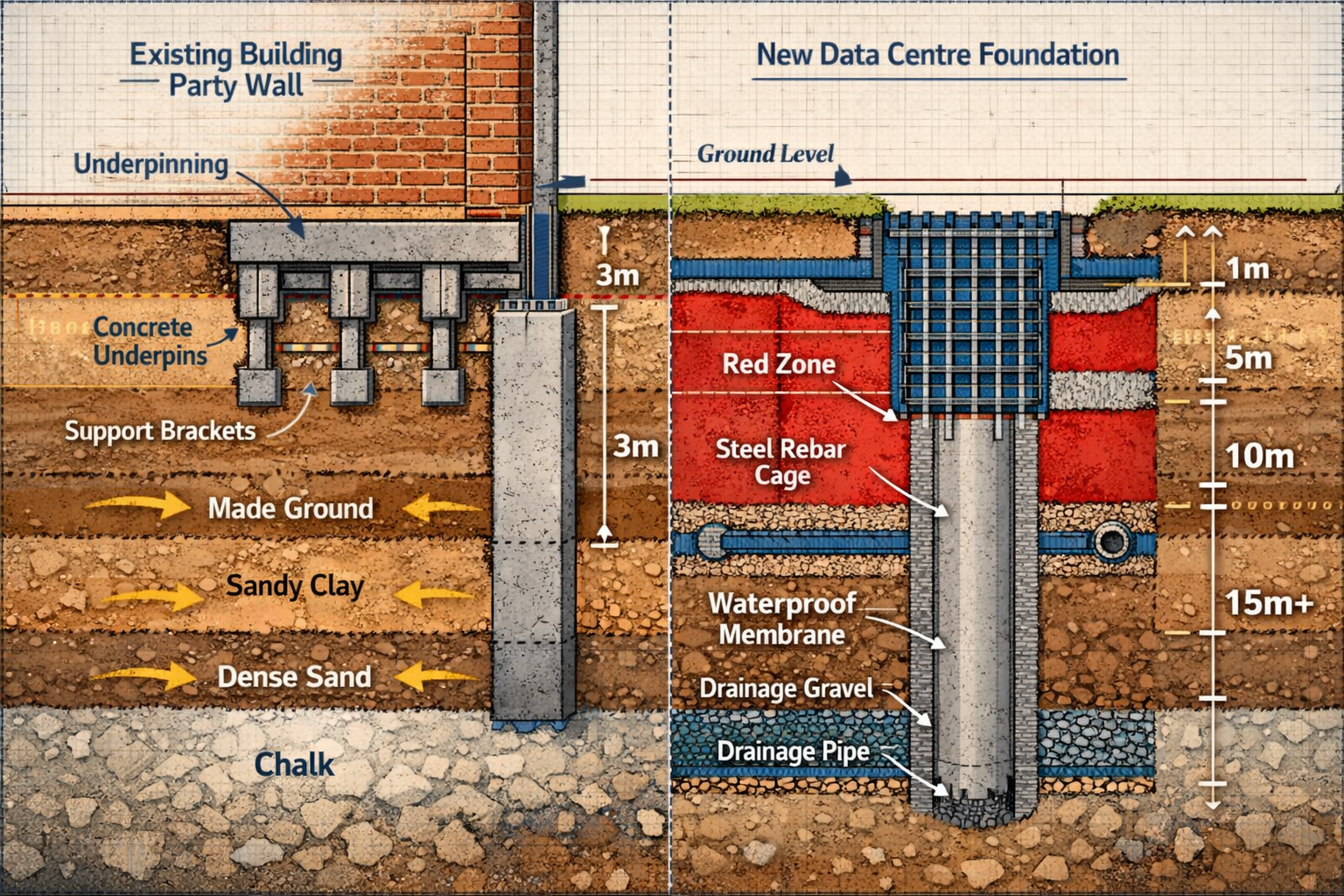
The construction of modern data centres presents unique challenges that traditional party wall procedures were never designed to handle. These facilities require foundations extending 15 to 20 metres below ground level to support heavy cooling equipment and backup power systems, creating significant risks for neighbouring structures. Understanding what is a party wall award becomes essential for anyone involved in these complex developments.
Key Takeaways
- 🏗️ Deep Foundation Requirements: Modern data centres require excavations 15-20 metres deep, creating unprecedented party wall challenges in urban settings
- 📋 Enhanced Documentation Protocols: Digital surveying methods and real-time monitoring systems are now standard practice for 2026 party wall awards
- 👥 Community Stakeholder Engagement: Early relationship building with neighbouring property owners has become mandatory rather than optional for successful project completion
- ⚖️ Regulatory Complexity: Permitting processes now involve third-party engineering reviews and more stringent approval requirements despite fast-tracking initiatives
- 💼 Professional Expertise Essential: The scale and technical complexity of data centre developments require specialist party wall surveyors with commercial construction experience
Understanding Party Wall Awards in Data Centre Developments: 2026 Protocols for High-Density Urban Expansions
What Makes Data Centre Party Wall Awards Different
Data centre construction differs fundamentally from residential or standard commercial development. These facilities house thousands of servers generating enormous heat, requiring sophisticated cooling systems and redundant power supplies that demand substantial structural support. The foundation loads for a typical hyperscale data centre can exceed 50 tonnes per square metre, compared to 10-15 tonnes for conventional office buildings.
This weight differential creates several party wall complications:
- Deeper excavations that extend well below neighbouring basements
- Vibration concerns from pile driving and continuous excavation work
- Groundwater management affecting adjacent properties
- Structural settlement risks to historic buildings sharing party walls
- Long-term operational vibration from cooling and power equipment
The Party Wall Act 1996 provides the legal framework, but its application to data centre developments requires specialist interpretation. Understanding party wall awards in this context means recognizing that standard residential protocols are insufficient for these industrial-scale projects.
The 2026 Regulatory Landscape
Despite political rhetoric about fast-tracking AI infrastructure, the reality on the ground in 2026 tells a different story. Permitting processes have become more complex, not simpler, with additional layers of review:
| Review Stage | 2024 Timeline | 2026 Timeline | Change |
|---|---|---|---|
| Initial Planning Application | 8-12 weeks | 12-16 weeks | +33% |
| Third-Party Engineering Review | Not required | 6-8 weeks | New requirement |
| Environmental Impact Assessment | 4-6 weeks | 8-12 weeks | +100% |
| Party Wall Notice Period | 2 months | 2 months | No change |
| Award Negotiation | 4-8 weeks | 8-16 weeks | +100% |
This extended timeline means developers must begin party wall procedures earlier in the planning process than ever before. The traditional approach of addressing party wall matters after planning approval is no longer viable for data centre projects.
Key Components of a Data Centre Party Wall Award
A comprehensive party wall award for data centre development in 2026 must address several critical elements beyond standard construction projects:
Structural Protection Measures
- Detailed underpinning specifications for adjacent properties
- Vibration monitoring protocols during construction and operation
- Settlement monitoring systems with defined trigger thresholds
- Emergency response procedures for structural concerns
Access Rights and Limitations
- Surveyor access schedules for ongoing inspections
- Construction vehicle routing to minimize disruption
- Working hours restrictions in mixed-use areas
- Noise mitigation requirements for 24/7 operations
Financial Safeguards
- Security deposits for potential damage claims
- Insurance requirements and coverage limits
- Compensation frameworks for temporary disruption
- Long-term maintenance obligations
The award must also specify the condition survey methodology. For data centre projects, this typically includes thermal imaging, structural monitoring equipment installation, and detailed photographic documentation of neighbouring properties before any work begins.
Navigating the Notification Process for High-Density Urban Data Centre Projects

Identifying Affected Neighbouring Properties
In high-density urban environments, the number of neighbouring properties requiring notification can be substantial. A single data centre development might trigger party wall obligations for:
- Adjacent properties sharing a physical party wall (typically 2-8 properties)
- Properties within 3 metres of excavation work (potentially 20-50 properties in dense areas)
- Properties within 6 metres if excavation extends below their foundations (another 30-60 properties)
The 3 metre rule becomes particularly important for data centre developments given their deep foundation requirements. Developers must conduct thorough surveys to identify all potentially affected parties, including:
✅ Commercial tenants in adjacent buildings
✅ Residential leaseholders in mixed-use developments
✅ Freeholders of neighbouring land
✅ Utility companies with underground infrastructure
✅ Local authorities for public infrastructure
Crafting Effective Party Wall Notices
The party wall notice for a data centre development must be far more detailed than standard residential notices. Best practice in 2026 includes:
Technical Specifications
- Detailed foundation design drawings
- Excavation depth and methodology
- Pile driving schedules and vibration predictions
- Underpinning proposals where applicable
- Drainage and waterproofing systems
Timeline Information
- Phased construction schedule
- Expected duration of noisy works
- Access requirements and frequency
- Monitoring inspection schedules
Contact Information
- Building owner details
- Lead contractor information
- Appointed party wall surveyor
- 24/7 emergency contact numbers
Many developers in 2026 supplement statutory notices with community information sessions, recognizing that proactive engagement prevents disputes more effectively than legal documentation alone. This approach addresses the widespread misconceptions about data centres that often fuel neighbour opposition.
Managing the Response Period
Once notices are served, neighbouring property owners have 14 days to respond. The three possible outcomes are:
- Consent – The neighbour agrees to the works (rare for major data centre projects)
- Dissent – The neighbour formally objects, triggering the award process
- No response – Treated as dissent after 14 days
For data centre developments, dissent is the norm rather than the exception. This isn't necessarily adversarial; it simply means the formal award process will establish protections and procedures. Developers should anticipate this outcome and have surveyors ready to begin the award process immediately.
The challenge in 2026 is managing multiple simultaneous negotiations with dozens of neighbouring property owners. Digital project management systems have become essential for tracking:
- Notice service dates and response deadlines
- Individual surveyor appointments for each property
- Ongoing negotiations and agreed terms
- Condition survey scheduling
- Award finalization status
When disputes arise, having access to experienced professionals who understand resolving party wall disputes becomes crucial for maintaining project timelines.
Community Engagement and Stakeholder Management in 2026 Data Centre Developments

Why Community Engagement Has Become Mandatory
The research is clear: community engagement is now critical to successful data centre development. Many communities harbor significant misconceptions about these facilities, from exaggerated noise concerns to unfounded fears about electromagnetic radiation. Early relationship building with local stakeholders has transitioned from optional public relations to a mandatory component of development timelines.
Effective community engagement for party wall matters involves:
Pre-Notice Consultation
Before serving formal party wall notices, leading developers in 2026 conduct informal consultations with neighbouring property owners. This might include:
- Information sessions explaining the project and its benefits
- One-on-one meetings with directly adjacent property owners
- Visual presentations showing construction phasing
- Question-and-answer forums with technical experts
- Distribution of fact sheets addressing common concerns
Ongoing Communication Channels
Throughout the construction period, maintaining open communication prevents minor issues from escalating into formal disputes:
- Dedicated community liaison officer
- Regular email updates on construction progress
- 24/7 hotline for concerns or complaints
- Monthly stakeholder meetings during active construction
- Real-time monitoring data sharing (vibration, noise levels)
Addressing Common Neighbour Concerns
Neighbouring property owners typically raise several recurring concerns about data centre construction:
🏠 Property Damage Fears
Neighbours worry about structural damage from deep excavations and ongoing vibration. The party wall award addresses this by mandating comprehensive condition surveys, continuous monitoring, and clear compensation mechanisms. Sharing examples of successful monitoring programs from similar projects helps alleviate these concerns.
💷 Property Value Impact
Some neighbours fear proximity to industrial facilities will reduce property values. While party wall awards don't address market value directly, demonstrating the economic benefits of data centres (employment, tax revenue, infrastructure improvements) helps counter this perception.
🔊 Noise and Disruption
Construction noise is inevitable, but the award can establish strict working hours, noise limits, and advance notice requirements for particularly disruptive activities. Modern data centres also operate far more quietly than many neighbours expect, with sophisticated sound attenuation systems.
⏰ Timeline Uncertainty
Neighbours want to know how long disruption will last. Providing realistic, phased timelines with clear milestones helps manage expectations. The award should specify maximum construction durations and penalties for delays.
The Role of Independent Surveyors
When a neighbour dissents to a party wall notice, they have the right to appoint their own surveyor or agree to a single "agreed surveyor" acting for both parties. For data centre developments, the independent surveyor model (each party appointing their own) is most common.
The appointed surveyors must:
- Conduct thorough condition surveys of neighbouring properties
- Review and assess the proposed construction methodology
- Negotiate protective measures and monitoring requirements
- Draft the party wall award document
- Oversee compliance during construction
- Resolve any disputes that arise during works
Finding a reliable party wall surveyor with data centre experience is crucial. These projects require surveyors who understand:
- Heavy industrial construction techniques
- Geotechnical engineering principles
- Vibration analysis and monitoring
- Commercial construction timelines
- High-value property damage assessment
The surveyor fees are typically paid by the building owner (the data centre developer), even when the neighbour appoints the surveyor. This cost should be factored into project budgets, as complex developments might require surveyor involvement for 12-24 months.
Technical Considerations for Data Centre Party Wall Awards
Foundation Design and Underpinning Requirements
Modern data centres require exceptionally deep foundations to support their massive structural loads. A typical hyperscale facility might use:
- Piled foundations extending 15-20 metres below ground level
- Raft foundations with reinforced concrete slabs 2-3 metres thick
- Basement levels for cooling systems and backup generators
- Seismic isolation systems in earthquake-prone areas
When these foundations extend below neighbouring properties, underpinning becomes necessary. The party wall award must specify:
- Underpinning methodology (mass concrete, piled, or beam and base)
- Sequencing to minimize risk to existing structures
- Monitoring requirements during underpinning works
- Contingency procedures if unexpected conditions arise
- Quality assurance and inspection protocols
Structural engineer reports play a vital role in designing appropriate underpinning solutions and demonstrating their adequacy to neighbouring property owners and their surveyors.
Vibration Monitoring and Mitigation
Vibration is a primary concern for party wall awards in data centre developments. Two distinct phases require attention:
Construction Phase Vibration
- Pile driving operations
- Excavation and earth removal
- Concrete pouring and compaction
- Heavy equipment operation
Operational Phase Vibration
- Cooling system pumps and fans
- Backup generator testing
- Mechanical equipment operation
- Transformer hum and vibration
The party wall award should establish:
- Baseline vibration surveys before construction begins
- Continuous monitoring at agreed locations on neighbouring properties
- Alert thresholds requiring immediate investigation
- Mitigation measures if thresholds are exceeded
- Regular reporting to neighbouring property owners and surveyors
Modern monitoring systems in 2026 use wireless sensors providing real-time data accessible via smartphone apps, giving neighbours transparency and confidence that their properties are protected.
Drainage and Waterproofing Obligations
Deep excavations for data centres can significantly alter groundwater flows, potentially affecting neighbouring properties. The party wall award must address:
Dewatering During Construction
- Pumping strategies to manage groundwater
- Monitoring of neighbouring basements for water ingress
- Emergency response procedures for flooding
- Restoration of natural drainage patterns post-construction
Permanent Drainage Systems
- Waterproofing of party walls below ground level
- Drainage channels and sump systems
- Long-term maintenance responsibilities
- Access rights for future maintenance
Surface Water Management
- Rainwater runoff from large roof areas
- Prevention of water discharge onto neighbouring land
- Compliance with sustainable drainage requirements
For properties with shared drainage systems, commercial building surveys can identify existing infrastructure that might be affected by data centre construction.
Cost Implications and Financial Protections
Who Pays for Party Wall Procedures?
Under the Party Wall Act, the building owner (data centre developer) bears the costs of party wall procedures, including:
- Serving notices and preparing documentation
- Surveyor fees for both parties
- Condition surveys and monitoring systems
- Award preparation and administration
- Dispute resolution costs
For a major data centre development affecting 50+ neighbouring properties, total party wall costs can easily reach £250,000 to £500,000 or more. This represents a small fraction of total project costs (typically under 0.5%) but must be budgeted appropriately.
Security for Costs and Compensation
Party wall awards for data centre developments typically include financial protections:
Security Deposits
Many awards require the developer to provide security (cash deposit or bond) to cover potential damage claims. For major projects, this might be:
- £50,000 to £100,000 per directly adjacent property
- £10,000 to £25,000 per property within excavation zones
- Released upon successful completion and final surveys
Compensation Frameworks
The award should establish clear procedures for:
- Reporting and investigating damage claims
- Independent assessment of damage causation
- Repair cost estimation and approval
- Payment timelines and dispute resolution
- Compensation for temporary inconvenience
Insurance Requirements
Developers must maintain comprehensive insurance covering:
- Construction all-risks policies
- Professional indemnity for design teams
- Public liability for third-party damage
- Contractor performance bonds
Neighbouring property owners should verify these insurances are in place before consenting to works commencing.
Best Practices for Data Centre Developers in 2026
Early Planning and Timeline Management
Successful data centre developers in 2026 integrate party wall procedures into their critical path planning from day one. Best practice timelines include:
Pre-Planning Phase (Months 1-3)
- Identify all potentially affected properties
- Conduct preliminary stakeholder engagement
- Appoint experienced party wall surveyors
- Prepare detailed construction methodology
Planning Application Phase (Months 4-8)
- Submit planning applications
- Continue community engagement
- Prepare party wall notice documentation
- Identify potential objectors and concerns
Pre-Construction Phase (Months 9-14)
- Serve formal party wall notices
- Negotiate and finalize awards
- Conduct condition surveys
- Install monitoring systems
- Obtain all necessary consents
Construction Phase (Months 15-36)
- Maintain ongoing communication
- Monitor and report regularly
- Address concerns promptly
- Conduct interim inspections
This extended timeline reflects the reality that party wall procedures for data centre developments cannot be rushed without creating significant project risks.
Selecting the Right Professional Team
The complexity of Party Wall Awards in Data Centre Developments: 2026 Protocols for High-Density Urban Expansions demands specialist expertise:
Essential Team Members
- Party wall surveyor with data centre experience
- Structural engineer specializing in heavy industrial construction
- Geotechnical engineer for foundation design and ground conditions
- Community liaison officer for stakeholder management
- Legal counsel familiar with Party Wall Act applications
- Project manager experienced in complex urban developments
When disputes arise or particularly complex technical issues emerge, developers may need to engage expert witness services to provide independent technical opinions.
Digital Documentation and Transparency
The construction boom of 2026 has accelerated technology adoption in party wall surveying. Leading practices now include:
Digital Condition Surveys
- 3D laser scanning of neighbouring properties
- Thermal imaging to identify existing defects
- Photogrammetry for detailed visual records
- Drone surveys for roof and elevation documentation
Real-Time Monitoring Platforms
- Cloud-based dashboards showing vibration data
- Automated alerts when thresholds are approached
- Historical data analysis and trending
- Neighbour access to monitoring information
Project Communication Systems
- Dedicated project websites with construction updates
- Email notification systems for upcoming works
- Mobile apps for reporting concerns
- Digital document libraries for awards and surveys
This transparency builds trust with neighbouring property owners and provides robust documentation if disputes arise.
Contingency Planning for Common Issues
Despite careful planning, data centre construction often encounters challenges:
Unexpected Ground Conditions
- Archaeological discoveries requiring work stoppages
- Contaminated soil requiring remediation
- Underground utilities in different locations than records show
- Variable soil bearing capacity affecting foundation design
Construction Delays
- Weather-related disruptions
- Material supply chain issues
- Labour shortages (particularly relevant given 4,000-worker requirements)
- Regulatory approval delays
Neighbour Relations Challenges
- Unreasonable demands from some property owners
- Coordinating access to multiple properties
- Managing expectations during extended projects
- Addressing concerns about operational phase impacts
Party wall awards should include variation procedures allowing amendments when circumstances change, avoiding the need to restart the entire process.
Common Questions About Party Wall Awards in Data Centre Developments
Do I Need a Party Wall Agreement for Data Centre Construction?
If your data centre development involves any of the following, you almost certainly need party wall procedures:
- Building on or near a boundary shared with another property
- Excavating within 3 metres of a neighbouring structure
- Excavating within 6 metres if going below neighbouring foundations
- Working on an existing party wall or structure
For more guidance on specific situations, review do you need a party wall agreement.
Can We Proceed Without a Formal Award?
Technically, if all affected neighbours consent in writing, formal awards aren't required. However, for data centre developments, this is extremely rare and generally inadvisable because:
- The number of affected properties makes universal consent unlikely
- The technical complexity requires formal documentation
- The financial stakes justify proper procedures
- Future disputes are more difficult to resolve without awards
- Lenders and insurers typically require formal awards
How Long Does the Party Wall Award Process Take?
For data centre developments in 2026, realistic timelines are:
- Simple projects (1-5 neighbours): 3-4 months
- Medium projects (6-20 neighbours): 4-6 months
- Complex projects (20+ neighbours): 6-12 months
These timelines assume cooperative neighbours and straightforward technical issues. Disputes or complex negotiations can extend the process significantly.
What Happens If Neighbours Refuse to Engage?
If a neighbour doesn't respond to a party wall notice within 14 days, this is treated as dissent. The building owner can then appoint a surveyor on the neighbour's behalf. While this seems to favor developers, the appointed surveyor still has a duty to protect the neighbour's interests, and the process continues as normal.
For persistent communication difficulties, refer to resources on resolving party wall disputes.
Are Party Wall Awards Legally Binding?
Yes. Party wall awards are legally enforceable documents. If either party fails to comply with the terms, the other party can seek enforcement through the courts. This legal weight makes proper drafting essential and provides confidence to all parties that their interests are protected.
Future Trends in Data Centre Party Wall Procedures
Regulatory Evolution
As data centre construction continues to accelerate, regulatory frameworks are evolving:
Potential Legislative Changes
- Specific party wall guidance for industrial-scale developments
- Mandatory community consultation requirements
- Enhanced environmental impact considerations
- Standardized monitoring and reporting protocols
Industry Standards Development
Professional bodies are developing best practice guidance specifically for data centre party wall procedures, recognizing that existing residential-focused guidance is insufficient.
Technology Integration
The digital transformation of party wall surveying will continue:
- Artificial intelligence analyzing monitoring data to predict potential issues
- Blockchain for immutable record-keeping of conditions and agreements
- Virtual reality allowing neighbours to visualize proposed works
- Automated reporting reducing administrative burden
Sustainability Considerations
As data centres face increasing pressure to demonstrate environmental responsibility, party wall awards may begin addressing:
- Construction waste management affecting neighbours
- Air quality during construction
- Energy efficiency measures reducing operational impacts
- Green infrastructure integration with neighbouring properties
Conclusion
Party Wall Awards in Data Centre Developments: 2026 Protocols for High-Density Urban Expansions represent a critical intersection of legal obligation, technical complexity, and community relations. As the digital infrastructure boom continues, developers who master these procedures gain significant competitive advantages through faster approvals, reduced disputes, and stronger community support.
The key success factors are clear:
✅ Start early – Integrate party wall procedures into project planning from day one
✅ Engage proactively – Build relationships with neighbours before serving formal notices
✅ Hire specialists – Use surveyors and engineers with data centre experience
✅ Embrace technology – Leverage digital tools for documentation and monitoring
✅ Communicate transparently – Share information and address concerns promptly
✅ Budget appropriately – Allocate sufficient resources for comprehensive procedures
Next Steps for Data Centre Developers
If you're planning a data centre development in a high-density urban area:
- Conduct a preliminary party wall assessment identifying all potentially affected properties
- Appoint specialist surveyors with relevant experience before serving notices
- Develop a community engagement strategy addressing local concerns proactively
- Create detailed construction methodology documents for party wall notices
- Build comprehensive timelines that realistically account for party wall procedures
- Establish monitoring systems before construction begins
For neighbouring property owners receiving party wall notices for data centre developments:
- Respond promptly to notices within the 14-day deadline
- Appoint your own surveyor rather than relying on an agreed surveyor for complex projects
- Request detailed information about construction methodology and protective measures
- Ensure comprehensive condition surveys document your property's current state
- Understand your rights to monitoring, inspections, and compensation
The construction of data centres in urban environments will only intensify as our digital economy grows. Those who approach party wall obligations as an opportunity for collaboration rather than a regulatory burden will find the process far more manageable and successful.
For additional guidance on party wall procedures, explore our party wall FAQ or contact experienced professionals who can provide project-specific advice tailored to your circumstances.
