
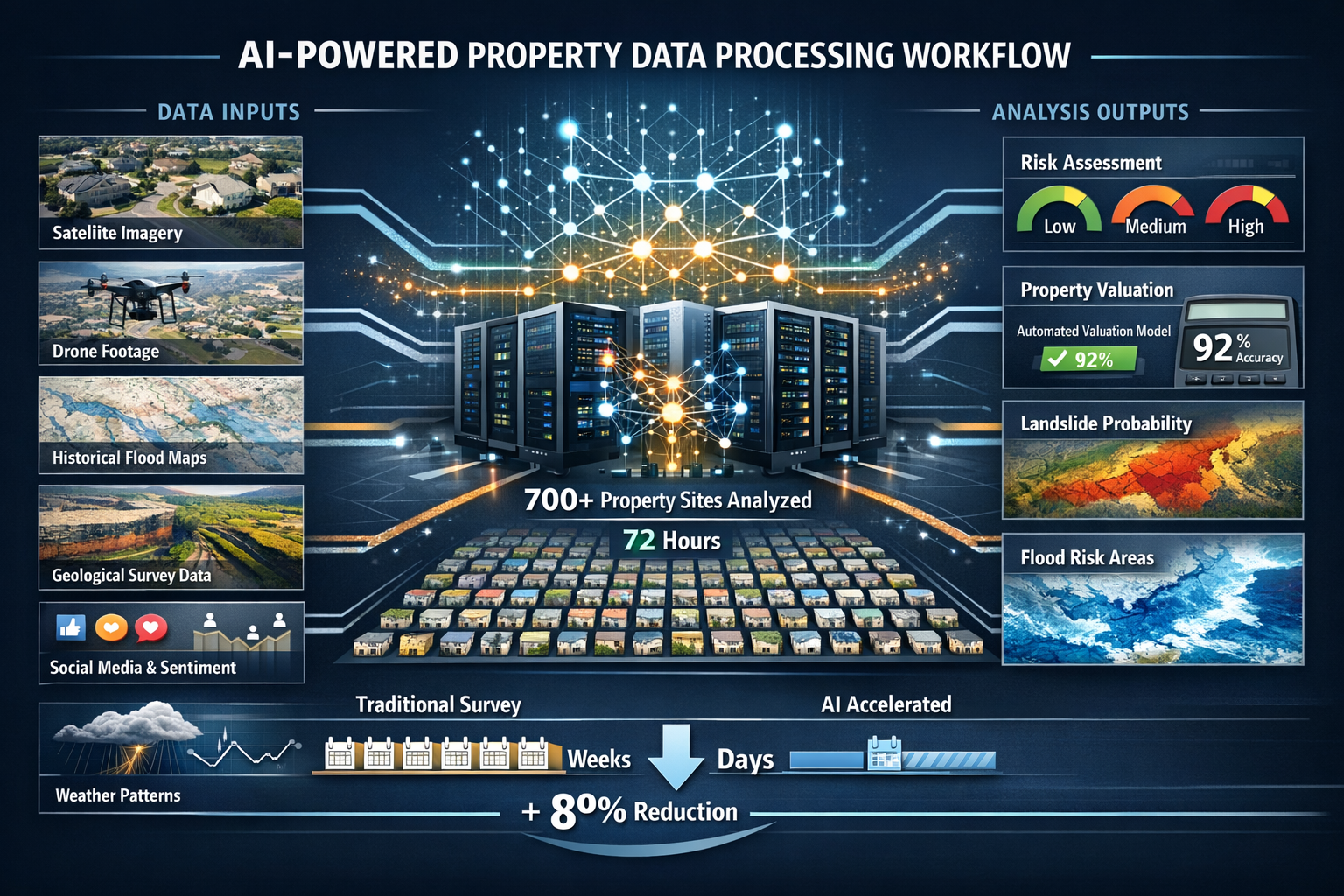
The property surveying industry stands at a transformative crossroads in 2026. Imagine analyzing 700 properties in just 72 hours with unprecedented accuracy, predicting landslides months before they occur, and identifying flood risks through satellite imagery that human eyes might miss. This isn't science fiction—it's the reality of revolutionizing property surveys: how AI and machine learning are predicting risks in 2026. As artificial intelligence reshapes traditional surveying practices, professionals and property developers face both extraordinary opportunities and critical limitations that demand careful navigation.
The convergence of machine learning algorithms, satellite imagery analysis, and predictive modeling has fundamentally altered how surveyors assess property risks, conduct due diligence, and deliver insights to clients. Yet beneath the technological promise lies a crucial truth: AI augments rather than replaces the irreplaceable judgment of qualified surveyors.
Key Takeaways
- AI processes property data 60% faster than traditional methods, analyzing 700+ sites in 72 hours while improving automated valuation accuracy by approximately 8%[1]
- Predictive algorithms now forecast environmental risks including landslides and floods by analyzing satellite imagery, soil composition, weather patterns, and thousands of unconventional data points[1]
- Human oversight remains legally essential as RICS standards confirm AI cannot meet professional requirements for high-stakes opinions without qualified surveyor judgment[4]
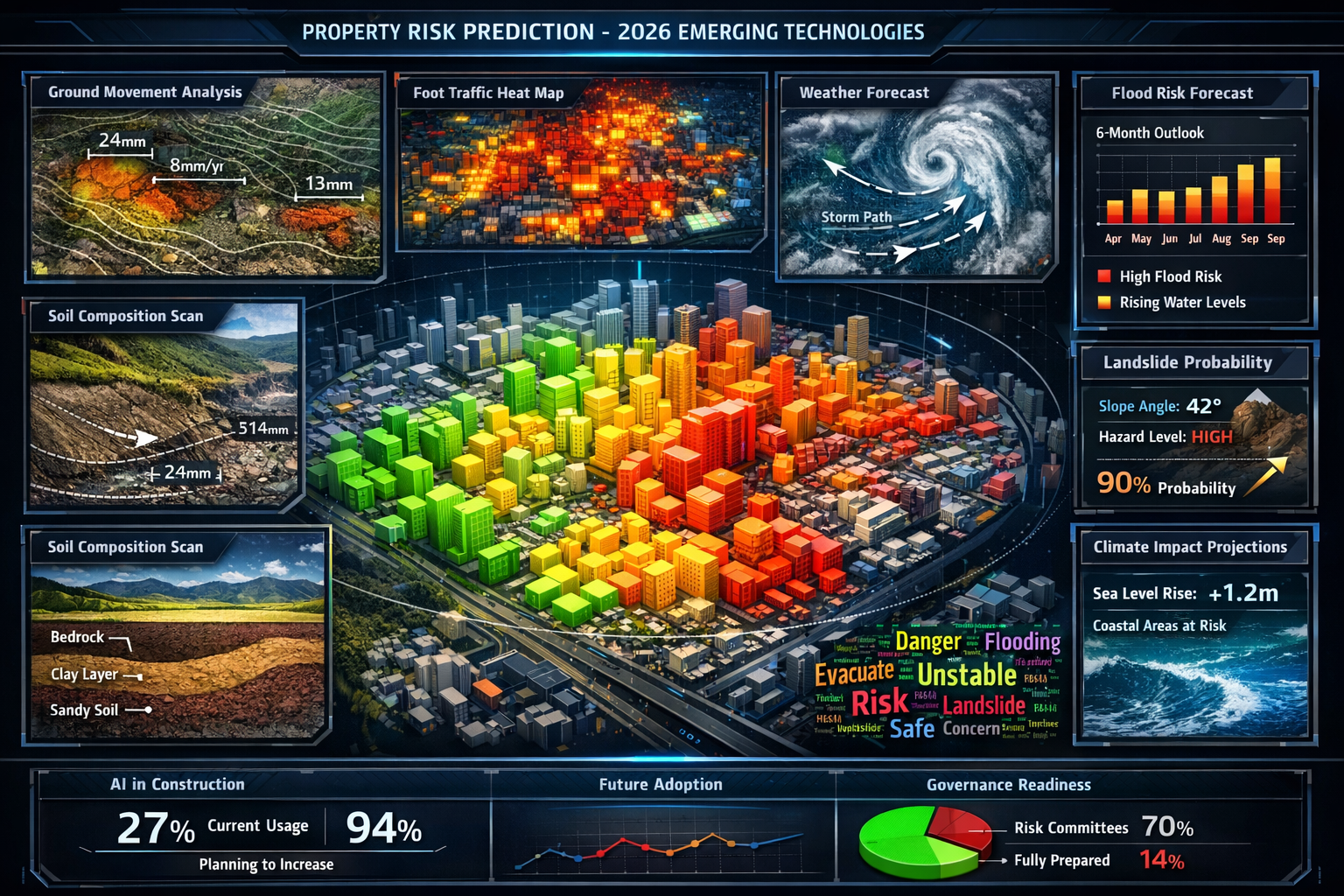
- Adoption accelerates despite readiness gaps with 94% of current AI users planning increased usage in 2026, though only 14% of organizations report full AI deployment preparedness[6][7]
- Data integration challenges persist as fragmented property information across platforms limits AI effectiveness, requiring industry-wide standardization efforts[4]
Understanding the AI Revolution in Property Surveying
The Technology Driving Change
Artificial intelligence and machine learning have evolved from experimental tools to practical applications transforming property surveying workflows. At their core, these technologies excel at pattern recognition—identifying relationships within massive datasets that would take human analysts months or years to uncover.
Modern AI property analysis platforms leverage several key technologies:
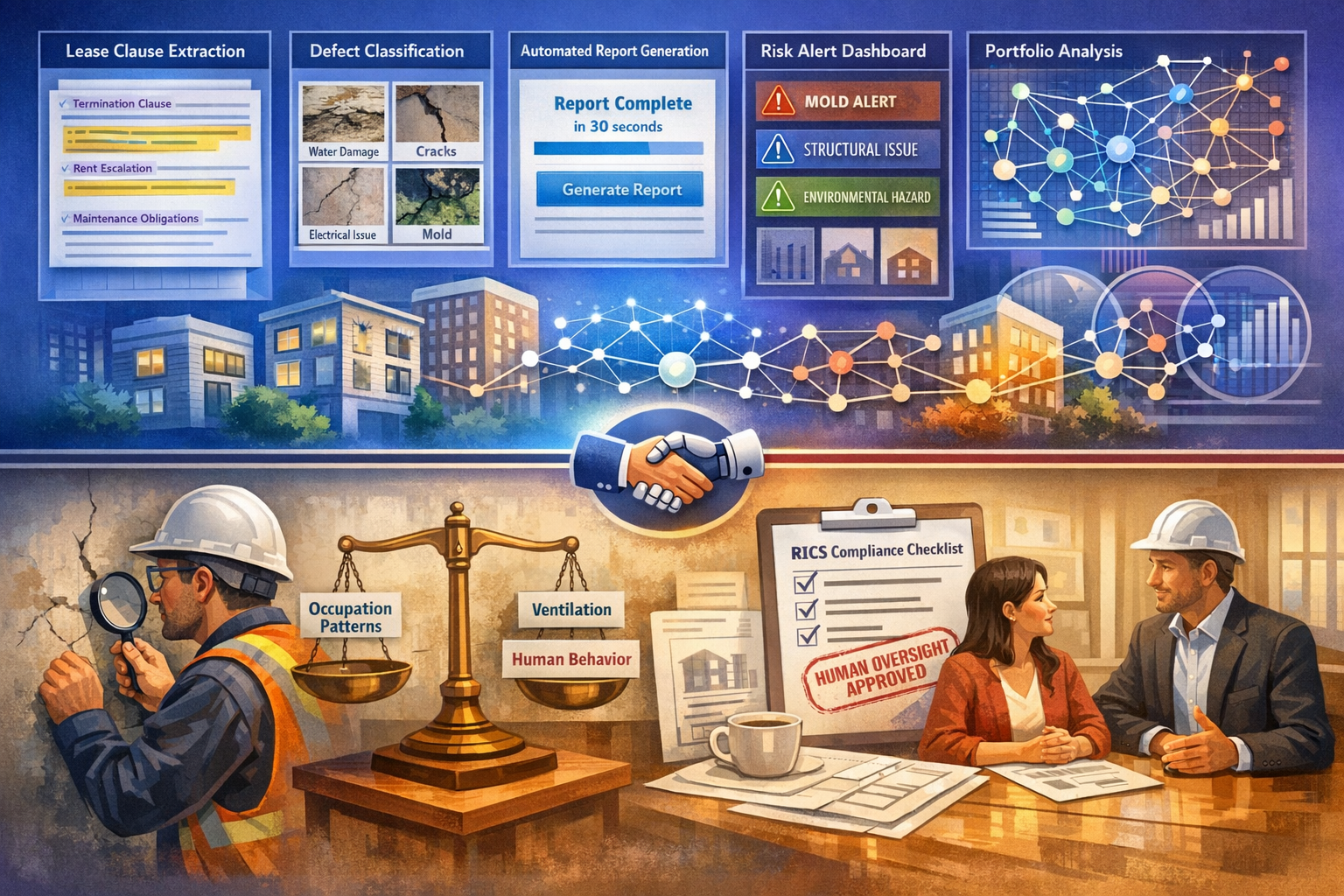
- Computer Vision: Automatically classifies photographs of building defects, identifies structural issues, and catalogs property conditions from drone imagery
- Natural Language Processing (NLP): Extracts critical information from lease agreements, planning documents, and historical records
- Predictive Analytics: Forecasts property values, market trends, and environmental risks based on historical patterns
- Deep Learning Algorithms: Evaluates complex correlations between properties to identify portfolio-level risk concentrations[1]
The speed advantage is remarkable. AI systems can now sift through hundreds of properties in minutes, filtering unsuitable options and automating extraction of data from rents, leases, and expenses to accelerate underwriting processes[1]. This capability proves particularly valuable for commercial property surveyors managing large portfolios or conducting rapid market assessments.
How AI Analyzes Vast Property Datasets
The true power of revolutionizing property surveys through AI and machine learning lies in data synthesis. Traditional surveyors examine individual properties sequentially, but AI platforms simultaneously analyze thousands of data points from disparate sources:
Conventional Data Sources:
- Public property records and transaction histories
- Tax assessments and valuation databases
- Planning permissions and building regulations
- Historical survey reports and condition assessments
Unconventional Data Sources:
- Satellite imagery tracking ground movement and vegetation changes
- Foot traffic patterns from mobile device data
- Social media sentiment about neighborhoods and developments
- Weather pattern analysis and climate projections
- Aerial imagery revealing roof conditions and property boundaries[1]
This multi-source verification approach enables AI systems to identify inconsistencies that might indicate data errors, fraudulent representations, or emerging risks. For instance, when conducting drone surveys, AI can cross-reference aerial imagery with property records to detect unauthorized structures or boundary discrepancies.
"AI can process 700+ property sites in 72 hours, reducing due diligence timelines by over 60% while improving accuracy."[1]
The integration of these diverse datasets creates comprehensive property profiles that inform risk assessments far beyond traditional methods. However, the quality of AI outputs depends entirely on the quality and completeness of input data—a challenge the industry continues to address.
AI-Powered Risk Prediction: Landslides, Floods, and Environmental Hazards
Predicting Landslide Risks Through Machine Learning
Landslide prediction represents one of the most compelling applications of AI in property surveying. Machine learning algorithms analyze geological, topographical, and environmental factors to assess slope stability and forecast potential ground movement events months before they become critical.
The AI models evaluate multiple risk indicators:
| Risk Factor | AI Analysis Method | Predictive Value |
|---|---|---|
| Slope Angle | Digital elevation models from satellite data | Identifies high-risk gradients above critical thresholds |
| Soil Composition | Geological survey integration with moisture sensors | Predicts saturation points leading to instability |
| Vegetation Coverage | Satellite imagery tracking seasonal changes | Detects root system degradation reducing soil cohesion |
| Rainfall Patterns | Historical weather data with climate projections | Forecasts triggering precipitation events |
| Ground Movement | Interferometric Synthetic Aperture Radar (InSAR) | Measures millimeter-level displacement over time |
Advanced algorithms combine these factors to generate probability scores for landslide events across different timeframes—30 days, 6 months, and multi-year projections. This enables property developers to make informed decisions about site selection, foundation design, and risk mitigation strategies.
For surveyors conducting building surveys in hilly or mountainous regions, AI-powered landslide risk assessments provide critical supplementary data that enhances traditional site evaluations. The technology proves particularly valuable for insurance underwriting, where accurate risk quantification directly impacts premium calculations and coverage decisions.
Flood Risk Assessment and Prediction
Flood prediction through AI has advanced significantly in 2026, moving beyond static flood zone maps to dynamic, scenario-based risk modeling. Machine learning systems integrate historical flood data with real-time environmental monitoring to forecast inundation risks under various conditions.
The AI analysis incorporates:
🌊 Hydrological Modeling: Simulates water flow patterns based on topography, drainage systems, and watershed characteristics
☁️ Weather Pattern Recognition: Identifies atmospheric conditions historically associated with severe precipitation events
🏗️ Infrastructure Assessment: Evaluates drainage capacity, flood defense effectiveness, and urban development impact on natural water flow
🌡️ Climate Change Projections: Integrates long-term climate models to assess future flood frequency and severity changes
📊 Sea Level Rise Calculations: For coastal properties, factors in projected ocean level increases and storm surge amplification
These systems can simulate thousands of economic scenarios to stress-test property portfolios against various flood events[1]. For property developers planning new construction, this capability provides invaluable insights for site selection, elevation planning, and flood mitigation design.
When conducting drainage surveys, surveyors can now supplement traditional assessments with AI-generated flood risk profiles that account for both current conditions and projected future scenarios. This forward-looking approach helps clients make decisions that remain sound over decades rather than just current conditions.
Environmental Hazard Detection Beyond Traditional Methods
AI's pattern recognition capabilities extend to detecting environmental hazards that traditional survey methods might overlook or assess inconsistently. Mold prediction serves as a prime example of both AI's potential and its limitations in property surveying.
Surveyors are actively developing AI systems to predict the likelihood of mold in residential properties by analyzing:
- Building construction materials and age
- Ventilation system specifications
- Historical moisture readings
- Local climate patterns
- Thermal imaging data revealing cold spots and condensation zones
However, experts acknowledge the variables are complex and unpredictable—building occupation patterns, heating schedules, ventilation usage, and human activities such as drying laundry on radiators create outcomes that resist simple algorithmic prediction[4]. This reality illustrates why human judgment remains essential even as AI capabilities expand.
Other environmental hazards where AI shows promise include:
✅ Asbestos Probability Mapping: Based on building age, construction type, and renovation history
✅ Contaminated Land Assessment: Cross-referencing historical land use with geological surveys
✅ Radon Gas Risk: Analyzing geological formations and building foundation types
✅ Subsidence Susceptibility: Evaluating soil types, mining history, and tree proximity
✅ Air Quality Forecasting: Integrating traffic patterns, industrial proximity, and meteorological data
For professionals conducting damp surveys, AI tools provide additional data points that complement traditional moisture meters and visual inspections, creating more comprehensive risk assessments.
Automating Data Processing and Analysis in Property Surveys
Accelerating Due Diligence Timelines
The due diligence process for property transactions traditionally consumed weeks or months as surveyors manually reviewed documents, conducted site visits, analyzed comparable sales, and compiled comprehensive reports. AI automation has compressed these timelines dramatically while maintaining or improving accuracy.
Modern AI platforms automate several time-intensive tasks:
Document Review and Data Extraction:
- Automatically extracts key terms from lease agreements, identifying rent escalation clauses, break options, and tenant obligations
- Scans planning permissions and building regulation approvals for compliance verification
- Analyzes title deeds and legal documents for encumbrances, easements, and restrictions
- Compiles historical transaction data and ownership chains
Financial Analysis:
- Calculates net operating income, capitalization rates, and cash flow projections
- Identifies anomalies in expense reporting or revenue patterns
- Benchmarks rental rates against comparable properties
- Projects future performance under various market scenarios
Physical Condition Assessment:
- Processes photographs and drone survey imagery to catalog visible defects
- Generates preliminary condition reports flagging areas requiring detailed inspection
- Estimates repair costs based on defect type and property characteristics
- Prioritizes issues by severity and financial impact
The result? Due diligence timelines reduced by over 60%[1] for routine transactions, allowing surveyors to focus their expertise on complex judgment calls rather than data compilation. This efficiency proves particularly valuable for investors evaluating multiple acquisition opportunities simultaneously.
However, testing conducted by the RICS Building Consultancy team in January 2026 revealed important limitations. While AI systems effectively identified key lease clauses in organized formats, they had significant gaps and omissions that required qualified surveyors to conduct thorough reviews[3]. Important provisions were overlooked or inadequately summarized by AI systems, underscoring the continuing need for professional oversight.
Automated Valuation Models (AVMs) and Accuracy Improvements
Automated Valuation Models represent one of the most mature applications of AI in property surveying. These systems estimate property values by analyzing comparable sales, property characteristics, market trends, and location factors through sophisticated algorithms.
In 2026, AI-enhanced AVMs demonstrate approximately 8% improvement in overall accuracy compared to previous generation models[1]. This improvement stems from:
- Expanded Comparable Analysis: AI evaluates thousands of comparable properties rather than the dozen or so a human appraiser might consider
- Real-Time Market Adjustment: Continuous data feeds enable daily recalibration based on latest transactions
- Granular Location Factors: Micro-location analysis accounting for proximity to amenities, transport links, and neighborhood characteristics
- Property-Specific Adjustments: Computer vision analysis of listing photographs to assess condition and quality
- Market Sentiment Integration: Analysis of listing duration, price reductions, and buyer inquiry patterns
Despite these advances, AVMs have clear boundaries. They work best for:
✅ Standard residential properties in active markets with abundant comparable sales
✅ Initial screening and portfolio-level valuations
✅ Monitoring value changes over time
✅ Desktop valuations for refinancing standard properties
AVMs struggle with:
❌ Unique or specialized properties lacking comparable sales
❌ Properties in thin markets with limited transaction data
❌ Valuations requiring detailed condition assessment
❌ Situations where professional judgment about market trends is critical
For RICS valuations and formal appraisals, qualified surveyors must verify AVM outputs, conduct physical inspections, and apply professional judgment to ensure compliance with professional standards. The Royal Institution of Chartered Surveyors confirmed in early 2026 that full automation of high-stakes professional opinions cannot meet RICS standards without human oversight[4].
Template-Driven Report Generation
AI has transformed the report writing process through intelligent template systems that automatically populate survey reports with standardized language, condition descriptions, and recommendations based on inspection data.
These systems offer several advantages:
📝 Consistency: Standardized terminology and formatting across all reports
⚡ Speed: Report generation time reduced from days to hours
🎯 Completeness: Automated checklists ensure all required sections are addressed
📊 Data Visualization: Automatic generation of charts, graphs, and comparison tables
🔄 Version Control: Systematic tracking of changes and updates
The workflow typically involves:
- Surveyor conducts site inspection using mobile app or tablet
- Photographs and observations uploaded with location tagging
- AI categorizes defects and matches to condition rating scales
- Template system generates draft report sections
- Surveyor reviews, edits, and adds professional judgment
- Final report compiled with all supporting documentation
For comprehensive condition survey reports, this automation handles routine description and documentation while freeing surveyors to focus on analysis, risk assessment, and client-specific recommendations.
However, the RICS emphasizes that interpretation of findings, assessment of risk, and provision of tailored advice require human judgment that cannot be automated[3]. Template systems accelerate documentation but cannot replace the surveyor's expertise in understanding how theoretical knowledge applies to real-world situations.
Real-World Case Studies: AI in Action
Portfolio Risk Management for Institutional Investors
A major UK pension fund managing a £2.3 billion property portfolio implemented AI-powered risk management systems in late 2025 to evaluate correlations between properties and identify concentration risks.
The Challenge:
The portfolio contained 847 commercial and residential properties across England and Wales. Traditional risk assessment methods evaluated properties individually but struggled to identify portfolio-level vulnerabilities—such as multiple properties exposed to the same flood zone or economic sector.
The AI Solution:
Deep learning algorithms analyzed the entire portfolio simultaneously, evaluating:
- Geographic clustering and regional economic exposure
- Tenant industry concentration and correlation
- Environmental risk overlap (flood zones, subsidence areas)
- Lease expiry patterns and renewal risk timing
- Capital expenditure requirements across the portfolio
The Results:
- Identified 23 properties with overlapping flood risk that traditional analysis had missed
- Discovered tenant industry concentration creating vulnerability to retail sector decline
- Generated stress-test scenarios simulating various economic downturns
- Enabled strategic disposal of 14 high-risk properties before market correction
- Reduced portfolio risk exposure by 18% while maintaining target returns
This case demonstrates AI's strength in portfolio-level pattern recognition that exceeds human analytical capacity when dealing with hundreds of interconnected assets.
Accelerated Due Diligence for Property Acquisition
A property development firm evaluating a mixed-use development opportunity in Manchester faced a tight 28-day due diligence deadline before their exclusive negotiation period expired.
The Challenge:
The target property included:
- 127-year-old building requiring extensive condition assessment
- 23 commercial leases with varying terms and conditions
- Complex planning permission history with multiple amendments
- Environmental concerns regarding previous industrial use
The AI-Assisted Approach:
The development firm engaged surveyors using AI-enhanced due diligence platforms:
- Document analysis AI extracted key terms from all 23 leases in 4 hours
- Computer vision systems analyzed 847 photographs identifying potential structural issues
- Environmental risk AI flagged contamination probability based on historical land use
- Automated comparable analysis generated preliminary valuation range
The Results:
- Due diligence completed in 19 days versus estimated 42 days using traditional methods
- Identified critical lease break clause that would have impacted valuation by £340,000
- Flagged three structural issues requiring specialist inspection that visual review might have missed
- Enabled informed negotiation resulting in 7.3% purchase price reduction
Importantly, qualified building surveyors verified all AI findings, conducted physical inspections, and provided professional opinions that formed the basis of the acquisition decision.
Predictive Maintenance for Property Management
A social housing provider managing 4,200 residential units across London implemented AI predictive maintenance systems to optimize repair scheduling and prevent emergency failures.
The Challenge:
Reactive maintenance was costly and disruptive to tenants. Traditional planned maintenance schedules were inefficient, replacing components on fixed timelines regardless of actual condition.
The AI Solution:
Machine learning algorithms analyzed:
- Historical repair records identifying failure patterns
- Building age, construction type, and component specifications
- Weather data correlating with heating system failures
- Tenant-reported issues predicting larger problems
- Thermal imaging from periodic inspections
The Results:
- Predicted heating system failures 6-8 weeks in advance with 73% accuracy
- Reduced emergency callouts by 34% through preventive interventions
- Optimized maintenance scheduling reducing costs by 22%
- Improved tenant satisfaction scores by 28% through reduced disruption
- Extended component lifespan through timely interventions before catastrophic failure
This application showcases AI's value in pattern recognition across time, identifying subtle indicators that predict future failures before they become emergencies.
The Critical Role of Human Expertise in the AI Era
Why RICS Standards Require Human Oversight
The Royal Institution of Chartered Surveyors has established clear boundaries for AI application in professional surveying. While acknowledging AI's value for routine tasks, RICS confirmed that full automation of high-stakes professional opinions cannot meet RICS standards without human oversight[4].
The professional standards framework identifies several areas where human judgment remains irreplaceable:
Complex Valuation Scenarios:
- Properties with unique characteristics lacking comparable sales data
- Valuations requiring interpretation of market trends and future projections
- Specialized properties (historic buildings, contaminated sites, development land)
- Situations where professional skepticism about data accuracy is essential
Risk Assessment and Advice:
- Evaluating the significance of defects in context of property use and client needs
- Balancing competing factors that algorithms cannot weight appropriately
- Providing nuanced recommendations accounting for client-specific circumstances
- Exercising professional judgment when data is incomplete or contradictory
Legal and Regulatory Compliance:
- Ensuring survey reports meet legal requirements and professional standards
- Taking professional responsibility for opinions and recommendations
- Maintaining independence and objectivity in potentially conflicted situations
- Adapting to regulatory changes and emerging legal precedents
The consensus among professional bodies is clear: "AI should augment, not replace, surveyor judgment"[4]. This principle guides responsible AI adoption across the industry.
The Limitations Revealed in RICS Testing
Testing conducted by the RICS Building Consultancy team in January 2026 provided concrete evidence of AI's current limitations when applied to complex surveying tasks.
Lease Review Testing:
RICS presented AI systems with 50 commercial lease agreements of varying complexity and asked them to identify key terms, obligations, and potential issues.
Results:
- ✅ AI effectively identified standard clauses in well-organized, modern leases
- ✅ Extracted basic financial terms (rent, service charges, rent review dates) with 94% accuracy
- ❌ Missed nuanced provisions in older leases with non-standard language
- ❌ Failed to identify contradictions between different lease sections
- ❌ Overlooked important qualifications and exceptions to standard clauses
- ❌ Could not assess the practical implications of identified terms
The testing revealed that significant gaps and omissions required qualified surveyors to conduct thorough reviews[3]. Important provisions were overlooked or inadequately summarized by AI systems, particularly when:
- Lease language deviated from modern standard forms
- Key provisions were buried in supplemental documents
- Terms required interpretation in light of current legislation
- Practical implications depended on property-specific context
Building Condition Assessment:
Similar testing of AI photo classification systems for building defects showed:
- ✅ Accurate identification of obvious defects (cracked render, missing tiles, vegetation growth)
- ✅ Consistent categorization of standard building elements
- ❌ Difficulty distinguishing cosmetic issues from structural concerns
- ❌ Inability to assess defect severity without understanding building construction
- ❌ Failure to identify defects requiring investigation beyond visible surfaces
These limitations underscore why Level 3 building surveys conducted by qualified surveyors remain essential for properties where comprehensive condition assessment is required.
Skills Surveyors Must Develop for the AI Age
As AI handles routine analytical tasks, surveyors must evolve their skill sets to focus on areas where human expertise provides irreplaceable value. The profession is shifting toward higher-level competencies:
AI Literacy and Technology Management:
- Understanding AI capabilities and limitations to deploy tools effectively
- Evaluating AI system outputs critically rather than accepting them uncritically
- Managing technology vendors and ensuring data quality
- Staying current with emerging tools and applications
Enhanced Analytical and Interpretive Skills:
- Synthesizing insights from multiple AI-generated analyses
- Identifying when AI outputs conflict with professional experience
- Applying contextual knowledge that algorithms cannot access
- Exercising professional skepticism about data and assumptions
Client Communication and Advisory:
- Translating complex AI analyses into actionable client recommendations
- Explaining uncertainty and risk in accessible language
- Providing strategic advice beyond technical assessment
- Building trust through demonstrated expertise and judgment
Specialized Expertise:
- Developing deep knowledge in niche property types or risk areas
- Mastering complex valuation methodologies AI cannot replicate
- Understanding emerging risks (climate change, regulatory changes, market disruptions)
- Maintaining expertise in areas requiring physical inspection and tactile assessment
Professional Ethics and Responsibility:
- Maintaining independence when AI systems are provided by interested parties
- Ensuring AI usage complies with professional standards and regulations
- Taking responsibility for opinions even when supported by AI analysis
- Protecting client confidentiality in data-driven environments
The surveyors who thrive in 2026 and beyond will be those who leverage AI to enhance productivity while focusing their expertise on judgment, interpretation, and client service that technology cannot replicate.
Industry Adoption: Current State and Future Trajectory
The Adoption Gap in Construction and Surveying
Despite AI's demonstrated benefits, adoption across the architecture, engineering, and construction sector remains surprisingly limited. As of December 2025, only 27% of the sector currently uses AI[6], placing construction among the slower-adopting industries compared to finance, healthcare, and retail.
Several factors explain this adoption gap:
Data Infrastructure Challenges:
Property data remains siloed across different platforms, formats, and owners[4]. AI systems require clean, structured datasets to deliver value, but the industry continues to struggle with fragmented information:
- Leases stored in various formats (paper, PDF, proprietary systems)
- Valuation assumptions documented inconsistently
- Transaction data held by multiple parties with limited sharing
- Historical survey reports in non-searchable formats
- Building specifications and drawings in legacy systems
Cost and Resource Constraints:
- Initial AI implementation requires significant capital investment
- Small and medium-sized surveying firms lack resources for technology development
- Training costs for staff to use new systems effectively
- Ongoing subscription fees for cloud-based AI platforms
- Integration costs with existing practice management systems
Professional Conservatism:
- Established practices with proven methodologies resist change
- Concerns about professional liability when relying on AI outputs
- Uncertainty about regulatory acceptance of AI-assisted valuations
- Client expectations for traditional survey approaches
- Risk aversion in an industry where errors have significant consequences
Skills and Knowledge Gaps:
- Limited understanding of AI capabilities among senior practitioners
- Shortage of professionals with both surveying expertise and data science skills
- Inadequate vendor education about realistic AI applications
- Confusion about which tasks benefit from automation versus which require human judgment
However, the trajectory is clear: 94% of those currently using AI plan to increase their usage in 2026[6], indicating accelerating adoption momentum as early adopters demonstrate value and overcome initial implementation challenges.
The AI Governance and Preparedness Challenge
While AI adoption grows, organizational readiness for responsible AI deployment lags significantly. Industry research reveals a troubling governance gap that poses risks for firms rushing to implement AI without adequate safeguards.
Current Preparedness Landscape:
- 70% of organizations have established AI risk committees[7]
- Only 14% report being fully prepared for AI deployment[7]
- 31% struggle to keep pace or fall behind in AI implementation[7]
- 55% lack comprehensive AI governance frameworks
This preparedness gap creates several risks:
Data Privacy and Security:
- AI systems processing sensitive property and client data without adequate protection
- Unclear data retention and deletion policies
- Insufficient access controls and audit trails
- Vulnerability to data breaches affecting confidential valuations and transaction details
Bias and Discrimination:
- AI models trained on historical data perpetuating past biases
- Valuation algorithms potentially discriminating based on neighborhood demographics
- Risk assessment tools reflecting historical redlining patterns
- Lack of bias testing and mitigation strategies
Professional Liability:
- Unclear responsibility when AI systems produce erroneous outputs
- Insurance coverage gaps for AI-related errors
- Inadequate documentation of AI system limitations and assumptions
- Insufficient human review processes to catch AI mistakes
Regulatory Compliance:
- Uncertainty about AI usage compliance with RICS professional standards
- Evolving data protection regulations affecting AI training data
- Lack of transparency about AI decision-making processes
- Inadequate explainability for clients and regulators
Organizations implementing AI in 2026 must establish robust governance frameworks addressing:
✅ Clear policies on appropriate AI usage and required human oversight
✅ Data quality standards and validation processes
✅ Bias testing and fairness assessments
✅ Professional liability insurance coverage for AI-assisted work
✅ Staff training on AI capabilities, limitations, and responsible usage
✅ Client disclosure about AI usage in survey and valuation processes
✅ Regular audits of AI system performance and accuracy
✅ Vendor management ensuring third-party AI tools meet professional standards
Future Trajectory: What's Next for AI in Property Surveying
Looking beyond 2026, several emerging trends will shape how AI transforms property surveying:
Enhanced Predictive Capabilities:
- Climate change modeling integrated into long-term property risk assessments
- Economic scenario modeling predicting market cycles and property value trajectories
- Demographic shift analysis forecasting demand patterns decades in advance
- Infrastructure development impact modeling on property values and accessibility
Internet of Things (IoT) Integration:
- Building sensors providing real-time data on structural movement, moisture levels, and system performance
- Continuous monitoring replacing periodic inspections for certain risk factors
- Predictive maintenance systems preventing failures before they occur
- Energy performance optimization through AI analysis of usage patterns
Augmented Reality (AR) Survey Tools:
- AR glasses overlaying building information, defect histories, and risk assessments during site inspections
- Virtual property tours with AI-highlighted areas requiring attention
- Remote expert consultation with AI-assisted visual analysis
- Training simulations for junior surveyors using AI-generated scenarios
Blockchain and AI Convergence:
- Immutable property records enabling more reliable AI training data
- Smart contracts automating survey report delivery and payment
- Transparent audit trails of AI decision-making processes
- Decentralized property data marketplaces improving AI access to comprehensive information
Specialized AI for Niche Applications:
- Heritage building conservation AI trained on historical construction techniques
- Contaminated land assessment AI with specialized environmental risk modeling
- Party wall surveying AI predicting damage risks from adjacent construction
- Dilapidation survey AI comparing property conditions across lease terms
The future of property surveying lies not in choosing between human expertise and AI capabilities, but in developing hybrid workflows that leverage each for their respective strengths—AI for data processing, pattern recognition, and routine analysis; humans for judgment, interpretation, and client service.
Practical Implications for Surveyors and Property Developers
For Property Surveyors: Adapting Your Practice
Surveyors navigating the AI revolution in 2026 should consider these strategic adaptations:
Invest in AI Literacy:
- Attend professional development courses on AI applications in surveying
- Experiment with AI tools on low-stakes projects to understand capabilities
- Join professional networks discussing AI implementation experiences
- Subscribe to industry publications tracking AI developments
Reposition Services Around Judgment:
- Emphasize expertise in complex properties where AI provides limited value
- Develop specialized knowledge in emerging risk areas (climate adaptation, sustainability)
- Focus marketing on interpretation and advice rather than data compilation
- Offer AI-enhanced services with clear human oversight and professional responsibility
Implement AI Strategically:
- Start with routine tasks offering clear efficiency gains (document review, photo classification)
- Maintain rigorous quality control processes to catch AI errors
- Document AI usage and limitations in engagement letters and reports
- Ensure professional indemnity insurance covers AI-assisted work
Collaborate with Technology Providers:
- Provide feedback to AI vendors about practical surveying requirements
- Participate in beta testing to influence tool development
- Share anonymized data to improve AI training (with appropriate client permissions)
- Advocate for transparency in AI decision-making processes
Maintain Professional Standards:
- Never rely on AI outputs without verification and professional judgment
- Disclose AI usage to clients when material to the engagement
- Stay current with RICS guidance on AI applications
- Take full professional responsibility for all opinions regardless of AI assistance
For Property Developers: Leveraging AI for Competitive Advantage
Property developers can harness AI-powered surveying capabilities to make faster, more informed decisions:
Accelerate Acquisition Due Diligence:
- Use AI screening to evaluate multiple opportunities simultaneously
- Identify deal-breaking issues earlier in the process
- Reduce due diligence costs for properties ultimately rejected
- Compress transaction timelines to secure competitive opportunities
Enhance Risk Assessment:
- Incorporate AI-generated environmental risk assessments into site selection
- Stress-test development pro formas against AI-modeled economic scenarios
- Identify portfolio concentration risks across multiple projects
- Evaluate long-term climate change impacts on development locations
Optimize Design and Planning:
- Use AI analysis of comparable developments to inform design decisions
- Identify planning risk factors based on historical approval patterns
- Optimize unit mix based on AI-predicted demand patterns
- Evaluate alternative development scenarios rapidly
Improve Asset Management:
- Implement predictive maintenance to reduce operating costs
- Use AI monitoring to identify emerging issues before they become expensive
- Optimize capital expenditure timing based on condition forecasting
- Enhance tenant satisfaction through proactive maintenance
Critical Success Factor:
Always engage qualified surveyors to verify AI outputs and provide professional opinions. AI accelerates analysis but cannot replace the judgment required for major investment decisions. Developers who treat AI as a decision-making tool rather than a decision-maker will gain competitive advantages while managing risks appropriately.
Overcoming Challenges and Limitations
Addressing Data Quality and Integration Issues
The effectiveness of AI in property surveying depends fundamentally on data quality. The industry faces several persistent challenges:
Data Fragmentation:
Property information exists across multiple systems:
- Local authority planning databases
- Land Registry records
- Utility company infrastructure maps
- Historical survey reports in various firms' archives
- Proprietary transaction databases
- Building control records
- Environmental agency data
Solution Approaches:
- Industry-wide data standardization initiatives
- API integrations enabling cross-platform data access
- Collaborative data sharing agreements (with privacy protections)
- Investment in data cleaning and validation processes
- Blockchain-based property records for future transactions
Data Completeness:
Many properties lack comprehensive digital records, particularly:
- Older buildings with limited documentation
- Properties with informal modification histories
- Rural properties with sparse comparable sales data
- Specialized properties with unique characteristics
Solution Approaches:
- Hybrid approaches combining AI analysis with traditional research
- Incremental digitization of historical records
- Crowdsourced data collection (with verification)
- Conservative AI confidence scoring when data is limited
Data Accuracy:
AI systems trained on inaccurate data produce unreliable outputs. Common accuracy issues include:
- Incorrect property boundaries in mapping databases
- Outdated planning permission records
- Errors in comparable sales data
- Misclassified property characteristics
Solution Approaches:
- Multi-source verification before accepting data as training inputs
- Human review of AI-flagged anomalies
- Regular accuracy audits of AI system outputs
- Continuous model retraining as errors are identified
Managing the Human-AI Partnership Effectively
Successful AI implementation requires thoughtful workflow design that leverages both human and machine strengths:
Optimal Task Allocation:
| Task Type | Primary Responsibility | Supporting Role |
|---|---|---|
| Data compilation | AI | Human verification |
| Pattern identification | AI | Human interpretation |
| Routine classification | AI | Human spot-checking |
| Risk flagging | AI | Human assessment |
| Professional judgment | Human | AI data support |
| Client communication | Human | AI visualization tools |
| Regulatory compliance | Human | AI compliance checking |
| Final report approval | Human | AI quality control |
Avoiding Over-Reliance:
- Implement mandatory human review checkpoints
- Train staff to question AI outputs that seem inconsistent
- Maintain traditional skills even as AI handles routine tasks
- Document instances where human judgment overrides AI recommendations
Preventing Under-Utilization:
- Identify bottleneck tasks where AI could improve efficiency
- Measure time savings from AI implementation
- Reallocate human resources to higher-value activities
- Continuously evaluate new AI capabilities for potential application
Building Trust:
- Start with low-stakes applications where errors have minimal consequences
- Validate AI accuracy through parallel human analysis initially
- Share success stories demonstrating AI value
- Address concerns transparently when AI makes mistakes
Navigating Regulatory and Professional Standards Evolution
The regulatory landscape for AI in property surveying continues evolving. Staying compliant requires:
Monitor RICS Guidance:
- Review updated professional standards addressing AI usage
- Participate in RICS consultations on AI regulation
- Attend professional development sessions on compliance
- Seek guidance when uncertain about AI application appropriateness
Maintain Transparency:
- Disclose AI usage in engagement letters and terms of business
- Explain AI role in methodology sections of reports
- Clarify that human surveyors retain professional responsibility
- Document AI system limitations and assumptions
Prepare for Increased Regulation:
- Anticipate requirements for AI explainability and transparency
- Establish audit trails documenting AI decision-making processes
- Implement bias testing for AI systems affecting property valuations
- Develop contingency plans for AI system failures or errors
Engage with Regulators:
- Provide input on practical implications of proposed AI regulations
- Share case studies demonstrating responsible AI usage
- Collaborate on developing industry best practices
- Advocate for regulations that enable innovation while protecting consumers
Conclusion: Embracing the AI-Augmented Future of Property Surveying
The transformation of property surveying through AI and machine learning in 2026 represents both unprecedented opportunity and significant responsibility. The technology's ability to analyze 700+ properties in 72 hours, predict environmental risks months in advance, and improve valuation accuracy by 8% demonstrates genuine value that forward-thinking surveyors and developers cannot ignore[1].
Yet the RICS testing revealing significant gaps in AI lease review and the confirmation that full automation cannot meet professional standards without human oversight provides essential guardrails[3][4]. Revolutionizing property surveys through AI and machine learning in 2026 means augmentation, not replacement—enhancing human expertise rather than eliminating it.
The surveyors who will thrive in this new landscape are those who:
✅ Embrace AI tools strategically while maintaining professional judgment
✅ Invest in continuous learning about emerging technologies and applications
✅ Focus expertise on interpretation, advice, and complex scenarios where AI provides limited value
✅ Implement robust governance ensuring responsible AI usage
✅ Maintain transparency with clients about AI's role and limitations
For property developers and investors, AI-enhanced surveying offers competitive advantages through faster due diligence, more comprehensive risk assessment, and data-driven decision support—provided they engage qualified professionals to verify outputs and provide expert judgment.
Actionable Next Steps
For Surveyors:
- Assess your current practice to identify routine tasks suitable for AI automation
- Invest in AI literacy through professional development and experimentation
- Establish governance frameworks before implementing AI tools
- Engage with technology vendors to understand capabilities and limitations
- Update professional indemnity insurance to cover AI-assisted work
- Develop specialized expertise in areas where human judgment remains irreplaceable
For Property Developers:
- Evaluate AI-enhanced survey providers for your next acquisition or development
- Incorporate AI risk assessments into site selection and planning processes
- Implement predictive maintenance for existing portfolio assets
- Stress-test developments against AI-modeled climate and economic scenarios
- Always engage qualified surveyors to verify AI outputs and provide professional opinions
- Build relationships with forward-thinking survey firms leveraging technology effectively
For the Industry:
- Collaborate on data standardization to improve AI training quality
- Develop best practice guidance for responsible AI implementation
- Invest in research quantifying AI accuracy across different property types and applications
- Educate clients about AI's role and the continuing importance of professional expertise
- Advocate for sensible regulation that enables innovation while protecting consumers
- Share knowledge about successful AI implementations and lessons learned from failures
The revolution in property surveying is not about choosing between traditional expertise and technological innovation—it's about thoughtfully combining both to deliver better outcomes for clients, more sustainable buildings, and more resilient communities. As AI capabilities continue advancing beyond 2026, the surveyors and developers who master this hybrid approach will lead the industry into its next chapter.
The future of property surveying has arrived. The question is not whether to engage with AI, but how to do so responsibly, effectively, and in ways that enhance rather than diminish the profession's essential role in the built environment.
References
[1] Ai Property Analysis – https://www.growthfactor.ai/blog-posts/ai-property-analysis
[2] Ai And Machine Learning In Property Surveying Predicting Risks And Automating Analysis – https://nottinghillsurveyors.com/blog/ai-and-machine-learning-in-property-surveying-predicting-risks-and-automating-analysis
[3] How Ai Is Changing Building Surveying Opportunities And Limitations – https://www.eddisons.com/insights/how-ai-is-changing-building-surveying-opportunities-and-limitations
[4] What Surveyors Think Ai – https://ww3.rics.org/uk/en/modus/technology-and-data/surveying-tools/what-surveyors-think-ai.html
[5] Ai Platform Risk Assessments Why 2026 3665508 – https://www.jdsupra.com/legalnews/ai-platform-risk-assessments-why-2026-3665508/
[6] Architecture Engineering Construction Sector Slow To Adapt Ai Survey Shows – https://www.asce.org/publications-and-news/civil-engineering-source/article/2025/12/18/architecture-engineering-construction-sector-slow-to-adapt-ai-survey-shows
[7] Global Risk Study Forecasts 2026 Risk Landscape – https://continuityinsights.com/global-risk-study-forecasts-2026-risk-landscape/
