
{"cover":"Professional landscape format (1536×1024) hero image with bold text overlay 'Energy Performance Certificate Methodology Shift in 2026: Building Surveyors' Role in Multi-Metric EPC Assessments' in extra large 70pt white sans-serif font with dark shadow and semi-transparent navy overlay box, positioned center-left. Background shows modern British residential property cross-section revealing insulation layers, heating systems, and smart technology integration, with EPC rating chart transitioning from single A-G scale to four-metric dashboard display. Color scheme: deep navy blue, white, green energy accents, professional editorial quality with architectural blueprint aesthetic overlays","content":["Detailed landscape format (1536×1024) illustration showing four distinct vertical panels representing the new EPC metrics: Fabric Performance panel with insulation cross-section and thermal imaging colors, Heating System panel with heat pump and boiler comparison icons, Energy Cost panel with pound sterling symbols and cost calculator display, Smart Readiness panel with smart meter and connectivity icons. Each panel labeled with large clear text, modern infographic style with navy blue, green, and orange color scheme, professional technical aesthetic","Landscape format (1536×1024) photograph of professional building surveyor in high-visibility vest conducting property assessment inside residential home, holding digital tablet displaying Home Energy Model (HEM) software interface with multi-metric dashboard visible on screen, background shows exposed wall cavity with insulation materials, thermal imaging camera on tripod, natural lighting through window, realistic documentary style, sharp focus on technology and assessment process","Landscape format (1536×1024) detailed timeline infographic showing EPC reform implementation phases from 2026 to 2030, horizontal arrow design with key milestone markers: March 2026 postponement announcement, H2 2027 new system launch, 2028 new tenancy requirements, 2030 all tenancy compliance deadline. Each milestone features icons of buildings, calendars, and compliance checkmarks, professional color gradient from red (delay) to green (compliance), clean corporate presentation style with data visualization elements"}
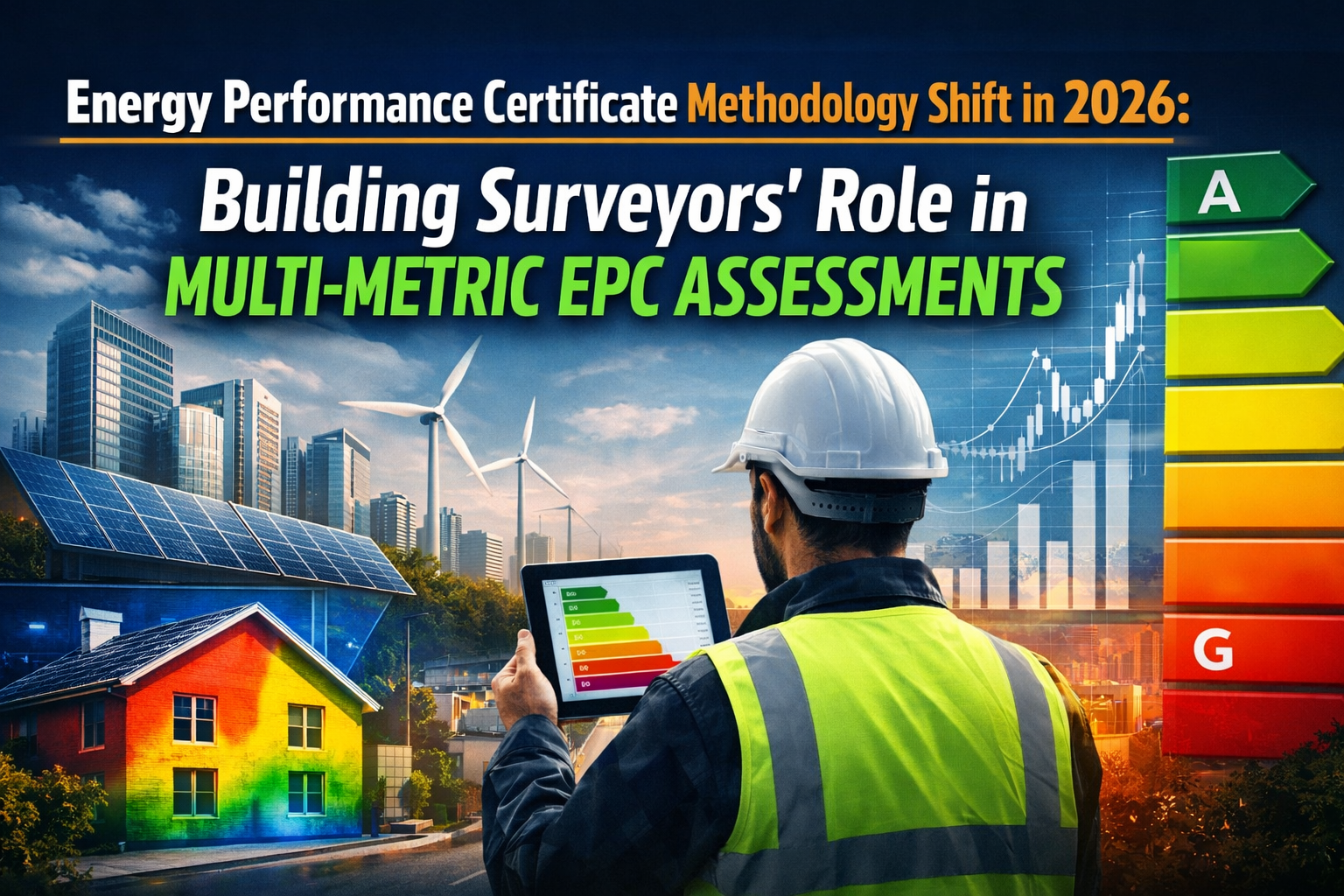
The UK government's March 10, 2026 announcement postponing EPC reform implementation to the second half of 2027 has given building surveyors and property professionals crucial additional time to prepare for the most significant transformation in energy assessment methodology since the Standard Assessment Procedure (SAP) was introduced in the 1990s. This delay, while extending the timeline, underscores the complexity and scale of changes that will fundamentally alter how building surveyors evaluate property energy performance and advise clients on compliance strategies.
The Energy Performance Certificate Methodology Shift in 2026: Building Surveyors' Role in Multi-Metric EPC Assessments represents a fundamental departure from the current single-rating system to a comprehensive four-metric framework that separately evaluates fabric performance, heating systems, energy costs, and smart readiness. This transformation requires building surveyors to expand their technical expertise, understand new assessment software, and provide more nuanced guidance to property owners and landlords navigating increasingly complex compliance requirements.
Key Takeaways
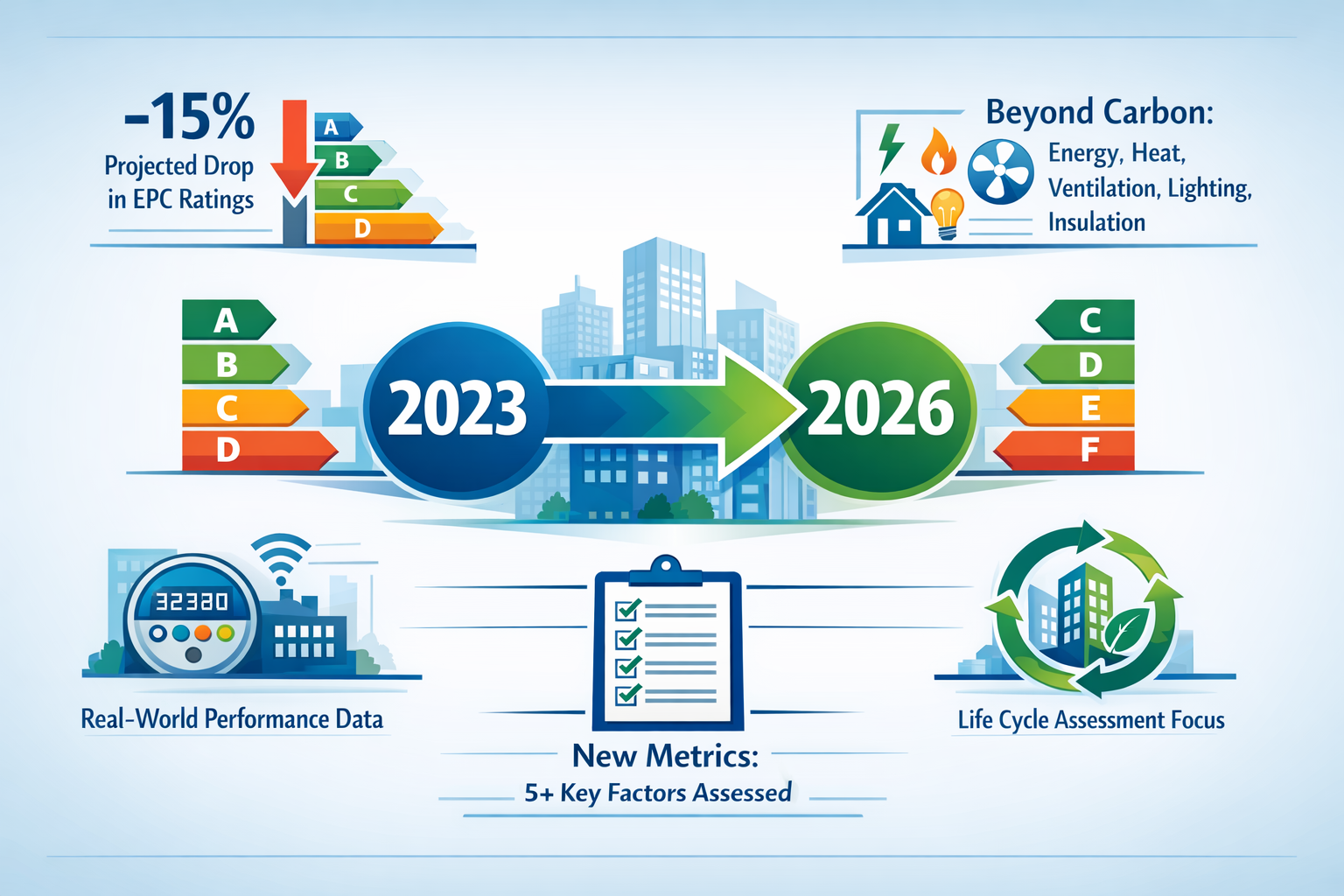
- 🔄 Four-metric system replaces single A-G rating: New EPCs will display separate scores for Fabric Performance, Heating System, Energy Cost, and Smart Readiness starting in H2 2027
- 🏗️ Home Energy Model (HEM) supersedes SAP: The 1990s-era Standard Assessment Procedure will be replaced with modern methodology designed for current building technologies
- 💷 Landlord cost cap increases to £15,000: Maximum financial obligation for rental property upgrades rises from £3,500, with EPC Band C requirements phased between 2028-2030
- 👷 Surveyors require new qualifications: Domestic Energy Assessor (DEA) training programs are being redeveloped to address multi-metric assessment methodology
- ⏰ Implementation postponed to H2 2027: Originally scheduled for October 2026, reforms delayed due to training gaps, software development needs, and industry readiness concerns
Understanding the Energy Performance Certificate Methodology Shift in 2026
The current EPC system, built on the Standard Assessment Procedure developed in the 1990s, has been deemed "no longer fit for purpose" by government officials and industry stakeholders[5]. The single A-G Energy Efficiency Rating that has guided property assessments for decades creates significant distortions, particularly penalizing electrically heated homes due to higher unit costs compared to gas, regardless of actual thermal efficiency[1].
Why the Current System Fails Modern Properties
The existing methodology creates a fundamental disconnect between actual building performance and ratings. A well-insulated home with electric heating may receive a lower rating than a poorly insulated property with gas heating, simply due to fuel cost differentials[1]. This misalignment has prevented accurate assessment of thermal efficiency and discouraged investment in electric heating systems that align with the UK's net-zero carbon objectives.
Key limitations of the current system include:
- ⚠️ Fuel cost bias favoring gas over electricity
- ⚠️ Single headline metric obscuring specific performance areas
- ⚠️ No recognition of smart technology integration
- ⚠️ Inability to separate building fabric quality from heating system efficiency
- ⚠️ Outdated assumptions about building technology and occupant behavior
The Multi-Metric Framework Explained
The reformed domestic EPC system introduces four primary metrics that provide "a much clearer picture" to help homeowners, tenants, and landlords make informed efficiency choices[5]:
| Metric | Assessment Focus | Purpose |
|---|---|---|
| Fabric Performance | Building envelope efficiency (insulation, windows, air tightness) | Evaluates the property's ability to retain heat independently of heating system |
| Heating System | Efficiency and carbon intensity of heat source | Assesses heating technology quality and environmental impact |
| Energy Cost | Projected annual running costs | Provides transparency on actual expense implications |
| Smart Readiness | Capacity to integrate with smart meters and flexible tariffs | Measures building's compatibility with modern energy management |
This separation allows building surveyors to provide targeted recommendations. A property might score well on fabric performance but poorly on heating system efficiency, clearly indicating where investment should be prioritized[1].
Home Energy Model (HEM) Replaces SAP
The underlying assessment methodology is shifting from SAP to the new Home Energy Model (HEM)[3][6]. This transition enables more accurate and reliable energy efficiency assessments by incorporating:
- Modern building materials and construction techniques
- Current heating technologies including heat pumps and hybrid systems
- Smart home technology integration
- Updated occupancy patterns and usage assumptions
- Regional climate data variations
The HEM framework provides the technical foundation that makes multi-metric assessment possible, allowing assessors to model building performance with greater precision than the decades-old SAP methodology[3].
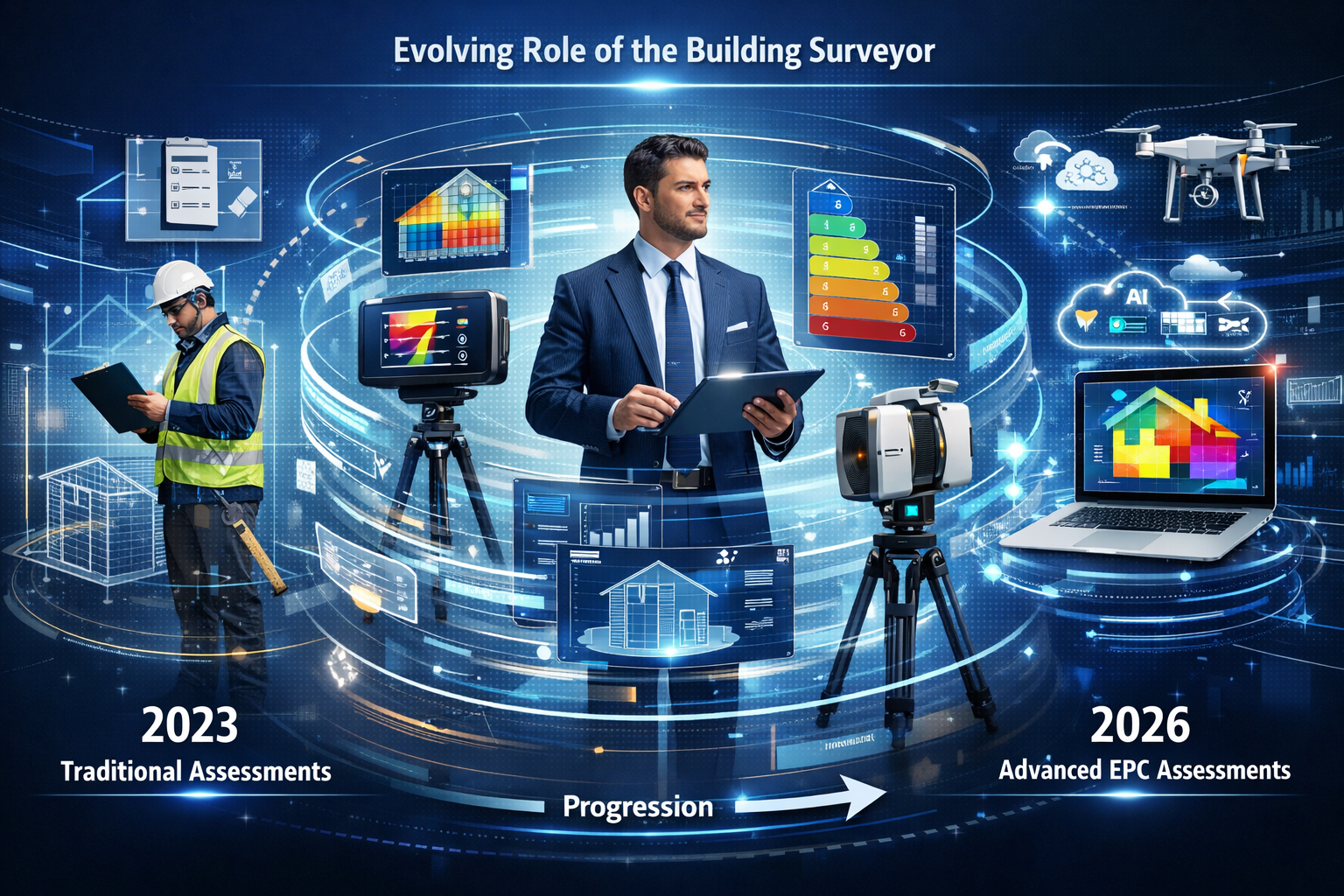
Building Surveyors' Evolving Role in Multi-Metric EPC Assessments
The Energy Performance Certificate Methodology Shift in 2026: Building Surveyors' Role in Multi-Metric EPC Assessments fundamentally transforms how property professionals conduct evaluations and advise clients. The March 2026 postponement decision specifically cited critical gaps including the "training and upskilling of thousands of energy assessors" and re-development of the Domestic Energy Assessor (DEA) qualification for new entrants[7].

New Technical Competencies Required
Building surveyors and energy assessors must develop proficiency across multiple specialized assessment areas:
Fabric Performance Assessment:
- Thermal imaging interpretation for heat loss identification
- Insulation material evaluation and U-value calculations
- Air tightness testing methodology
- Window and door thermal performance measurement
- Thermal bridging identification and quantification
Heating System Evaluation:
- Heat pump efficiency assessment (SCOP ratings)
- Hybrid heating system configuration analysis
- Renewable heat technology integration
- Carbon intensity calculations for different fuel sources
- System sizing and load matching evaluation
Smart Readiness Assessment:
- Smart meter compatibility verification
- Home automation system integration potential
- Demand response capability evaluation
- Energy storage system compatibility
- Time-of-use tariff optimization potential
This expanded technical scope requires chartered surveyors to invest in continuous professional development and potentially obtain additional certifications in specialized areas such as thermography or renewable heating technology.
Software and Technology Adoption
The new HEM-based assessment methodology requires entirely new software platforms. Building surveyors must:
- Master new assessment software interfaces designed for multi-metric data input
- Integrate digital measurement tools including thermal imaging cameras and air tightness testing equipment
- Understand data validation protocols to ensure assessment accuracy across multiple metrics
- Navigate transition period requirements where both old and new systems operate concurrently
Industry experts had questioned whether the original October 2026 timeline was realistic, citing the need for "software/UI approval, DEA feedback, user groups, and beta testing of new software—all incomplete as of early 2026"[7]. The postponement to H2 2027 provides additional time for these critical systems to be developed and tested.
Enhanced Advisory Services
The multi-metric framework enables building surveyors to provide more sophisticated guidance to property owners and landlords. Rather than simply stating "your property is rated D," surveyors can now explain:
- "Your fabric performance is excellent (Band B), but your heating system is outdated (Band E)"
- "Investing £8,000 in a heat pump would improve your heating metric from E to B"
- "Your energy costs are high despite good fabric performance due to lack of smart meter integration"
This granular analysis allows property surveyors to develop targeted improvement strategies that maximize return on investment and prioritize the most cost-effective upgrades.
Fabric-First Assessment Approach
The new methodology prioritizes a "Fabric First" approach for landlords, requiring upgrades to insulation and windows before investing in high-tech heating solutions[2]. This represents a significant shift in assessment hierarchy that building surveyors must communicate effectively to clients.
The Fabric-First hierarchy:
- Improve building envelope (insulation, windows, air sealing)
- Optimize ventilation (controlled ventilation with heat recovery)
- Upgrade heating systems (heat pumps, renewable technology)
- Integrate smart controls (smart meters, automation systems)
This approach separates the "insulation" assessment from the "technology" assessment for the first time[1], ensuring that buildings are thermally efficient before expensive heating system upgrades are considered. Building surveyors play a critical role in sequencing these improvements to maximize effectiveness and minimize total investment.
Compliance Requirements and Implementation Timeline for Building Surveyors
The Energy Performance Certificate Methodology Shift in 2026: Building Surveyors' Role in Multi-Metric EPC Assessments carries significant compliance implications, particularly for the rental sector. Building surveyors must understand these requirements to properly advise landlord clients and ensure properties meet evolving standards.
Rental Sector Minimum Standards
Privately and socially rented homes must achieve an EPC Band C equivalent under the new system[2]. The implementation is phased to allow landlords time to plan and execute necessary upgrades:
📅 2028: New Tenancy Requirements
- All new tenancies must meet EPC Band C equivalent
- Applies to properties first let or re-let after implementation date
- Landlords must provide compliant EPC at tenancy commencement
📅 2030: All Tenancy Compliance
- All existing tenancies must meet EPC Band C regardless of start date
- No exemptions for continuing tenancies
- Full enforcement across entire rental sector
Building surveyors conducting Level 3 building surveys for potential rental property purchases must now factor these compliance timelines and associated upgrade costs into their valuation advice.
Increased Cost Cap for Landlords
The maximum financial obligation for landlords upgrading rental properties is rising from £3,500 to £15,000 (inclusive of VAT)[2]. This significant increase is intended to prevent unlimited costs while ensuring meaningful compliance.
Key implications for building surveyors:
- Upgrade cost estimation becomes critical: Surveyors must provide accurate cost projections for fabric improvements, heating system upgrades, and smart technology installation
- Prioritization strategies required: With a £15,000 cap, surveyors must identify the most cost-effective path to Band C compliance
- Documentation requirements: Detailed records of upgrade costs must be maintained to demonstrate compliance with spending cap
- Exemption applications: Where £15,000 proves insufficient, surveyors may need to support exemption applications with technical evidence
The increased cap makes compliance achievable for most properties but requires sophisticated cost-benefit analysis that building surveyors are uniquely positioned to provide.
Legacy Rating Retention During Transition
To maintain continuity with the current "EPC C by 2030" target, the traditional A-G Energy Efficiency Rating will be retained alongside new metrics during the transition period[1][6]. This dual-system approach creates complexity that building surveyors must navigate:
Transition period considerations:
- Properties will display both legacy single rating and new multi-metric scores
- Compliance requirements reference Band C equivalent in new system
- Comparison between old and new ratings may not be direct
- Marketing materials may reference either or both rating systems
- Mortgage lenders may use different metrics for lending decisions
Building surveyors must clearly communicate which rating system applies to specific compliance, lending, or marketing contexts to avoid client confusion.
Electric Heating Systems Prioritization
Under the new system, electric heating systems with smart capabilities will receive higher ratings than older gas and fossil fuel systems[3], reflecting the shift away from fuel-cost-based assessments[2]. This represents a fundamental reversal from current methodology.
Implications for property assessment:
- Properties with modern electric heating may see significant rating improvements
- Gas-heated properties may see relative rating decreases
- Heat pump installations become more valuable in assessment terms
- Smart heating controls add measurable value to heating system metric
- Carbon intensity becomes weighted factor in heating assessment
Building surveyors must recalibrate their understanding of heating system value and advise clients accordingly. A property with electric heating that currently rates poorly may achieve Band C or better under the new methodology with minimal additional investment.
Secondary Metrics and Non-Domestic Properties
Beyond the four primary metrics, Energy Demand and Carbon emissions will be reported as secondary metrics[4]. For commercial property surveyors, carbon emissions remain the primary metric for non-domestic EPCs[4].
This creates a bifurcated assessment approach where:
- Domestic properties prioritize the four primary metrics with carbon as secondary
- Commercial properties maintain carbon emissions as headline metric
- Mixed-use properties may require dual assessment approaches
Building surveyors working across both residential and commercial sectors must maintain expertise in both methodological frameworks.
Preparing for the Methodology Shift: Action Steps for Building Surveyors
The postponement to H2 2027 provides valuable preparation time. Building surveyors should take immediate action to ensure readiness:
1. Professional Development and Training
Priority actions:
- ✅ Enroll in HEM methodology training courses as they become available
- ✅ Obtain thermal imaging certification for fabric performance assessment
- ✅ Complete heat pump and renewable heating technology courses
- ✅ Attend industry workshops on smart home technology assessment
- ✅ Join professional forums discussing EPC reform implementation
The DEA qualification is being completely redeveloped for the new system[7]. Existing assessors should plan for mandatory requalification requirements.
2. Technology and Equipment Investment
Essential equipment upgrades:
- 📱 Thermal imaging cameras for heat loss identification
- 📱 Air tightness testing equipment (blower door systems)
- 📱 Digital measurement tools for precise U-value calculations
- 📱 Tablets or mobile devices capable of running new HEM software
- 📱 Cloud-based data management systems for multi-metric reporting
Building surveyors should budget for these capital investments and factor equipment costs into fee structures for post-reform assessments.
3. Client Communication Strategies
Develop clear messaging about:
- Timeline changes and what the H2 2027 implementation means for property owners
- Differences between current and new EPC systems
- Cost implications of achieving Band C under multi-metric framework
- Fabric-first investment strategies for optimal compliance
- Benefits of early action versus waiting until enforcement dates
Property surveyors in London should proactively reach out to landlord clients to discuss compliance planning and upgrade sequencing strategies.
4. Service Offering Expansion
Consider adding complementary services:
- Pre-assessment consultations to identify likely rating outcomes
- Upgrade cost estimation and ROI analysis
- Project management for fabric improvement works
- Post-upgrade verification assessments
- Portfolio-level compliance planning for multi-property landlords
These value-added services position building surveyors as strategic advisors rather than simply assessment providers.
5. Industry Engagement and Advocacy
Stay informed and contribute to policy development:
- Participate in industry consultation processes
- Join professional bodies' EPC reform working groups
- Provide feedback on draft methodology documents
- Share practical implementation challenges with policymakers
- Collaborate with software developers on user interface design
The March 2026 postponement resulted partly from industry feedback about unrealistic timelines[7]. Continued engagement ensures surveyors' practical concerns are addressed before final implementation.
Conclusion
The Energy Performance Certificate Methodology Shift in 2026: Building Surveyors' Role in Multi-Metric EPC Assessments represents the most significant transformation in property energy evaluation since the EPC system was introduced. While the postponement to H2 2027 provides additional preparation time, the scale and complexity of changes require immediate action from building surveyors and energy assessors.
The shift from a single consumption-focused rating to a comprehensive four-metric framework—evaluating fabric performance, heating systems, energy costs, and smart readiness separately—enables far more accurate and actionable property assessments. The underlying transition from SAP to the Home Energy Model provides the technical foundation for these improvements, incorporating modern building technologies and usage patterns that the 1990s-era methodology could not address.
For building surveyors, this transformation demands significant professional development, technology investment, and service offering evolution. The expanded technical competencies required—from thermal imaging interpretation to heat pump efficiency assessment to smart home technology evaluation—represent both a challenge and an opportunity. Surveyors who invest in these capabilities now will be positioned as essential advisors guiding property owners and landlords through increasingly complex compliance requirements.
The rental sector implications are particularly significant, with EPC Band C requirements phased between 2028 and 2030 and landlord cost caps increasing to £15,000. Building surveyors must provide sophisticated cost-benefit analysis and prioritization strategies to help landlord clients achieve compliance efficiently. The fabric-first approach embedded in the new methodology provides a clear hierarchy for these investments, ensuring thermal efficiency is optimized before expensive heating system upgrades are considered.
Next Steps for Building Surveyors
Immediate actions (2026-2027):
- Enroll in HEM methodology training as courses become available
- Invest in essential assessment equipment including thermal imaging and air tightness testing tools
- Develop client communication materials explaining the new system and compliance timelines
- Engage with industry working groups to stay informed on implementation details
- Expand service offerings to include compliance planning and upgrade cost analysis
Medium-term preparation (H2 2027):
- Complete DEA requalification under the new framework
- Master new assessment software through beta testing and user group participation
- Establish relationships with heating system installers and fabric improvement contractors
- Develop portfolio assessment services for multi-property landlords
- Create case studies demonstrating successful compliance strategies
The postponement to H2 2027 is not a reprieve but an opportunity. Building surveyors who use this time strategically will emerge as indispensable advisors in a transformed property assessment landscape. Those who delay preparation risk being left behind as clients increasingly demand the sophisticated multi-metric analysis and compliance guidance that the new EPC system requires.
For property owners, landlords, and building professionals, the message is clear: the EPC methodology shift is coming, and preparation should begin now. Engaging with qualified surveyors who understand both current and emerging assessment frameworks is essential for navigating this transition successfully.
References
[1] 2026 Epc Reform Technical Update – https://buildingenergyexperts.co.uk/resources/2026-epc-reform-technical-update/
[2] The 2026 Energy Performance Certificate Reform – https://muradqureshi.com/the-2026-energy-performance-certificate-reform/
[3] 2026 Changes Epc Rules Rental – https://anthonyjones.com/2026-changes-epc-rules-rental/
[4] January 2026 Epc Reform Update – https://www.meessolutions.co.uk/blog/january-2026-epc-reform-update
[5] Epc Ratings How Are They Changing In 2026 And What Does That Mean For Home Heating – https://ecostrad.com/blog/epc-ratings-how-are-they-changing-in-2026-and-what-does-that-mean-for-home-heating/
[6] Epc Reform What We Know – https://energy-trust.co.uk/epc-reform-what-we-know/
[7] Government Confirms Epc Reform Will Be Postponed To Second Half Of 2027 – https://www.elmhurstenergy.co.uk/blog/2026/03/13/government-confirms-epc-reform-will-be-postponed-to-second-half-of-2027/
