
The UK property market in 2026 faces a critical inflection point. With homes valued over £2 million now subject to steeper taxation, surveyors must fundamentally rethink their approach to mid-market properties. Building Survey Protocols for Mid-Market Properties Under New High-Value Tax Thresholds: RICS Strategies Post-2026 Budget represents more than just technical adjustments—it's about identifying hidden value risks and uplift potential in properties that suddenly find themselves in the market's sweet spot. As national growth forecasts predict 4-5% increases, the mid-range segment (£500,000 to £1.5 million) demands heightened scrutiny and strategic assessment protocols.
Recent RICS market surveys reveal that "recent rises in taxation led to reduced demand, particularly for higher value properties"[2], creating a ripple effect that elevates the importance of thorough survey work in the mid-market tier. Buyers are increasingly cautious, seeking properties that offer genuine value without triggering punitive tax thresholds. This shift requires surveyors to adapt their methodologies, focusing not just on structural integrity but on strategic value positioning.
Key Takeaways
- 🏘️ Tax-Driven Market Shift: Properties above £2 million face increased taxation, making mid-market properties (£500k-£1.5m) more attractive and requiring enhanced survey protocols
- 📊 Growth Opportunity Zone: National forecasts predict 4-5% property value growth, positioning mid-market properties as strategic investments requiring detailed value assessment
- 🔍 Enhanced Due Diligence: Surveyors must now identify hidden defects and compliance issues that could impact future value uplift potential
- 📋 RICS Protocol Adaptation: Building survey methodologies must incorporate tax threshold awareness and strategic value positioning analysis
- ⚠️ Compliance Focus: "Lack of Building Regulations Completion Certificates has become a recurring theme"[1], making documentation verification critical for mid-market assessments
Understanding the 2026 Budget Impact on Mid-Market Property Surveys
The 2026 Budget fundamentally altered the UK property taxation landscape, creating distinct market tiers with different risk profiles. Properties exceeding £2 million now face substantially higher stamp duty and ongoing tax obligations, pushing buyer interest decisively toward the mid-market segment. This shift isn't merely about price points—it represents a strategic recalibration of where buyers perceive value and acceptable risk.
The New Tax Threshold Landscape
For surveyors, understanding these thresholds is essential to providing relevant advice. Properties valued between £500,000 and £1.5 million now occupy a privileged position in the market hierarchy. They offer substantial living space and quality without triggering the highest tax bands, making them attractive to both first-time movers-up and downsizers from higher-value properties.
Key Tax Threshold Considerations:
| Property Value Range | Tax Implications | Survey Priority Focus |
|---|---|---|
| £500k – £750k | Moderate stamp duty | Value uplift potential, hidden defects |
| £750k – £1.5m | Standard higher band | Compliance verification, structural integrity |
| £1.5m – £2m | Elevated taxation | Strategic positioning, premium features |
| Above £2m | Maximum tax burden | Luxury market (outside mid-market scope) |
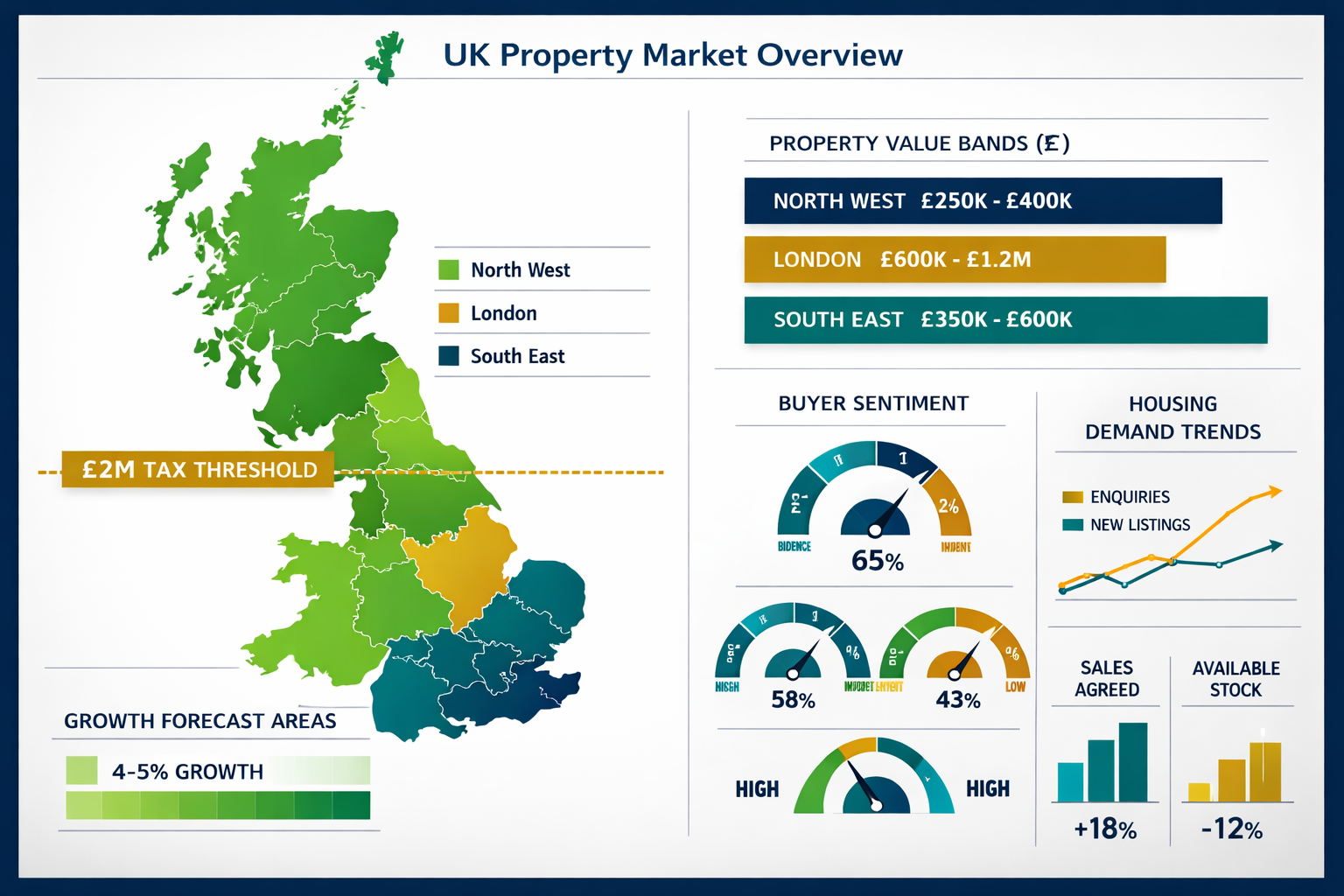
The RICS February 2026 survey data shows stark regional variations in how these thresholds affect local markets[5]. In areas like the North West, where property values traditionally run lower, the mid-market segment captures a broader range of property types. Conversely, in London and the Southeast, mid-market properties often represent smaller or older stock requiring more intensive survey scrutiny.
Why Mid-Market Properties Demand Enhanced Protocols
Traditional RICS building surveys focused primarily on structural condition and immediate defects. However, the post-2026 Budget environment requires a more strategic approach. Buyers aren't just purchasing a home—they're making a calculated investment decision based on tax efficiency and future value appreciation potential.
Enhanced protocol elements include:
- Tax positioning analysis: Assessing whether current valuation sits comfortably within target bands
- Uplift potential evaluation: Identifying features or improvements that could enhance value without pushing into higher tax brackets
- Compliance documentation review: Verifying all building regulations certificates and planning permissions are complete
- Hidden defect detection: Uncovering issues that could impair future value or create unexpected costs
- Market positioning assessment: Understanding how the property compares to local mid-market alternatives
"The lack of Building Regulations Completion Certificates has become a recurring theme" in recent market assessments[1], highlighting the critical importance of documentation verification in mid-market surveys.
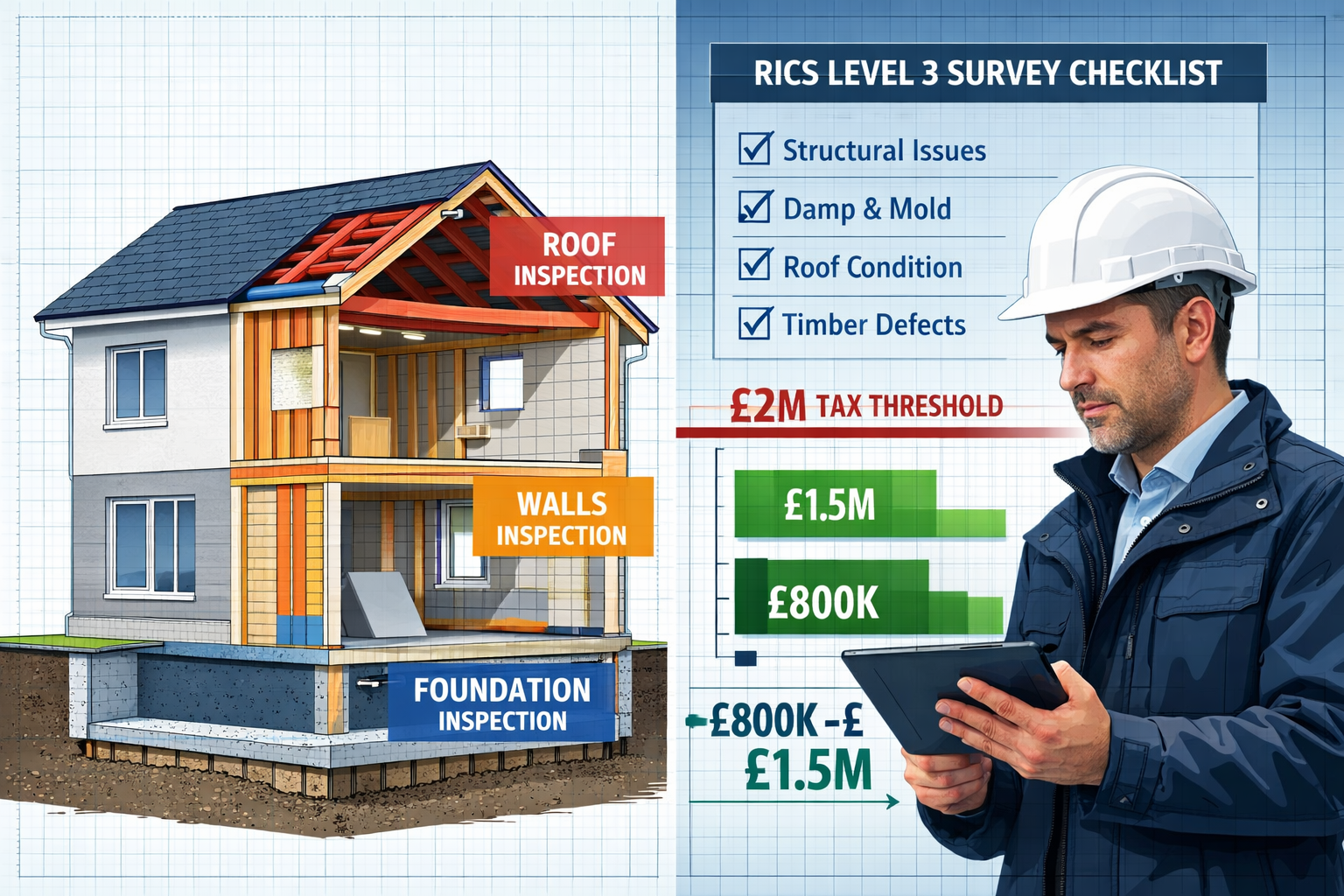
For property buyers navigating this complex landscape, a comprehensive Level 3 building survey provides the detailed analysis necessary to make informed decisions. These surveys go beyond surface-level inspections to examine structural elements, building systems, and compliance status thoroughly.
RICS Survey Protocol Adaptations for the Mid-Market Segment
The Royal Institution of Chartered Surveyors (RICS) has long maintained rigorous standards for building surveys, but the 2026 Budget necessitates specific adaptations for mid-market properties. These adjustments reflect both the changing buyer priorities and the strategic importance of accurate valuation within tax threshold bands.
Core Protocol Enhancements for Building Survey Protocols
1. Comprehensive Documentation Verification
One of the most significant protocol changes involves intensified scrutiny of property documentation. The recurring issue of missing Building Regulations Completion Certificates[1] can severely impact property value and future sale prospects. Mid-market buyers cannot afford to inherit compliance problems that might cost tens of thousands to resolve.
Essential documentation checklist:
- ✅ Building Regulations Completion Certificates for all extensions and alterations
- ✅ Planning permission records and compliance confirmation
- ✅ Party Wall Awards (if applicable)
- ✅ Energy Performance Certificates (current and valid)
- ✅ Guarantees for major works (damp-proofing, roofing, electrical, etc.)
- ✅ Structural engineer reports (for any previous concerns)
- ✅ Drainage and utility connection records
For properties requiring party wall considerations, consulting RICS party wall surveyors ensures proper documentation and compliance verification.
2. Strategic Value Assessment
Beyond traditional condition reporting, surveyors must now evaluate properties through a value optimization lens. This involves identifying features that could enhance value while keeping the property within desirable tax bands.
Value assessment components:
- Current market positioning: How the property compares to similar mid-market alternatives
- Improvement potential: Identifying cost-effective upgrades that add value
- Tax threshold proximity: Assessing risk of future valuations crossing into higher bands
- Rental yield potential: For buyers considering investment flexibility
- Future marketability: Evaluating features that appeal to mid-market buyers
3. Enhanced Defect Detection and Risk Analysis
Mid-market buyers operate with tighter budgets than luxury purchasers. Unexpected repair costs can significantly impact their financial planning. Enhanced defect detection protocols focus on identifying issues that might not be immediately visible but could create substantial future expenses.
Priority inspection areas:
- 🔍 Foundation and structural integrity: Subsidence, settlement, or structural movement
- 🔍 Roof condition and life expectancy: Remaining useful life and replacement costs
- 🔍 Damp and moisture issues: Rising damp, penetrating damp, condensation problems
- 🔍 Electrical system safety: Compliance with current regulations, capacity for modern demands
- 🔍 Heating and plumbing systems: Efficiency, condition, and replacement timeline
- 🔍 Windows and external envelope: Thermal performance, condition, security
Understanding what a surveyor checks during these comprehensive inspections helps buyers appreciate the value of thorough survey work.
Regional Considerations in Protocol Application
The RICS market surveys highlight significant regional variations in property conditions and buyer expectations[5]. Surveyors must adapt their protocols to reflect local market characteristics while maintaining consistent professional standards.
Regional protocol variations:
| Region | Typical Property Age | Common Issues | Protocol Focus |
|---|---|---|---|
| London | Victorian/Edwardian | Subsidence, outdated systems | Structural integrity, modernization assessment |
| North West | 1930s-1970s | Damp, cavity wall issues | Moisture detection, thermal performance |
| Southeast | Mixed era | Extensions without certificates | Compliance verification, documentation |
| Midlands | Post-war | Concrete defects, insulation | Material condition, energy efficiency |
For buyers in specific regions, working with local experts like chartered surveyors in London or North London specialists ensures protocols are properly adapted to local conditions.
Technology Integration in Modern Survey Protocols
Contemporary survey protocols increasingly incorporate advanced technology to enhance accuracy and provide clearer documentation. This is particularly valuable for mid-market properties where buyers need comprehensive evidence to support purchase decisions.
Technology enhancements include:
- Thermal imaging cameras: Detecting insulation defects, moisture ingress, and heat loss
- Moisture meters: Precise measurement of dampness levels in walls and floors
- Drone surveys: Comprehensive roof and chimney inspection without scaffolding costs
- Digital reporting platforms: Interactive reports with photographs, diagrams, and prioritized recommendations
- 3D scanning: Creating detailed property models for renovation planning
Drone surveys have become particularly valuable for mid-market properties with complex roof structures or difficult-to-access areas, providing detailed visual evidence without the cost of scaffolding.
Implementing Strategic Survey Approaches for Maximum Value Protection
Building Survey Protocols for Mid-Market Properties Under New High-Value Tax Thresholds require not just technical competence but strategic thinking. Surveyors must position themselves as value advisors, helping clients understand both risks and opportunities within their target property.
The Three-Tier Survey Approach for Mid-Market Properties
Tier 1: Essential Structural and Compliance Assessment
This foundational level addresses immediate safety concerns and legal compliance. It answers the fundamental question: "Is this property safe and legally compliant?"
Key elements:
- Structural integrity verification
- Building Regulations compliance confirmation
- Health and safety hazard identification
- Immediate repair requirements
- Legal compliance status
A comprehensive Level 3 building survey example demonstrates how thorough this foundational assessment should be.
Tier 2: Financial Impact and Cost Projection
This intermediate level quantifies the financial implications of survey findings. It answers: "What will this property actually cost me over the next 5-10 years?"
Analysis includes:
- Immediate repair cost estimates (detailed and prioritized)
- Medium-term maintenance projections (1-5 years)
- Long-term capital expenditure forecasts (5-10 years)
- Energy efficiency improvement costs and savings
- Insurance implications and premium considerations
Tier 3: Strategic Value Optimization
This advanced level provides strategic guidance on maximizing property value within tax-efficient parameters. It answers: "How can I optimize this property's value without crossing unfavorable tax thresholds?"
Strategic guidance covers:
- Value-adding improvement recommendations
- Tax threshold positioning analysis
- Market positioning optimization
- Rental yield enhancement options (if applicable)
- Future sale marketability assessment
Buyer Sentiment and Survey Timing Considerations
The January 2026 RICS survey noted that taxation changes have created buyer caution, particularly in higher value segments[2]. This caution extends to mid-market buyers who are increasingly risk-averse and demand comprehensive information before committing.
Survey timing strategies:
📅 Pre-offer surveys: Increasingly common for competitive properties, allowing buyers to make informed offers quickly
📅 Conditional offer surveys: Traditional approach where survey is conducted after offer acceptance but before exchange
📅 Pre-purchase due diligence: For cash buyers or investors, conducting preliminary assessments before formal offers
Understanding how long house surveys take helps buyers plan their purchase timeline effectively and manage house survey anxiety.
Specialized Survey Considerations for Mid-Market Properties
Certain mid-market properties require specialized survey approaches beyond standard protocols:
Period Properties (Pre-1919)
Victorian and Edwardian properties dominate many mid-market areas. These require surveyors with specific expertise in:
- Traditional construction methods and materials
- Common period property defects (subsidence, damp, timber decay)
- Sympathetic modernization assessment
- Conservation area restrictions and planning considerations
Properties with Extensions or Alterations
The recurring issue of missing Building Regulations certificates[1] makes this particularly important. Surveyors must:
- Identify all alterations and extensions
- Verify documentation for each modification
- Assess quality of workmanship
- Evaluate compliance with current standards
- Advise on regularization options if certificates are missing
Properties Requiring Specialist Assessments
Some mid-market properties need additional specialist surveys beyond the standard building survey:
- Drainage surveys: For properties with persistent drainage issues or old systems
- Structural engineer reports: When significant structural concerns are identified
- Asbestos surveys: For properties built before 2000
- Roof surveys: For complex or inaccessible roof structures
For comprehensive assessment needs, drainage surveys and structural engineer reports provide specialized expertise.
Communicating Survey Findings Effectively
The value of comprehensive survey protocols is diminished if findings aren't communicated clearly to buyers. Modern survey reporting should:
✓ Prioritize findings by urgency and cost impact
- Category 1: Urgent repairs requiring immediate attention
- Category 2: Significant issues requiring action within 1-2 years
- Category 3: Minor defects and routine maintenance items
✓ Provide clear cost estimates
- Detailed breakdown of repair costs
- Range estimates (minimum to maximum likely costs)
- Prioritization guidance for budget-conscious buyers
✓ Include visual documentation
- Comprehensive photographs of all significant defects
- Annotated diagrams highlighting problem areas
- Thermal images or specialist survey results where applicable
✓ Offer strategic recommendations
- Negotiation guidance based on findings
- Improvement prioritization for value optimization
- Long-term property management advice
For buyers new to the survey process, understanding what a property surveyor does helps set appropriate expectations for the survey report and findings.
Conclusion: Navigating the New Mid-Market Reality
The post-2026 Budget property landscape has fundamentally transformed the role of building surveys in mid-market transactions. Building Survey Protocols for Mid-Market Properties Under New High-Value Tax Thresholds: RICS Strategies Post-2026 Budget represents a comprehensive evolution in how surveyors approach properties in the £500,000 to £1.5 million range.
With taxation changes pushing buyer interest decisively toward mid-market properties and national growth forecasts predicting 4-5% value increases, thorough survey work has never been more critical. The recurring compliance issues, particularly around Building Regulations Completion Certificates[1], combined with buyer caution driven by recent tax rises[2], create an environment where comprehensive due diligence is essential.
Actionable Next Steps for Property Buyers
1. Engage qualified RICS surveyors early: Don't wait until after offer acceptance to consider survey requirements. Early engagement allows strategic planning and potentially faster transaction completion.
2. Insist on comprehensive documentation verification: Given the prevalence of missing certificates[1], make documentation review a non-negotiable element of your survey.
3. Request strategic value assessment: Beyond identifying defects, ask your surveyor to evaluate improvement potential and tax threshold positioning.
4. Consider specialist surveys where appropriate: Don't hesitate to commission additional specialist assessments if your surveyor recommends them.
5. Use survey findings strategically: Leverage comprehensive survey results in purchase negotiations and long-term property planning.
Actionable Next Steps for Surveyors
1. Update protocols to reflect tax threshold awareness: Incorporate strategic value positioning into standard survey approaches.
2. Enhance documentation verification procedures: Develop systematic approaches to identifying and verifying all required certificates and permissions.
3. Invest in technology and training: Ensure access to modern survey technology and ongoing professional development in mid-market strategies.
4. Develop clear, strategic reporting formats: Move beyond traditional defect listing to provide strategic guidance that adds genuine value for clients.
5. Build specialist knowledge networks: Establish relationships with structural engineers, drainage specialists, and other experts for seamless referral when needed.
The mid-market property segment in 2026 represents both opportunity and complexity. With proper survey protocols adapted to the new tax threshold reality, buyers can make informed decisions that protect their investment while positioning for future value growth. Surveyors who embrace these enhanced protocols will provide invaluable guidance in navigating this transformed market landscape.
For professional, comprehensive building surveys that incorporate these advanced protocols, consider engaging qualified chartered surveyors with specific expertise in mid-market properties and current RICS standards.
References
[1] Uk Residential Market Survey February 2026 – https://www.rics.org/content/dam/ricsglobal/documents/market-surveys/uk-residential-market-survey/UK-Residential-Market-Survey_February-2026.pdf
[2] Uk Residential Market Survey January 2026 – https://www.rics.org/content/dam/ricsglobal/documents/market-surveys/uk-residential-market-survey/UK-Residential-Market-Survey_January-2026.pdf
[3] Uk Residential Survey February 2026 – https://www.rics.org/news-insights/uk-residential-survey-february-2026
[4] Watch – https://www.youtube.com/watch?v=USxjLM9reFU
[5] Rics January 2026 Survey Insights Building Survey Protocols For Surging Buyer Enquiries In North West England – https://nottinghillsurveyors.com/blog/rics-january-2026-survey-insights-building-survey-protocols-for-surging-buyer-enquiries-in-north-west-england
