
Over 4.6 million households in England rent privately — and a growing number of those tenants now live next door to landlords planning rear extensions. When a building project crosses a shared wall, the legal obligations don't pause for tenancy arrangements. In 2026, those obligations have become significantly more complex. Party Wall Surveys for Renters' Rights Compliance: Managing Extensions Amid 2026 PRS Database Mandates sits at the intersection of construction law, landlord regulation, and tenant security — and getting it wrong can derail a project, trigger disputes, or expose a landlord to serious penalties.
This guide unpacks exactly what landlords, tenants, and their surveyors need to know when managing extensions under the Party Wall etc. Act 1996 while simultaneously navigating the new Private Rented Sector (PRS) registration requirements introduced in 2026.
Key Takeaways 📋
- Party wall notices must still be served regardless of whether the building owner is a landlord with tenants in situ.
- The 2026 PRS database requires landlords to register tenancies; failure to do so can complicate party wall dispute resolution and affect legal standing.
- Periodic tenancies now carry stronger protections under the Renters' Rights Act, meaning construction disruption must be managed carefully to avoid unlawful eviction risk.
- A Schedule of Condition is more important than ever when tenants occupy a property adjacent to construction works.
- Early engagement with a qualified party wall surveyor prevents costly disputes and ensures compliance on both fronts.

Understanding the Legal Landscape: Party Wall Act Meets PRS Registration
The Party Wall etc. Act 1996 remains the cornerstone legislation governing works to shared walls, boundary structures, and excavations near neighbouring properties. It applies to any building owner intending to carry out notifiable works — including rear extensions, loft conversions, and basement digs. For a thorough grounding, the complete guide to party wall surveys for homeowners is an excellent starting point.
What has changed dramatically in 2026 is the regulatory environment surrounding landlords. The Renters' Rights Act, which received Royal Assent in 2025, abolished Section 21 "no-fault" evictions and introduced mandatory PRS database registration. Every private landlord in England must now register their rental properties and tenancy agreements on the national PRS database. This is not merely administrative — it has direct implications for party wall proceedings.
Why PRS Registration Affects Party Wall Proceedings
When a landlord serves a Party Structure Notice or a Line of Junction Notice on a neighbouring property, the adjoining owner's identity and legal standing must be established. If that neighbouring property is also rented, the question of who constitutes the "adjoining owner" becomes nuanced. Under the Act, an adjoining owner can include any person with a freehold or leasehold interest of more than one year.
💡 Pull Quote: "In 2026, a tenant on a periodic tenancy may qualify as an adjoining owner under the Party Wall Act — and PRS database records are increasingly used to verify that standing."
With periodic tenancies now the default arrangement (replacing fixed-term ASTs as the standard), more tenants hold qualifying interests. The PRS database provides a verifiable record of those interests, which surveyors and solicitors are beginning to reference when establishing who must receive party wall notices.
Key implications for landlords planning extensions:
| Scenario | Party Wall Notice Requirement | PRS Database Relevance |
|---|---|---|
| Landlord builds extension on their own rental property | Must serve notice on adjoining owners | PRS record confirms landlord's registered status |
| Tenant next door holds periodic tenancy | Tenant may be a qualifying adjoining owner | PRS database verifies tenancy existence and duration |
| Both properties are rented | Both landlords and tenants may need to be notified | Cross-referencing PRS records clarifies obligations |
| Freehold neighbour with no tenants | Standard party wall process applies | PRS database not directly relevant |
Managing Extensions Amid 2026 PRS Database Mandates: A Step-by-Step Approach
Landlords embarking on extensions in 2026 face a dual compliance burden. They must satisfy the Party Wall etc. Act 1996 and ensure their PRS registration is current and accurate before works begin. Failing on either front creates significant risk.
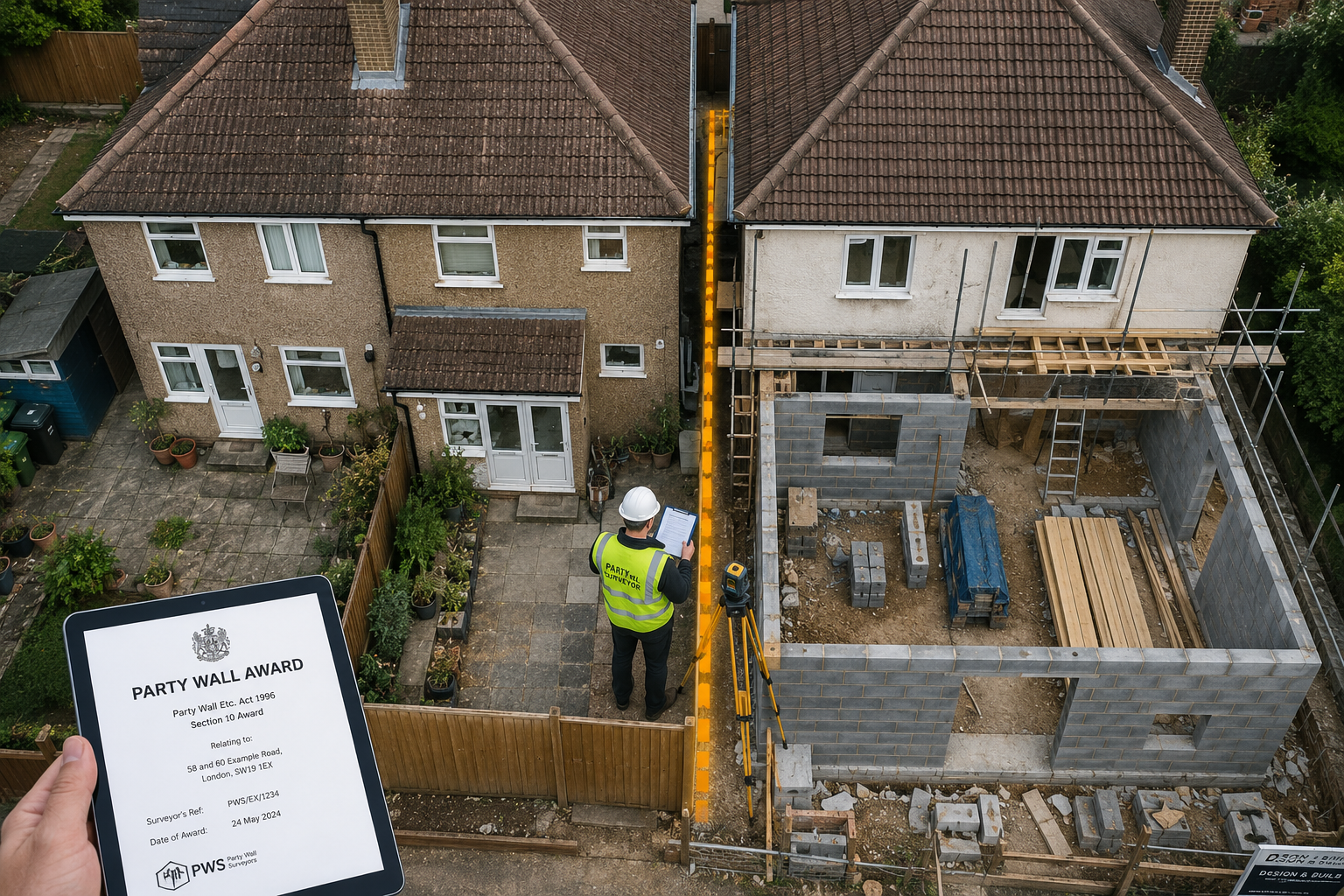
Step 1: Confirm PRS Registration Before Serving Notices
Before a single party wall notice is drafted, the building owner (landlord) should confirm that:
- ✅ Their property is registered on the national PRS database
- ✅ All tenancy agreements are accurately recorded
- ✅ Any ongoing periodic tenancies are reflected in the register
Why does this matter? In the event of a party wall dispute, the First-tier Tribunal and county courts are increasingly scrutinising landlord compliance with PRS obligations. A landlord found to be unregistered risks having their legal standing challenged — which can delay or invalidate the entire party wall process.
Step 2: Identify All Adjoining Owners (Including Tenants)
This is where 2026 compliance gets genuinely complex. The Party Wall etc. Act 1996 comprehensive guide explains that notices must be served on all qualifying adjoining owners. In a street of rented terraces, that could mean serving notices on both the freeholder landlord and the tenant of the neighbouring property.
Practical checklist for identifying adjoining owners:
- Search Land Registry for freehold and leasehold titles
- Cross-reference with the PRS database for registered tenancies
- Confirm whether any leases exceed one year (qualifying interest)
- For periodic tenancies, seek legal advice on whether the tenant qualifies
- Serve notices on all qualifying parties — erring on the side of inclusion
Step 3: Commission a Schedule of Condition
Before any extension work begins, a Schedule of Condition should be prepared for the adjoining property. This photographic and written record documents the existing state of the neighbouring building, protecting both the building owner and the adjoining owner from inflated or disputed claims later.
For landlords with tenants in situ next door, this step is doubly important. Tenants living through construction disruption may raise dilapidations claims or allege that damage was caused by the works. A robust Schedule of Condition removes ambiguity. Learn more about dilapidations surveys and their importance for tenants and landlords.
Step 4: Appoint a Qualified Party Wall Surveyor
The appointment of a party wall surveyor is not optional once a dispute is in play — and in 2026, the threshold for what constitutes a "dispute" has effectively lowered. Any adjoining owner (including a qualifying tenant) who does not consent in writing within 14 days of receiving a notice is deemed to have dissented, triggering the formal surveyor appointment process.
Understanding the roles, responsibilities, and legal requirements of party wall surveyors is essential for any landlord navigating this process. Surveyors can be appointed as:
- Agreed surveyor — one surveyor acting for both parties
- Two surveyors — one appointed by each party, with a third surveyor available if they cannot agree
Step 5: Draft and Serve the Party Wall Award
The Party Wall Award is the legally binding document that governs how and when works can proceed. It sets out working hours, methods of construction, access rights, and provisions for making good any damage. For landlords with tenants in situ, the Award should also address:
- 🏠 Noise and dust management during occupied hours
- 📅 Advance notice periods for particularly disruptive works
- 🔧 Procedures for reporting and rectifying damage promptly
The complete guide to party wall awards provides detailed guidance on what these documents must contain.
Party Wall Surveys for Renters' Rights Compliance: Protecting Tenants During Construction
The Renters' Rights Act 2026 has fundamentally shifted the power balance in the private rented sector. Tenants on periodic tenancies now enjoy significantly stronger security of tenure. This has direct consequences for landlords planning extensions — particularly when those extensions affect the habitability or quiet enjoyment of a neighbouring rented property.

The Quiet Enjoyment Principle Under Pressure
Every tenancy agreement contains an implied covenant of quiet enjoyment — the tenant's right to use their home without interference. Construction works on an adjoining property can test this covenant severely. Excessive noise, vibration, dust ingress, and temporary loss of light are all potential sources of complaint.
Under the strengthened protections of 2026, tenants have clearer routes to:
- Seek rent reductions for periods of significant disruption
- Apply to the First-tier Tribunal for remedies
- Raise complaints through the new mandatory landlord redress schemes
💡 Pull Quote: "A party wall surveyor who understands renters' rights compliance isn't just protecting brickwork — they're protecting the entire project from legal challenge."
When the Building Owner Is Also a Landlord
A landlord who owns the property being extended and also has tenants in that property faces an additional layer of complexity. If the extension works make the property temporarily uninhabitable — or significantly less comfortable — the landlord must balance:
- Construction timelines against tenant rights
- Party wall obligations against tenancy agreement terms
- PRS database accuracy (any change in tenancy status must be updated)
Critically, using construction works as a pretext to pressure tenants to leave would constitute a breach of the Renters' Rights Act and could be treated as harassment or unlawful eviction. The distinction between legitimate building works and tenant pressure must be clearly documented throughout the party wall process.
Costs and Who Pays
One of the most common questions in party wall proceedings is: who bears the cost? The general rule is that the building owner (the person carrying out the works) pays for the party wall surveyor's fees and any damage caused. However, costs can escalate quickly in complex cases involving multiple parties.
For a detailed breakdown, the party wall surveyor cost guide provides realistic figures. In 2026, expect fees to reflect the additional complexity of PRS compliance checks and multi-party notice serving.
Typical cost factors in 2026:
| Cost Element | Typical Range |
|---|---|
| Party wall surveyor (agreed) | £700 – £1,500 |
| Party wall surveyor (each party) | £900 – £2,000 per surveyor |
| Schedule of Condition | £300 – £800 |
| Third surveyor (if required) | £1,000 – £2,500 |
| Legal advice on PRS compliance | £200 – £600 per hour |
Avoiding Disputes: Practical Guidance for Landlords and Tenants
Disputes in party wall proceedings are costly, time-consuming, and damaging to neighbourly relations. In a PRS context, they can also attract regulatory scrutiny. The comprehensive guide to resolving party wall disputes outlines the formal resolution pathways, but prevention is always preferable.
Top Tips for Dispute Prevention 🛡️
For landlords planning extensions:
- Engage a party wall surveyor before applying for planning permission
- Serve notices at least two months before planned start dates (three months for excavation works)
- Keep PRS registration fully up to date throughout the project
- Communicate proactively with neighbouring tenants as well as freeholders
- Document everything — notices, responses, conversations, and site conditions
For tenants in neighbouring properties:
- Understand your rights as a potential adjoining owner
- Request a copy of the party wall notice from your landlord if one is received
- Consider appointing your own surveyor if works are extensive
- Keep records of any disruption, damage, or communication
For landlords of neighbouring properties:
- Respond to party wall notices promptly — silence after 14 days is deemed dissent
- Ensure your tenants are informed and their interests represented
- Update PRS records if tenancy arrangements change during the works period
The 3-Metre Rule and Excavation Notices in 2026
Extensions often involve excavations — for foundations, drainage, or basement works. The Party Wall etc. Act imposes specific notice requirements when excavating within 3 metres of a neighbouring structure. Understanding what the 3-metre rule means in practice is essential for any landlord planning a rear extension.
In 2026, excavation notices carry additional weight because:
- Neighbouring tenants may have qualifying interests requiring separate notification
- PRS database records help identify all parties who must receive notice
- Structural damage during excavation in occupied properties can trigger both party wall claims and housing disrepair claims under the Renters' Rights Act
For properties where excavation is planned, a party wall excavation notice should be served alongside any Party Structure Notice, with all qualifying adjoining owners — freeholders and tenants alike — properly identified and notified.
Conclusion: Actionable Next Steps for 2026 Compliance
Party Wall Surveys for Renters' Rights Compliance: Managing Extensions Amid 2026 PRS Database Mandates is not a niche concern — it is the new standard of practice for any landlord planning building works in England's private rented sector. The convergence of the Party Wall etc. Act 1996 and the 2026 PRS registration requirements demands a more thorough, more inclusive approach to party wall proceedings than ever before.
Actionable Next Steps ✅
- Register on the PRS database before commencing any party wall process — your legal standing may depend on it.
- Identify all adjoining owners, including tenants on periodic tenancies, using Land Registry and PRS database records.
- Serve notices early — at least two months before works begin, three months for excavations.
- Commission a Schedule of Condition to protect all parties from disputed damage claims.
- Appoint a qualified party wall surveyor with experience in both the Party Wall etc. Act and the 2026 regulatory environment.
- Document all communications with tenants, neighbours, and surveyors throughout the project.
- Review the Party Wall Award carefully to ensure it addresses tenant welfare and construction management obligations.
The 2026 landscape is more regulated, more tenant-protective, and more legally complex than at any previous point. But with the right professional support and a proactive approach to compliance, landlords can complete extensions successfully — protecting their investment, their tenants' rights, and their relationships with neighbours.
