
Over 400 building surveying professionals packed the RICS UK&I Dilapidations Conference in March 2026 — a record attendance that signals just how high the stakes have become in commercial lease-end disputes. [6] For landlords and tenants alike, the difference between a well-prepared expert witness report and a deficient one can mean hundreds of thousands of pounds. Yet many practitioners still underestimate the technical and procedural precision required to produce a CPR-compliant dilapidations report that withstands court scrutiny.
This guide addresses Dilapidations Expert Witness Reports in 2026 Commercial Leases: RICS Valuation Protocols Amid End-of-Lease Disputes directly — walking surveyors through the mandatory frameworks, quantum valuation methodology, and best-practice report structure that define credible expert evidence in today's commercial property landscape.
Key Takeaways 📌
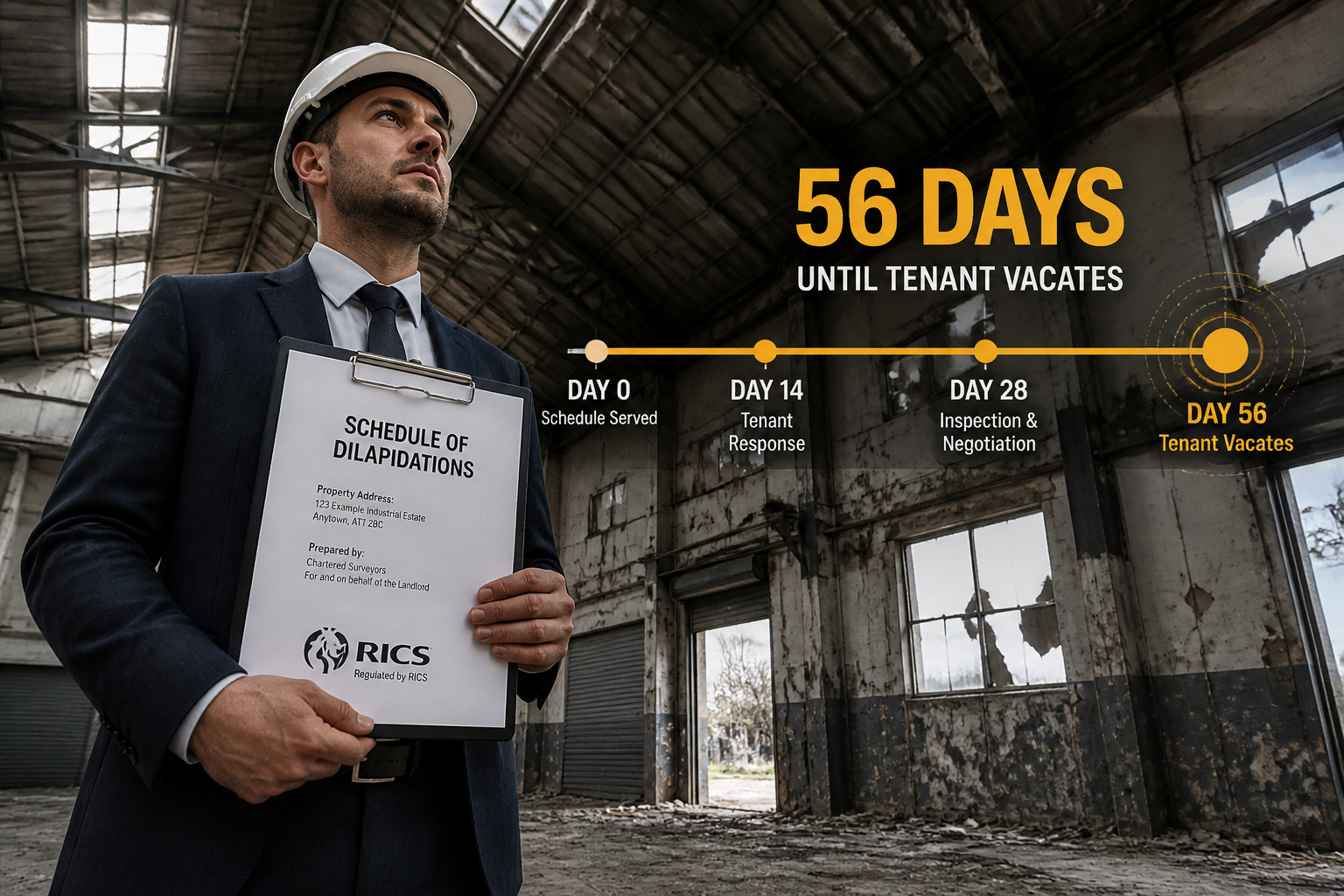
- The Pre-Action Protocol mandates a 56-day timeline for serving and responding to Schedules of Dilapidations — non-compliance carries serious litigation consequences. [2]
- CPR Part 35 governs expert witness duties; the expert's overriding duty is to the court, not the instructing party.
- Section 18(1) of the Landlord and Tenant Act 1927 caps landlord recovery at the diminution in property value — quantum assessment is therefore as critical as defect diagnosis.
- RICS Red Book valuation standards underpin all credible diminution valuations in dilapidations disputes. [3]
- A robust Schedule of Condition agreed at lease commencement remains the single most effective tool for limiting dilapidations liability.
Understanding the Legal and Procedural Framework in 2026
The Mandatory Pre-Action Protocol
The foundation of every dilapidations dispute is the "Pre-Action Protocol for Claims for Damages in Relation to the Physical Condition of Commercial Property" — commonly called the Dilapidations Protocol. It remains the mandatory framework governing all such claims in England and Wales. [2]
The protocol's core timeline operates as follows:
| Stage | Party | Timeframe |
|---|---|---|
| Serve Schedule of Dilapidations | Landlord | Within 56 days of lease expiry |
| Respond with Quantified Demand | Landlord | Accompanies or follows the Schedule |
| Tenant's Response | Tenant | Within 56 days of receiving the Schedule |
| Without Prejudice Negotiations | Both parties | Before issuing proceedings |
💡 Pull Quote: "The 56-day rule is not a suggestion — courts treat protocol non-compliance as a material factor when awarding costs." [2]
Failure to follow the protocol can result in cost sanctions even where the claimant succeeds on the merits. In 2026, courts continue to scrutinise procedural compliance rigorously, making protocol adherence a non-negotiable starting point for any expert witness.
CPR Part 35: The Expert's Overriding Duty
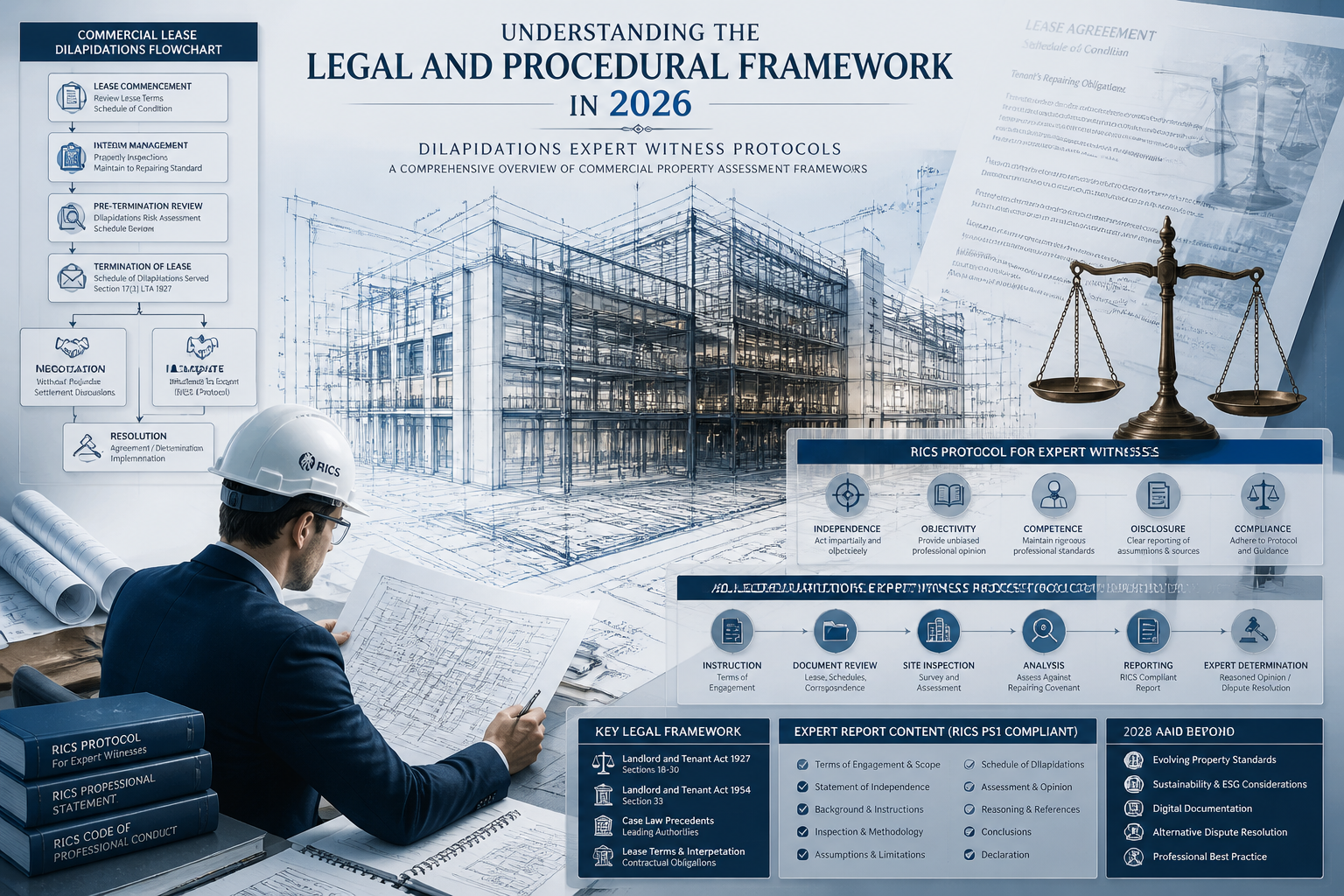
Under Civil Procedure Rules (CPR) Part 35, an expert witness owes a primary duty to the court — not to the party who instructs and pays them. This is the most critical principle governing Dilapidations Expert Witness Reports in 2026 Commercial Leases: RICS Valuation Protocols Amid End-of-Lease Disputes, and it shapes every aspect of how a report must be written.
Key CPR Part 35 requirements include:
- ✅ A signed declaration of independence confirming the expert understands their duty to the court
- ✅ A clear statement of the facts and assumptions upon which opinions are based
- ✅ Disclosure of any range of opinion where the expert's view is not definitive
- ✅ A summary of conclusions in plain language accessible to a non-specialist judge
The RICS Dispute Resolution Service provides adjudication and expert determination services for dilapidations disputes that cannot be resolved through negotiation. [1] Surveyors preparing expert witness reports should be familiar with both litigation and alternative dispute resolution pathways.
For surveyors who also handle party wall matters, the discipline of writing impartial, court-ready reports translates directly — the principles of independence and factual rigour explored in RICS party wall surveyor guidance apply equally in the dilapidations context.
RICS Valuation Protocols and Quantum Assessment: The Heart of the Expert Report
Defect Diagnosis: Building the Technical Foundation
Before any valuation can be performed, the expert surveyor must conduct a thorough defect diagnosis — a systematic inspection of the property against the lease covenants. This is not a general building survey; it is a covenant-by-covenant analysis.
The typical lease covenants examined include:
- Repair obligations — identifying items in disrepair relative to the condition at lease commencement
- Decoration obligations — internal and external redecoration cycles
- Reinstatement obligations — removal of tenant alterations and reinstatement to original condition
- Statutory compliance — ensuring the property meets current regulatory requirements
- Yielding-up obligations — returning the property in the condition required by the lease
A professionally prepared schedule of dilapidations will itemise every alleged breach with reference to the specific lease clause, a description of the defect, and a proposed remedy. The expert witness report then builds upon this foundation by applying valuation methodology to each item.
🔍 Critical Point: The expert must distinguish between items that are genuinely in breach of covenant and items that represent normal wear and tear or pre-existing defects documented in a Schedule of Condition. Without a Schedule of Condition report agreed at lease commencement, tenants face a significantly harder task in challenging the landlord's claim.
Section 18(1) Cap: The Diminution Valuation
The most technically demanding element of any dilapidations expert witness report is the Section 18(1) valuation. Under the Landlord and Tenant Act 1927, a landlord's damages are capped at the diminution in the value of the reversion caused by the tenant's breaches. This means:
- Even if the cost of works to remedy all breaches totals £500,000, the landlord can only recover the amount by which the property's market value has been reduced
- If the landlord intends to demolish or substantially redevelop the property, no damages are recoverable at all (the "supersession" defence)
The diminution valuation requires the expert to assess:
- "As is" value — the market value of the property in its actual condition at lease expiry
- "As repaired" value — the market value assuming all breaches had been remedied
- The difference — this is the Section 18(1) cap
RICS Red Book (RICS Valuation — Global Standards) methodology underpins credible diminution valuations. [3] The expert must apply recognised valuation approaches — typically the income capitalisation method for investment properties — and justify their yield and rental assumptions by reference to comparable market evidence.
For a deeper understanding of how RICS valuation standards apply across different property contexts, the RICS Red Book valuation framework provides the authoritative baseline that courts expect to see referenced in expert reports.
Cost of Works Schedules: Pricing the Remediation
Alongside the diminution valuation, the expert must prepare or critically review a Schedule of Works with costs. This document:
- Lists every remediation item with a unit rate and total cost
- Is typically prepared by a quantity surveyor or building surveyor with current market pricing knowledge
- Must reflect realistic contractor rates for the specific property type and location
- Should account for preliminaries, contractor's overheads and profit, and VAT
⚠️ Common Pitfall: Using schedule rates from outdated price books without adjustment for current market conditions is a frequent weakness in dilapidations reports that opposing experts will exploit. In 2026, construction cost inflation remains a live issue — expert witnesses must demonstrate that their pricing reflects current tender market conditions.
The interplay between the cost of works and the Section 18(1) cap is where most dilapidations disputes are ultimately resolved. Where the cost of works exceeds the diminution in value, the Section 18(1) cap applies and the landlord's recovery is limited accordingly.
Structuring a CPR-Compliant Expert Witness Report: Practical Guidance
The Essential Toolkit for Dilapidations Expert Witnesses
A well-structured dilapidations expert witness report follows a clear architecture that satisfies both CPR Part 35 requirements and the substantive demands of the dilapidations dispute. [5] The essential components are:
1. Expert's Declaration and Statement of Truth
The opening section must include the CPR Part 35 declaration, confirming the expert's understanding of their duty to the court and their independence from the instructing party.
2. Instructions and Scope
A clear statement of the instructions received, the documents reviewed, and the scope of the expert's opinion. This section defines the boundaries of the report.
3. Qualifications and Experience
The expert's relevant professional qualifications (MRICS/FRICS), specialist experience in dilapidations, and any relevant prior expert witness appointments.
4. Factual Background
- Property description and tenure
- Lease terms and relevant covenants
- Lease commencement and expiry dates
- Summary of the Schedule of Condition (if any)
- History of the dispute to date
5. Inspection Methodology
Date(s) of inspection, access arrangements, and any limitations on the inspection (e.g., areas not accessed, documents not available).
6. Scott Schedule Analysis
The Scott Schedule is the standard format for presenting dilapidations items in litigation. It presents each alleged breach in a table format with columns for:
| Column | Content |
|---|---|
| Item No. | Sequential reference |
| Alleged Breach | Landlord's description |
| Tenant's Response | Tenant's position |
| Expert's Opinion | Independent assessment |
| Agreed/Disputed | Status |
| Landlord's Costs | Claimed amount |
| Expert's Costs | Assessed amount |
7. Section 18(1) Valuation
The diminution valuation with full methodology, comparable evidence, and conclusions.
8. Summary of Conclusions
A concise, plain-language summary of the expert's key findings and the total assessed quantum.
9. Appendices
Inspection photographs, comparable evidence, cost schedules, lease extracts, and any other supporting documents.
Avoiding the Most Common Expert Witness Failures
The Ashfords dilapidations expert witness toolkit identifies several recurring weaknesses in reports that undermine their credibility in dispute proceedings. [5] These include:
- Advocacy masquerading as expert opinion — the expert who argues their client's case rather than providing independent analysis will be dismantled in cross-examination
- Failure to address the Section 18(1) cap — landlord-side reports that present only the cost of works without a diminution analysis are technically incomplete
- Inadequate comparable evidence — valuation opinions unsupported by market comparables carry little weight
- Inconsistent assumptions — using different market assumptions in different sections of the same report
- Failure to engage with the opposing report — where a joint statement is required, the expert must genuinely engage with areas of disagreement rather than simply restating their original position
💡 Best Practice: Where the court directs a Single Joint Expert (SJE), the surveyor must be especially rigorous in presenting a balanced analysis, as there will be no opposing expert to challenge errors.
Leveraging RICS Guidance for Lease-End Negotiations
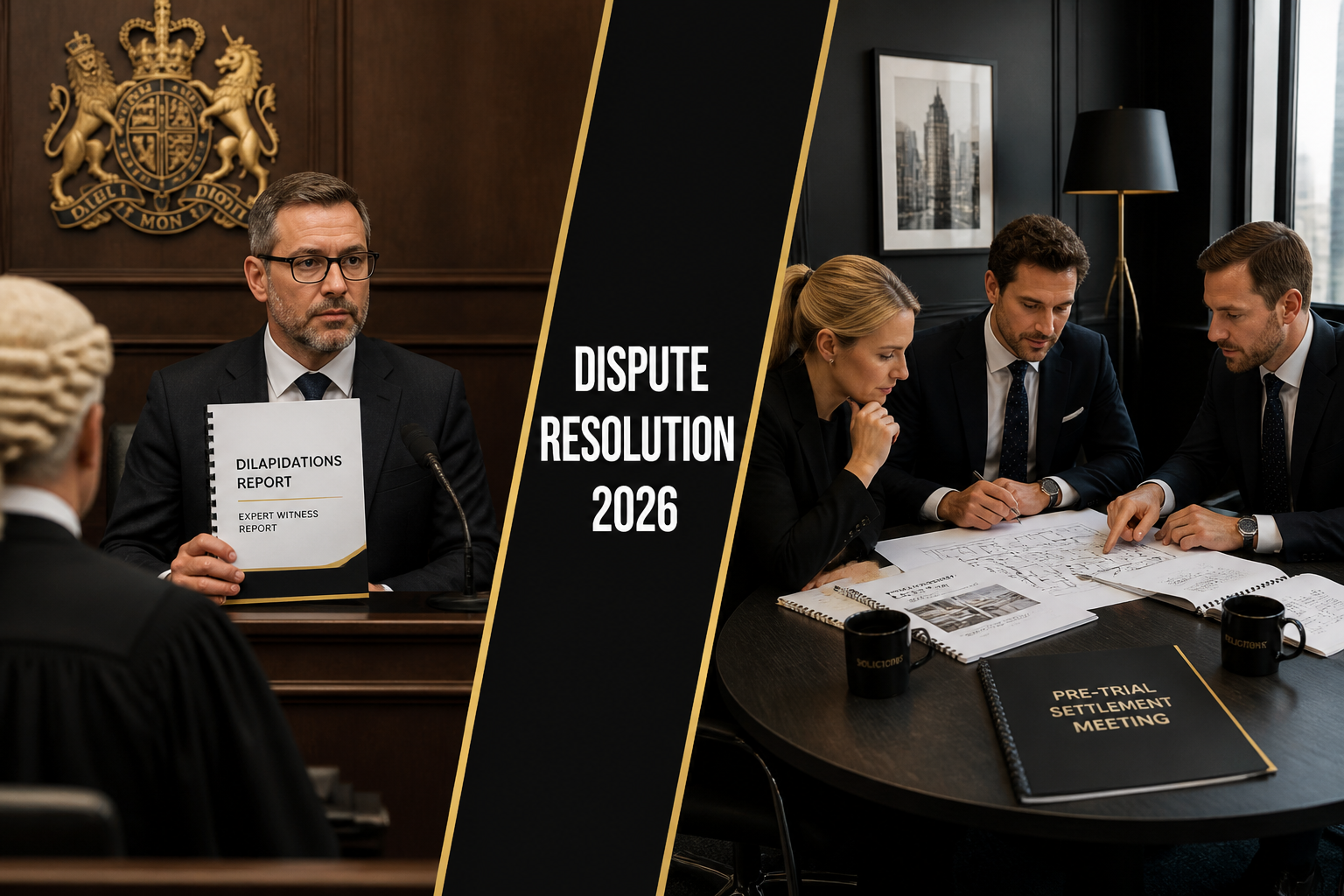
The record attendance at the 2026 RICS UK&I Dilapidations Conference reflects the profession's recognition that most dilapidations disputes settle before trial. [6] Expert witnesses play a crucial role in shaping settlement outcomes — a well-reasoned report with a defensible quantum assessment creates the conditions for realistic negotiation.
Practical negotiation leverage points include:
- Supersession arguments — where the landlord's redevelopment plans mean repairs would never actually be carried out
- Mitigation evidence — demonstrating that the landlord failed to take reasonable steps to mitigate their loss
- Condition at commencement — using Schedule of Condition evidence to limit the scope of repair obligations
- Betterment adjustments — where remediation works would put the landlord in a better position than they were entitled to under the lease
For commercial property professionals seeking broader context on how surveyors approach complex valuation and dispute scenarios, the commercial property surveyors service overview provides useful background on the range of expertise involved in these matters.
The expert witness who understands both the legal framework and the commercial dynamics of lease-end negotiations adds far greater value than one who simply produces a schedule of defects. Understanding valuation factors that influence market value — yield movements, rental tone, comparable transactions — is essential for producing a Section 18(1) analysis that withstands challenge.
Similarly, surveyors involved in expert witness work across residential and commercial contexts will find that the principles governing expert witness valuations in housing disputes share significant common ground with the dilapidations context, particularly around RICS protocol compliance and quantum methodology. [4]
Conclusion: Actionable Steps for Surveyors in 2026
Dilapidations Expert Witness Reports in 2026 Commercial Leases: RICS Valuation Protocols Amid End-of-Lease Disputes represent one of the most technically demanding areas of building surveying practice. The combination of legal procedure, defect diagnosis, and valuation methodology demands a multi-disciplinary skill set that few practitioners fully master.
Here are the key actionable steps for surveyors preparing expert witness reports in 2026:
- Know the protocol cold. The 56-day timelines are mandatory — advise clients early and build compliance into every instruction from day one. [2]
- Separate the technical from the legal. The expert's role is to provide independent technical opinion; advocacy is the solicitor's job. Conflating the two destroys credibility.
- Always address Section 18(1). Every landlord-side report must include a diminution valuation. Every tenant-side report must challenge the landlord's quantum with a counter-analysis.
- Price works at current market rates. In 2026's construction market, outdated pricing is immediately apparent to opposing experts and courts.
- Engage with RICS guidance actively. The 2026 RICS Dilapidations Conference underscores the profession's commitment to raising standards — practitioners should stay current with RICS guidance documents and CPD. [6]
- Recommend a Schedule of Condition at lease commencement. This single document does more to prevent dilapidations disputes than any other measure. [3]
- Structure reports for a non-specialist reader. Judges are not surveyors. Clear, logical, plain-language reports are more persuasive than technically dense documents that obscure the key issues.
The commercial property market in 2026 continues to generate significant lease-end activity as pandemic-era leases expire and occupiers reconfigure their space requirements. For surveyors who invest in mastering the expert witness discipline, the demand for high-quality dilapidations reports has never been greater.
References
[1] Dilapidation Disputes – https://www.rics.org/dispute-resolution-service/drs-services/rent-and-property-disputes/dilapidation-disputes
[2] The Dilapidations Protocol Navigating The 56 Day Countdown – https://stokemont.com/advice/the-dilapidations-protocol-navigating-the-56-day-countdown/
[3] Dilapidations England Wales – https://www.rics.org/consumer-guides/dilapidations-england-wales
[4] Expert Witness Valuations In 2026 Housing Disputes Rics Protocols For North South Price Divergence Cases – https://nottinghillsurveyors.com/blog/expert-witness-valuations-in-2026-housing-disputes-rics-protocols-for-north-south-price-divergence-cases
[5] The Essentials Toolkit For Dilapidations Expert Witnesses – https://www.ashfords.co.uk/insights/articles/the-essentials-toolkit-for-dilapidations-expert-witnesses
[6] Dilapidations Conference – https://www.rics.org/training-events/conferences/dilapidations-conference
