
Nearly one in three home renovation projects in the UK triggers some form of neighbour dispute — yet the vast majority of these conflicts are entirely preventable with the right preparation. Preventing domestic building disputes through party wall and building survey strategies for client-contractor harmony is not just a legal obligation; it is a practical investment in smoother, faster, and less costly construction projects. Whether planning a loft conversion, rear extension, or basement dig, understanding how formal notices, pre-construction surveys, and clear communication protocols work together can mean the difference between a completed project and a costly legal battle.
Key Takeaways 📋
- Serve formal Party Wall Notices early — ideally two months before work begins — to give neighbours adequate time to respond and reduce the risk of disputes.
- Pre-construction schedules of condition are among the most powerful tools for preventing damage claims and protecting both building owners and neighbours.
- RICS is updating its Party Wall guidance (draft 8th edition consultation, April–May 2026), signalling a stronger push for consistency and competence across the industry.
- Informal communication before formal notices dramatically reduces neighbour objections and creates goodwill before work starts.
- Non-compliance with the Party Wall Act 1996 carries real legal and financial consequences, including injunctions, project delays, and compensation claims.
Understanding the Legal Foundation: The Party Wall Act 1996
The Party Wall etc. Act 1996 remains the cornerstone legal framework governing work on shared walls, floors, and boundaries between properties in England and Wales. It is important to note that these requirements do not apply in Scotland or Northern Ireland [1][5].
The Act covers three main categories of work:
| Work Type | Example | Notice Required |
|---|---|---|
| Work on an existing party wall | Cutting in steel beams, raising height | Party Structure Notice |
| New building at or near boundary | New wall along boundary line | Line of Junction Notice |
| Excavation near a neighbour's building | Basement dig, deep foundations | 3-6 metre Notice |
For homeowners planning loft conversions, extensions, or damp proof course insertions, the Act almost always applies. These are also among the most common triggers for residential disputes [5]. For a thorough overview of when the Act is engaged, the complete guide to understanding the Party Wall etc. Act 1996 is an excellent starting point.
When Is a Formal Notice Required?
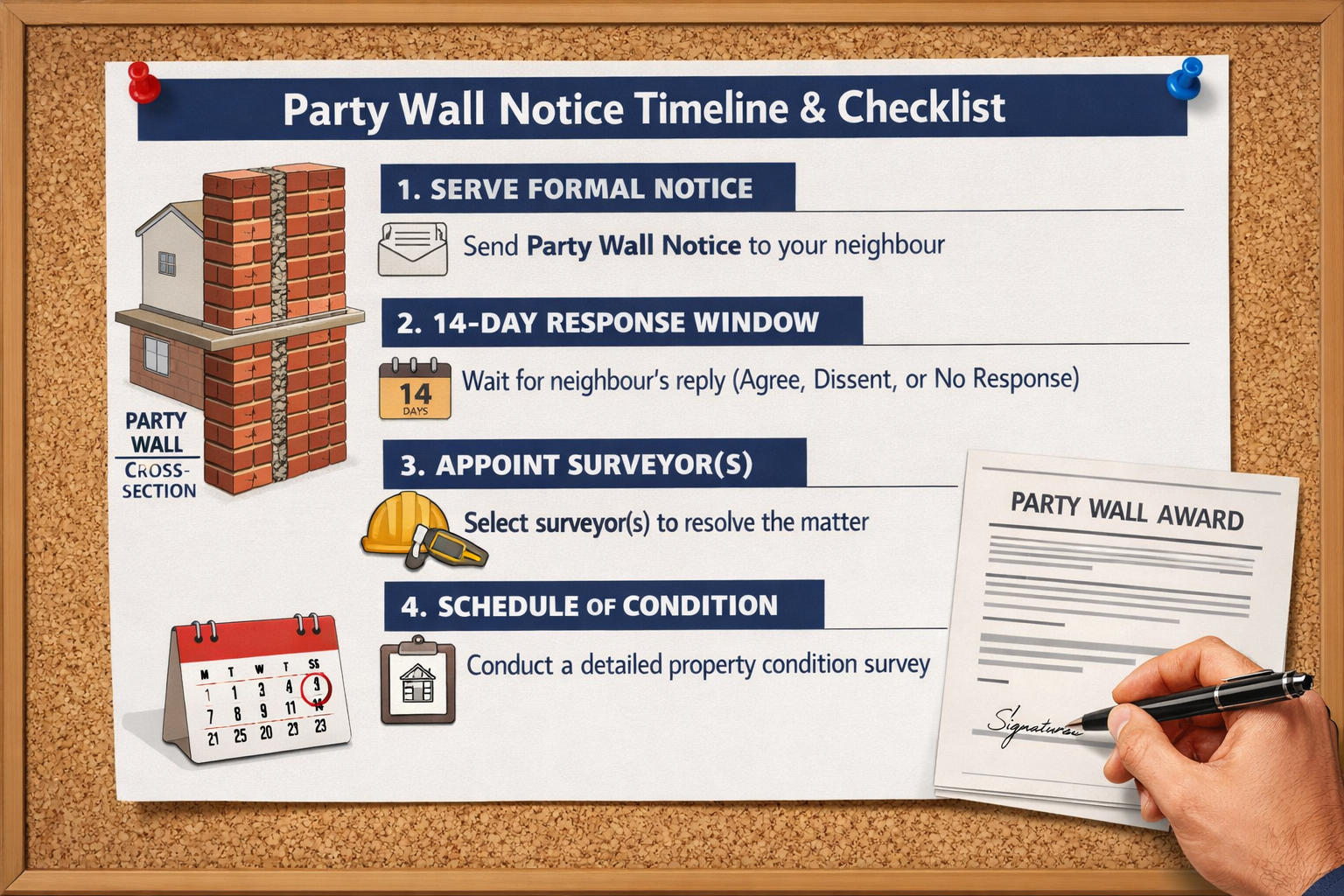
A Party Wall Notice must be served to all adjoining owners before work begins. The notice periods are:
- 🗓️ Two months before work starts for party structure notices
- 🗓️ One month before work starts for line of junction notices
If the adjoining owner consents in writing, a surveyor may not be required. However, if they raise any concerns or simply fail to respond within 14 days, a surveyor must be appointed [1]. Understanding when you need a party wall agreement is a critical first step in any project planning process.
💬 Pull Quote: "Serving notice is not a bureaucratic hurdle — it is the first act of good faith between neighbours, and it sets the tone for everything that follows."
Preventing Domestic Building Disputes: The Role of Party Wall Surveys and Pre-Construction Documentation
One of the most effective strategies for preventing domestic building disputes through party wall and building survey approaches is thorough pre-construction documentation. This is where qualified surveyors deliver exceptional value — not just as administrators of legal process, but as genuine dispute-prevention specialists.
The Schedule of Condition: Your Best Defence
A Schedule of Condition is a detailed record — including written descriptions and photographic evidence — of the state of the neighbouring property before any work begins [5]. This document:
- Records existing cracks, damp patches, and structural conditions
- Provides a clear baseline if damage claims arise later
- Forms part of the legally binding Party Wall Award
- Protects both the building owner and the neighbour equally
Party wall surveyors conduct pre-construction inspections documenting the current state of the party wall and surrounding area. This documentation provides an essential reference point if disputes arise about whether damage occurred during the project [1]. Without it, any crack appearing after work begins becomes a potential dispute — with no objective evidence to resolve it.
For projects involving damage to property in party wall situations, having a robust schedule of condition can prevent disputes from escalating into formal legal proceedings.
The Party Wall Award: Legally Binding Clarity
When a surveyor is appointed, they produce a formal Party Wall Award — a legally binding document that:
- Details the proposed works in full
- Sets out the manner and hours of working
- Includes the schedule of condition with photographic evidence
- Outlines the process for dealing with any damage that arises [5]
Understanding what a Party Wall Award contains and how it protects homeowners is essential for anyone embarking on a project near a shared boundary.
Choosing the Right Surveyor
When both parties agree to appoint one agreed surveyor, that individual must be genuinely independent — not the same surveyor already engaged by the building owner for the project itself [5]. This independence is critical to the neighbour's confidence in the process.
Both parties may instead appoint their own surveyors, who then jointly appoint a third surveyor to resolve any disagreements between them. For guidance on finding qualified party wall surveyors, it pays to verify credentials carefully.
💡 Pro Tip: Always check that your surveyor is RICS-accredited. The RICS launched a consultation on the draft 8th edition of Party Wall Legislation and Procedure in April–May 2026, reflecting ongoing efforts to raise standards and consistency across party wall practice [2].
Preventing Domestic Building Disputes: RICS Best Practices for Communication and Early Intervention
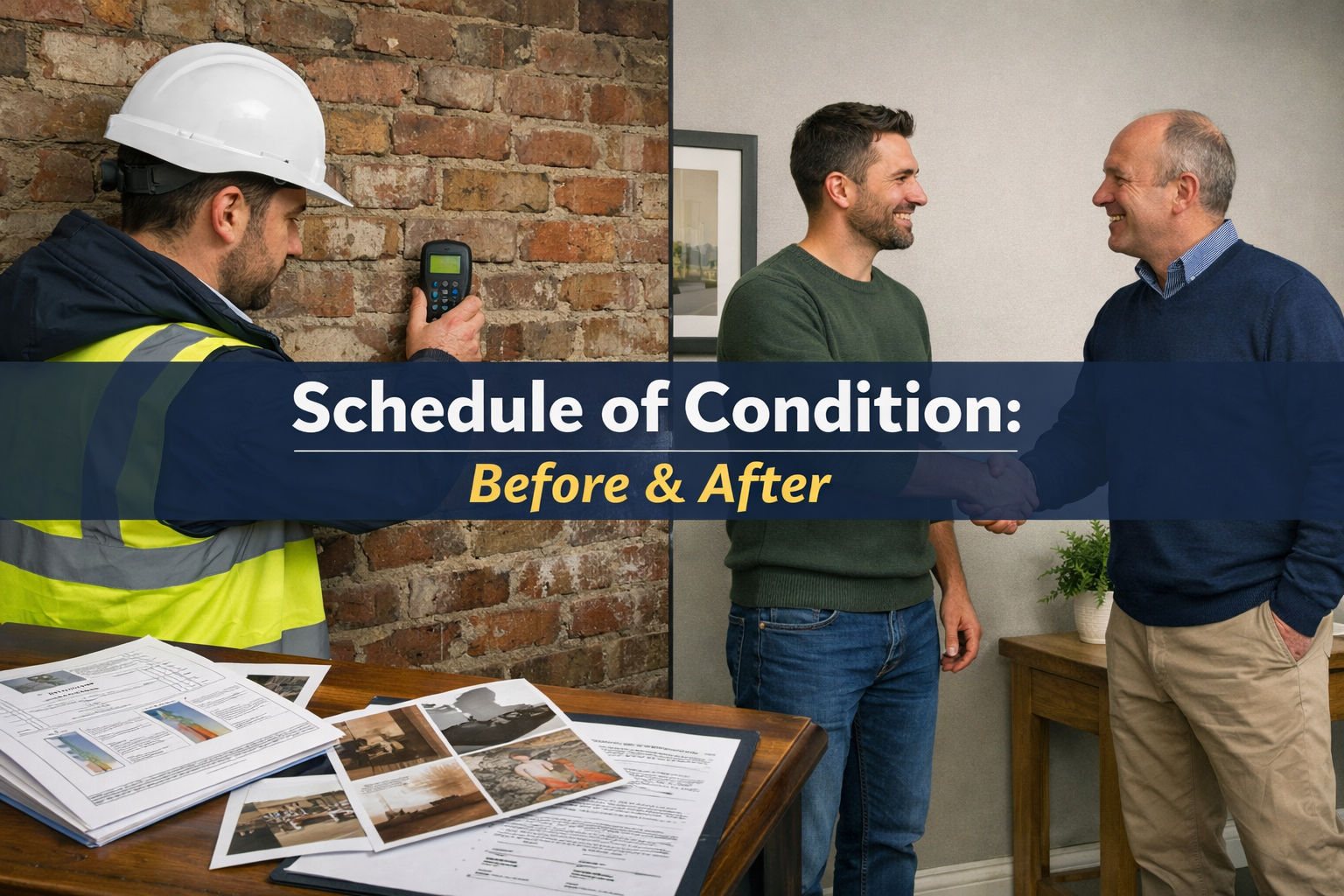
Legal compliance alone does not prevent disputes. The most effective client-contractor harmony strategies combine formal processes with proactive, human-centred communication. RICS best practices consistently highlight early engagement as the single most impactful dispute-prevention measure.
The Pre-Notice Conversation: Underrated but Powerful
Before serving any formal notice, talking informally to neighbours about planned works has a measurable impact on outcomes. Proactive communication before serving formal Party Wall Notices — discussing plans with neighbours informally to address their concerns upfront — makes neighbours more comfortable with projects and significantly reduces objections and disputes [1].
A simple conversation covering:
- ✅ What work is planned and why
- ✅ Approximate start and end dates
- ✅ How disruption will be managed
- ✅ Who to contact with concerns
…can transform a neighbour from an anxious objector into a cooperative participant.
A Proactive Building Survey Checklist for Dispute Prevention
The following checklist brings together the key steps for preventing domestic building disputes through party wall and building survey strategies:
Before Work Begins:
- Identify all adjoining owners and occupiers
- Consult a qualified surveyor to assess whether the Act applies
- Serve formal notices within the correct timeframes
- Commission a pre-construction schedule of condition
- Agree on working hours, site access, and dust/noise management
- Obtain a signed Party Wall Award before breaking ground
During Construction:
- Keep neighbours informed of progress and any changes
- Document any unexpected findings (e.g., hidden structural issues)
- Ensure contractors adhere to the terms of the Party Wall Award
- Address any concerns raised by neighbours promptly
After Completion:
- Conduct a post-construction inspection
- Compare post-work condition against the schedule of condition
- Resolve any legitimate damage claims promptly and fairly
- Retain all documentation for at least six years
Building Regulations: Beyond Party Wall Compliance
It is important to recognise that legal obligations extend well beyond the Party Wall Act. Construction work must also comply with Building Regulations and relevant safety standards [4]. These cover structural integrity, fire safety, drainage, and energy efficiency — all of which intersect with party wall works.
A RICS Level 3 Building Survey can identify structural concerns that may affect party wall works before they become problems, providing an independent assessment of the property's condition that informs safer, more compliant construction planning.
What Happens When Disputes Do Arise?
Despite best efforts, disputes sometimes occur. Common triggers include:
- 🔴 Alleged damage to the neighbouring property
- 🔴 Noise or disruption exceeding agreed terms
- 🔴 Failure to serve notices correctly
- 🔴 Disagreements over the scope of the Party Wall Award
Qualified surveyors are trained to act as impartial mediators — examining building plans, assessing impact on party walls, and negotiating terms without taking sides [1][4]. This neutral role is one of the most valuable aspects of professional surveyor involvement.
For situations that escalate further, resolving party wall disputes through the formal surveyor process is almost always faster and cheaper than litigation.
The Cost of Non-Compliance
Ignoring the Party Wall Act is never a viable option. Legal non-compliance can result in:
- 🚫 Injunctions halting construction mid-project
- 🚫 Court orders requiring demolition of completed work
- 🚫 Compensation claims from neighbours
- 🚫 Significant legal costs and project delays [1]
Surveyors' expertise ensures compliance and prevents unexpected legal issues that save time and expense in the long run [1]. The cost of a party wall surveyor is almost always a fraction of the cost of resolving a dispute after work has begun.
Conclusion: Building Harmony Before Breaking Ground
Preventing domestic building disputes through party wall and building survey strategies for client-contractor harmony is fundamentally about preparation, professionalism, and people. The legal framework provided by the Party Wall Act 1996 exists not to create obstacles, but to protect everyone involved — building owners, neighbours, and contractors alike.
Actionable Next Steps 🎯
- Consult a qualified surveyor early — before finalising plans, not after. A professional assessment can identify party wall obligations before they become surprises.
- Serve notices on time — use the correct notice periods and ensure all adjoining owners are identified and notified.
- Commission a schedule of condition — this single document prevents more disputes than almost any other measure.
- Talk to your neighbours first — an informal conversation before formal notices sets a collaborative tone.
- Stay RICS-compliant — with the draft 8th edition of party wall guidance under consultation in 2026, staying current with best practice protects both clients and contractors [2].
- Document everything — from pre-construction inspections to post-completion sign-offs, thorough records are the foundation of dispute-free projects.
The investment in proper party wall and building survey processes is not just a legal necessity — it is the smartest way to protect relationships, property values, and project timelines. Whether a first-time renovator or an experienced developer, getting the foundations right — literally and legally — makes everything that follows smoother.
References
[1] Understanding The Importance Of Party Wall Surveys – https://akt-surveyors.com/understanding-the-importance-of-party-wall-surveys/
[2] Rics Launches Consultation On Updated Party Wall Practice Guidance – https://www.rics.org/news-insights/rics-launches-consultation-on-updated-party-wall-practice-guidance
[3] Common Party Wall Disputes And How To Resolve Them Effectively – https://www.partywallslimited.com/blog/common-party-wall-disputes-and-how-to-resolve-them-effectively
[4] Building Against A Party Wall Key Considerations Tips And Best Practices – https://thepartywallguru.com/building-against-a-party-wall-key-considerations-tips-and-best-practices/
[5] Party Wall Agreement – https://hoa.org.uk/advice/guides-for-homeowners/i-am-improving/party-wall-agreement/
[6] Avoiding Party Wall Disputes In 2026 Construction Boom Surveyor Best Practices For Notice Procedures And Early Neighbour Engagement – https://nottinghillsurveyors.com/blog/avoiding-party-wall-disputes-in-2026-construction-boom-surveyor-best-practices-for-notice-procedures-and-early-neighbour-engagement
[7] Party Wall Surveys And Neighbour Disputes During 2026s Construction Uptick Rics Compliance Framework – https://nottinghillsurveyors.com/blog/party-wall-surveys-and-neighbour-disputes-during-2026s-construction-uptick-rics-compliance-framework
[9] Top 5 Tips To Avoid Party Wall Dispute With Your Neighbour – https://partywall-services.co.uk/top-5-tips-to-avoid-party-wall-dispute-with-your-neighbour/
