
{"cover":"Professional landscape format (1536×1024) hero image featuring bold text overlay 'RICS Home Survey vs Full Building Survey in 2026: Which Level of Inspection Do UK Buyers Really Need?' in extra large 72pt white sans-serif font with dark gradient shadow, positioned in upper third. Background shows split-screen composition: left side displays modern UK suburban house exterior with surveyor holding clipboard and tablet, right side shows Victorian-era brick property with visible structural details. Color scheme: deep navy blue, crisp white, professional burgundy accents. High contrast, magazine cover quality, editorial style with subtle architectural blueprint pattern overlay","content":["Landscape format (1536×1024) detailed comparison infographic showing two side-by-side property inspection scenarios. Left panel labeled 'Level 2 Home Survey' depicts surveyor conducting visual inspection of modern kitchen and bathroom with checkmarks on tablet, bright natural lighting, contemporary fixtures visible. Right panel labeled 'Level 3 Building Survey' shows surveyor examining structural elements with moisture meter, thermal camera, and detailed notes, older property features like exposed beams and period details visible. Clean professional layout with icons representing inspection depth, duration clocks showing 4 hours vs full day, color-coded severity ratings, modern architectural photography style","Landscape format (1536×1024) editorial photograph of diverse UK property types arranged in grid layout with overlay labels. Top row: post-1960s modern semi-detached home, contemporary apartment building, new-build estate house. Bottom row: Victorian terraced house with bay windows, listed Georgian townhouse, converted barn with unusual architecture. Each property has floating annotation boxes showing recommended survey level (Level 2 or Level 3) with brief reasoning. Professional property photography style, golden hour lighting, clear typography with RICS branding colors, decision-tree arrows connecting property characteristics to survey recommendations","Landscape format (1536×1024) professional cost-benefit analysis visualization showing transparent calculator interface overlaid on UK property transaction scene. Foreground displays detailed cost breakdown chart comparing Level 2 survey (£450-£900 range) versus Level 3 survey (£800-£1,500+ range) with bar graphs. Background shows estate agent handing keys to young couple in modern property, subtle imagery of hidden defects in corner (damp patches, structural cracks) with price tags showing potential repair costs (£5,000-£25,000). Color scheme: trustworthy blue, warning amber, savings green. Clean financial infographic aesthetic with British pound symbols and 2026 market data"]"}
Buying a property in 2026 means navigating a market where hidden defects can cost tens of thousands of pounds in unexpected repairs. The question facing every UK homebuyer isn't whether to get a survey—it's which level of inspection will actually protect their investment. With RICS Home Survey vs Full Building Survey in 2026: Which Level of Inspection Do UK Buyers Really Need? becoming one of the most searched property queries, understanding the critical differences between these inspection types has never been more important for making informed purchasing decisions.
The confusion between RICS survey levels costs buyers dearly each year. Some overpay for comprehensive inspections they don't need, while others discover catastrophic structural issues weeks after moving in because they chose inadequate coverage. This guide cuts through the complexity to help UK property buyers select the right survey level based on their specific property type, condition, and risk tolerance.
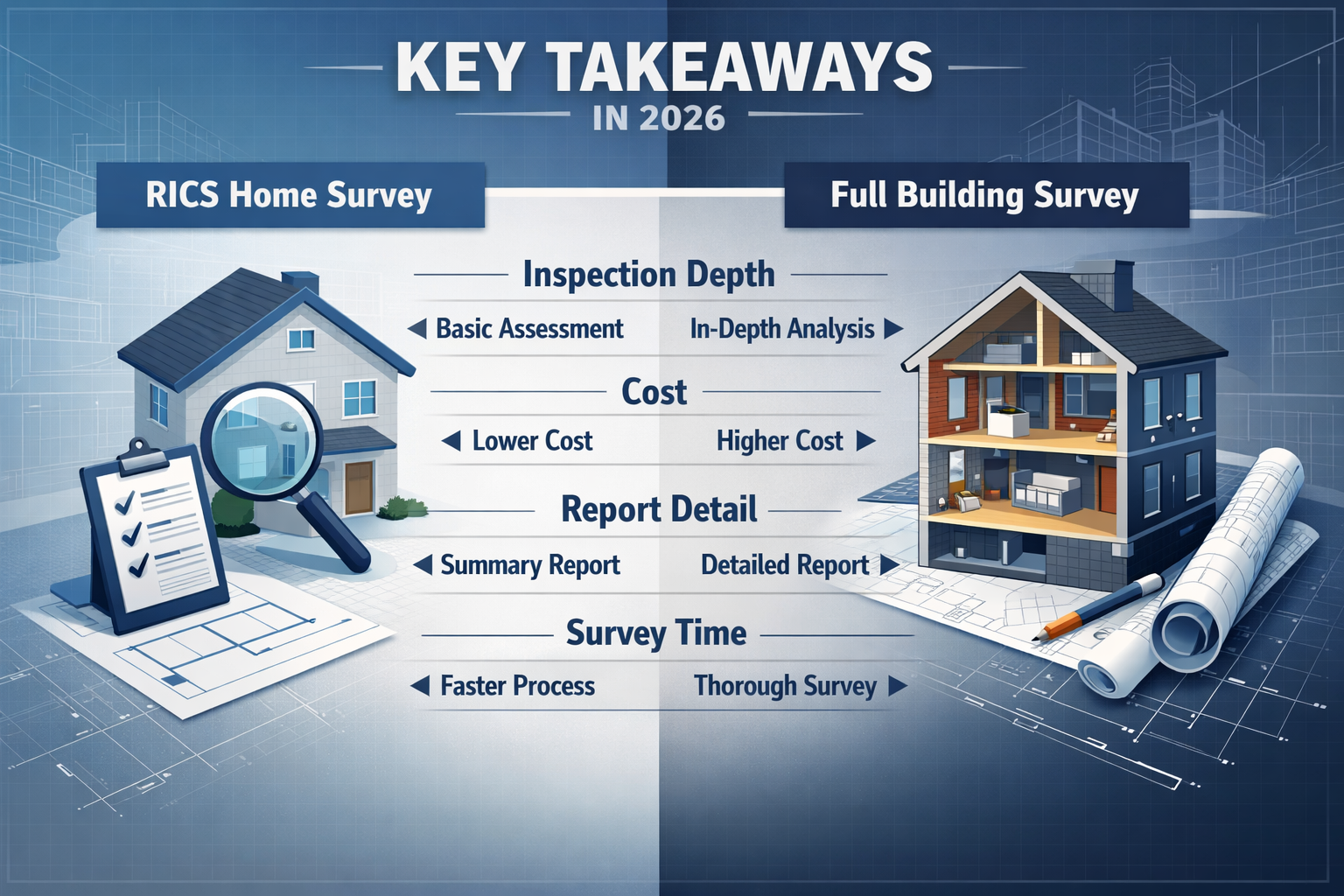
Key Takeaways
- Level 2 (Home Survey) suits modern properties built after 1960 in reasonable condition, costing £450-£900 and taking up to 4 hours to complete[1]
- Level 3 (Building Survey) is essential for older properties, listed buildings, or homes in poor condition, costing £800-£1,500+ and requiring a full day of inspection[1][2]
- The cost difference between survey levels is minimal compared to hidden defect repair costs, which can range from £5,000 to £25,000 or more
- Both surveys use standardized RICS formats and condition rating systems, but Level 3 provides significantly more detailed analysis of structural issues and repair guidance[4]
- Choosing the wrong survey level can affect mortgage offers, negotiation leverage, and long-term property maintenance costs in 2026's competitive market
Understanding RICS Survey Levels: The 2026 Framework
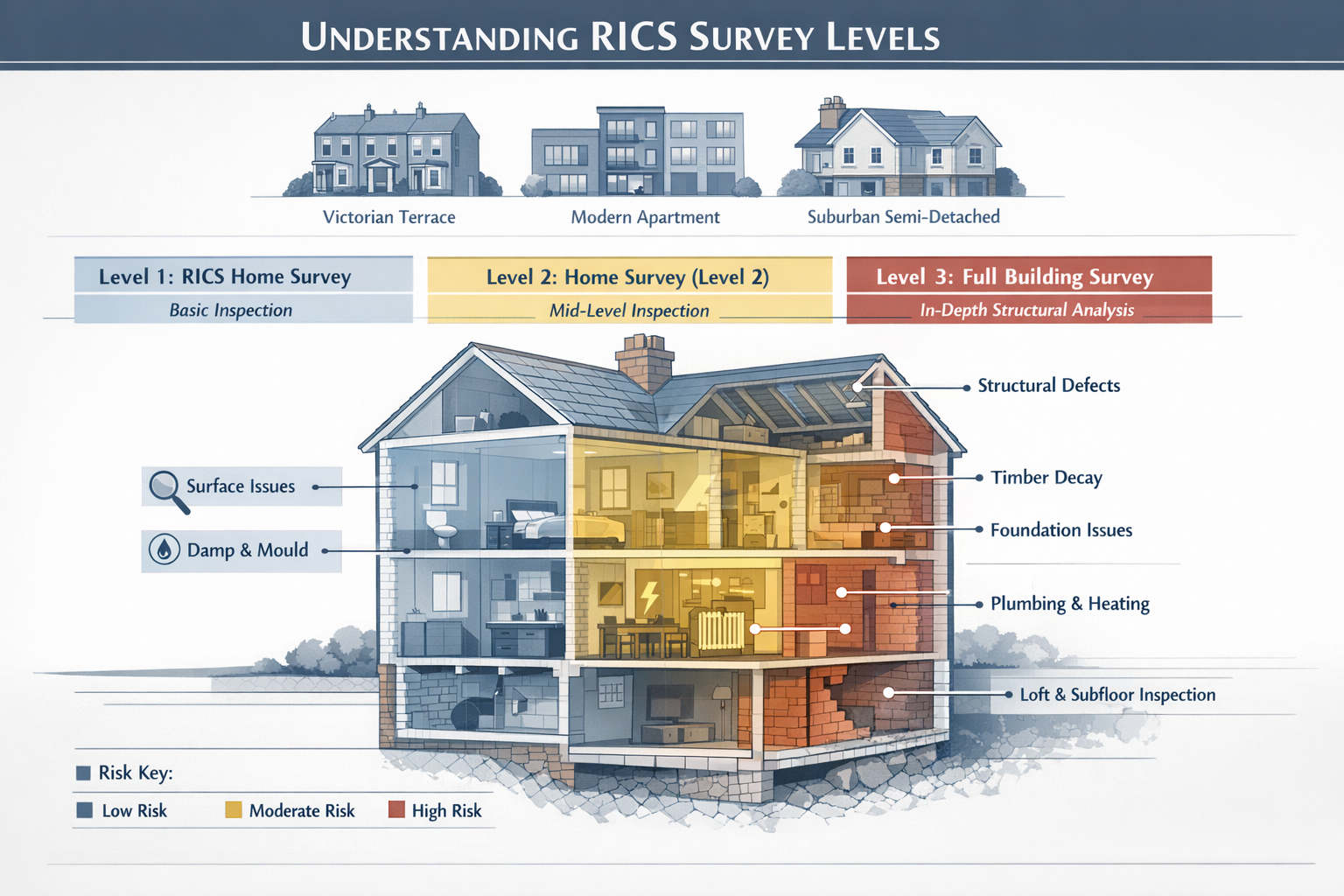
The Royal Institution of Chartered Surveyors (RICS) has established three standardized survey levels to help UK property buyers select appropriate inspection depth. In 2026, these levels remain the industry standard, though market conditions and lender expectations continue to evolve.
What Is a Level 2 Home Survey?
A Level 2 Home Survey (previously known as a HomeBuyer Report) represents a mid-level inspection suitable for conventional properties in reasonable condition. This survey type provides visual inspection of accessible areas without invasive investigation[1].
What Level 2 Surveys Cover:
- ✅ Roofs, walls, windows, doors, and floors
- ✅ Ceilings and visible structural elements
- ✅ Signs of damp, condensation, and water penetration
- ✅ Loft space inspection (where accessible)
- ✅ Visual checks of plumbing, heating, and electrical systems
- ✅ Condition ratings using RICS traffic light system
Level 2 surveys typically take up to 4 hours to complete, though access issues or property size may extend this timeframe[2]. The resulting report uses a standardized format with condition ratings that help buyers quickly identify areas of concern.
For those considering this option, our complete guide to Level 2 house surveys provides detailed insights into what homebuyers can expect from this inspection level.
What Is a Level 3 Building Survey?
A Level 3 Building Survey (formerly called a Full Structural Survey) represents the most comprehensive inspection available to UK property buyers. This detailed analysis goes far beyond visual observation to provide in-depth structural assessment[1].
What Level 3 Surveys Include:
- 🔍 All Level 2 features plus detailed structural analysis
- 🔍 Identification of defect causes and underlying issues
- 🔍 Comprehensive repair and maintenance advice
- 🔍 Photographs documenting problem areas
- 🔍 Construction insights and material assessments
- 🔍 Descriptions of identifiable risks in non-inspected areas
- 🔍 Likely scope and cost estimates for remedial work
- 🔍 Consequences of not addressing identified issues[2]
Level 3 surveys can take up to a full day for standard properties, with particularly large or complex buildings potentially requiring several days of inspection time[3]. The comprehensive nature of these surveys means surveyors spend significantly more time examining structural elements, testing for defects, and documenting their findings.
Our essential guide to Level 3 building surveys explores the detailed process and benefits of this comprehensive inspection approach.
The Key Differences That Matter in 2026
| Feature | Level 2 Home Survey | Level 3 Building Survey |
|---|---|---|
| Inspection Depth | Visual assessment of accessible areas | Detailed examination including structural analysis |
| Report Detail | Standardized format with condition ratings | Bespoke report with extensive explanations |
| Defect Analysis | Identifies visible issues | Explains causes and provides solutions |
| Cost Estimates | General guidance | Specific repair cost estimates |
| Duration | Up to 4 hours | Full day or multiple days |
| Typical Cost | £450-£900[1] | £800-£1,500+[1] |
| Best For | Modern, conventional properties | Older, unusual, or problematic properties |
The fundamental distinction lies not just in inspection depth but in how problems are explained and contextualized. Level 3 surveys provide significantly more detailed explanations of issues, including how problems can be overcome and rectified, along with surveyor cost estimates for repairs[4].
RICS Home Survey vs Full Building Survey in 2026: Choosing the Right Level for Your Property
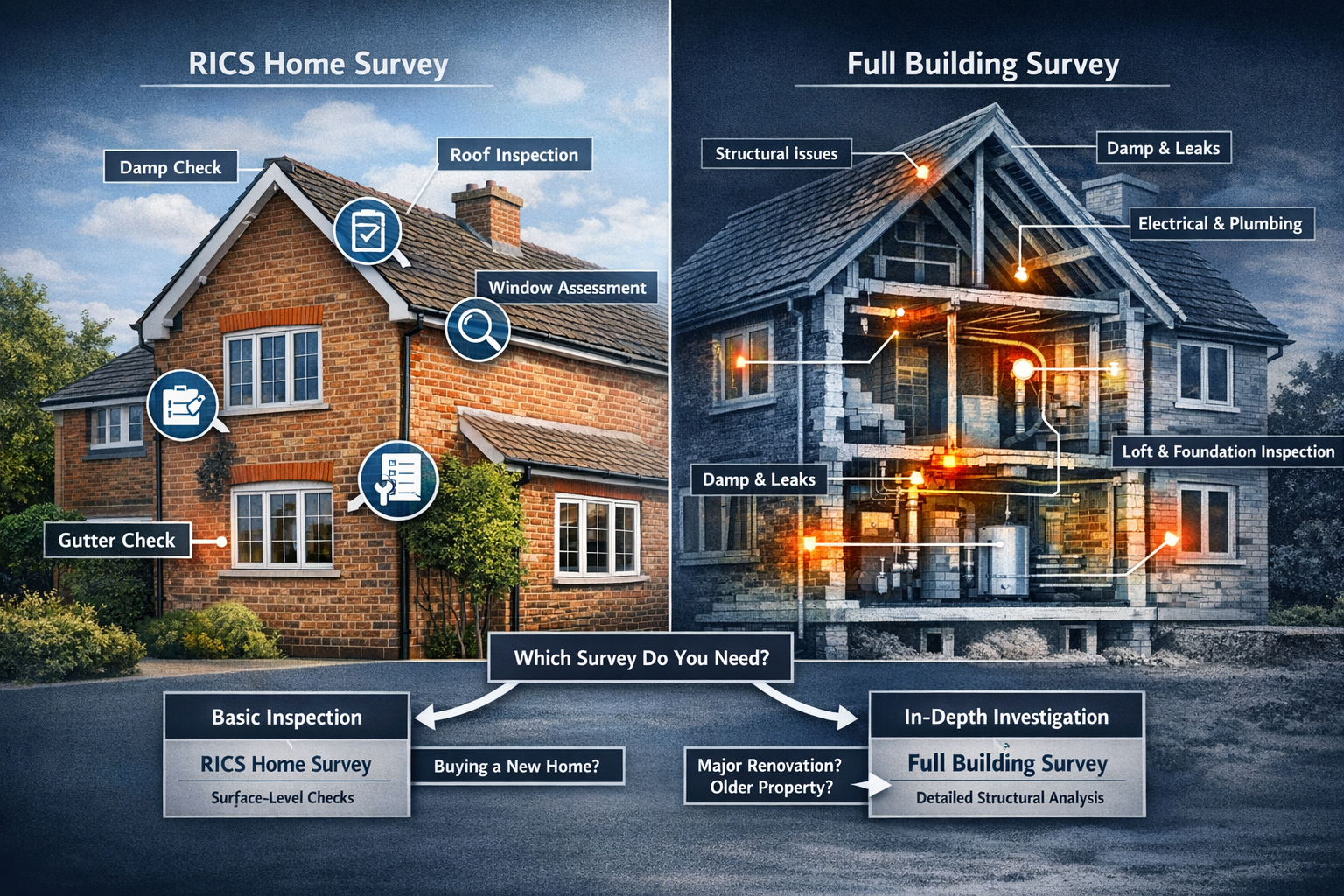
Selecting between a Level 2 and Level 3 survey requires careful consideration of property characteristics, buyer circumstances, and risk tolerance. In 2026's competitive housing market, making the wrong choice can have expensive consequences.
When Level 2 Home Surveys Are Sufficient
Level 2 surveys work best for:
- 🏠 Properties built after 1960 in reasonable condition
- 🏠 Conventional homes constructed from common materials
- 🏠 Properties that appear well-maintained during viewing
- 🏠 Standard construction types without unusual features
- 🏠 Buyers seeking cost-effective baseline protection[1]
A Level 2 survey provides adequate protection for modern semi-detached houses, contemporary apartments, and standard new-builds where no obvious defects are visible. However, even seemingly perfect properties can harbor hidden issues, which is why understanding whether you need a survey when buying a home remains crucial.
Real-World Example: A 1985-built three-bedroom semi in good decorative order with no visible structural concerns would typically suit a Level 2 survey. The standardized report would identify any emerging issues while keeping survey costs proportionate to the property value.
When Level 3 Building Surveys Are Essential
Level 3 surveys are recommended for:
- 🏛️ Properties over 50 years old
- 🏛️ Listed buildings or properties in conservation areas
- 🏛️ Homes with unusual design or construction methods
- 🏛️ Properties in visibly poor condition
- 🏛️ Buildings where major renovations are planned
- 🏛️ Properties that have been significantly altered or extended[2]
The comprehensive nature of Level 3 surveys makes them invaluable for Victorian terraces, Georgian townhouses, converted barns, and any property with visible defects such as cracking, subsidence signs, or damp issues.
For buyers considering older properties, our comprehensive guide to understanding Level 3 building surveys details exactly what this inspection level reveals.
Real-World Example: A Victorian terraced house with original features, period details, and some visible cracking would require a Level 3 survey. The detailed structural analysis would identify whether cracks indicate settlement or active movement, provide repair solutions, and estimate costs—information a Level 2 survey wouldn't deliver.
The Grey Area: Properties That Could Go Either Way
Some properties fall between clear-cut categories, requiring careful assessment:
1960s-1980s Properties with Minor Concerns
Properties from this era often present dilemmas. While technically modern enough for Level 2, they're old enough to have developing issues. Visible signs like minor cracking, outdated electrics, or aging roofing might justify upgrading to Level 3.
Recently Renovated Older Properties
A comprehensively renovated Victorian house might appear suitable for Level 2, but hidden structural issues could lurk beneath new finishes. The renovation quality itself warrants investigation—was structural work properly executed?
Properties Near Environmental Risks
Homes near trees, on clay soil, in flood zones, or with subsidence history benefit from Level 3's detailed risk assessment, regardless of age. Our subsidence survey services can be particularly valuable in these situations.
Expert Insight: "In 2026, we're seeing more buyers opt for Level 3 surveys even on 1970s properties due to increasing awareness of hidden defects. The £300-£600 cost difference is negligible compared to discovering a £15,000 roof replacement need after completion."
How Lender Requirements Affect Your Choice
Mortgage lenders in 2026 increasingly scrutinize survey results before releasing funds. While they don't mandate specific survey levels (beyond their own basic valuation), the survey you choose can directly impact your mortgage offer.
Lender Considerations:
- Properties with significant defects identified in surveys may receive reduced valuations
- Some lenders require specific issues to be addressed before completion
- Detailed Level 3 reports provide lenders with confidence in property condition
- Survey findings can affect loan-to-value ratios and interest rates
Understanding how long homebuyer surveys take helps buyers plan their purchase timeline around lender requirements and completion deadlines.
Cost Considerations and Value Analysis: Making the Financial Case
The price difference between survey levels often influences buyer decisions, but focusing solely on upfront costs can prove penny-wise and pound-foolish in 2026's property market.
Survey Costs in 2026: What to Expect
Level 2 Home Survey Costs:
- Typical range: £450-£900[1]
- Factors affecting price: property size, location, surveyor experience
- Average for standard three-bedroom house: £600-£700
Level 3 Building Survey Costs:
- Typical range: £800-£1,500+[1]
- Factors affecting price: property complexity, age, size, accessibility
- Average for Victorian terraced house: £1,000-£1,200
- Large or complex properties: £1,500-£2,500+[3]
The cost difference between survey levels typically ranges from £300 to £600 for standard properties—a relatively modest investment when compared to potential repair costs.
The Hidden Cost of Choosing Wrong
Undersurvey Risk (Choosing Level 2 When Level 3 Needed):
Selecting an insufficient survey level exposes buyers to substantial financial risks:
- 💷 Undiscovered structural issues: £10,000-£50,000+ in repairs
- 💷 Roof replacement needs: £5,000-£15,000
- 💷 Damp treatment and remediation: £3,000-£12,000
- 💷 Electrical rewiring: £4,000-£8,000
- 💷 Subsidence repairs: £15,000-£50,000+
Case Study: A buyer purchased a 1930s semi-detached house with a Level 2 survey showing no major concerns. Six months after moving in, significant structural movement became apparent, requiring £28,000 in underpinning work. A Level 3 survey would have identified early warning signs and provided negotiation leverage or purchase withdrawal opportunity.
Oversurvey Risk (Choosing Level 3 When Level 2 Sufficient):
While less financially damaging, paying for unnecessary survey depth has opportunity costs:
- Spending £400-£600 more than needed
- Potentially longer survey timeline delaying completion
- More detailed report than required for straightforward property
However, the downside of over-surveying is minimal compared to under-surveying risks. As our guide on Level 2 vs Level 3 surveys explains, erring on the side of comprehensive inspection rarely proves regrettable.
Negotiation Leverage and Purchase Price Adjustments
Survey findings provide powerful negotiation tools:
Level 2 Survey Negotiation Potential:
- Identify issues for price reduction discussions
- Highlight urgent repairs requiring immediate attention
- Provide evidence for renegotiation if significant defects emerge
Level 3 Survey Negotiation Potential:
- Detailed repair cost estimates strengthen negotiation position
- Comprehensive defect analysis prevents seller disputes
- Professional surveyor opinions carry weight in price discussions
- Can justify £10,000-£30,000+ price reductions on problematic properties
Real Negotiation Example: A Level 3 survey on a £450,000 Victorian house identified £18,000 in necessary roof and damp repairs with detailed cost breakdowns. The buyer successfully negotiated a £15,000 price reduction, effectively making the £1,100 survey cost a £13,900 net saving.
Long-Term Value: Maintenance Planning and Future Costs
Beyond immediate purchase decisions, comprehensive surveys provide long-term value through maintenance planning:
Level 3 Survey Long-Term Benefits:
- 📋 Detailed maintenance schedules for major building elements
- 📋 Anticipated replacement timelines for roofs, windows, heating systems
- 📋 Budgeting information for future repairs
- 📋 Understanding of property-specific maintenance requirements
- 📋 Documentation valuable for insurance claims and future sales
This forward-looking information helps homeowners budget for inevitable maintenance, preventing financial surprises and enabling proactive property care.
Timeline Expectations: How Survey Choice Affects Your Purchase Schedule
In 2026's fast-moving property market, survey timelines can make or break purchase chains. Understanding how long different survey levels take helps buyers plan realistic completion schedules.
Level 2 Survey Timeline
Inspection Duration: Up to 4 hours[2]
Report Delivery: Typically 5-10 working days
Total Timeline: 1-2 weeks from booking to report receipt
The relatively quick turnaround of Level 2 surveys suits buyers in competitive situations where speed matters. However, access issues or surveyor availability can extend timelines.
Level 3 Survey Timeline
Inspection Duration: Full day for standard properties, potentially several days for large or complex buildings[3]
Report Delivery: Typically 7-14 working days due to comprehensive reporting requirements
Total Timeline: 2-3 weeks from booking to report receipt
The extended timeline reflects the detailed nature of Level 3 inspections and the comprehensive reports produced. Buyers should factor this into their purchase timeline and completion date negotiations.
Our guide on how long Level 2 surveys take provides detailed timeline planning information for buyers working within tight schedules.
Special Circumstances: When Standard Rules Don't Apply
Certain property types and purchase situations require special consideration beyond the standard Level 2 vs Level 3 decision framework.
New Build Properties
Do new builds need surveys? This remains a contentious question in 2026. While new builds come with NHBC warranties and building regulation sign-offs, defects still occur.
New Build Survey Considerations:
- Snagging surveys identify cosmetic and minor defects before completion
- Structural surveys can reveal construction quality issues
- NHBC coverage doesn't eliminate survey value
- Developer reputation affects survey necessity
Our comprehensive guide on whether you need a survey on a new build explores this specialized scenario in detail.
Listed Buildings and Conservation Areas
Properties with listed status or conservation area restrictions always warrant Level 3 surveys due to:
- Unique construction methods requiring specialist knowledge
- Restrictions on repair and alteration methods
- Higher costs for sympathetic repairs using traditional materials
- Complex planning requirements for any changes
Properties Requiring Specialist Surveys
Some properties need additional specialist surveys beyond standard RICS levels:
- Damp surveys for properties with moisture issues (damp survey services)
- Subsidence surveys for properties with movement history
- Timber surveys for properties with potential wood decay or insect infestation
- Electrical surveys for properties with outdated wiring
These specialist surveys often complement rather than replace standard RICS surveys.
Leasehold Properties and Flats
Leasehold considerations affect survey choices:
- Shared structural elements require different assessment approaches
- Freeholder maintenance responsibilities affect buyer obligations
- Service charge histories provide context for building condition
- Building insurance claims history reveals past issues
While flats often suit Level 2 surveys, older conversions or properties with visible defects still benefit from Level 3 inspection depth.
Making Your Decision: A Practical Framework
Selecting between RICS Home Survey vs Full Building Survey in 2026 requires weighing multiple factors specific to each property and buyer situation.
Decision-Making Checklist
Choose Level 2 Home Survey If:
- ✅ Property built after 1960
- ✅ Conventional construction and materials
- ✅ Good apparent condition during viewings
- ✅ No visible structural concerns
- ✅ Standard property type for the area
- ✅ Limited renovation plans
- ✅ Tight budget constraints
Choose Level 3 Building Survey If:
- ✅ Property built before 1970
- ✅ Listed building or unusual construction
- ✅ Visible defects or maintenance concerns
- ✅ Planning major renovations
- ✅ Property has been significantly altered
- ✅ Located in high-risk area (subsidence, flooding)
- ✅ Previous survey or valuation raised concerns
- ✅ Peace of mind worth the additional cost
Questions to Ask Your Surveyor
Before booking, discuss these questions with potential surveyors:
- What survey level do you recommend for this specific property and why?
- What are the limitations of each survey level for this property type?
- How long will the inspection take and when will I receive the report?
- What additional surveys might be beneficial alongside the standard RICS survey?
- Can you provide examples of similar properties you've surveyed?
Verifying surveyor qualifications remains essential—our guide on verifying surveyor credentials in the UK helps buyers ensure they're working with qualified professionals.
Regional Considerations Across the UK
Property characteristics and survey needs vary by region:
London and Southeast:
- Higher property values justify comprehensive surveys
- Victorian and Edwardian properties predominate
- Subsidence risks in clay soil areas
- Competitive market demands quick survey turnaround
Northern England:
- More affordable property values
- Mix of Victorian terraces and post-war housing
- Damp issues more prevalent
- Survey costs generally lower
Scotland:
- Different legal system affects survey timing
- Home Reports mandatory for sellers
- Buyers may still commission additional surveys
- Survey expectations differ from England and Wales
Our network of chartered surveyors across locations provides region-specific expertise throughout the UK.
Conclusion
The decision between RICS Home Survey vs Full Building Survey in 2026 fundamentally comes down to matching inspection depth to property risk. While Level 2 surveys provide adequate protection for modern, well-maintained properties, Level 3 surveys deliver essential detailed analysis for older, unusual, or problematic buildings.
The £300-£600 typical cost difference between survey levels pales in comparison to the £10,000-£50,000+ repair costs that comprehensive surveys can uncover before purchase. In 2026's competitive property market, where hidden defects can derail purchases and devastate budgets, investing in the appropriate survey level isn't optional—it's essential financial protection.
Key principles for survey selection:
- Property age and condition should guide your choice, not just budget constraints
- Visible defects or unusual features always warrant Level 3 inspection
- Survey costs are negligible compared to potential repair expenses
- Detailed reports provide negotiation leverage and long-term maintenance planning value
- When in doubt, choose the more comprehensive option—the downside of over-surveying is minimal compared to under-surveying risks
Next Steps for UK Property Buyers
- Assess your target property against the decision-making checklist provided
- Contact qualified RICS surveyors to discuss your specific situation and property type
- Request quotes for both survey levels to understand the actual cost difference
- Review surveyor credentials and experience with similar property types
- Book your survey early in the purchase process to avoid timeline pressures
- Plan for potential additional specialist surveys if initial findings warrant deeper investigation
For professional guidance on selecting and arranging the right survey level for your property purchase, contact our team of experienced chartered surveyors who can provide personalized recommendations based on your specific circumstances.
The right survey choice in 2026 isn't about finding the cheapest option—it's about securing comprehensive protection proportionate to your property's risk profile. Make an informed decision, and your survey investment will deliver value for years to come.
References
[1] Homebuyer Survey Vs Building Survey – https://surveymatch.co.uk/homebuyer-survey-vs-building-survey/
[2] What Sort Of Survey Should I Have – https://hoa.org.uk/advice/guides-for-homeowners/i-am-buying/what-sort-of-survey-should-i-have/
[3] House Surveys Uk The Costs Types And Benefits Of An Rics Home Survey – https://www.rics.org/consumer-guides/house-surveys-uk-the-costs-types-and-benefits-of-an-rics-home-survey
[4] Difference Rics Homebuyer Report And Full Building Survey – https://stokemont.com/advice/difference-rics-homebuyer-report-and-full-building-survey/
