
The UK housing market has turned a corner. After years of volatile price swings and affordability pressures, 2026 brings something property buyers haven't experienced in recent memory: genuine price stability. With median home prices declining modestly through 2025 and growth slowing to approximately 1% as we entered 2026, the frenzied bidding wars have cooled, inventory levels are normalizing, and buyers finally have breathing room to make informed decisions[2][3]. This fundamental shift in market dynamics changes everything about how Building Surveys in a Cooling-Then-Recovering Market: How 2026 Price Stability Changes What Buyers Should Prioritise should be approached and interpreted.
In this stabilising environment, the traditional rush to overlook survey findings or accept properties "as-is" no longer makes strategic sense. Buyers now have leverage to negotiate repairs, request price reductions based on defect findings, and walk away from problematic properties without fear of missing the market entirely. Understanding how to maximise the value of your building survey in 2026's balanced market conditions is essential for making sound property investment decisions.
Key Takeaways
- 🏠 Price stability in 2026 gives buyers unprecedented negotiating power based on survey findings, reversing the seller-dominated dynamics of previous years
- 📊 67% of builders now offer sales incentives, with average price reductions of 5%, creating opportunities to renegotiate based on defect discoveries[2]
- 🔍 Comprehensive building surveys are more valuable than ever as buyers shift focus from securing any property to securing the right property at the correct price
- 💰 Mortgage rates averaging 6.3% make post-purchase repairs significantly more expensive, elevating the importance of pre-purchase defect identification[1]
- ⚖️ Balanced inventory conditions (4-month combined supply) mean buyers can afford to be selective and demand seller accountability for major defects[2]
Understanding the 2026 Market Context: From Overheated to Stabilised
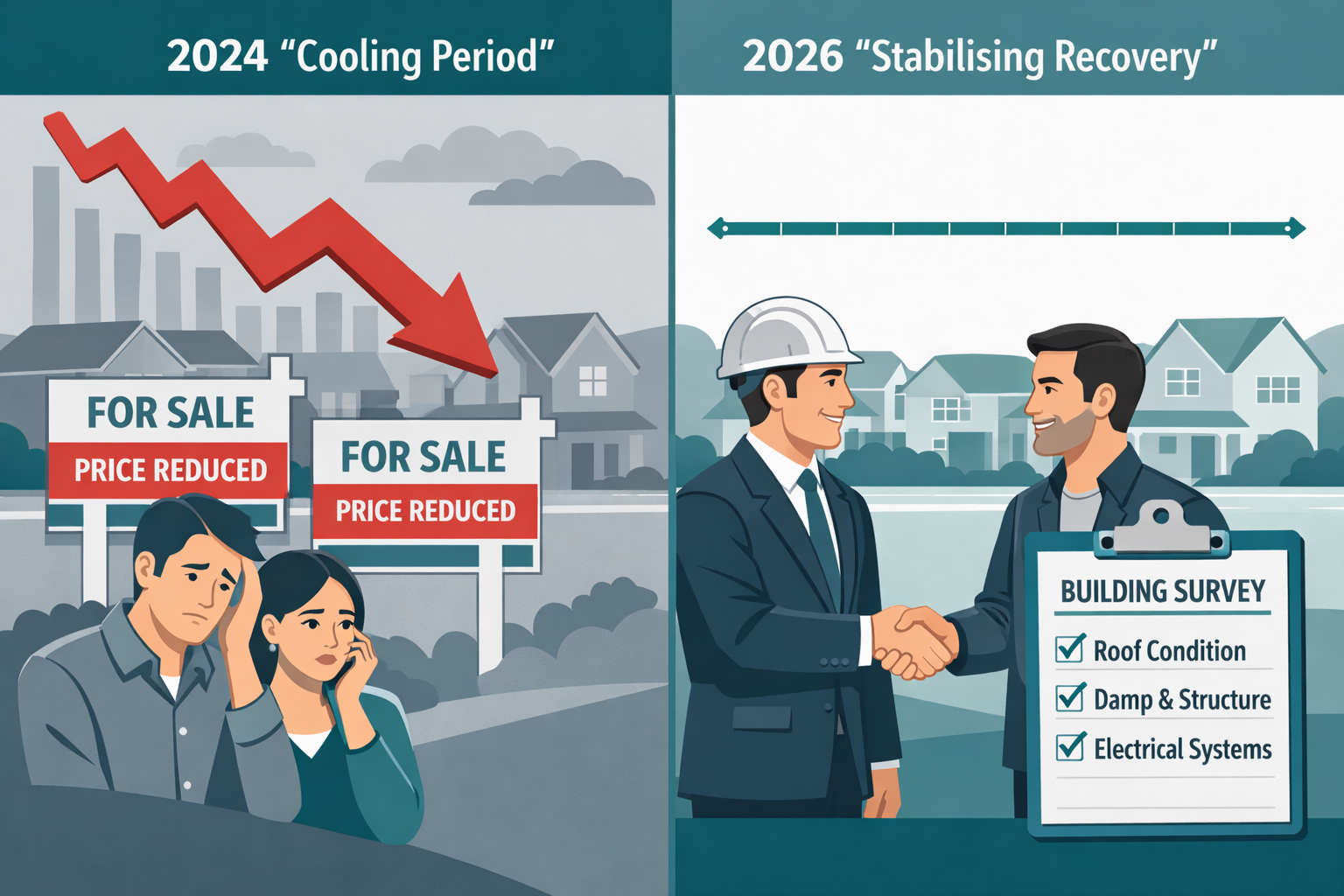
The Cooling Period That Changed Everything
The journey to 2026's price stability began with significant market cooling throughout 2025. Median new home prices declined to $415,000, representing a 1.3% drop from $420,300 in 2024[2]. This softening wasn't isolated to new construction—existing home markets experienced similar stabilisation as elevated mortgage rates and affordability pressures tempered buyer enthusiasm.
The cooling manifested in several concrete ways:
- Extended time on market: Properties that previously sold within days now remained listed for weeks or months
- Increased builder incentives: By December 2025, 67% of builders were offering sales incentives—the highest share in the post-pandemic period[2]
- Inventory normalisation: New home inventory reached 7.6-month supply, approaching the balanced six-month benchmark[2]
- Reduced bidding competition: Multiple-offer scenarios became exceptions rather than the norm
What Recovery Looks Like in 2026
The recovery phase entering 2026 differs fundamentally from previous market rebounds. Rather than explosive price appreciation, the market is characterised by stability and predictability. Over half of builders surveyed in January 2026 reported demand meeting expectations—double the share from earlier periods[4]. This balanced environment creates ideal conditions for thorough due diligence.
Home improvement spending reaching $522 billion in 2026, despite growth slowdown, indicates homeowners are investing strategically in maintenance and targeted upgrades rather than extravagant renovations[1]. This shift reflects both financial constraints from elevated borrowing costs and a more practical approach to property ownership.
For buyers commissioning building surveys, this context is crucial. The market no longer rewards hasty decisions or overlooking defects to secure a property. Instead, it rewards informed, strategic purchasing backed by comprehensive survey intelligence.
Building Surveys in a Cooling-Then-Recovering Market: Strategic Priorities for 2026 Buyers
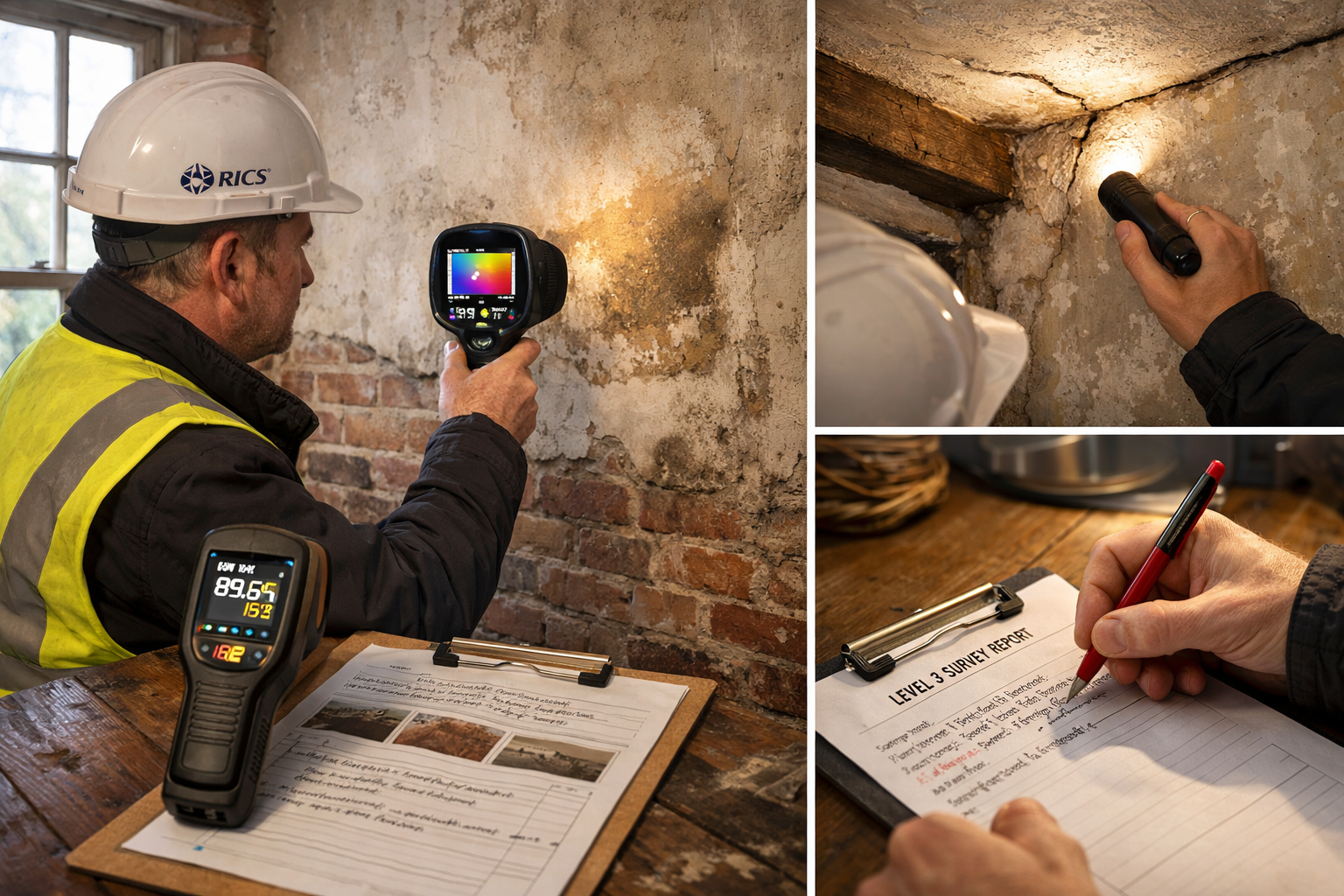
Why Survey Depth Matters More Than Ever
In overheated markets, many buyers opted for basic valuation surveys or skipped professional inspections entirely to remain competitive. The 2026 stabilised market reverses this calculus entirely. With average home equity loan rates around 7.75%[1], financing post-purchase repairs has become significantly more expensive than negotiating pre-purchase price reductions.
The financial mathematics are compelling: A £20,000 repair financed at 7.75% over ten years costs approximately £29,000 total. That same £20,000 negotiated off the purchase price immediately saves the full amount plus reduces mortgage interest over the loan term. This reality makes comprehensive Level 3 building surveys an investment that typically returns multiples of their cost.
What Surveyors Should Prioritise in 2026
The shift from need-based to strategic purchasing changes what buyers should emphasise during survey inspections. Understanding what surveyors look for in a house survey helps buyers request specific focus areas:
Critical structural elements deserve heightened attention:
- Foundation integrity and settlement patterns
- Roof condition, remaining lifespan, and replacement costs
- Damp penetration and moisture management systems
- Electrical and plumbing infrastructure age and compliance
- Timber condition and pest damage indicators
Hidden defects that become negotiation leverage:
- Concealed structural alterations without building control approval
- Asbestos-containing materials requiring professional removal
- Drainage and sewerage system deficiencies
- Boundary disputes or encroachment issues
- Evidence of previous flood damage or subsidence
The complete guide to home surveying provides comprehensive detail on inspection methodologies, but the 2026 market demands particular attention to quantifiable defects that support price renegotiation.
Survey Types and Market Conditions
Different survey levels serve different strategic purposes in the current market:
| Survey Type | Best For 2026 Market | Key Advantages | Typical Cost Range |
|---|---|---|---|
| Level 1 (Condition Report) | New-build with warranties | Quick overview, lowest cost | £250-£400 |
| Level 2 (HomeBuyer Report) | Standard properties under 50 years | Balance of detail and cost | £400-£900 |
| Level 3 (Building Survey) | Older, altered, or complex properties | Comprehensive defect identification | £600-£1,500+ |
| Specialist Surveys | Specific concerns (damp, subsidence) | Targeted deep investigation | £300-£800 each |
In 2026's buyer-friendly market, the incremental cost difference between survey levels shrinks compared to the negotiating power gained. Many buyers find Level 3 surveys worth the investment even for properties that might previously have warranted only Level 2 inspections.
Leveraging Survey Findings: Renegotiation Strategies in a Balanced Market

The New Negotiation Landscape
Building Surveys in a Cooling-Then-Recovering Market: How 2026 Price Stability Changes What Buyers Should Prioritise fundamentally alters post-survey negotiations. With 67% of builders offering incentives and average price reductions of 5%[2], the precedent for price adjustments based on property conditions is firmly established.
Successful renegotiation strategies include:
- Quantified repair costs: Obtain contractor quotes for identified defects rather than requesting arbitrary reductions
- Prioritised defect lists: Separate critical structural issues from cosmetic concerns to focus negotiations
- Alternative remedies: Consider seller-funded repairs, completion retention, or extended warranties alongside price reductions
- Market comparables: Reference similar properties without identified defects to justify adjustments
- Timeline leverage: Use the seller's motivation and time-on-market to inform negotiation approach
When to Walk Away vs. Negotiate
The balanced 2026 market restores buyers' ability to be selective. Survey findings that would have been overlooked in competitive markets now warrant serious consideration:
Red flags justifying withdrawal:
- Major structural defects requiring £50,000+ remediation
- Active subsidence or settlement with ongoing movement
- Widespread Japanese knotweed or other invasive species
- Significant building regulation non-compliance requiring retrospective approval
- Evidence of serious flood risk or previous undisclosed flood damage
Negotiable concerns:
- Roof repairs or replacement within 5-10 year horizon (£8,000-£25,000)
- Damp issues with identifiable causes and solutions (£3,000-£15,000)
- Electrical rewiring or consumer unit upgrades (£4,000-£8,000)
- Heating system replacement or repair (£3,000-£6,000)
- External repointing or render repairs (£5,000-£20,000)
Understanding whether a homebuyer survey is worth it depends partly on your risk tolerance and negotiation confidence, but the 2026 market environment strongly favours thorough investigation.
Documentation and Professional Support
Effective renegotiation requires professional documentation. Survey reports should include:
- ✅ Clear defect descriptions with photographic evidence
- ✅ Risk ratings (urgent, significant, moderate) for each finding
- ✅ Estimated repair cost ranges from qualified professionals
- ✅ Implications for property value and future saleability
- ✅ Recommendations for specialist follow-up investigations
Many buyers engage their surveyor in post-report consultations to develop negotiation strategies. Some surveyors offer this as standard service; others charge additional fees for extended advisory support.
Risk Tolerance Recalibration: What Buyers Can Afford to Accept in 2026
The Shifting Risk-Reward Calculation
In seller's markets, buyers often accepted significant defects to secure properties, gambling on future appreciation offsetting repair costs. The 2026 stabilised market with 1% price growth[3] fundamentally changes this calculation. Property appreciation can no longer be relied upon to mask poor purchasing decisions.
This reality demands recalibrated risk tolerance:
Higher risk in 2026:
- Purchasing properties with deferred maintenance expecting rapid appreciation
- Accepting structural defects without price adjustment
- Overlooking building regulation compliance issues
- Underestimating repair costs in high-interest environment
Lower risk in 2026:
- Walking away from problematic properties (inventory allows replacement options)
- Demanding seller remediation of critical defects
- Requiring specialist investigations before completion
- Negotiating extended warranty coverage for identified concerns
The True Cost of Deferred Repairs
With mortgage rates at 6.3% and home equity loans at 7.75%[1], the financing cost of post-purchase repairs significantly impacts total ownership expenses. Consider this comparison:
Scenario A: Purchase at £450,000 with known £25,000 roof replacement needed
- Finance repair via home equity loan at 7.75% over 10 years
- Total repair cost: £36,500 (including interest)
- Monthly payment: £304
Scenario B: Negotiate £25,000 reduction, purchase at £425,000
- Immediate savings: £25,000
- Reduced mortgage interest over 25 years at 6.3%: ~£23,000 additional savings
- Total benefit: £48,000+
This mathematics explains why comprehensive surveys delivering negotiating ammunition provide exceptional return on investment in the current market.
Balancing Perfect vs. Practical
While thorough investigation is essential, buyers must balance perfectionism with market reality. No property is defect-free, and what surveyors check will always identify maintenance items and minor concerns.
Practical acceptance criteria:
- Minor cosmetic issues (£500-£2,000 total)
- Age-appropriate wear consistent with property age
- Maintenance items within normal homeownership expectations
- Defects you're capable of addressing through DIY
- Issues offset by other property advantages (location, size, features)
Unacceptable without remedy:
- Safety hazards requiring immediate attention
- Structural integrity concerns
- Building regulation non-compliance affecting insurance or saleability
- Defects requiring specialist contractors and significant expense
- Issues misrepresented or concealed by sellers
Practical Implementation: Building Surveys in a Cooling-Then-Recovering Market Workflow
Pre-Survey Preparation
Maximising survey value begins before the surveyor arrives:
- Research the property history: Planning applications, previous sales, flood risk data
- Identify specific concerns: Age-related issues, visible defects, neighbourhood patterns
- Brief your surveyor: Communicate particular areas requiring detailed attention
- Understand the survey scope: Confirm what's included and any limitations
- Schedule appropriately: Allow sufficient time before exchange deadline for negotiations
During the Survey Process
While buyers don't typically attend surveys, communication during the process helps:
- Ensure property access to all areas (lofts, basements, outbuildings)
- Provide any available documentation (guarantees, previous works, warranties)
- Make yourself available for surveyor questions
- Request preliminary feedback on significant findings if offered
Post-Survey Action Plan
Survey report receipt triggers strategic decision-making:
Week 1: Analysis and consultation
- Review report thoroughly, noting all significant defects
- Consult surveyor for clarification on technical findings
- Obtain repair quotes for quantifiable defects
- Assess overall risk profile and purchase viability
Week 2: Negotiation strategy
- Prioritise defects by urgency and cost
- Develop negotiation position (price reduction, seller repairs, or withdrawal)
- Engage solicitor to communicate position formally
- Request seller documentation on known issues
Week 3: Resolution and decision
- Evaluate seller response and counter-offers
- Consider compromise positions balancing both parties' interests
- Make final purchase decision based on negotiated outcome
- Commission specialist surveys if required for specific concerns
This structured approach ensures survey findings translate into actionable outcomes rather than merely informational documents.
Specialist Considerations for 2026 Market Conditions
Period Properties and Heritage Concerns
Older properties require particular attention in the current market. Traditional construction methods, period features, and conservation area restrictions create unique challenges and opportunities.
Enhanced survey focus areas:
- Original timber condition and beetle infestation
- Historic damp management systems and breathability
- Chimney stack integrity and repointing requirements
- Sash window condition and draught-proofing
- Listed building consent compliance for alterations
The shift toward practical, maintenance-focused home improvements in 2026[1] means period property buyers should budget realistically for ongoing stewardship rather than expecting deferred maintenance to remain affordable indefinitely.
New-Build and Recently Constructed Properties
Even new properties warrant professional surveys despite NHBC warranties and building regulation approval. Recent construction quality varies significantly, and warranty claims processes can be protracted.
New-build survey priorities:
- Workmanship quality and finishing standards
- Snagging items requiring developer remediation
- Drainage and external works completion
- Compliance with approved plans and specifications
- Warranty coverage scope and claim procedures
The 7.6-month supply of new homes[2] gives buyers leverage to demand high completion standards before purchase.
Investment and Buy-to-Let Considerations
Investment purchasers face additional considerations in the stabilised 2026 market. With rental vacancy rates increasing[5], property condition directly impacts letting potential and tenant quality.
Investment-specific survey focus:
- Safety compliance (gas, electrical, fire safety)
- Maintenance cost projections affecting yield calculations
- Tenant appeal and market positioning
- Energy efficiency and EPC rating improvement potential
- Longevity of major systems (heating, roof, windows)
Investment buyers should calculate repair costs against projected rental income to ensure purchases remain financially viable at current yield rates.
Regional Variations and Local Market Dynamics
How Local Conditions Affect Survey Priorities
While national trends show stabilisation, regional variations persist. Some areas maintain seller advantages while others favour buyers significantly. Understanding local dynamics informs survey strategy.
Buyer-advantaged regions (higher inventory, slower sales):
- Maximise negotiation leverage from survey findings
- Consider more thorough survey levels for comprehensive ammunition
- Be willing to walk away from problematic properties
- Request seller remediation of defects before completion
Balanced or seller-advantaged regions (tighter inventory):
- Focus negotiations on critical defects only
- Accept reasonable maintenance items without renegotiation
- Move quickly on acceptable properties
- Consider retention arrangements for minor repairs
Urban vs. Rural Survey Considerations
Location type influences defect priorities and remediation complexity:
Urban properties:
- Shared structures and party wall implications
- Access constraints for major works
- Conservation area and planning restrictions
- Proximity to transport infrastructure (vibration, subsidence risk)
Rural properties:
- Septic tank and private drainage systems
- Water supply quality and infrastructure
- Access track maintenance responsibilities
- Agricultural building conversions and compliance
- Flood risk from watercourses
Understanding these contextual factors helps buyers interpret survey findings appropriately and negotiate effectively.
Future-Proofing: Long-Term Value in a Stabilised Market
Sustainability and Energy Efficiency
The 2026 market increasingly values energy efficiency as running costs impact affordability. Survey findings related to thermal performance, heating systems, and renewable energy potential carry greater weight.
Energy-related survey priorities:
- Insulation levels (loft, cavity wall, solid wall)
- Window and door thermal performance
- Heating system efficiency and fuel type
- Renewable energy installation potential (solar, heat pumps)
- EPC rating and improvement pathway
Properties with poor energy performance face increasing value penalties as buyers calculate total ownership costs including utilities.
Climate Resilience and Adaptation
Climate change impacts property risk assessment. Surveys should address:
- Flood resilience: Drainage capacity, flood defence proximity, historical flooding
- Overheating risk: Ventilation, solar gain, cooling options
- Water efficiency: Supply infrastructure, greywater potential
- Storm damage vulnerability: Roof security, tree proximity, exposed locations
These considerations affect both immediate habitability and long-term value retention.
Adaptability and Future Needs
Stabilised price growth emphasises purchasing properties meeting long-term needs rather than short-term stepping stones. Survey findings should inform adaptability assessment:
- Structural capacity for extensions or conversions
- Planning potential for additional accommodation
- Accessibility for aging-in-place considerations
- Home working space and connectivity infrastructure
- Garden and outdoor space functionality
Properties offering flexibility command premiums in markets where transaction costs discourage frequent moves.
Conclusion: Strategic Survey Investment in the New Market Reality
The 2026 property market represents a fundamental reset from the volatile conditions of recent years. Building Surveys in a Cooling-Then-Recovering Market: How 2026 Price Stability Changes What Buyers Should Prioritise reflects this new reality where informed, strategic purchasing replaces desperate competition. Price stability, normalising inventory, and established precedent for price reductions create unprecedented opportunities for buyers who leverage comprehensive survey intelligence effectively.
The financial mathematics are compelling: with mortgage rates at 6.3% and repair financing at 7.75%, every pound negotiated off the purchase price delivers multiples in long-term savings compared to post-purchase remediation. This reality elevates building surveys from optional due diligence to essential investment protection.
Actionable Next Steps
For buyers currently in the market:
- Commission appropriate survey levels based on property age, complexity, and your risk tolerance—don't default to the minimum
- Engage surveyors early in the process to understand timelines and scheduling requirements
- Prepare negotiation strategies before receiving survey reports to act decisively when findings emerge
- Obtain repair quotations quickly to support renegotiation positions with concrete figures
- Consider specialist surveys for specific concerns rather than accepting uncertainty
For those planning future purchases:
- Research local market conditions to understand regional dynamics affecting negotiation leverage
- Budget for comprehensive surveys as essential purchase costs, not optional extras
- Build professional relationships with surveyors, solicitors, and contractors before needing urgent services
- Understand survey types and scopes through resources like understanding Level 3 building surveys
- Develop realistic repair cost expectations for different property types and ages
The stabilised market of 2026 rewards patience, thoroughness, and strategic thinking. Buyers who invest in comprehensive building surveys, interpret findings within market context, and negotiate confidently based on evidence will secure properties at fair prices reflecting true condition. Those who rush or skip due diligence risk overpaying in a market no longer offering appreciation to mask poor decisions.
The question isn't whether you can afford a comprehensive building survey—it's whether you can afford to purchase without one. In the cooling-then-recovering market of 2026, the answer is unequivocally no. Make survey investment a non-negotiable element of your property purchase strategy, and let the findings guide decisions that protect both your immediate finances and long-term property investment success.
For professional survey services tailored to current market conditions, contact experienced chartered surveyors who understand how to maximise buyer advantage in 2026's balanced property market.
References
[1] Remodeling Growth Cooling In 2026 Here Are Top Markets To Watch – https://www.realtor.com/advice/real-estate-summary-advice/remodeling-growth-cooling-in-2026-here-are-top-markets-to-watch/
[2] Cooling Prices Leaner Inventory In 2025 – https://www.nahb.org/blog/2026/02/cooling-prices-leaner-inventory-in-2025
[3] Cooling Prices Persistent Regional Divides Shape Housing Outlook 2026 – https://nationalmortgageprofessional.com/news/cooling-prices-persistent-regional-divides-shape-housing-outlook-2026
[4] Article314777124 – https://www.thestate.com/news/business/article314777124.html
[5] Watch – https://www.youtube.com/watch?v=EoK-ArAi2g0
