
The property landscape across the United Kingdom has undergone a dramatic transformation, with the traditional north-south divide flipping on its head. While Southern England struggles with affordability constraints and stagnant growth, Northern regions are experiencing remarkable momentum that demands a fundamental shift in surveyor valuation strategies. Valuing Northern England Properties in 2026: Surveyor Tactics for Outpacing Southern Affordability Pressures represents more than just a geographical consideration—it's a complete reimagining of how property professionals assess value in a rapidly evolving market.
The latest RICS data paints a compelling picture: the North West, Scotland, and Northern Ireland are leading the charge with robust price growth, while London and the South East continue to face headwinds[2]. For surveyors, this shift presents both unprecedented opportunities and complex challenges that require sophisticated valuation frameworks tailored to regional dynamics.
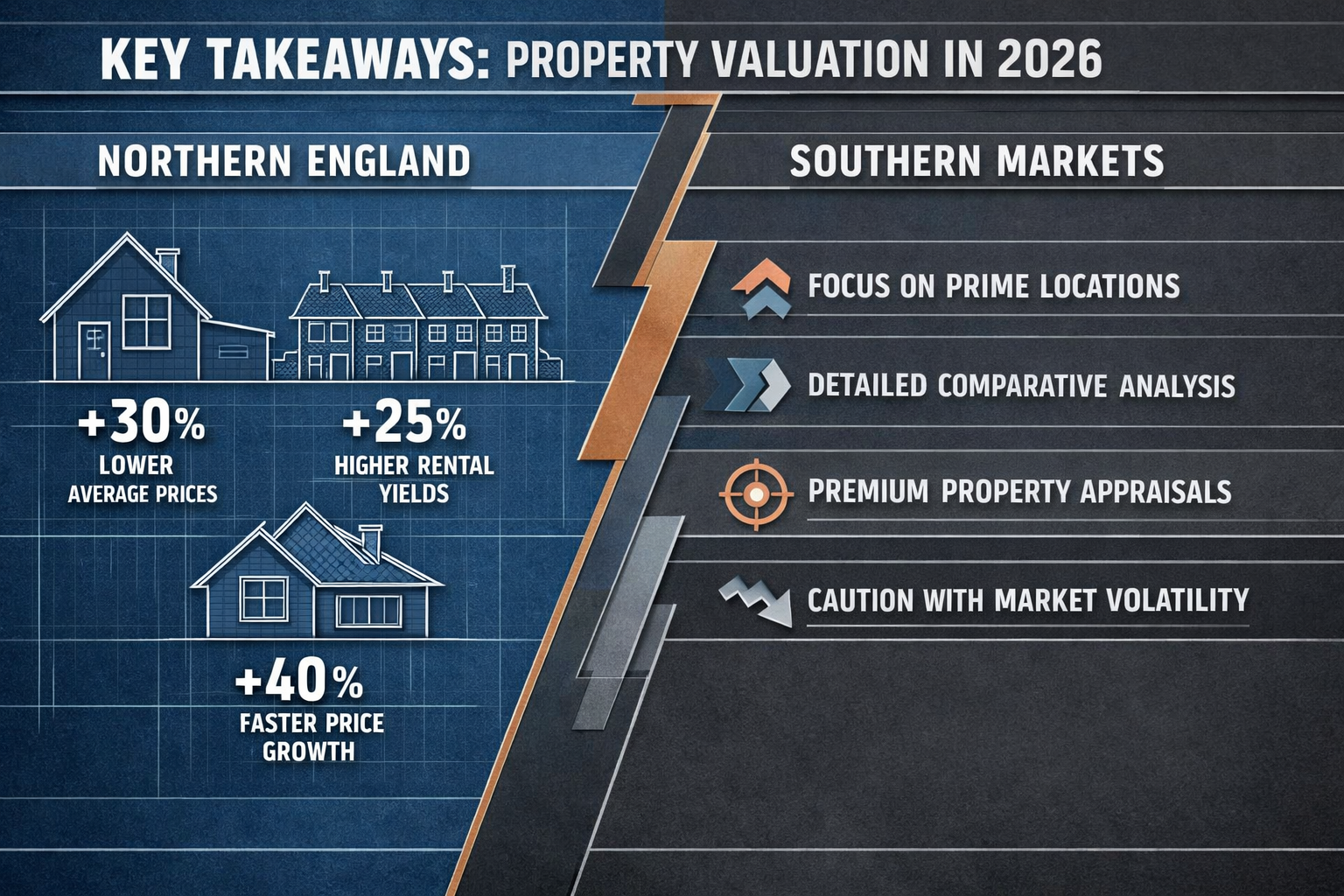
Key Takeaways
✅ Northern England recorded exceptional growth in 2025, with the North East achieving 5% price increases and the North West reaching 3.1%, substantially outpacing the 1.4% national average[3]
✅ Southern affordability pressures continue to constrain growth, with London experiencing -2.4% price decline and buyers requiring 10 times their annual income to purchase average homes[3][4]
✅ RICS survey data confirms sustained momentum in Northern regions, with 43% of surveyors anticipating higher prices over the next twelve months—the most positive outlook since February 2025[2]
✅ Regional valuation frameworks must account for divergent market dynamics, including local employment patterns, infrastructure investment, and demographic shifts unique to Northern England
✅ Strategic surveyor tactics focused on comparable analysis, regeneration potential, and rental yield optimization can unlock significant value in Northern property markets
Understanding the 2026 Regional Property Divide
The Northern England Growth Phenomenon
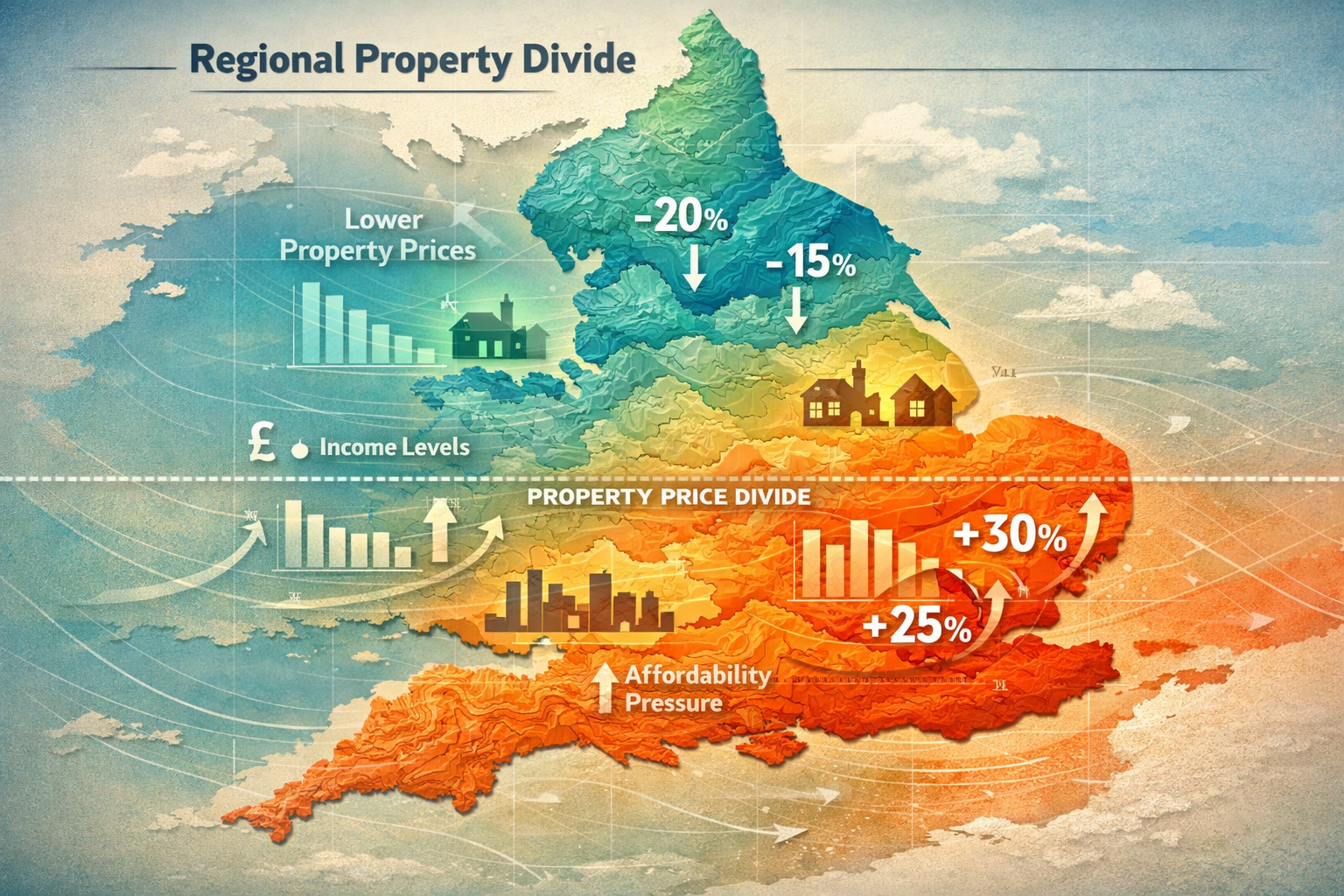
The property market transformation sweeping across Northern England represents one of the most significant regional shifts in recent UK housing history. The North East England's remarkable 5% price growth in 2025 stands in stark contrast to London's -2.4% decline, signaling a fundamental rebalancing of the national property landscape[3].
This growth isn't isolated to a single region. The North West achieved 3.1% growth, with Yorkshire and the Humber matching this performance[3]. What makes this particularly significant for surveyors is the sustained nature of this trend. The RICS January 2026 survey confirms that price growth remains strongest in Scotland and Northern Ireland, with clear upward trends reported in the North West and North of England[2].
The net balance for prices improved to -10% over the past three months through January 2026, steadily climbing from a low of -19% in October 2025[2]. This recovery momentum suggests that Northern England's growth trajectory isn't a temporary anomaly but rather a structural shift in market dynamics.
Southern England's Affordability Crisis
The challenges facing Southern England create a stark contrast that directly impacts valuation methodologies. In London and South East markets, average buyers now require spending 10 times their annual income to purchase an average home[4]. This affordability barrier has created a ceiling effect on price growth, fundamentally altering how surveyors must approach valuations in these regions.
Despite greater housing supply, buyers remain price sensitive in Southern England according to Zoopla's outlook[1]. This sensitivity means that traditional valuation approaches based on historical price appreciation may overestimate current market values, creating risks for both buyers and lenders.
The -2.4% price decline in London during 2025 reflects not just temporary market conditions but deeper structural issues around affordability, wage growth, and changing lifestyle preferences accelerated by remote work trends[3]. For surveyors working across both regions, understanding these divergent pressures is essential for accurate property assessment.
Key Growth Locations for 2026
Wigan ranks as the highest-performing English location in 2026 growth predictions, followed by Liverpool, Stoke-on-Trent, and Wolverhampton[1]. The North West dominates England's top growth locations, with six of the top ten English areas featured on growth forecasts[1].
Scotland's dominance is even more pronounced, with nine of the top ten UK locations for forecast house price growth located there. Motherwell leads with the strongest growth potential after experiencing 3.4% year-on-year growth in 2025[1].
| Region | 2025 Growth | 2026 Outlook | Key Drivers |
|---|---|---|---|
| North East England | 5.0% | Strong | Affordability, regeneration |
| North West England | 3.1% | Strong | Infrastructure, employment |
| Yorkshire & Humber | 3.1% | Moderate-Strong | Regional cities, connectivity |
| London | -2.4% | Weak | Affordability constraints |
| South East | Constrained | Weak-Moderate | Price sensitivity |
This regional performance data provides surveyors with critical context for conducting comprehensive property valuations that reflect actual market conditions rather than outdated assumptions about north-south dynamics.
Surveyor Valuation Frameworks for Northern England Properties 🏘️
Adapting Comparable Analysis for Regional Markets
Traditional comparable analysis requires significant adaptation when Valuing Northern England Properties in 2026: Surveyor Tactics for Outpacing Southern Affordability Pressures come into play. The rapid price movements in Northern regions mean that comparables from even six months ago may not accurately reflect current market conditions.
Time-adjusted comparables become essential. A property that sold in Wigan in mid-2025 for £200,000 may need upward adjustment of 3-5% to reflect current market conditions, while a comparable in London might require downward adjustment. This regional divergence means surveyors must maintain separate adjustment matrices for different regions.
Micro-market analysis takes on heightened importance. Within the North West, for example, Liverpool's growth trajectory differs from Manchester's, which differs from smaller towns like Wigan or Warrington. Surveyors must develop granular knowledge of specific neighborhoods, understanding which areas benefit from regeneration initiatives, improved transport links, or changing demographic patterns.
Key considerations for Northern England comparable analysis include:
- Regeneration proximity: Properties near major regeneration schemes command premiums that may not be reflected in older comparables
- Transport infrastructure: New or improved rail links, particularly those connecting to major employment centers, significantly impact values
- Local employment trends: Areas with growing employment sectors show stronger sustained growth
- Housing stock quality: The condition and energy efficiency of comparable properties becomes increasingly important as buyers prioritize running costs
When conducting Level 3 building surveys, surveyors should pay particular attention to renovation potential. Many Northern properties offer substantial upside through modernization that may not be immediately apparent in surface-level valuations.
Incorporating Regional Economic Indicators
Economic fundamentals drive long-term property values, making regional economic analysis essential for accurate surveyor assessments. Northern England's economic landscape differs substantially from Southern regions, requiring tailored analytical approaches.
Employment growth patterns provide critical valuation context. Areas experiencing job creation in high-wage sectors typically see sustained property price growth. The North West's diverse economy, spanning digital technology, advanced manufacturing, and professional services, creates multiple employment nodes that support property values.
Wage-to-price ratios remain significantly more favorable in Northern England compared to the South. This affordability advantage attracts both first-time buyers and investors seeking rental yields, creating sustained demand that supports valuations. Surveyors should calculate and track these ratios as leading indicators of market sustainability.
Infrastructure investment represents another crucial factor. The ongoing Northern Powerhouse initiatives, HS2 connections (despite modifications), and local transport improvements create value uplift that forward-thinking surveyors can identify before it fully materializes in transaction prices.
💡 Professional Tip: Maintain a regional economic dashboard tracking employment data, wage growth, infrastructure projects, and demographic trends for your key valuation areas. This contextual knowledge enables more accurate future value projections.
Assessing Renovation and Modernization Potential
Northern England's housing stock includes substantial Victorian and Edwardian properties that present unique valuation challenges and opportunities. Unlike Southern markets where renovation costs may exceed value uplift potential, Northern properties often offer excellent returns on modernization investment.
Energy efficiency improvements have become increasingly important valuation factors. Properties with poor EPC ratings face growing buyer resistance, while those with modern insulation, heating systems, and renewable energy features command premiums. Surveyors must assess not just current condition but cost-effective improvement pathways.
Period feature preservation versus modernization represents a critical balance. Many Northern properties contain original features—cornicing, fireplaces, stained glass—that add significant value when properly restored. Detailed property surveys should identify these features and assess their contribution to overall value.
Structural considerations require particular attention in older Northern housing stock. Issues like damp, subsidence, or outdated electrical systems can significantly impact valuations, but the cost-to-remedy ratios often remain favorable compared to Southern equivalents where base property values are higher.
Key renovation factors for Northern England valuations:
- Kitchen and bathroom modernization: Typically delivers 70-90% return on investment in Northern markets
- Loft and basement conversions: Space addition often proves cost-effective given lower base property values
- Garden improvements: Outdoor space commands growing premiums post-pandemic
- Smart home technology: Increasingly expected by buyers, particularly in higher-value segments
When conducting Level 2 surveys, surveyors should provide clear guidance on which improvements would deliver the strongest value uplift relative to cost.
Rental Yield Analysis and Investment Valuation
Northern England's favorable price-to-rent ratios make rental yield analysis particularly important for property valuations. Investment buyers represent a significant market segment, and understanding yield dynamics enables more accurate market value assessments.
Gross rental yields in Northern cities typically range from 5-8%, substantially higher than the 3-4% common in Southern England. This yield advantage attracts buy-to-let investors and institutional buyers, creating additional demand that supports capital values.
Tenant demand patterns vary significantly by property type and location. Student accommodation near universities in Manchester, Liverpool, and Leeds commands premium rents with high occupancy rates. Young professional housing near city centers shows strong demand, while family housing in suburban locations with good schools maintains steady rental markets.
Regulatory considerations impact investment valuations. Minimum EPC requirements, selective licensing schemes, and Article 4 directions limiting HMOs all affect investment potential. Surveyors must understand local authority policies and incorporate these constraints into valuations.
For commercial property valuations, Northern England's growing business sectors create opportunities in office, retail, and industrial segments. Mixed-use developments combining residential and commercial space show particular strength in regeneration areas.
Strategic Tactics for Outpacing Southern Affordability Pressures
Leveraging RICS Data and Market Intelligence
Professional surveyors gain significant competitive advantage by systematically incorporating RICS survey data into their valuation frameworks. The January 2026 RICS survey provides invaluable insights that should inform every Northern England property assessment[2].
Forward-looking indicators from RICS data help surveyors anticipate market movements. The fact that 43% of surveyors anticipate higher prices over the next twelve months—the most positive outlook since February 2025—suggests continued momentum that should influence current valuations[2].
Regional sentiment tracking reveals important divergences. While RICS data confirms price growth remains strongest in Scotland and Northern Ireland with upward trends in the North West and North of England, it simultaneously shows weakness in London, the South East, South West, and East Anglia[2]. This divergence validates the need for region-specific valuation approaches.
Supply and demand metrics from RICS surveys provide context for individual property valuations. Understanding whether your local market shows rising or falling inventory levels, increasing or decreasing buyer enquiries, and changing time-to-sale metrics enables more accurate pricing recommendations.
Practical applications of RICS data:
- Benchmark your local market against regional and national trends
- Adjust comparable timeframes based on market velocity indicators
- Weight recent transactions more heavily in rapidly moving markets
- Incorporate sentiment data into risk assessments for lending valuations
When preparing RICS home surveys, surveyors should explicitly reference relevant market data to provide clients with comprehensive context for their property decisions.
Identifying Regeneration and Infrastructure Opportunities
Valuing Northern England Properties in 2026: Surveyor Tactics for Outpacing Southern Affordability Pressures requires keen awareness of regeneration initiatives and infrastructure developments that create value uplift opportunities often invisible in transaction data.
Major regeneration schemes across Northern cities create significant value migration. Liverpool's Baltic Triangle, Manchester's Northern Quarter expansion, Leeds' South Bank development, and Newcastle's Quayside transformation all generate ripple effects extending well beyond their immediate boundaries. Surveyors should map these initiatives and assess proximity impacts on subject properties.
Transport infrastructure improvements deliver measurable value uplift. Properties within walking distance of new or improved rail stations typically see 5-15% value premiums. The expansion of Manchester's Metrolink, improvements to TransPennine Express services, and enhanced local bus networks all create valuation opportunities.
Digital infrastructure increasingly impacts property values. Areas with full-fiber broadband access command premiums as remote work becomes permanent for many professionals. Surveyors should verify connectivity quality and incorporate this into valuations, particularly for properties targeting professional buyers.
🏗️ Case Study Example: A Victorian terrace in Anfield, Liverpool, valued at £140,000 in early 2023, saw valuations rise to £165,000 by late 2025 following announcement of major regeneration schemes and improved transport links—an 18% increase substantially exceeding regional averages.
Town center revitalization programs create opportunities in secondary locations. Government funding for high street improvements, cultural initiatives, and public realm enhancements can transform market perceptions of previously overlooked areas.
Demographic Shift Analysis
Understanding demographic movements provides surveyors with predictive power for long-term value trends. Northern England is experiencing several significant demographic shifts that impact property valuations.
Southern migration represents a growing trend. Professionals able to work remotely are relocating from expensive Southern markets to affordable Northern cities, bringing higher incomes and different property expectations. This demographic shift supports premium pricing for properties offering home office space, good connectivity, and urban amenities.
Generational preferences shape market dynamics. Millennials and Gen Z buyers prioritize different features than previous generations—walkability, sustainability, community spaces, and cultural amenities often outweigh traditional considerations like garden size or garage space. Properties aligned with these preferences command premiums.
International migration patterns affect specific Northern markets. Cities with major universities see sustained international student and graduate retention, creating demand for specific property types. Manchester, Liverpool, and Leeds benefit particularly from this trend.
Age demographic shifts in specific areas impact property types in demand. Areas experiencing aging populations may see reduced demand for large family homes but increased demand for accessible, low-maintenance properties. Conversely, areas attracting young families show opposite trends.
Surveyors should incorporate demographic analysis by:
- Reviewing local authority demographic projections
- Analyzing school enrollment trends as family migration indicators
- Monitoring planning applications for large-scale residential developments
- Tracking retail and leisure openings that signal demographic confidence
Risk Assessment and Market Volatility Considerations
While Northern England shows strong growth momentum, professional surveyors must incorporate comprehensive risk assessment into valuations, particularly when Valuing Northern England Properties in 2026: Surveyor Tactics for Outpacing Southern Affordability Pressures for lending purposes.
Interest rate sensitivity affects Northern markets differently than Southern ones. While higher rates constrain all markets, Northern England's better affordability ratios provide some insulation. However, surveyors should model various rate scenarios when providing long-term value projections.
Economic dependency risks vary by location. Areas heavily dependent on single employers or industries carry concentration risk that should factor into valuations. Diversified local economies provide greater stability and support sustained value growth.
Climate and environmental risks require increasing attention. Flood risk, subsidence potential, and coastal erosion affect specific Northern locations. Specialized surveys may be necessary to properly assess these risks and their impact on long-term values.
Regulatory changes present ongoing risks. Changes to landlord taxation, energy efficiency requirements, or planning policies can significantly impact property values. Surveyors should maintain awareness of pending regulatory changes and incorporate these into risk assessments.
Market correction potential deserves consideration. While Northern England's growth appears fundamentally sound, rapid price increases always carry correction risk. Conservative surveyors might apply modest discounts to comparable-based valuations in the fastest-growing micro-markets to account for potential volatility.
Practical Implementation for Surveying Professionals
Building Regional Expertise and Local Knowledge
Developing deep regional expertise represents perhaps the most valuable investment surveyors can make when focusing on Northern England properties. This expertise extends far beyond understanding price trends to encompass cultural, economic, and social dynamics that influence property values.
Micro-market specialization delivers competitive advantage. Rather than attempting to cover all of Northern England, surveyors benefit from developing exceptional knowledge of specific cities or regions. Understanding the difference between Chorlton and Didsbury in Manchester, or Jesmond and Gosforth in Newcastle, enables nuanced valuations that generic approaches miss.
Local authority engagement provides valuable intelligence. Attending planning committee meetings, reviewing economic development strategies, and building relationships with council planning departments yields insights into future developments before they become public knowledge.
Network development with local estate agents, developers, and property investors creates information flows that enhance valuation accuracy. These relationships provide real-time market intelligence about buyer preferences, emerging hotspots, and transaction dynamics not yet visible in official data.
Continuous professional development specific to Northern markets proves essential. This includes:
- Attending regional property conferences and seminars
- Participating in RICS regional events and networking groups
- Subscribing to local property market reports and analyses
- Conducting regular site visits to monitor area developments
- Reviewing planning applications and approved developments
When conducting comprehensive building surveys, this local knowledge enables surveyors to provide contextual insights that purely technical assessments cannot deliver.
Technology Integration for Enhanced Valuation Accuracy
Modern surveying practice increasingly relies on technology to enhance accuracy and efficiency. For Northern England properties, specific technological tools provide particular value.
Geographic Information Systems (GIS) enable sophisticated spatial analysis. Mapping property values against infrastructure, amenities, schools, employment centers, and regeneration zones reveals patterns invisible in traditional comparable analysis. GIS tools help identify emerging value hotspots before they appear in transaction data.
Automated Valuation Models (AVMs) provide useful starting points but require careful interpretation in rapidly changing Northern markets. AVMs trained on historical data may lag current market conditions. Professional surveyors add value by understanding AVM limitations and applying appropriate adjustments based on current market intelligence.
Drone technology offers cost-effective methods for assessing property exteriors, particularly for larger properties or those with access challenges. Thermal imaging drones can identify insulation deficiencies and heat loss patterns that impact energy efficiency valuations.
Digital measurement tools improve accuracy and efficiency. Laser measuring devices, 3D scanning technology, and photogrammetry software enable precise floor area calculations essential for accurate valuations.
Database management systems help surveyors maintain comprehensive comparable databases. Recording detailed property characteristics, transaction prices, market conditions, and time-on-market data creates valuable proprietary intelligence that enhances future valuations.
Market analysis platforms aggregate data from multiple sources—Land Registry, Rightmove, Zoopla, local agents—providing comprehensive market overviews. These platforms enable rapid identification of relevant comparables and market trend analysis.
Client Communication and Expectation Management
Effective communication represents a critical but often overlooked aspect of professional surveying. When Valuing Northern England Properties in 2026: Surveyor Tactics for Outpacing Southern Affordability Pressures, clear client communication ensures that valuations are properly understood and utilized.
Educational approach: Many clients, particularly those relocating from Southern England, carry assumptions about property markets that don't apply in Northern regions. Surveyors should proactively educate clients about regional market dynamics, explaining why Northern properties offer different value propositions than Southern equivalents.
Contextual reporting: Valuation reports should include regional market context, not just property-specific findings. Explaining how the subject property fits within broader market trends helps clients make informed decisions. When preparing detailed survey reports, include sections on local market conditions and future outlook.
Risk transparency: Professional surveyors clearly communicate uncertainties and risks. In rapidly appreciating markets, it's important to explain that recent growth rates may not continue indefinitely. Conversely, in emerging areas, surveyors should articulate the potential upside alongside current values.
Visual communication tools enhance understanding. Charts showing price trends, maps highlighting local amenities and developments, and photographs documenting property features make reports more accessible and actionable.
Follow-up availability: Offering to discuss findings and answer questions demonstrates professionalism and ensures clients fully understand valuation conclusions. This is particularly valuable for complex properties or unusual market conditions.
Ethical Considerations and Professional Standards
Maintaining the highest ethical standards becomes particularly important when market conditions create pressure for optimistic valuations. The strong growth in Northern England markets can tempt some practitioners toward aggressive valuations that may not withstand scrutiny.
Independence and objectivity remain paramount. Surveyors must resist pressure from clients, estate agents, or lenders to adjust valuations beyond what evidence supports. The RICS Red Book provides clear guidance on maintaining independence that all chartered surveyors must follow.
Evidence-based valuations require robust comparable analysis and clear reasoning. When market conditions are changing rapidly, surveyors should document their analytical approach thoroughly, explaining how they've adjusted for market movements and why specific comparables were selected or rejected.
Conflict of interest management requires particular attention. Surveyors should decline instructions where they have personal interests or relationships that could compromise objectivity. This includes properties in developments where the surveyor has financial interests or valuations for close personal contacts.
Continuing competence represents an ethical obligation. Surveyors working in Northern England markets must maintain current knowledge of local conditions, regulatory changes, and market dynamics. Accepting instructions in areas where the surveyor lacks sufficient expertise violates professional standards.
Professional indemnity insurance must provide adequate coverage for the surveyor's practice area and typical instruction values. As Northern property values increase, surveyors should review coverage limits to ensure adequate protection.
Future Outlook and Emerging Trends

Sustainability and Energy Efficiency Impact on Values
The growing emphasis on property sustainability will increasingly influence valuations across Northern England. As energy costs remain elevated and environmental awareness grows, energy-efficient properties command growing premiums.
EPC rating impact on values will intensify. Properties with A or B ratings already show measurable premiums, while those rated E or below face growing buyer resistance. The government's trajectory toward higher minimum standards for rental properties will extend to the broader market, making energy efficiency a critical valuation factor.
Retrofit potential becomes an important assessment criterion. Victorian and Edwardian properties common in Northern England often require substantial investment to achieve high energy efficiency. Surveyors should assess both current efficiency and cost-effective improvement pathways, incorporating these into valuations.
Renewable energy installations—solar panels, heat pumps, battery storage—add value while reducing running costs. However, surveyors must carefully assess installation quality and system appropriateness. Poorly installed systems can create liabilities rather than assets.
Sustainable materials and construction increasingly influence buyer preferences, particularly among younger demographics. Properties featuring sustainable materials, water conservation systems, and biodiversity-friendly gardens will likely command growing premiums.
The Remote Work Revolution's Continued Impact
The permanent shift toward hybrid and remote work continues reshaping property preferences in ways that particularly benefit Northern England markets.
Home office space has transitioned from luxury to necessity for many buyers. Properties offering dedicated workspace, good natural light, and high-quality broadband connectivity command premiums. Surveyors should assess and document these features as value-adding characteristics.
Commutability versus livability balance has shifted. While proximity to employment centers remains important, buyers increasingly prioritize neighborhood amenities, green space access, and quality of life factors. Northern cities offering both urban amenities and affordable access to countryside benefit particularly from this trend.
Secondary city growth accelerates as remote workers choose locations based on lifestyle preferences rather than employment proximity. Cities like Liverpool, Newcastle, and Sheffield attract professionals who might previously have felt compelled to locate in London or the South East.
Co-working and flexible workspace availability in neighborhoods adds value by providing professional environment options for remote workers. Surveyors should note proximity to quality co-working facilities as a positive factor.
Demographic Trends Shaping Future Demand
Understanding emerging demographic trends enables surveyors to provide forward-looking valuations that anticipate rather than merely reflect market changes.
Millennial and Gen Z homeownership patterns differ from previous generations. These demographics prioritize urban living, walkability, public transport access, and community amenities. Properties aligned with these preferences in Northern cities will likely see sustained demand growth.
Downsizing baby boomers create demand for accessible, low-maintenance properties in desirable locations. Northern England's combination of affordability and quality of life attracts retirees from more expensive regions, supporting values for appropriate property types.
International talent attraction to Northern cities through university retention and employer recruitment creates sustained demand for quality rental and purchase properties. Manchester, Liverpool, Leeds, and Newcastle particularly benefit from this trend.
Family formation patterns show younger families increasingly choosing Northern locations where housing costs allow for larger properties and better quality of life. This demographic shift supports suburban and semi-rural property values within commuting distance of major Northern cities.
Policy and Regulatory Developments
Anticipated policy changes will shape Northern England property markets in ways surveyors must monitor and incorporate into valuations.
Levelling Up initiatives continue directing government investment toward Northern regions. Infrastructure improvements, business incentive schemes, and cultural investments create value uplift opportunities that forward-thinking surveyors can identify early.
Planning reform may increase development potential in specific locations. Understanding local authority development frameworks and identifying properties with redevelopment or extension potential adds value to surveyor assessments.
Taxation changes affecting property ownership, particularly around capital gains, inheritance tax, and landlord taxation, influence investment demand and should factor into valuations for investment properties.
Environmental regulations will increasingly impact property values. Flood risk management, air quality requirements, and biodiversity net gain obligations all affect development potential and property desirability.
Conclusion
Valuing Northern England Properties in 2026: Surveyor Tactics for Outpacing Southern Affordability Pressures represents both a significant opportunity and a professional challenge for property surveyors. The fundamental shift in UK regional property dynamics—with Northern regions substantially outperforming Southern markets—requires surveyors to adapt their methodologies, deepen their regional expertise, and embrace sophisticated analytical frameworks.
The evidence is compelling: the North East's 5% growth and North West's 3.1% growth in 2025 stand in stark contrast to London's -2.4% decline[3]. RICS data confirms this momentum continues into 2026, with 43% of surveyors anticipating further price increases[2]. These aren't temporary fluctuations but structural market shifts driven by affordability advantages, infrastructure investment, demographic changes, and evolving lifestyle preferences.
Professional surveyors who develop deep Northern England expertise, incorporate comprehensive regional economic analysis, leverage technology effectively, and maintain rigorous professional standards will find themselves ideally positioned to serve this dynamic market. The tactics outlined in this guide—from adapted comparable analysis to regeneration opportunity identification, from demographic trend analysis to sustainability assessment—provide a framework for delivering exceptional value to clients.
Actionable Next Steps
For surveyors looking to capitalize on Northern England's property market momentum:
- Develop specialized regional knowledge by focusing on specific Northern cities or regions rather than attempting broad coverage
- Build comprehensive comparable databases that capture the nuances of rapidly changing Northern markets
- Establish local networks with estate agents, developers, planners, and other property professionals to access real-time market intelligence
- Invest in technology tools including GIS systems, market analysis platforms, and digital measurement equipment that enhance valuation accuracy
- Monitor RICS survey data and regional economic indicators to stay ahead of market trends
- Enhance reporting approaches to provide clients with contextual market analysis alongside property-specific findings
- Pursue continuing professional development focused on Northern England market dynamics, sustainability assessment, and emerging valuation methodologies
The Northern England property market in 2026 offers exceptional opportunities for surveyors who approach it with appropriate expertise, analytical rigor, and professional standards. By implementing the tactics outlined in this guide, surveyors can deliver valuations that accurately reflect current market conditions while anticipating future trends—providing genuine value to clients navigating this dynamic landscape.
For those seeking professional surveying services that incorporate these sophisticated regional approaches, consider consulting with experienced chartered surveyors who understand the complexities of valuing properties across diverse UK markets.
References
[1] Revealed The 10 Uk Locations Which Could See The Biggest House Price Growth In 2026 – https://moneyweek.com/investments/house-prices/revealed-the-10-uk-locations-which-could-see-the-biggest-house-price-growth-in-2026
[2] Uk Resi Survey Jan 2026 Report Shows Early Signs Market Recovery Despite Caution – https://www.rics.org/news-insights/uk-resi-survey-jan-2026-report-shows-early-signs-market-recovery-despite-caution
[3] Best Places To Live 2026 – https://www.garrington.co.uk/best-places-to-live-2026/
[4] Seven Trends That Will Shape The Regional Housing Market In 2026 – https://www.struttandparker.com/blog/seven-trends-that-will-shape-the-regional-housing-market-in-2026
