
The UK property market stands at a critical juncture in 2026, where energy efficiency retrofits have transformed from optional upgrades into essential compliance requirements. As homeowners and landlords rush to meet increasingly stringent environmental standards, Building Surveys for Retrofit Compliance: Navigating RICS Standards and Consumer Insights in 2026 has emerged as a vital framework for ensuring quality, safety, and regulatory adherence. With RICS preparing to publish its groundbreaking 2nd edition of the Home Survey Standard in Q1 2026—following a comprehensive public consultation that attracted over 1,000 detailed comments[1][3]—surveyors face unprecedented challenges in assessing properties that blend traditional construction with modern energy-saving technologies.
The landscape has shifted dramatically. Retrofit homes are now explicitly designated as "additional risk dwellings" alongside historic buildings and new builds, reflecting the complexity and potential hazards inherent in these modified properties[1]. Meanwhile, technological advancements including drone inspections and thermal imaging are revolutionizing how surveyors assess retrofit quality[1]. This convergence of regulatory evolution, technological innovation, and consumer demand creates both opportunities and obligations for property professionals navigating the retrofit compliance landscape.
Key Takeaways
- 🏗️ RICS is publishing the 2nd edition of the Home Survey Standard in Q1 2026, explicitly including retrofit homes as "additional risk dwellings" requiring specialized assessment protocols[1][3]
- 📊 Over 1,000 consultation responses have shaped new guidance emphasizing clearer mandatory requirements ("musts") versus recommendations ("shoulds") for retrofit property surveys[3]
- 🔍 Expanded hazard coverage will address fire, electrical, hygiene, and excess cold by 2026-2027, with full Housing Health & Safety Rating System (HHSRS) integration critical for retrofit compliance[1]
- 🚁 Technology integration including drone inspections and thermal imaging is now formally recognized in RICS standards, enabling more comprehensive retrofit assessments[1]
- ⚖️ New regulatory obligations from the Renters Rights Act 2025 and Decent Homes Standard place stricter timeframes on surveyors to identify and report defects in rental properties[1]
Understanding the Retrofit Compliance Landscape in 2026
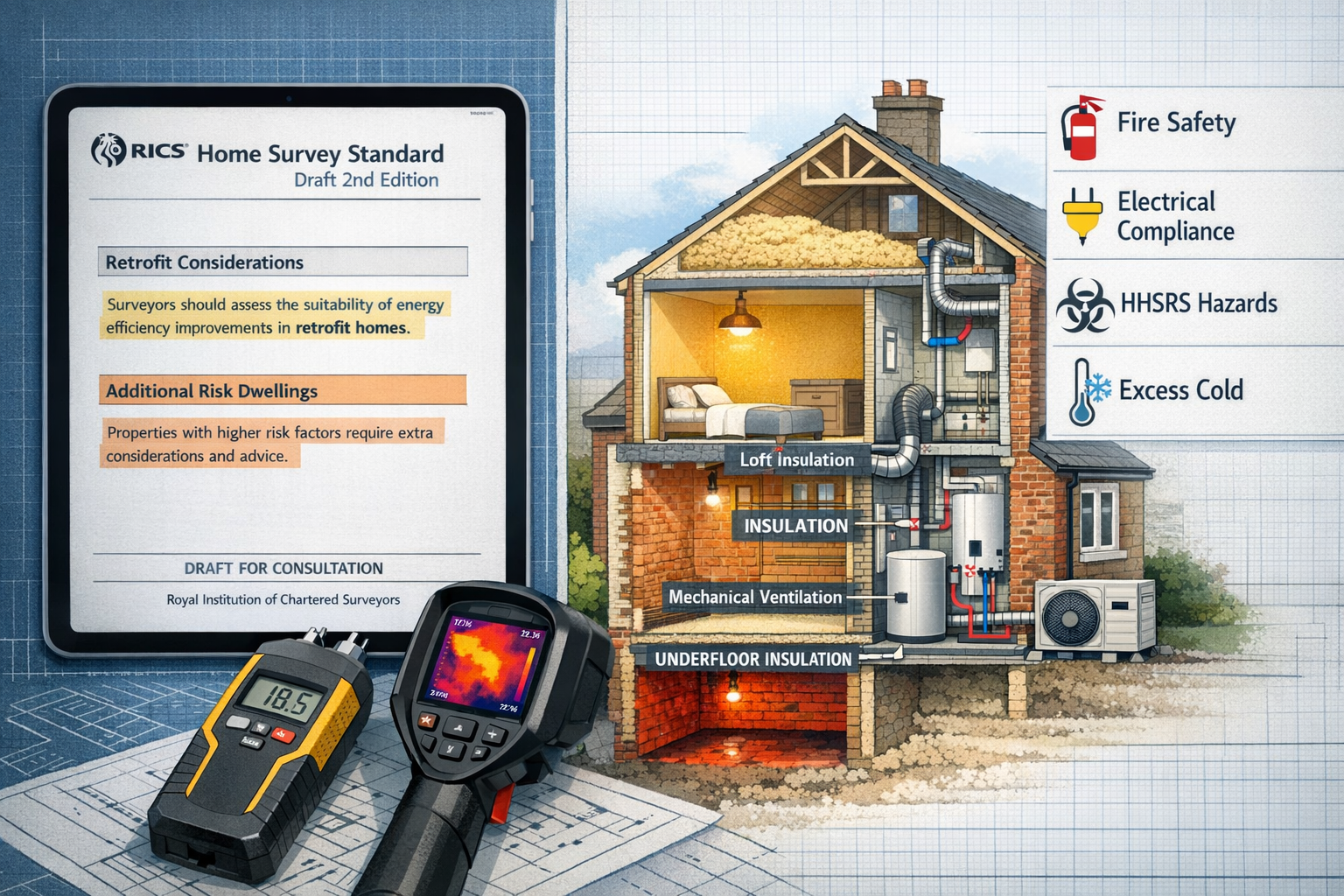
The Evolution of Retrofit as a Risk Category
The designation of retrofit homes as "additional risk dwellings" represents a fundamental shift in how the surveying profession approaches these properties[1]. Unlike traditional buildings constructed to a single set of standards, retrofit properties present unique challenges:
Layered construction systems where modern insulation, ventilation, and heating technologies interact with original building fabric, creating potential failure points that require specialized knowledge to identify. Interface vulnerabilities at junctions between old and new materials, where moisture management, thermal bridging, and structural movement can compromise both energy performance and building integrity. Hidden defects concealed by retrofit installations, including original structural issues, damp problems, or electrical hazards that may be exacerbated by changes to building breathability and thermal performance.
The recognition of these complexities within RICS standards acknowledges what experienced surveyors have long understood: assessing a retrofitted property demands different skills and methodologies than evaluating either a traditional building or new construction. For property professionals conducting RICS building surveys, this classification elevates retrofit assessment from a niche consideration to a core competency.
Regulatory Drivers Shaping Retrofit Surveys
Multiple regulatory frameworks converge in 2026 to create a comprehensive compliance environment for retrofit properties:
The Renters Rights Act 2025 extends Awaab's Law protections through the Decent Homes Standard for private rentals, placing "greater obligations on Surveyors and Property Managers to identify these issues and report on them promptly" with strict statutory time limits[1]. This legislation transforms retrofit surveys from optional due diligence into mandatory compliance documentation for landlords.
ESG and sustainability standards updated by RICS with effect from 30 April 2026 align commercial property valuations with retrofit compliance frameworks[4], creating parallel obligations across residential and commercial sectors. These standards integrate environmental performance metrics directly into valuation methodologies, making retrofit quality a quantifiable financial factor.
Housing Health & Safety Rating System (HHSRS) expansion will achieve comprehensive coverage by 2027, with a Second Phase in 2026 addressing fire, electrical, hygiene, and excess cold hazards—all particularly relevant to retrofit work compliance[1]. This expansion creates a more robust framework for identifying defects that could pose health and safety risks in modified properties.
Market Context: Recovery Signals and Retrofit Demand
Early 2026 market data shows cautious recovery signs in UK residential property, with implications for retrofit survey demand[6]. As transaction volumes stabilize, buyers increasingly scrutinize energy performance and retrofit quality, recognizing that poorly executed improvements can create liabilities rather than assets.
The consultation feedback emphasizing "clearer and more concise requirements" reflects consumer frustration with inconsistent retrofit assessment quality[3]. Homebuyers want certainty about what they're purchasing, particularly when premium prices reflect claimed energy efficiency improvements. This demand for transparency drives the enhanced standards framework being finalized in Q1 2026.
RICS Standards Framework for Building Surveys for Retrofit Compliance: Navigating RICS Standards and Consumer Insights in 2026
The Draft 2nd Edition: Key Changes and Implications
The forthcoming 2nd edition of the Home Survey Standard represents the most significant update to RICS residential survey guidance in years, with specific provisions addressing "the diverse range of modern housing stock and specific instructions from consumers"[1]. Understanding these changes is essential for surveyors preparing to implement Building Surveys for Retrofit Compliance: Navigating RICS Standards and Consumer Insights in 2026 effectively.
Mandatory vs. Recommended Practices
One of the most important clarifications emerging from the consultation process is the distinction between mandatory requirements ("musts") and recommended practices ("shoulds")[3]. This framework provides:
Clear compliance thresholds that define minimum acceptable standards for retrofit property assessment, removing ambiguity about professional obligations. Flexibility for enhanced service allowing surveyors to exceed baseline requirements when client needs or property complexity warrant additional investigation. Defensible professional standards that protect both surveyors and consumers by establishing unambiguous expectations for what constitutes adequate retrofit assessment.
For those conducting a Level 3 building survey, these distinctions are particularly important, as the comprehensive nature of this survey type aligns well with the detailed investigation retrofit properties often require.
Technology Integration and Innovation
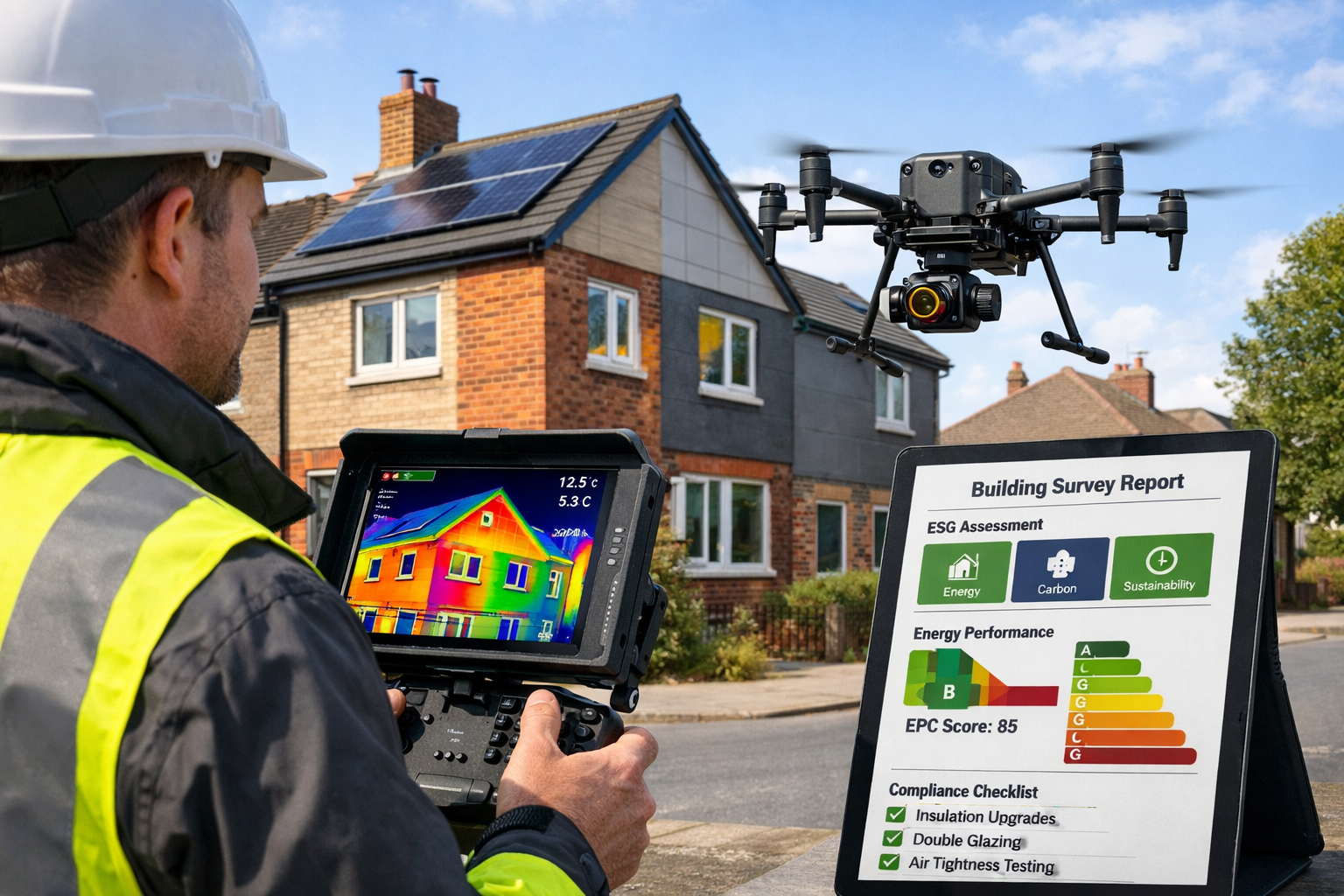
The formal recognition of "technological developments including the use of drone inspections"[1] within RICS standards legitimizes and encourages innovative assessment methodologies particularly valuable for retrofit surveys:
| Technology | Retrofit Application | Compliance Value |
|---|---|---|
| Thermal Imaging | Identifies insulation gaps, thermal bridging, air leakage | Verifies energy efficiency claims, detects hidden defects |
| Drone Surveys | Assesses roof-mounted solar panels, external wall insulation, difficult-access areas | Enables comprehensive inspection without scaffolding costs |
| Moisture Meters | Detects condensation issues from improved airtightness, interstitial condensation | Identifies unintended consequences of retrofit work |
| Electrical Testing | Verifies safe integration of heat pumps, solar systems, EV chargers | Ensures compliance with electrical safety standards |
| Air Tightness Testing | Measures building envelope performance post-retrofit | Validates ventilation adequacy and energy performance |
These technologies transform retrofit surveys from visual-only assessments into evidence-based evaluations that can quantify performance and identify defects invisible to traditional inspection methods. The integration of such tools into RICS commercial building surveys and residential assessments alike represents a professional evolution driven by technological capability and regulatory necessity.
Valuation Flexibility and Integrated Assessment
The draft 2nd edition introduces "the option for valuation to be included at any survey level"[1], extending survey scope beyond condition-based reporting. This flexibility enables:
Integrated retrofit cost analysis where surveyors can provide clients with comprehensive understanding of both current condition and investment required to achieve desired energy performance levels. Enhanced decision-making support that combines technical assessment with financial implications, helping buyers evaluate whether retrofit investments represent value or liability. Streamlined transaction processes reducing the need for separate valuation and survey appointments, particularly valuable in competitive market conditions.
This integration acknowledges the reality that retrofit quality directly impacts property value, making separation of condition assessment and valuation increasingly artificial. For professionals offering RICS valuations, this represents an opportunity to provide more holistic client service.
Hazard Assessment Framework for Retrofit Properties
The expanded hazard coverage framework targeting implementation in 2026-2027 creates specific obligations for surveyors assessing retrofit properties[1]. Understanding how HHSRS categories apply to common retrofit scenarios is essential:
Fire Safety in Retrofit Properties
Retrofit installations can inadvertently compromise fire safety through:
- Combustible external wall insulation systems requiring assessment against post-Grenfell safety standards
- Altered escape routes where loft conversions or reconfigured layouts affect evacuation
- Electrical fire risks from poorly integrated renewable energy systems or heat pumps
- Reduced compartmentation where retrofit work has breached fire barriers between dwellings
Surveyors must identify these hazards and assess compliance with current Building Regulations, even when retrofit work predates recent regulatory changes. The guidance on fire hazard assessment provides frameworks for evaluating these risks systematically.
Electrical Safety and Modern Systems
The integration of heat pumps, solar panels, battery storage, and EV charging points creates complex electrical systems requiring specialized assessment:
✅ Adequate electrical capacity to support new loads without overloading circuits
✅ Proper earthing and bonding for renewable energy systems
✅ Compliant installation meeting current wiring regulations
✅ Safe isolation and control systems for multiple generation/consumption points
✅ Certification documentation proving competent installation by qualified electricians
The electrical hazard assessment framework being introduced in 2026 provides surveyors with structured approaches to evaluating these systems, even when detailed electrical inspection falls outside their direct competence. Knowing when to recommend specific defect surveys by electrical specialists becomes a critical professional judgment.
Excess Cold and Ventilation Balance
Perhaps the most common retrofit-related hazard involves the interaction between improved thermal performance and adequate ventilation:
Unintended condensation occurs when airtightness improvements reduce natural ventilation without adequate mechanical ventilation provision, leading to mould growth and associated health risks. Inadequate fresh air supply can result from sealed buildings without properly designed ventilation strategies, creating poor indoor air quality. Interstitial condensation may develop within building fabric when vapor-permeable traditional construction is sealed with impermeable insulation systems.
The excess cold hazard assessment framework addresses both inadequate heating (the traditional concern) and the modern problem of over-sealed buildings creating condensation and mould risks. Surveyors must evaluate the entire environmental control system—insulation, heating, and ventilation—as an integrated whole rather than separate components.
Hygiene Hazards and Moisture Management
Retrofit work frequently affects moisture management in ways that create hygiene hazards:
- Bathroom and kitchen ventilation may be inadequate after airtightness improvements
- Damp-proof course bridging can occur when external wall insulation is poorly detailed
- Condensation mould develops in thermal bridges or areas with inadequate ventilation
- Water penetration may increase at interfaces between original and retrofit elements
The hygiene hazard assessment guidance provides frameworks for identifying these moisture-related risks and evaluating their severity under HHSRS methodology.
Consumer Insights and Practical Implementation of Building Surveys for Retrofit Compliance: Navigating RICS Standards and Consumer Insights in 2026
Understanding Consumer Expectations and Concerns
The consultation process that attracted over 1,000 detailed responses[1][3] revealed significant consumer concerns about retrofit survey quality and consistency. Understanding these expectations is essential for surveyors seeking to deliver services that meet both regulatory requirements and client needs.
Transparency and Communication
Consumers consistently emphasized the need for:
Plain language reporting that explains technical findings in accessible terms without sacrificing accuracy or professional rigor. Clear risk categorization that distinguishes between urgent safety hazards, significant defects requiring attention, and minor issues for monitoring. Actionable recommendations providing specific guidance on remediation approaches, approximate costs, and urgency rather than vague suggestions to "seek specialist advice."
For surveyors conducting home surveys, this feedback reinforces the importance of client-focused communication that balances technical precision with accessibility. The readability requirements in the updated standards reflect this consumer demand for clarity.
Retrofit Quality Verification
Buyers of properties with recent retrofit work want surveyors to verify:
✓ Claimed energy performance matches actual building condition and system operation
✓ Installation quality meets professional standards with proper detailing and integration
✓ Certification documentation exists proving compliant installation by qualified contractors
✓ Warranty coverage protects against defects in materials and workmanship
✓ Building Control approval was obtained where required for notifiable work
This verification function transforms the survey from passive observation to active quality assurance, requiring surveyors to understand not just what retrofit work has been done, but whether it was done correctly. This level of scrutiny aligns with the comprehensive approach characteristic of what a Level 3 building survey entails.
Value and Investment Guidance
Consumers purchasing retrofit properties want to understand:
- Whether retrofit investments represent good value or over-capitalization
- What additional retrofit work might be needed to achieve desired performance levels
- How retrofit quality affects property value, insurance costs, and future marketability
- Whether claimed energy savings are realistic based on actual building performance
The option for integrated valuation at any survey level[1] directly addresses these concerns, enabling surveyors to provide holistic advice that combines technical assessment with financial implications.
Practical Survey Methodology for Retrofit Properties
Implementing Building Surveys for Retrofit Compliance: Navigating RICS Standards and Consumer Insights in 2026 requires systematic approaches that address the unique characteristics of retrofit properties:
Pre-Survey Information Gathering
Effective retrofit assessment begins before site inspection:
1. Documentation review – Request Energy Performance Certificates, Building Control completion certificates, installer warranties, and commissioning records for retrofit systems
2. Planning history – Check for planning permissions and building regulation approvals for retrofit work
3. Installer identification – Identify contractors who performed retrofit work to assess competence and certification status
4. Performance data – Obtain utility bills or monitoring data showing actual energy consumption post-retrofit
5. Client briefing – Understand specific concerns about retrofit quality and performance expectations
This preparation enables targeted investigation during site inspection and provides context for evaluating findings.
Site Inspection Protocols
Systematic retrofit assessment requires methodical inspection covering:
External envelope assessment:
- External wall insulation detailing at openings, corners, and base
- Roof insulation and ventilation adequacy
- Window and door replacement quality and thermal performance
- Solar panel installation and roof penetration weatherproofing
- Rainwater management and drainage adequacy
Internal systems evaluation:
- Heating system type, capacity, and controls functionality
- Ventilation provision (natural and mechanical)
- Electrical system capacity and safety
- Condensation, mould, or dampness evidence
- Thermal comfort and air quality indicators
Technology-assisted investigation:
- Thermal imaging to identify insulation gaps and thermal bridges
- Moisture meter readings to detect hidden dampness
- Electrical testing where appropriate and within competence
- Photographic documentation of defects and concerns
The comprehensive nature of this assessment aligns with the thorough approach described in guides to commercial building surveys, adapted for residential retrofit contexts.
Specialist Referral Criteria
Knowing when retrofit assessment exceeds surveyor competence is a critical professional judgment. Consider specialist referral for:
🔧 Complex electrical systems – Heat pumps, solar PV, battery storage requiring detailed electrical inspection
🔧 Structural alterations – Where retrofit work involved structural changes requiring engineering assessment
🔧 Fire safety concerns – External wall systems requiring specialist fire risk appraisal
🔧 Mechanical systems – Heat pump performance testing and optimization
🔧 Energy modeling – Detailed thermal performance analysis and improvement recommendations
The updated RICS standards emphasize that recognizing limitations and recommending appropriate specialist input demonstrates professional competence rather than inadequacy. This principle applies equally whether conducting damp surveys or comprehensive retrofit assessments.
Reporting Standards and Risk Communication
The final 2nd edition will include comprehensive "Basis for Conclusions" documentation summarizing consultation responses and how they were addressed[3], providing transparency on retrofit-related guidance development. This commitment to evidence-based standard-setting should inform how surveyors approach reporting:
Structured Risk Assessment
Effective retrofit survey reports should categorize findings using clear risk hierarchies:
Category 1: Immediate hazards requiring urgent action before occupation (e.g., dangerous electrical installations, fire safety defects)
Category 2: Significant defects requiring attention within defined timeframes (e.g., inadequate ventilation causing condensation, thermal bridging reducing energy performance)
Category 3: Minor issues for monitoring or future attention (e.g., minor detailing imperfections, cosmetic concerns)
This framework, aligned with HHSRS methodology, provides clients with clear priorities for action.
Evidence-Based Conclusions
Where technology-assisted inspection has been employed, reports should include:
- Thermal images with annotations explaining heat loss locations and implications
- Moisture readings with context about acceptable levels and significance of elevated readings
- Photographic evidence documenting defects and installation quality concerns
- Comparative data showing how findings relate to expected performance standards
This evidence base supports conclusions and provides clients with tangible documentation of survey findings.
Actionable Recommendations
Moving beyond vague suggestions to "consult a specialist," effective retrofit survey recommendations should specify:
✅ What action is needed (e.g., "Install mechanical extract ventilation in bathroom")
✅ Why it matters (e.g., "Current inadequate ventilation is causing condensation and mould growth presenting health risks")
✅ Urgency level (e.g., "Address within 3 months to prevent further deterioration")
✅ Approximate cost (e.g., "Budget £500-£800 for compliant installation")
✅ Specialist type if referral needed (e.g., "Consult NICEIC registered electrician for electrical safety concerns")
This specificity empowers clients to take informed action and demonstrates the value of professional survey services.
Regulatory Compliance and Professional Obligations
The Renters Rights Act 2025 and Surveyor Responsibilities
The extension of Awaab's Law protections through the Decent Homes Standard for private rentals creates new obligations for surveyors assessing rental properties[1]. Understanding these requirements is essential for Building Surveys for Retrofit Compliance: Navigating RICS Standards and Consumer Insights in 2026:
Statutory Time Limits for Hazard Reporting
The legislation establishes strict timeframes within which landlords must address reported hazards:
- 14 days for emergency hazards requiring immediate action
- 7 days to begin investigation of reported health and safety concerns
- Defined remediation periods based on hazard severity and type
These statutory obligations create corresponding responsibilities for surveyors to identify and report hazards promptly and clearly. Delayed or ambiguous reporting could expose both surveyors and landlords to regulatory action.
Enhanced Due Diligence for Rental Properties
Surveyors assessing rental properties must now consider:
Decent Homes Standard compliance across multiple criteria including thermal comfort, modern facilities, and reasonable state of repair. Tenant vulnerability factors where occupants may be particularly susceptible to hazards like excess cold or poor air quality. Landlord disclosure obligations requiring clear documentation of property condition and identified defects.
This enhanced scrutiny applies particularly to retrofit rental properties, where improvements may have been undertaken to meet energy efficiency requirements but could have created unintended health and safety risks.
ESG Integration and Sustainability Standards
The updated global standards on ESG and sustainability for commercial property valuations effective 30 April 2026[4] create parallel frameworks applicable to residential retrofit assessment:
Environmental Performance Metrics
Surveyors must increasingly consider:
- Energy Performance Certificate ratings and trajectory toward future minimum standards
- Carbon emissions associated with heating and energy systems
- Renewable energy generation capacity and actual performance
- Embodied carbon in retrofit materials and systems
- Climate resilience including overheating risk and flood vulnerability
These metrics transform retrofit assessment from purely technical evaluation to holistic sustainability appraisal.
Social Value Considerations
ESG frameworks emphasize social impacts including:
Health and wellbeing factors like indoor air quality, thermal comfort, and natural light
Accessibility improvements enabling aging in place or disability accommodation
Community benefit through reduced fuel poverty and improved housing quality
Tenant satisfaction with retrofit improvements and system usability
Incorporating these considerations into retrofit surveys provides clients with comprehensive understanding of property performance beyond narrow technical compliance.
Governance and Compliance Documentation
The governance dimension of ESG requires:
- Certification verification proving compliant installation by qualified contractors
- Warranty coverage protecting against defects and ensuring remediation routes
- Regulatory approval documentation for notifiable building work
- Maintenance planning ensuring ongoing performance and compliance
- Performance monitoring systems enabling verification of energy savings claims
Surveyors assessing retrofit properties must evaluate not just physical condition but also the documentation and governance frameworks supporting ongoing compliance.
Professional Indemnity and Risk Management
The designation of retrofit properties as "additional risk dwellings"[1] has implications for professional indemnity insurance and risk management:
Enhanced Competence Requirements
Insurers increasingly expect surveyors assessing retrofit properties to demonstrate:
Specialized knowledge of retrofit technologies, building physics, and integration challenges
Continuing professional development in emerging retrofit methods and regulatory requirements
Technology competence in thermal imaging, moisture detection, and other diagnostic tools
Appropriate limitations recognizing when specialist referral is necessary
Surveyors should review their professional indemnity coverage to ensure retrofit assessment is adequately covered and understand any exclusions or limitations.
Documentation Standards
Robust risk management requires:
- Comprehensive photographic records documenting property condition and specific concerns
- Clear scope definition explaining what was and wasn't inspected or tested
- Evidence-based conclusions supported by observations, measurements, or specialist reports
- Appropriate disclaimers regarding concealed defects and limitations of visual inspection
- Specialist referral documentation showing where concerns exceeded surveyor competence
These practices protect both surveyors and clients by creating clear records of what was assessed and what conclusions were drawn.
Looking Ahead: Implementation Timeline and Preparation
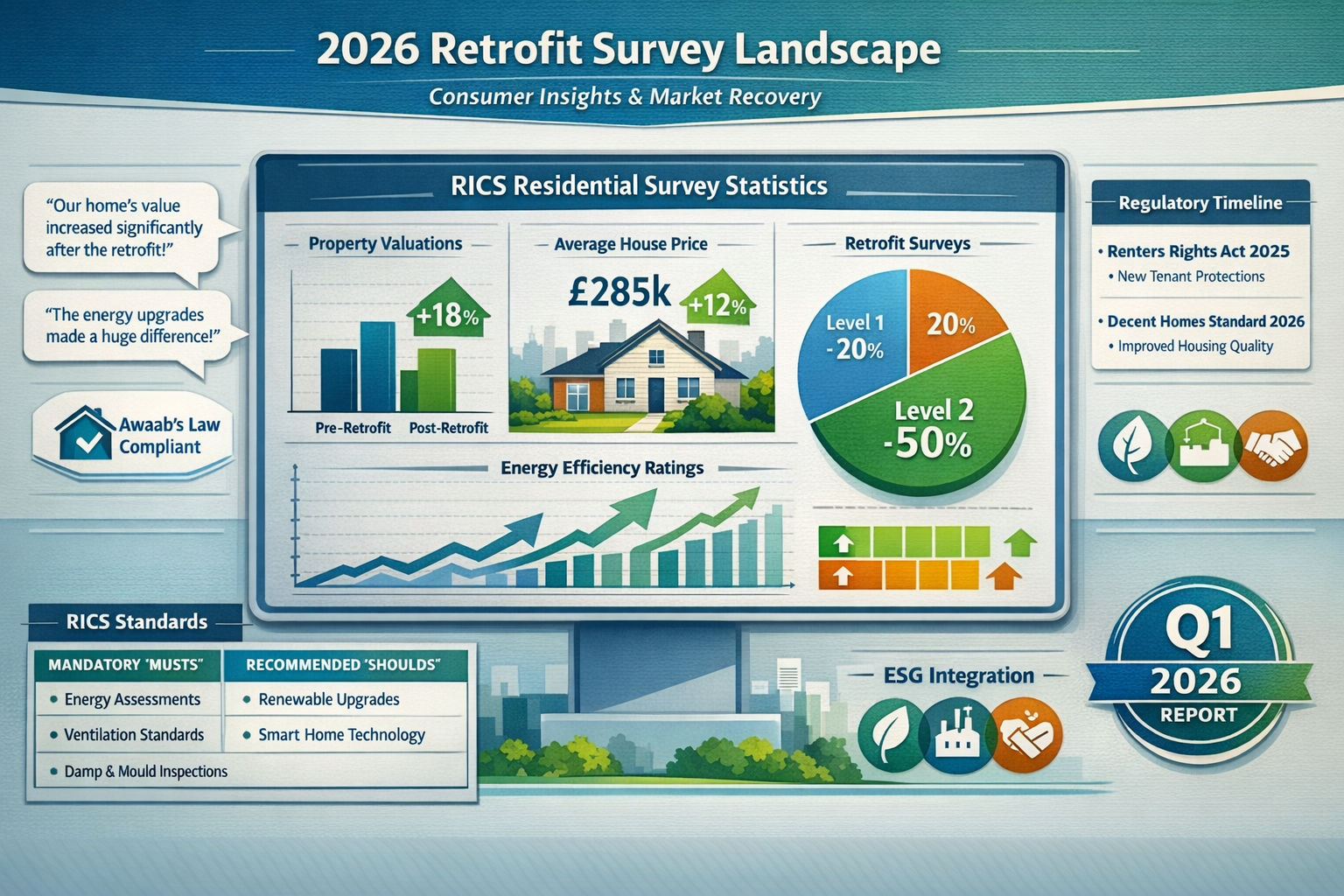
Q1 2026 Publication and Transition Planning
With RICS targeting Q1 2026 publication of the 2nd edition following regulatory approval[1], surveyors should prepare for implementation:
Immediate Actions (Q1 2026)
Review published standards thoroughly upon release, identifying changes affecting current practice
Update templates and processes to incorporate new mandatory requirements and recommended practices
Assess training needs identifying knowledge gaps in retrofit assessment competence
Review professional indemnity ensuring coverage adequately addresses retrofit property risks
Communicate changes to clients explaining enhanced service standards and implications
Medium-Term Development (Q2-Q4 2026)
Invest in technology acquiring thermal imaging, moisture detection, and other diagnostic equipment
Pursue specialized training in retrofit assessment, building physics, and emerging technologies
Develop specialist networks establishing referral relationships for electrical, structural, and fire safety expertise
Monitor consultation feedback reviewing the "Basis for Conclusions" documentation[3] to understand standard rationale
Track regulatory developments following progress on Second Phase hazard assessment implementation[1]
Long-Term Strategic Planning (2027 and Beyond)
Anticipate full HHSRS coverage preparing for comprehensive hazard assessment obligations by 2027[1]
Develop retrofit specialization positioning practice as expert in retrofit quality assessment
Integrate ESG frameworks incorporating sustainability metrics into standard survey offerings
Monitor market evolution tracking retrofit demand and regulatory requirements
Contribute to profession participating in consultation processes and standard development
Technology Investment and Capability Building
The formal recognition of technology in RICS standards[1] creates both opportunities and obligations for capability development:
Essential Technology for Retrofit Assessment
| Technology | Investment Level | Training Requirement | Application Priority |
|---|---|---|---|
| Thermal Imaging Camera | £2,000-£15,000 | 2-5 days certification | High – identifies insulation defects, thermal bridges |
| Moisture Meters | £200-£2,000 | 1-2 days training | High – detects condensation and dampness issues |
| Drone Systems | £1,000-£10,000 | CAA certification required | Medium – enables roof and high-level inspection |
| Electrical Testing Equipment | £500-£3,000 | Electrical competence required | Medium – basic safety verification |
| Air Tightness Testing | £3,000-£8,000 | 2-3 days certification | Low – specialist service offering |
Investment decisions should balance capability development with market demand and professional competence boundaries. Understanding what surveyors do and how roles are evolving helps inform strategic technology investment.
Training and Competence Development
Building retrofit assessment competence requires:
Building physics fundamentals – Understanding heat transfer, moisture movement, and ventilation principles
Retrofit technology knowledge – Familiarity with insulation systems, heat pumps, solar panels, and integration challenges
Regulatory frameworks – Comprehensive understanding of Building Regulations, HHSRS, and energy efficiency standards
Technology operation – Practical competence in thermal imaging interpretation, moisture measurement, and diagnostic equipment
Risk assessment – Ability to evaluate hazards systematically and communicate findings effectively
Professional bodies including RICS offer specialized training programs addressing these competence areas. Continuous professional development in retrofit assessment will increasingly differentiate surveyors in competitive markets.
Building Client Awareness and Market Positioning
As retrofit properties become increasingly common, client education becomes a marketing opportunity:
Communicating Enhanced Service Value
Effective positioning emphasizes:
Specialized retrofit expertise differentiating comprehensive assessment from basic visual surveys
Technology-enabled insights highlighting thermal imaging and diagnostic capabilities
Regulatory compliance assurance providing confidence in RICS standard adherence
Consumer-focused reporting delivering clear, actionable information in accessible language
Integrated advice combining condition assessment with valuation and improvement guidance
This value proposition resonates with buyers increasingly aware of retrofit quality variations and concerned about energy performance claims.
Educational Content and Thought Leadership
Building market presence through:
- Guidance articles explaining retrofit assessment importance and what buyers should expect
- Case studies demonstrating how comprehensive surveys identify defects and protect clients
- Technology demonstrations showing how thermal imaging and diagnostics reveal hidden issues
- Regulatory updates keeping clients informed about evolving standards and requirements
- Market insights analyzing retrofit trends and implications for property values
This educational approach positions surveyors as trusted advisors rather than transactional service providers, building long-term client relationships and referral networks.
Conclusion: Embracing the Future of Retrofit Assessment
Building Surveys for Retrofit Compliance: Navigating RICS Standards and Consumer Insights in 2026 represents far more than regulatory compliance—it embodies a fundamental evolution in how the surveying profession serves clients and protects the public in an era of rapid building stock transformation. The convergence of updated RICS standards, enhanced regulatory requirements, technological innovation, and informed consumer expectations creates both challenges and opportunities for forward-thinking practitioners.
The designation of retrofit properties as "additional risk dwellings"[1] acknowledges what experienced surveyors have long recognized: assessing modified buildings requires different expertise than evaluating either traditional construction or new builds. The integration of over 1,000 consultation responses[1][3] into the forthcoming 2nd edition demonstrates RICS's commitment to evidence-based standard development responsive to both professional and consumer needs.
As the Q1 2026 publication approaches, surveyors must prepare systematically for implementation. This preparation encompasses technical capability development through technology investment and training, process refinement to incorporate new mandatory requirements, and strategic positioning to capitalize on growing retrofit assessment demand. The expansion of hazard coverage to address fire, electrical, hygiene, and excess cold concerns[1] creates comprehensive frameworks for systematic risk evaluation, while the option for integrated valuation[1] enables holistic client service combining technical and financial advice.
Actionable Next Steps
For Surveying Professionals:
- Review the 2nd edition immediately upon Q1 2026 release, identifying specific changes affecting current practice and compliance obligations
- Assess current retrofit assessment competence honestly, identifying knowledge gaps and training needs
- Invest strategically in diagnostic technology, prioritizing thermal imaging and moisture detection capabilities with highest retrofit application value
- Develop specialist referral networks for electrical, structural, fire safety, and other expertise beyond surveyor competence
- Update templates and processes incorporating new standards, particularly mandatory vs. recommended practice distinctions
- Review professional indemnity coverage ensuring retrofit assessment risks are adequately addressed
- Engage in continuing professional development focused on building physics, retrofit technologies, and regulatory frameworks
For Property Buyers and Owners:
- Commission comprehensive surveys from RICS-qualified professionals when purchasing retrofit properties, recognizing that basic valuations may miss critical defects
- Request technology-assisted inspection including thermal imaging to verify energy performance claims and identify hidden issues
- Verify retrofit documentation ensuring Building Control approval, installer certifications, and warranty coverage exist
- Understand the distinction between cosmetic improvements and properly integrated retrofit systems affecting building performance
- Budget for remediation recognizing that even recent retrofit work may require correction if poorly executed
- Monitor building performance post-purchase, tracking energy consumption against claimed savings to identify underperformance
For Landlords and Property Managers:
- Implement proactive inspection programs addressing Renters Rights Act 2025 obligations and Decent Homes Standard compliance
- Prioritize hazard identification particularly for excess cold, condensation, electrical safety, and fire risks in retrofit properties
- Document compliance systematically maintaining records of surveys, remediation work, and ongoing maintenance
- Respond to identified defects within statutory timeframes to avoid regulatory action and protect tenant health
- Consider retrofit quality when planning improvements, recognizing that poor execution creates liabilities rather than value
The evolution of Building Surveys for Retrofit Compliance: Navigating RICS Standards and Consumer Insights in 2026 reflects broader transformation in the built environment toward sustainability, health, and performance. Surveyors who embrace this evolution—developing specialized competence, investing in appropriate technology, and communicating value effectively—will find themselves well-positioned in markets increasingly focused on building quality and energy performance.
The journey toward comprehensive retrofit assessment standards continues beyond 2026, with full HHSRS coverage anticipated by 2027[1] and ongoing technological innovation expanding diagnostic capabilities. By engaging proactively with these developments, the surveying profession can fulfill its fundamental purpose: protecting clients and the public through rigorous, competent assessment of the built environment.
For those seeking expert guidance on retrofit property assessment or comprehensive building surveys meeting the latest RICS standards, professional chartered surveyors provide the specialized knowledge and technology-enabled insights essential for informed property decisions in 2026 and beyond.
References
[1] Surveyors – https://www.rpclegal.com/thinking/insurance-reviews/annual-insurance-review-2026/surveyors/
[2] Key Takeaways From The 2026 Alta Nsps 1518118 – https://www.jdsupra.com/legalnews/key-takeaways-from-the-2026-alta-nsps-1518118/
[3] Home Survey Standard 2nd Edition A Progress Update – https://www.rics.org/news-insights/home-survey-standard-2nd-edition-a-progress-update
[4] Rics Publishes Updated Global Standard Esg Sustainability Commercial Property Valuation – https://www.rics.org/news-insights/rics-publishes-updated-global-standard-esg-sustainability-commercial-property-valuation
[5] Home Survey Standards – https://www.rics.org/profession-standards/rics-standards-and-guidance/sector-standards/building-surveying-standards/home-surveys/home-survey-standards
[6] Uk Resi Survey Jan 2026 Report Shows Early Signs Market Recovery Despite Caution – https://www.rics.org/news-insights/uk-resi-survey-jan-2026-report-shows-early-signs-market-recovery-despite-caution
[7] Rics Publishes Progress Update On Home Survey Standard Review – https://www.lexisnexis.co.uk/legal/news/rics-publishes-progress-update-on-home-survey-standard-review
