
London's property market has just been handed a sobering five-year outlook. On 4 November 2026, Savills published its UK housing market forecast predicting that London house prices will fall by 3.5% in 2027 alone, and that the capital will underperform every other UK region right through to 2031. For homeowners and buyers in Notting Hill, this is not a distant statistic. It lands in a week when the Bank of England has already raised interest rates and Halifax has confirmed London prices are falling annually. The Savills London house price forecast 2027 is now one of the defining stories for west London property this autumn.
This article explains what the forecast actually says, why it matters for Notting Hill specifically, and what buyers, sellers and leasehold flat owners should do about it right now.
Key Takeaways
- Savills forecasts London mainstream house prices will fall 3.5% in 2027, following flat growth in 2026, with five-year growth to 2031 of just 8.1%, the weakest of any UK region.
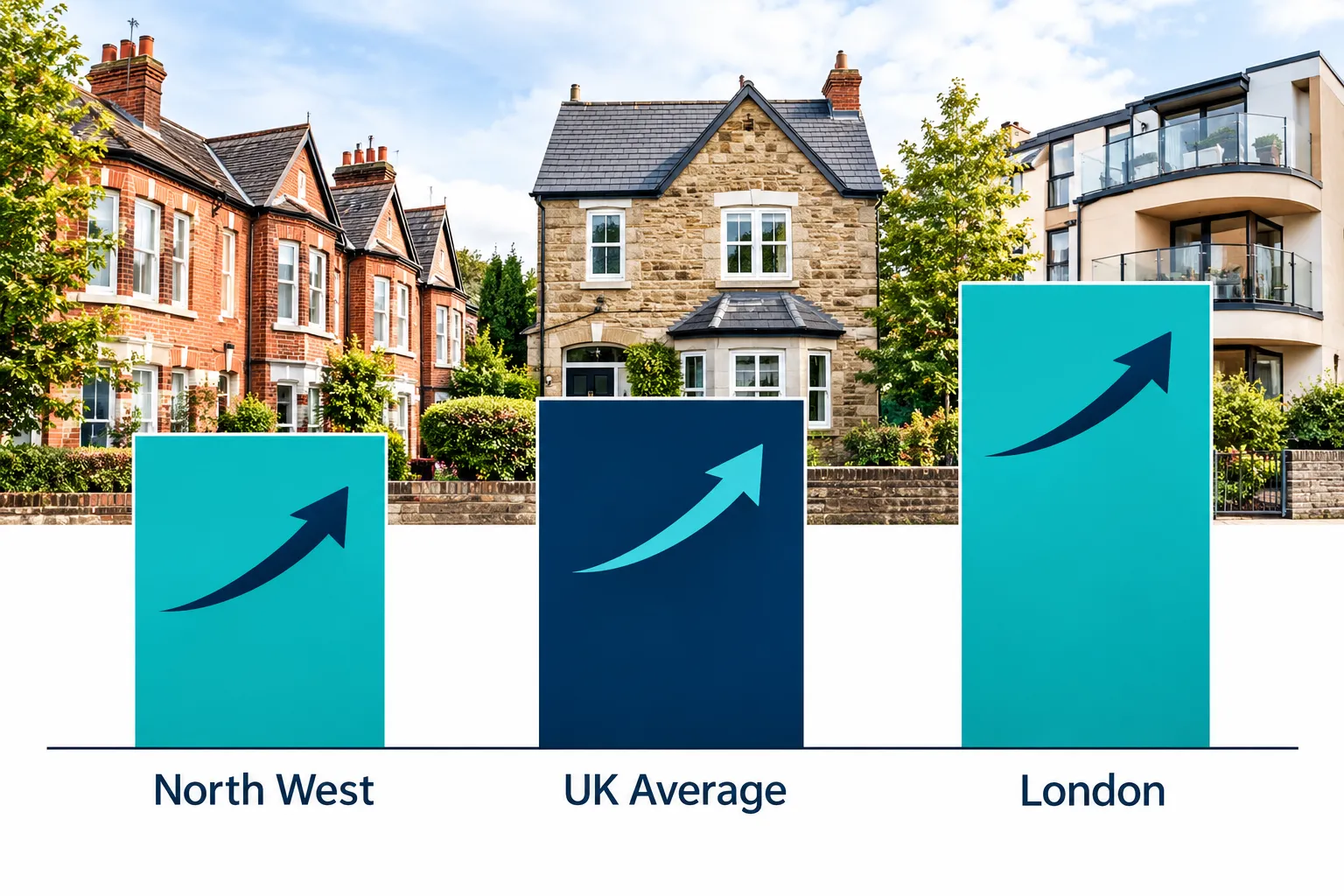
- The North West is forecast to grow 23.3% over the same period; the UK average is 15.8%, roughly £56,500.
- London's house-price-to-earnings ratio stands at 11.3, far above the sub-six ratios in the three northern regions Savills cites.
- Mortgage rates are not expected to drop below 5% until early 2028, according to Savills' own rate assumptions.
- Bank Rate rose to 4% on 5 November 2026; Halifax reported London prices down 3.1% annually to £524,892 on 6 November 2026.
What the Savills London House Price Forecast 2027 Actually Says
Savills' year-by-year projection for London mainstream prices is stark reading for anyone with equity tied up locally:
| Year | Forecast change |
|---|---|
| 2026 | 0.0% (UK-wide) |
| 2027 | -3.5% (London) |
| 2028 | +2.0% |
| 2029 | +3.5% |
| 2030 | +3.5% |
| 2031 | +2.5% |
Add it together and London's five-year growth to 2031 comes to just 8.1%, according to Savills, by far the lowest of any UK region in its forecast. The North West tops the table at 23.3%, with the UK average sitting at 15.8%, or about £56,500 in cash terms. Savills notes this continues a long-running pattern: prices in the North West have risen 53% over the period it examined, against just 12% in London, as the regions converge.
For the UK as a whole, Savills expects a flatter picture: 0.0% growth in 2026, a 1.5% fall in 2027 (around £5,500 off the average home), then a recovery of 3.5% in 2028. Taken together with 2026's weakness, Savills describes a peak-to-trough fall of around 3.0% nationally.
Why London Is Falling Behind: Affordability and Mortgage Rates
The core reason Savills gives for London's underperformance is affordability. The capital's house-price-to-earnings ratio is 11.3, compared with below six times earnings in the three northern regions Savills highlights. Put simply, London property remains expensive relative to local incomes, even after recent falls, which limits how far demand can stretch.
Mortgage costs compound the problem. Savills does not expect rates to fall below 5% until early 2028. Its own assumptions have mortgage rates at 5.32% by the end of 2026 and 5.09% by the end of 2027, alongside a Bank Rate of 4.00% at end-2026 and 4.25% at end-2027, before easing to 3.25% in 2028. Emily Williams, Savills' Director of Residential Research, summed up the cause of the delay: "The drawn-out conflict in the Middle East has pushed back the prospect of meaningful mortgage-rate relief."
Savills also expects first-time buyers to lead any eventual recovery, overtaking cash buyers as the largest buyer group by 2029, while buy-to-let activity stays below its long-term average. Notably, Savills expects prime London to outperform the mainstream market in the second half of this forecast period, a detail that matters for higher-value Notting Hill streets specifically.
This Week's News Backs Up the Forecast
The Savills London house price forecast 2027 did not land in isolation. Two other data points this week reinforce the direction of travel.
First, the Bank of England raised Bank Rate to 4% on 5 November 2026, in an 8-1 vote, its first rise since 2023. That is a meaningful shift for anyone assuming rate cuts were imminent.
Second, Halifax reported on 6 November 2026 that London house prices are down 3.1% annually, with the average London price now £524,892. That is a live, present-tense confirmation of the softening Savills is forecasting to continue through 2027.
What It Means for Notting Hill Buyers
If you are house-hunting in Notting Hill, this forecast is leverage, not just background noise. Asking prices set during the stronger market of previous years may no longer reflect where values are genuinely heading.
Buyers should treat the Savills London house price forecast 2027 as a negotiating tool, not a reason to panic or delay indefinitely. Practical steps include:
- Commission an independent RICS valuation or Home Survey before agreeing a price, rather than relying on the asking price or estate agent guidance alone.
- Use local comparable evidence, including recent Halifax and Land Registry data, to challenge pricing that assumes growth rather than the 3.5% fall Savills is forecasting for 2027.
- Factor higher mortgage costs into affordability calculations, using Savills' rate assumptions (above 5% until early 2028) rather than optimistic best-case scenarios.
- Ask for a structural survey on period conversions and stucco-fronted houses, common across Notting Hill, where repair costs can offset any price reduction.
- Build negotiation room into offers, citing the regional underperformance Savills has identified, since sellers in a softening market often have more flexibility than headline asking prices suggest.
What It Means for Notting Hill Sellers
Sellers face a harder conversation this autumn. A forecast of continued falls through 2027, against a backdrop of rising Bank Rate and falling Halifax figures, means pricing a property too optimistically risks a prolonged sale or repeated reductions.
Realistic pricing now, informed by an independent valuation, is likely to achieve a better outcome than chasing a figure based on 2024 or 2025 market conditions. Savills' point that prime London may outperform the mainstream later in the forecast period is also worth noting: it suggests patience may be rewarded for higher-value stock, but mainstream flats and smaller houses should expect a tougher near-term market.
Sellers should also be transparent with buyers' surveyors from the outset. A property that has already had an independent condition assessment, with any issues disclosed, tends to move through negotiation faster than one where problems surface late and derail the deal.
Leasehold Flat Owners: Lease Length and Service Charges Matter More Now
Notting Hill has a high concentration of leasehold conversion flats, and in a softening market, lease-related issues become more consequential. When prices are rising strongly, buyers sometimes overlook a shortening lease or an unclear service charge history. In a falling or flat market, those same issues typically become deal-breakers or significant price-chipping points.
Flat owners should, as a general rule:
- Check how many years remain on the lease and understand, in general terms, how shorter leases typically affect marketability and mortgageability.
- Gather up-to-date service charge accounts and any major works notices, since buyers' solicitors and surveyors will scrutinise these closely in a more cautious market.
- Consider obtaining professional advice on lease extension options well before marketing the property, as the process can take time.
- Keep documentation organised and accessible, since delays in providing lease or service charge information can slow a sale at precisely the time speed matters most.
What Happens Next
Savills' forecast runs to 2031, but the near-term focus for Notting Hill is 2027. With Bank Rate at 4% and mortgage rates assumed to stay above 5% until early 2028, affordability pressure is unlikely to ease quickly. The Savills London house price forecast 2027 points to a market that stabilises gradually rather than snapping back, with growth returning only from 2028 onward and prime London potentially recovering faster than the mainstream market later in the period.
FAQ
Does the Savills London house price forecast 2027 apply equally across all of London?
Savills forecasts mainstream London prices generally, but notes that prime London is expected to outperform the mainstream market in the second half of the forecast period, which may affect higher-value Notting Hill streets differently from surrounding areas.
Why is London expected to underperform every other UK region?
Savills attributes this mainly to affordability: London's house-price-to-earnings ratio is 11.3, compared with under six in the three northern regions it highlights, limiting how much prices can rise relative to incomes.
When does Savills expect mortgage rates to improve?
Savills does not expect rates to fall below 5% until early 2028, with its own assumptions showing rates at 5.09% by the end of 2027.
How does this week's Bank Rate rise affect the forecast?
The Bank of England's rise to 4% on 5 November 2026 aligns with Savills' own end-2026 Bank Rate assumption, reinforcing the view that borrowing costs will stay elevated into 2027.
Should I delay selling my Notting Hill flat because of this forecast?
That depends on individual circumstances, but realistic pricing based on an independent valuation is generally more effective than waiting for conditions Savills does not expect to improve meaningfully until 2028 onward.
Conclusion
The Savills London house price forecast 2027 confirms what many Notting Hill owners and buyers have already been sensing: the capital faces a slower, harder road than the rest of the country through at least 2031. Falling prices in 2027, elevated mortgage rates, and a widening affordability gap mean decisions made now deserve proper evidence, not guesswork.
Whether buying, selling, or managing a leasehold flat, an independent RICS valuation or Home Survey provides the clarity needed to negotiate confidently in this market. Notting Hill Surveyors can carry out that assessment and talk through what the current forecast means for your specific property. Contact the team today to book a survey or valuation.