
{"cover":"Professional landscape format (1536x1024) hero image featuring bold text overlay 'Building Surveys for Bungalow Retrofits in 2026: RICS Standards & Risk Assessment' in extra large 72pt white sans-serif font with dark shadow and semi-transparent navy overlay box, positioned in upper third. Background shows detailed split-screen composition: left side displays traditional Scottish bungalow with surveyor conducting thermal imaging inspection, right side shows modern retrofit insulation installation and energy efficiency improvements. Include subtle RICS logo watermark, clipboard with checklist, and thermal camera equipment in foreground. Color scheme: deep navy blue, white, warm orange accents representing heat loss visualization. High contrast, magazine cover quality, professional editorial style with architectural photography aesthetic.","content":["Landscape format (1536x1024) detailed infographic showing comprehensive RICS Residential Retrofit Standard framework flowchart with three main pillars: pre-retrofit assessment (building survey icon, structural analysis symbols), implementation phase (insulation layers, ventilation systems, heating upgrades), and post-completion verification (energy performance certificate, quality assurance checkmarks). Include visual representation of bungalow cross-section highlighting key inspection areas: roof structure, wall cavities, foundation assessment, damp-proof course. Color-coded risk levels (green-amber-red) for different structural elements. Professional architectural drawing style with clean lines, technical annotations, and RICS branding elements. Text overlays showing '25 million UK homes need retrofitting' and '500,000 annual target by 2025'.","Landscape format (1536x1024) detailed comparison table visualization showing bungalow-specific structural risk assessment matrix. Left column displays common bungalow vulnerabilities: single-story load distribution, aging roof structures, cavity wall conditions, foundation settlement, damp ingress points. Center section shows RICS-compliant inspection methodologies: thermal imaging cameras, moisture meters, structural calculation tools, ventilation assessment equipment. Right column presents risk mitigation strategies with before-after photography of successful retrofit interventions. Include visual elements: surveyor examining bungalow roof space with headlamp, moisture detection equipment readings, insulation depth measurements, ventilation system diagrams. Color scheme: professional blues and grays with warning amber highlights for high-risk areas.","Landscape format (1536x1024) professional scene showing RICS-certified surveyor conducting comprehensive bungalow retrofit assessment in stable Scottish market setting. Foreground displays surveyor with tablet showing digital survey software, thermal imaging overlay, and building condition report. Middle ground shows traditional Scottish bungalow with visible retrofit improvements: modern insulation, upgraded windows, efficient heating system components. Background includes Scottish landscape context. Include visual data elements: property value growth chart showing post-retrofit appreciation in stable markets, energy efficiency rating improvement from D to B, cost-benefit analysis graph. Professional photography style with natural lighting, technical equipment visible, documentation clipboard, RICS accreditation certificate prominently displayed. Color palette: Scottish landscape greens, professional navy, energy efficiency green ratings."]}
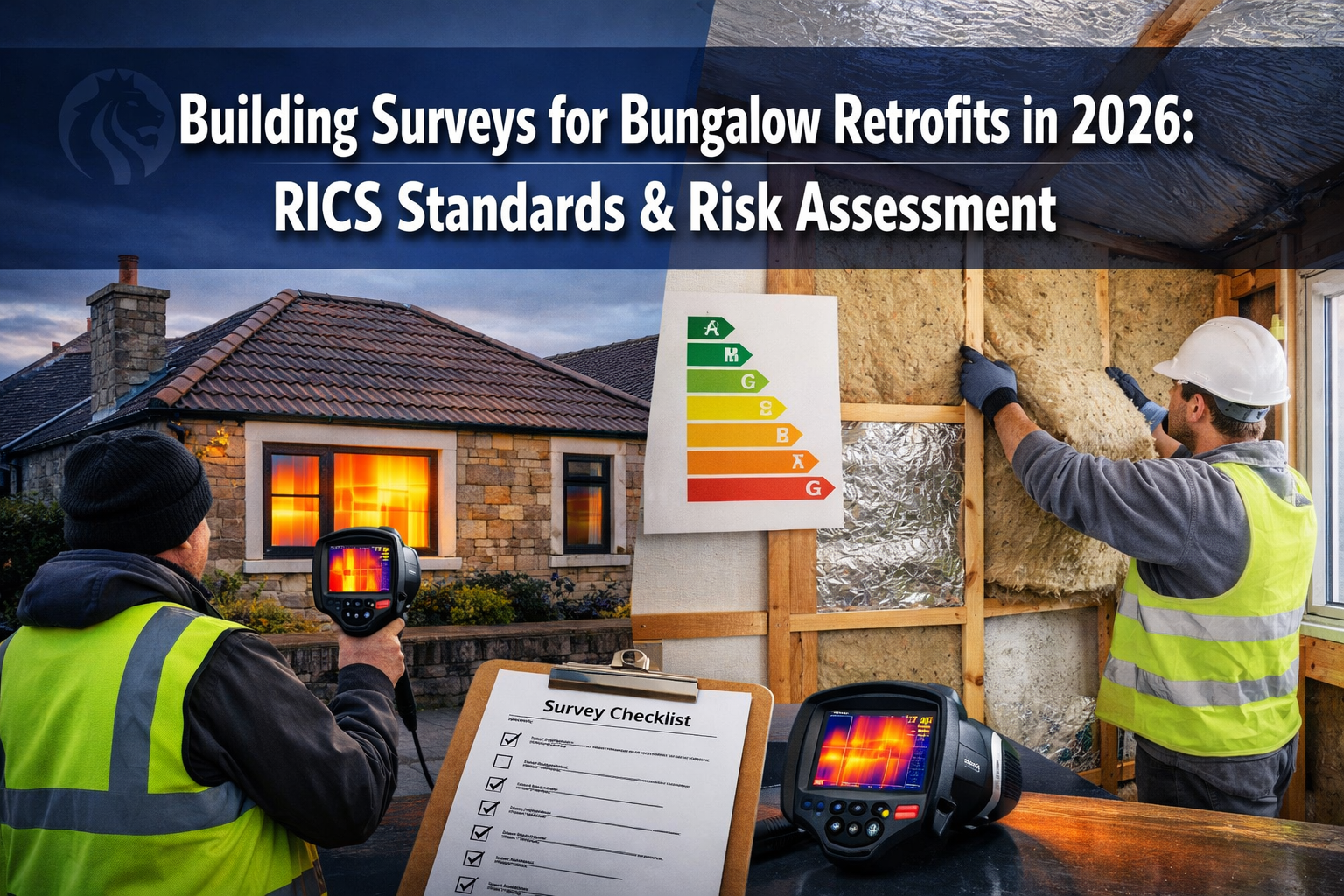
The UK property market in 2026 presents unique opportunities for bungalow owners seeking to enhance their homes through energy-efficient retrofits. With an estimated 25 million homes requiring energy improvements and the RICS Residential Retrofit Standard now fully implemented, understanding Building Surveys for Bungalow Retrofits in 2026 Stable Markets: RICS Standards and Risk Assessments has never been more critical. As demand-driven markets—particularly in Scotland and other stable regions—continue to show resilience, homeowners and investors are discovering that professional building surveys can unlock significant property value while ensuring structural integrity during retrofit projects.
The convergence of post-budget economic stability, ambitious government targets requiring 500,000 annual retrofits by 2025, and comprehensive RICS standards creates a perfect environment for strategic bungalow improvements. Whether you're planning to upgrade heating systems, install insulation, or implement comprehensive energy efficiency measures, a thorough building survey forms the essential foundation for successful retrofit projects.
Key Takeaways
- RICS standards mandate professional oversight for all residential retrofits since October 2024, placing consumer safety and building integrity at the center of every project[1]
- Bungalows require specialized structural assessments due to their single-story configuration, aging roof structures, and unique load distribution patterns that affect retrofit feasibility
- Stable markets in 2026 offer optimal conditions for retrofit investments, with professional surveys identifying risks early and maximizing property value appreciation
- Comprehensive risk assessments prevent costly failures by addressing damp, ventilation, insulation compatibility, and structural capacity before work begins
- RICS-certified surveyors provide independent, professional guidance that protects homeowners, satisfies lenders, and ensures compliance with evolving energy efficiency regulations
Understanding the RICS Residential Retrofit Standard Framework
What Makes the 2024 RICS Standard Essential
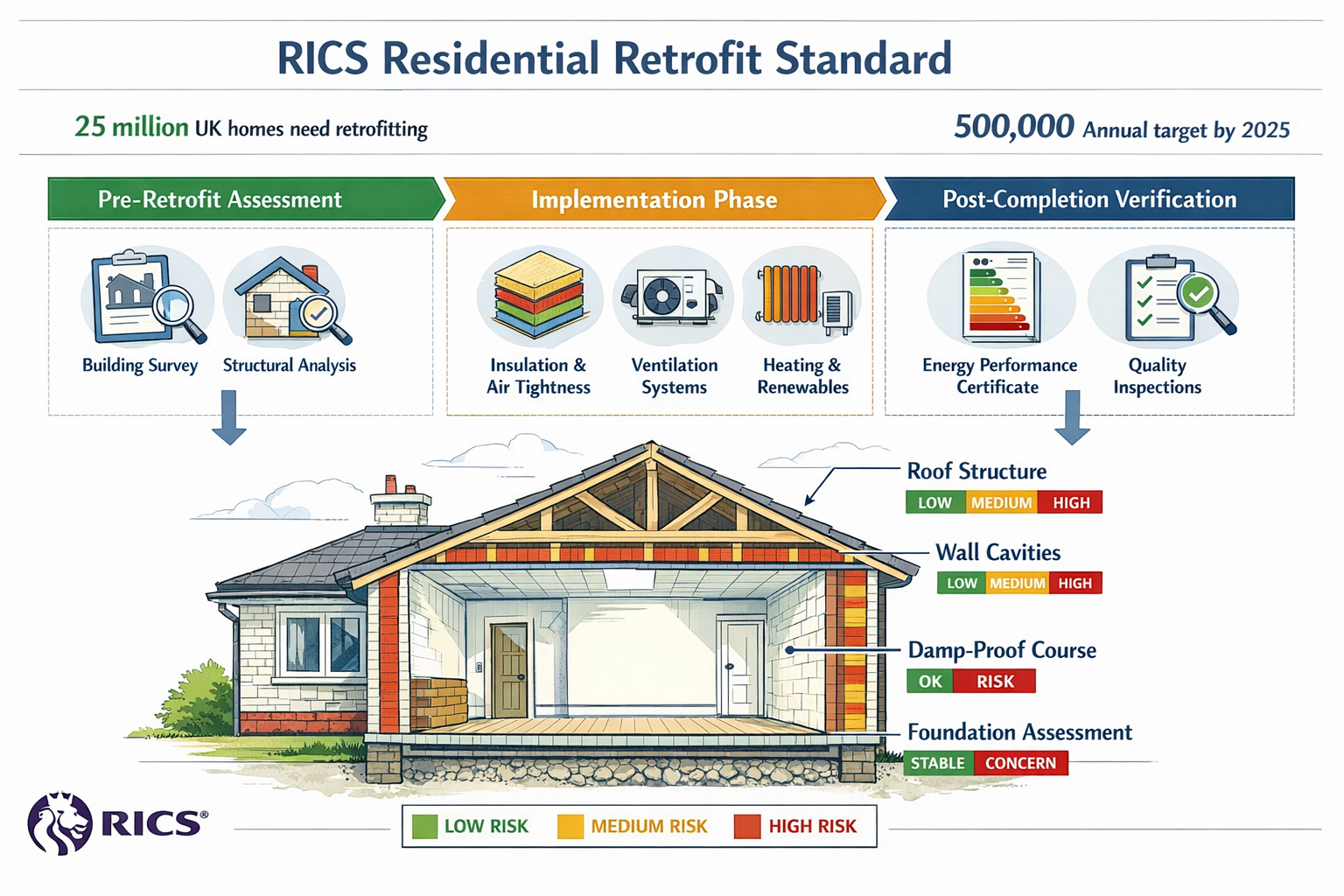
The RICS Residential Retrofit Standard, launched in March 2024 and effective from October 31, 2024, represents a transformative shift in how retrofit projects are managed across the UK[2]. This mandatory framework replaces earlier guidance and establishes clear professional requirements for surveyors, contractors, and energy assessors working on residential improvements.
The standard addresses a critical need in the market. With professional advice becoming essential for risk management, lenders, government bodies, and consumers increasingly seek impartial expertise to ensure works are properly managed to minimize risks to buildings and occupants' health[2]. For bungalow owners specifically, this means access to standardized, reliable assessment protocols that account for the unique characteristics of single-story dwellings.
Key components of the RICS framework include:
- 🏗️ Pre-retrofit condition surveys that document existing structural integrity
- 📋 Risk assessment protocols for damp, mould, and ventilation issues
- 🔍 Professional energy audits aligned with EPC assessment standards
- ✅ Post-completion verification ensuring work meets specified standards
- 📊 Consumer-centered delivery with transparent reporting and documentation
The standard emphasizes that retrofit projects must be "right from start to end," with certified professionals maintaining independence throughout the process[5]. This professional oversight proves particularly valuable in stable markets where property values depend on quality improvements rather than speculative growth.
How Building Surveys Integrate with Retrofit Planning
A comprehensive RICS building survey serves as the cornerstone of any successful bungalow retrofit project. Unlike basic homebuyer surveys, Level 3 building surveys provide the detailed structural analysis necessary for planning significant energy efficiency improvements.
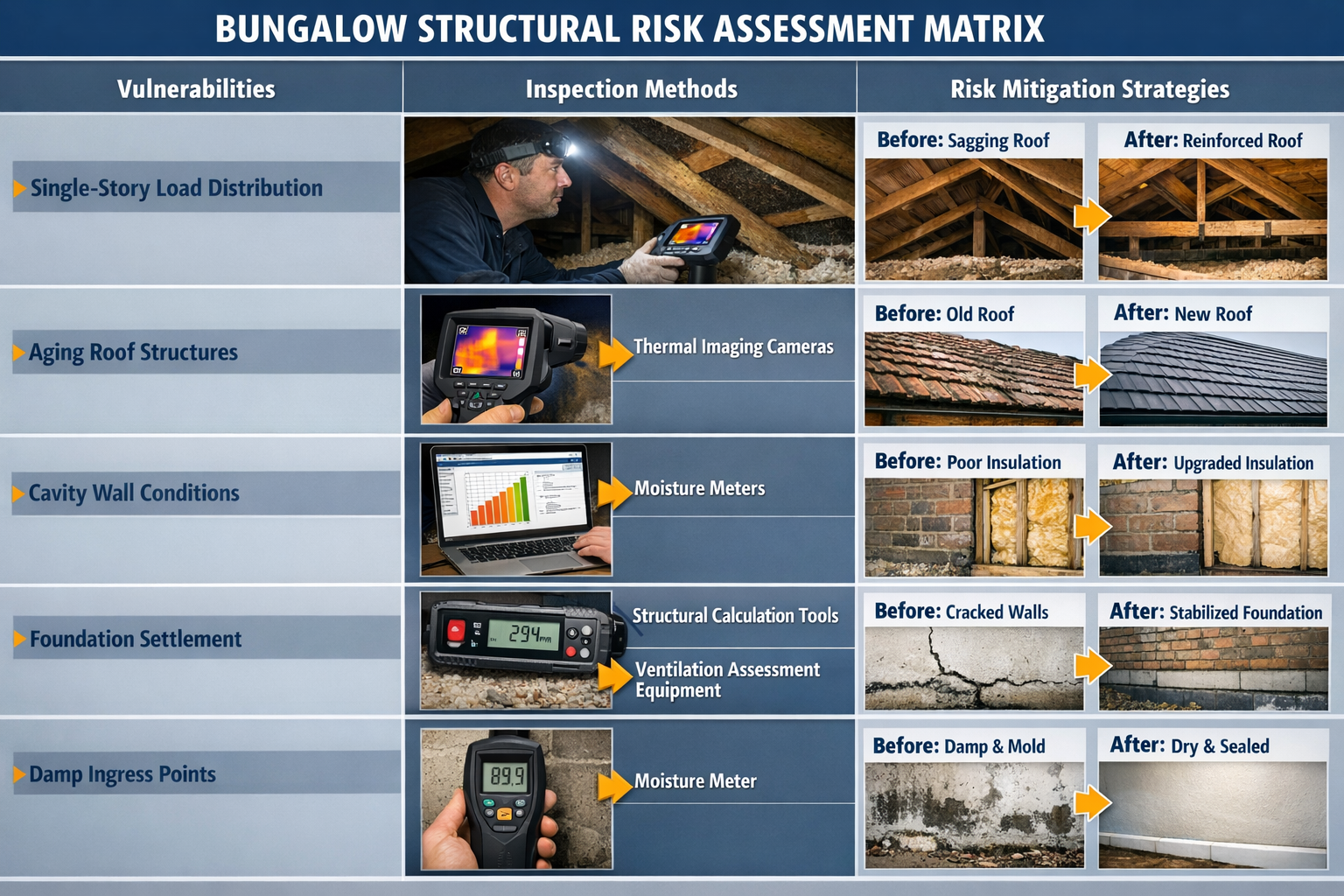
For bungalows specifically, surveyors examine:
| Survey Element | Bungalow-Specific Considerations | Retrofit Implications |
|---|---|---|
| Roof Structure | Single-story span, aging timbers, limited access | Insulation capacity, ventilation requirements |
| Wall Construction | Cavity walls, solid walls, thermal bridging | Insulation type selection, damp risk assessment |
| Foundation Assessment | Settlement patterns, ground conditions | Load capacity for additional insulation weight |
| Ventilation Systems | Existing airflow, moisture management | Preventing condensation post-insulation |
| Heating Infrastructure | Boiler age, radiator sizing, pipework | System upgrade compatibility |
Understanding these elements before retrofit work begins prevents costly mistakes. For example, adding external wall insulation to a bungalow with existing damp issues can trap moisture and accelerate structural deterioration—a risk that proper building surveys identify early in the planning process.
Building Surveys for Bungalow Retrofits in 2026 Stable Markets: Key Structural Considerations
Why Bungalows Require Specialized Assessment Approaches
Bungalows present unique structural challenges that demand specialized surveying expertise. Their single-story configuration creates different load distribution patterns compared to multi-story homes, affecting how retrofit improvements can be safely implemented.
Critical bungalow characteristics include:
-
Roof Structure Vulnerabilities: Bungalow roofs often span wider distances without intermediate support, making them more susceptible to deflection. Adding heavy insulation materials without proper structural assessment can compromise roof integrity.
-
Aging Building Fabric: Many bungalows were constructed between the 1930s-1970s using materials and techniques that may not accommodate modern retrofit interventions without modification.
-
Ground-Level Moisture Risks: Single-story construction means greater exposure to ground moisture, making damp-proof course assessment critical before installing insulation that could bridge existing barriers.
-
Limited Loft Space: Shallow roof voids restrict insulation options and require careful ventilation planning to prevent condensation issues.
-
Heating System Sizing: Existing heating systems designed for poorly insulated bungalows may require recalibration or replacement after retrofit to prevent overheating and inefficiency.
A Level 3 building survey provides the comprehensive analysis necessary to address these factors. Surveyors assess load-bearing capacity, identify existing defects, and recommend remedial works that should precede retrofit improvements.
Risk Assessment Protocols Under RICS Standards
The RICS Residential Retrofit Standard places significant emphasis on risk assessment, particularly regarding damp and mould—issues addressed through condition surveys and compliance with Awaab's Law[3]. For bungalows in stable markets, this professional risk assessment delivers multiple benefits:
Health and Safety Protection: Professional surveyors identify potential hazards including asbestos in older bungalows, structural weaknesses that could compromise during retrofit work, and ventilation inadequacies that might create health risks post-insulation. Specialized asbestos surveys may be recommended for bungalows built before 2000.
Financial Risk Mitigation: Early identification of structural issues prevents mid-project cost escalations. A survey might reveal that roof timbers require treatment or replacement before insulation installation, allowing accurate budgeting and avoiding contractor disputes.
Compliance Assurance: RICS-certified surveyors ensure retrofit plans comply with building regulations, planning requirements, and energy efficiency standards. This documentation proves invaluable for warranty claims, insurance purposes, and future property sales.
Insurance and Warranty Validation: Many retrofit warranties require pre-work condition surveys. Professional documentation protects homeowners if defects emerge post-completion, clearly establishing whether issues existed before retrofit or resulted from poor workmanship.
"Works to homes must be professionally managed to minimize risks to the building and occupants' health. Lenders, government, and consumers are increasingly seeking professional and impartial advice." – RICS Retrofit Standards[2]
Maximizing Property Value Through Strategic Retrofit Surveys in Stable Markets
The Scottish Market Opportunity and Beyond
Scotland's property market in 2026 exemplifies the stable, demand-driven conditions where strategic bungalow retrofits deliver exceptional value. Unlike volatile speculative markets, stable regions reward quality improvements with predictable value appreciation and enhanced marketability.
Market characteristics favoring retrofit investment:
- 📈 Consistent demand for energy-efficient properties from environmentally conscious buyers
- 💰 Accessible funding through government schemes and green mortgages
- 🏡 Strong rental yields for landlords meeting minimum energy efficiency standards
- 🎯 Demographic trends favoring accessible single-story living for aging populations
- ⚡ Rising energy costs making efficiency improvements financially compelling
The UK Government's Warm Homes Plan provides a three-pillar approach supporting these market conditions: targeted support for low-income households, universal offers for households able to invest, and stronger protections for renters[3]. This framework creates opportunities for surveyor involvement across multiple market segments.
For bungalow owners in stable markets, professional surveys enable strategic decision-making about which improvements deliver optimal return on investment. Rather than pursuing comprehensive retrofits that may exceed market value limits, surveys help identify priority interventions that balance cost, energy savings, and property value enhancement.
Cost-Benefit Analysis: Survey Investment vs. Retrofit Risk
Many homeowners question whether comprehensive building surveys justify their cost for retrofit projects. The evidence strongly supports professional assessment as a cost-effective investment:
Direct Financial Benefits:
- Avoiding Unsuitable Interventions: A £800-1,200 survey might reveal that external wall insulation would trap moisture in solid-wall bungalows, preventing a £15,000+ installation that could cause structural damage
- Accurate Project Budgeting: Identifying hidden defects early prevents mid-project cost escalations that typically exceed 20-30% of initial estimates
- Warranty Compliance: Many retrofit warranties require pre-work surveys, making them mandatory rather than optional expenses
- Negotiating Leverage: For properties being purchased for retrofit, surveys provide evidence for price negotiations based on required remedial works
Indirect Value Creation:
- Enhanced Marketability: Properties with documented retrofit history and professional surveys command premium prices in stable markets
- Insurance Benefits: Some insurers offer reduced premiums for professionally assessed and improved properties
- Future-Proofing: Surveys identify opportunities for phased improvements, allowing strategic investment over time
- Energy Performance: Professional guidance ensures retrofit interventions achieve projected energy savings rather than underperforming due to installation errors
The difference between Level 2 and Level 3 surveys becomes particularly relevant for retrofit planning. While Level 2 surveys suit standard property purchases, Level 3 surveys provide the detailed structural analysis essential for significant alteration projects.
RICS Standards and Risk Assessments: Practical Implementation for Bungalow Retrofits
Selecting the Right Survey Type for Your Retrofit Project
Not all building surveys serve retrofit planning equally well. Understanding which assessment type matches your project scope ensures you receive relevant, actionable information without paying for unnecessary detail.
Survey Type Comparison for Retrofit Projects:
Level 2 RICS Homebuyer Survey: Suitable for newer bungalows (post-1980) requiring minor energy efficiency upgrades like boiler replacement or loft insulation top-up. Provides overview of condition but limited structural detail. Learn more about Level 2 surveys and their applications.
Level 3 Building Survey: Essential for comprehensive retrofits involving wall insulation, heating system replacement, ventilation improvements, or work on pre-1980 bungalows. Provides detailed structural analysis, identifies defects, and recommends remedial priorities. Explore comprehensive Level 3 survey examples.
Specialist Surveys: Depending on findings, additional assessments may include damp surveys for moisture issues, structural surveys for load-bearing assessments, or thermal imaging surveys for heat loss identification.
Energy Performance Assessments: While not building surveys per se, professional energy audits complement structural assessments by identifying specific efficiency improvements and projecting savings[1].
Working with RICS-Certified Professionals
The RICS retrofit pathway accreditation has been reported as oversubscribed, indicating strong demand for professional certification in this growing sector[5]. This popularity reflects the value consumers place on independent, qualified expertise.
What to expect from RICS-certified surveyors:
✅ Independence and Impartiality: RICS professionals maintain independence from contractors and material suppliers, ensuring recommendations serve client interests rather than commercial relationships
✅ Comprehensive Reporting: Detailed documentation including photographs, condition ratings, priority recommendations, and estimated costs for remedial works
✅ Retrofit-Specific Expertise: Understanding of how structural characteristics affect retrofit feasibility, including insulation compatibility, ventilation requirements, and heating system sizing
✅ Regulatory Knowledge: Current awareness of building regulations, energy efficiency standards, and compliance requirements affecting retrofit projects
✅ Consumer-Centered Approach: Clear communication translating technical findings into practical recommendations aligned with client budgets and priorities[3]
When engaging surveyors for bungalow retrofit projects, request specific experience with single-story properties and energy efficiency improvements. Ask about their familiarity with the RICS Residential Retrofit Standard and whether they hold relevant accreditations.
Addressing Common Retrofit Risks Through Professional Surveys
Damp, Ventilation, and Insulation Compatibility
The relationship between insulation, ventilation, and moisture management represents the most critical risk area for bungalow retrofits. Poor planning in this area can transform energy efficiency improvements into structural disasters.
How professional surveys prevent moisture problems:
Pre-Existing Damp Identification: Surveys document existing damp issues that must be resolved before insulation installation. Adding insulation over damp walls traps moisture, accelerating deterioration and creating health hazards through mould growth.
Ventilation Adequacy Assessment: Bungalows often have minimal ventilation that proved adequate for poorly insulated properties but becomes insufficient post-retrofit. Surveyors assess existing airflow and recommend ventilation improvements to prevent condensation.
Insulation Type Compatibility: Different wall constructions require specific insulation approaches. Solid walls need breathable insulation or external systems, while cavity walls may accommodate injected insulation if cavities are clear and damp-proof courses function properly.
Thermal Bridge Identification: Surveys identify areas where heat bypasses insulation through structural elements, causing cold spots that attract condensation. Professional assessment ensures comprehensive thermal envelope improvement.
The RICS standard specifically addresses these risks through mandatory condition surveys and compliance requirements aligned with Awaab's Law, which establishes minimum standards for damp and mould prevention[3].
Structural Capacity and Load-Bearing Assessments
Adding insulation, particularly to roofs and external walls, increases structural loads that aging bungalows may not safely accommodate without reinforcement.
Critical structural considerations:
🏗️ Roof Load Capacity: Modern insulation materials can add significant weight to roof structures. Surveyors assess timber condition, span distances, and support adequacy to determine whether existing roofs can safely support additional insulation or require reinforcement.
🏗️ Foundation Adequacy: External wall insulation systems add weight and change how walls interact with ground conditions. Professional assessment ensures foundations can support modifications without settlement or cracking.
🏗️ Wall Tie Condition: Cavity wall insulation requires intact, functional wall ties. Surveys identify corroded or failed ties that need replacement before insulation installation.
🏗️ Loft Access and Working Space: Retrofit work requires safe access for installation and future maintenance. Surveys assess whether existing loft access meets current standards or requires modification.
For complex structural concerns, surveyors may recommend structural engineer reports providing detailed calculations and reinforcement specifications.
The Future of Bungalow Retrofits: Meeting 2026 Targets and Beyond
Scaling to Meet National Retrofit Targets
According to the Climate Change Committee, residential retrofits must accelerate to 500,000 per year from 2025, and one million per year by 2030 to meet the UK's net-zero target[1]. Achieving these ambitious goals requires professional infrastructure capable of delivering quality improvements at scale.
How RICS standards support scaling:
- Standardized Processes: Consistent assessment and delivery frameworks enable efficient project management across multiple properties
- Professional Capacity Building: The oversubscribed retrofit pathway accreditation indicates growing professional capacity to meet demand[5]
- Consumer Confidence: Professional standards build trust, encouraging homeowners to invest in necessary improvements
- Quality Assurance: Mandatory professional oversight prevents the poor-quality work that undermined earlier retrofit initiatives
For bungalow owners, this scaling creates opportunities for competitive pricing as more professionals enter the market while maintaining quality through standardized RICS requirements.
Beyond Carbon: Quality of Life Improvements
Successful retrofit projects significantly improve residents' quality of life beyond carbon reduction, delivering warm, comfortable, and energy-efficient homes that are healthier, more affordable, and more resilient[3]. This holistic benefit perspective proves particularly relevant for bungalow residents, many of whom are older homeowners prioritizing comfort and health alongside environmental concerns.
Quality of life benefits from professional retrofits:
- 🌡️ Thermal Comfort: Consistent temperatures throughout the year without cold spots or overheating
- 💰 Reduced Energy Bills: Genuine savings that improve household budgets and financial security
- 🏥 Health Improvements: Warmer, drier homes reduce respiratory issues and improve overall wellbeing
- 🔇 Noise Reduction: Many insulation improvements also reduce external noise intrusion
- 🏡 Enhanced Property Value: Professional improvements create marketable assets in stable markets
Professional surveys ensure these benefits materialize by identifying the right improvements for specific properties rather than applying generic solutions that may underperform or create new problems.
Conclusion

Building Surveys for Bungalow Retrofits in 2026 Stable Markets: RICS Standards and Risk Assessments represents more than regulatory compliance—it's the foundation for successful, value-enhancing property improvements. As the UK pursues ambitious retrofit targets requiring 500,000 annual improvements by 2025, professional surveying expertise ensures individual projects deliver promised benefits while avoiding costly failures.
The RICS Residential Retrofit Standard, fully implemented since October 2024, provides the framework for consumer-centered, professionally managed improvements that minimize risks to buildings and occupants[2]. For bungalow owners in stable markets like Scotland, this professional infrastructure creates optimal conditions for strategic investments that enhance property value, reduce energy costs, and improve quality of life.
Actionable Next Steps
-
Commission a Professional Survey: Engage a RICS-certified surveyor with retrofit experience to assess your bungalow's condition and retrofit potential
-
Review Survey Findings Carefully: Understand identified risks, recommended remedial works, and priority improvements before proceeding with retrofit planning
-
Develop a Phased Improvement Plan: Work with your surveyor to create a strategic improvement sequence that addresses structural issues first, then implements energy efficiency upgrades in logical order
-
Verify Contractor Credentials: Ensure retrofit contractors understand RICS standards and can work to professional specifications documented in your survey
-
Document Everything: Maintain comprehensive records of surveys, specifications, installations, and certifications to support warranties, insurance claims, and future property sales
-
Consider Specialist Assessments: Based on survey findings, commission additional damp surveys, structural analyses, or energy audits as recommended
-
Explore Funding Options: Research government schemes, green mortgages, and local authority programs that may offset survey and improvement costs
The convergence of professional standards, market stability, and government support creates unprecedented opportunities for bungalow owners to enhance their properties through strategic retrofits. By investing in professional building surveys that identify risks and opportunities, homeowners position themselves for successful improvements that deliver lasting value in 2026's stable property markets and beyond.
References
[1] Retrofit Improving Energy Efficiency For Residential Property – https://www.ricsfirms.com/residential/improvements/going-green/retrofit-improving-energy-efficiency-for-residential-property/
[2] Retrofit – https://www.rics.org/profession-standards/rics-standards-and-guidance/sector-standards/real-estate-standards/retrofit
[3] Retrofit Leaders Meet Rics Hq Discuss Importance Transformative Projects – https://www.rics.org/news-insights/retrofit-leaders-meet-rics-hq-discuss-importance-transformative-projects
[4] Rics Launches Residential Retrofit And Improving Energy In Your Home Guide – https://www.rics.org/news-insights/rics-launches-residential-retrofit-and-improving-energy-in-your-home-guide
[5] Sparks Of 2026 9 Rics And The Return Of Professional Trust In Retrofit – https://www.refurbandretrofit.com/sparks-of-2026-9-rics-and-the-return-of-professional-trust-in-retrofit/
