
The UK Government's consultation on homebuying reforms closed in December 2025, and the property industry now stands at a crossroads. While no implementation date has been confirmed, the proposed changes could fundamentally transform when and how building surveys are conducted—shifting property condition assessments from optional post-offer investigations to mandatory upfront requirements. This seismic shift in the transaction timeline has profound implications for chartered surveyors, property buyers, and the entire residential market ecosystem.
Understanding Building Surveys and Property Condition Assessments: Navigating the Government's 2026 Homebuying Process Reforms is essential for anyone involved in property transactions. The Royal Institution of Chartered Surveyors (RICS) has already requested a minimum 24-month implementation period, signaling the scale of preparation required across the industry.[1]
Key Takeaways
- ✅ No confirmed implementation date exists yet—the government is currently reviewing consultation feedback with no official timeline announced
- 📋 Upfront property assessments may become mandatory—fundamentally changing when surveys occur in the transaction process
- ⏰ RICS requests 24-month preparation period—highlighting the significant industry capacity building required before reforms take effect
- 🏗️ Surveyors must prepare for increased demand—potential surge in pre-listing property condition assessments
- 📊 Standards and guidance need development—new frameworks will be essential to ensure consistency and quality across the sector
Understanding the Proposed Homebuying Reforms and Their Impact on Building Surveys
The government's consultation process examined several key areas that directly affect how building surveys and property condition assessments are conducted. The most significant proposal involves requiring sellers to provide material information about their property upfront—before listing it for sale.[1]
What Material Information Means for Property Assessments
Material information encompasses any details that could influence a buyer's decision to purchase a property or affect the price they're willing to pay. This includes:
- Structural defects and building condition issues
- Subsidence or foundation problems
- Damp, rot, or pest infestations
- Planning permissions and building regulation compliance
- Flood risk and environmental concerns
- Alterations and extensions documentation
Currently, most buyers commission their own building survey after making an offer. Under the proposed reforms, sellers would need to obtain property condition assessments before marketing their homes. This represents a complete reversal of the traditional timeline.
The Current Transaction Process vs. Proposed Changes
| Current Process | Proposed Reformed Process |
|---|---|
| Property listed with limited information | Property listed with comprehensive condition report |
| Buyer makes offer based on viewing | Buyer makes informed offer based on survey data |
| Buyer commissions survey post-offer | Seller provides pre-listing assessment |
| Surveys often cause renegotiation or fall-throughs | Transparent information reduces transaction failures |
| Timeline: 3-6 months average | Timeline: Potentially faster with upfront information |
This transformation in Building Surveys and Property Condition Assessments: Navigating the Government's 2026 Homebuying Process Reforms could significantly reduce the notorious problem of property transaction fall-throughs, which currently plague the UK market.
Timeline and Implementation Challenges for the 2026 Reforms
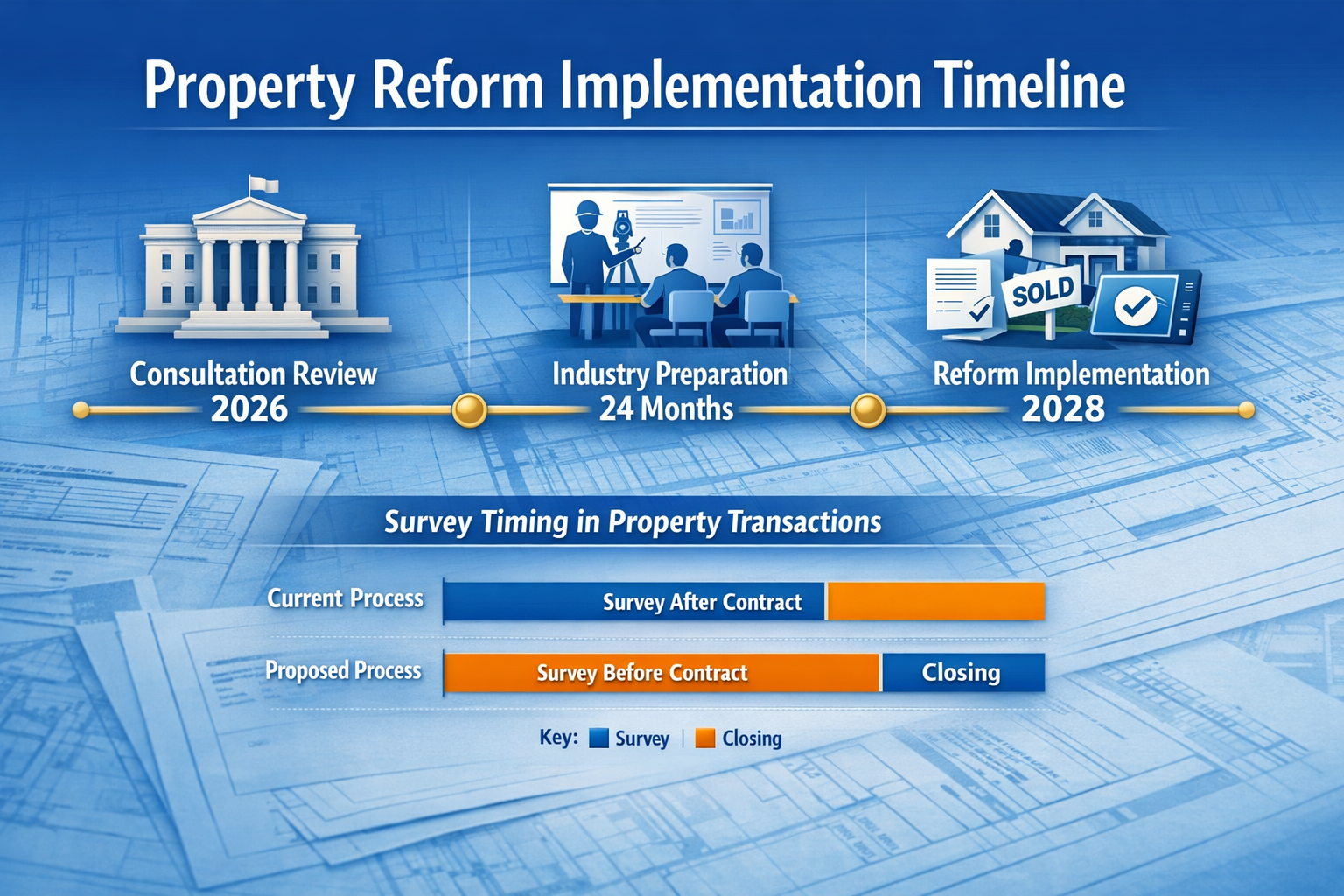
Despite the article title referencing 2026, it's crucial to understand that no definitive government timeline has been announced. The consultation period ended in December 2025, and the government is currently reviewing feedback.[1] Industry experts and professional bodies are now waiting for clarity on next steps.
Why RICS Requests a 24-Month Preparation Period
The Royal Institution of Chartered Surveyors has been clear in its communication with government officials: implementing these reforms requires substantial preparation time. The 24-month minimum implementation period is necessary for several critical reasons:
Capacity Building Requirements 🏗️
- Training additional chartered surveyors to meet increased demand
- Upskilling existing professionals on new reporting standards
- Expanding surveying firms' operational capacity
Standards Development Needs 📋
- Creating uniform assessment criteria for pre-listing surveys
- Establishing quality assurance frameworks
- Developing templates and reporting guidelines
Technology Infrastructure 💻
- Implementing digital platforms for report sharing
- Integrating survey data with property listing systems
- Ensuring data security and accessibility standards
Market Education 📚
- Educating sellers about new obligations
- Training estate agents on material information requirements
- Informing buyers about how to interpret upfront reports
RICS has proactively offered to support government research on industry capacity and resourcing, emphasizing the need for a realistic timetable that allows surveyors and businesses to plan effectively.[1] This collaborative approach demonstrates the profession's commitment to successful implementation while acknowledging practical constraints.
Potential Implementation Scenarios
While speculation should be treated cautiously, several scenarios could emerge:
- Phased Implementation: Reforms introduced gradually, starting with certain property types or regions
- Pilot Programs: Trial schemes in selected areas before nationwide rollout
- Voluntary Period: Initial voluntary compliance phase before mandatory requirements
- Further Consultation: Additional consultation rounds on specific technical aspects
The lack of confirmed timeline means that professionals must remain flexible and prepared for various implementation approaches. Understanding the complete guide to building surveyors in London can help property professionals stay informed about current best practices while anticipating future changes.
How Building Surveyors Should Prepare for the Shift
The proposed reforms in Building Surveys and Property Condition Assessments: Navigating the Government's 2026 Homebuying Process Reforms present both challenges and opportunities for chartered surveyors. Proactive preparation will be essential for firms that want to thrive in the reformed market.
Expanding Service Capacity and Workforce
The shift to upfront assessments will likely create a significant surge in demand for building surveys. Currently, only buyers who proceed past the offer stage commission surveys. Under the new system, every seller would potentially need a pre-listing assessment.
Strategic workforce planning should include:
- Recruiting and training additional RICS-qualified surveyors
- Developing apprenticeship and graduate programs
- Creating partnerships with surveying education institutions
- Implementing efficient scheduling and workflow management systems
Firms should also consider specialization strategies. While Level 2 surveys might become the standard for most residential properties, there will still be demand for comprehensive Level 3 building surveys on older or more complex properties.
Developing Standardized Pre-Listing Assessment Products
Currently, building surveys vary significantly in scope, depth, and format. The reformed system will likely require greater standardization to ensure consistency and comparability across properties.
Key product development considerations:
✅ Report Templates: Creating clear, accessible formats that both sellers and buyers can easily understand
✅ Pricing Structures: Developing transparent, competitive pricing for pre-listing assessments
✅ Turnaround Times: Establishing rapid response capabilities to meet seller timelines
✅ Digital Delivery: Implementing technology platforms for seamless report distribution
✅ Quality Assurance: Maintaining rigorous standards despite increased volume
Surveyors should also prepare for potential integration with property listing platforms. Pre-listing reports may need to be uploaded to property portals alongside photographs and floor plans, requiring compatible digital formats.
Investing in Technology and Efficiency
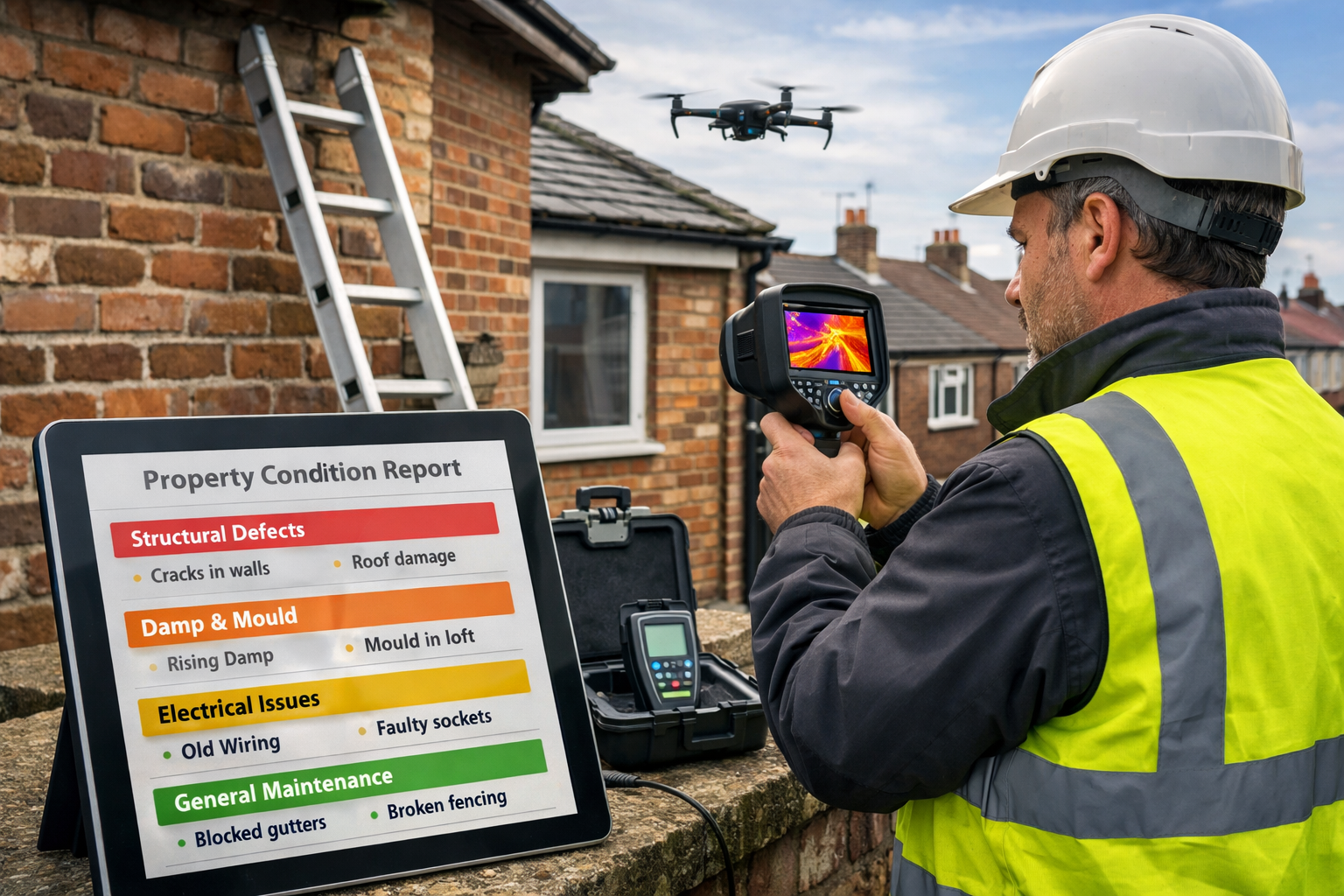
Technology will play a crucial role in managing increased demand without compromising quality. Forward-thinking surveying firms are already investing in:
Advanced Inspection Tools 🔧
- Thermal imaging cameras for detecting hidden defects
- Moisture meters and electronic detection equipment
- Drone surveys for roof and chimney inspections
- 3D scanning technology for accurate measurements
Digital Reporting Systems 📱
- Mobile apps for on-site data collection
- Cloud-based report generation platforms
- Automated defect categorization systems
- Client portals for report access and queries
Practice Management Software 💼
- Scheduling and resource allocation tools
- Client relationship management systems
- Financial tracking and invoicing automation
- Quality control and peer review workflows
Understanding how long a Level 2 survey takes under current conditions will help firms benchmark efficiency improvements as they adopt new technologies.
Building Client Education and Communication Strategies
The reformed system will require significant client education. Sellers accustomed to listing properties without formal assessments will need guidance on:
- Why pre-listing surveys benefit them (faster sales, fewer fall-throughs, realistic pricing)
- What the assessment process involves (inspection duration, access requirements, costs)
- How to interpret survey findings (understanding defect categories and implications)
- What actions to take before listing (whether to address defects or price accordingly)
Surveyors should develop clear communication materials, including:
- Explanatory videos and infographics
- FAQ documents addressing common concerns
- Case studies demonstrating benefits
- Transparent pricing guides
Similarly, buyers will need education on how to use pre-listing surveys effectively. Even with upfront information, many buyers may still want their own independent assessment, particularly for higher-value properties. Understanding whether a homebuyers survey is worth it will remain relevant in the reformed landscape.
Implications for Valuation Timing and Property Transactions
The timing shift in Building Surveys and Property Condition Assessments: Navigating the Government's 2026 Homebuying Process Reforms has significant implications beyond the surveying profession itself. The entire property transaction ecosystem will need to adapt.
Impact on Property Pricing and Marketing
When sellers obtain comprehensive property condition assessments before listing, it fundamentally changes pricing dynamics:
Transparent Defect Disclosure 📊
Properties with known issues will need realistic pricing from the outset. The current practice of pricing optimistically and negotiating down after buyer surveys reveal problems will become less viable.
Reduced Post-Offer Renegotiation 💷
With condition information available upfront, buyers and sellers can agree on prices that already account for necessary repairs, reducing the likelihood of renegotiation or transaction collapse.
Faster Transaction Times ⚡
Removing the post-offer survey stage could significantly accelerate transactions, potentially reducing the average completion time from 3-6 months to 2-3 months.
Market Efficiency 📈
Transparent information should lead to more efficient price discovery, with properties selling closer to their true market value accounting for condition.
The Role of Independent Buyer Surveys
An important question emerges: if sellers provide pre-listing assessments, will buyers still commission their own surveys? The answer is likely nuanced:
High-Value Properties: Buyers of expensive properties will probably still want independent verification, particularly for structural concerns.
Older Buildings: Properties with complex histories or unusual construction may warrant additional scrutiny beyond standard pre-listing assessments.
Buyer Peace of Mind: Some buyers will simply prefer their own independent assessment, regardless of seller-provided information.
Lender Requirements: Mortgage lenders may still require their own valuations and condition assessments for lending purposes.
Surveyors should therefore prepare for a dual-track market: pre-listing assessments for sellers and supplementary independent surveys for cautious buyers. Understanding the differences between Level 2 and Level 3 surveys will help professionals guide clients toward appropriate assessment levels.
New Build Properties and Reform Implications
The reforms may have particular implications for new build properties. Currently, many buyers question whether they need a survey on a new build, often relying on NHBC warranties and builder guarantees.
Under reformed regulations, developers might be required to provide comprehensive condition assessments even for newly constructed properties. This could include:
- Pre-completion snagging reports
- Documentation of building regulation compliance
- Warranty and guarantee information
- Details of materials and construction methods
This increased transparency could benefit buyers while potentially increasing development costs and timelines.
Preparing for Regulatory and Professional Standards Changes
As Building Surveys and Property Condition Assessments: Navigating the Government's 2026 Homebuying Process Reforms progress from consultation to implementation, regulatory frameworks will need updating.
RICS Standards and Guidance Updates
The Royal Institution of Chartered Surveyors will play a central role in developing professional standards for pre-listing assessments. Expected developments include:
Updated Practice Statements 📋
- Specific guidance on pre-listing survey scope and methodology
- Standardized reporting formats and defect categorization
- Professional conduct requirements for pre-listing work
- Liability and insurance considerations
Quality Assurance Frameworks ✅
- Peer review mechanisms to maintain standards
- Continuing professional development requirements
- Complaint and dispute resolution procedures
- Monitoring and enforcement protocols
Client Care Standards 🤝
- Clear terms of engagement templates
- Transparent fee structures and scope definitions
- Conflict of interest management
- Data protection and confidentiality requirements
Surveyors should stay closely connected to RICS communications and participate in consultation processes as standards evolve. Understanding what chartered surveyors do in their broader professional context will help practitioners navigate these changes.
Insurance and Liability Considerations
The shift to pre-listing assessments introduces new liability questions:
Who relies on the report? Under current arrangements, surveyors owe duties to the client who commissioned the survey. With seller-commissioned reports used by multiple potential buyers, liability frameworks become more complex.
Duration of liability: How long does a pre-listing survey remain valid? Properties may be on the market for weeks or months, during which time conditions could change.
Standard of care: Will pre-listing assessments require the same depth of investigation as buyer-commissioned surveys, or will a different standard apply?
Professional indemnity insurance: Insurers will need to develop products that appropriately cover the new risk profile of pre-listing work.
These questions will require careful consideration during the implementation period, with input from legal experts, insurance providers, and professional bodies.
Practical Action Steps for Surveyors and Property Professionals
While awaiting official implementation details, proactive property professionals can take concrete steps to position themselves for success:
Immediate Actions (Next 6 Months)
-
Monitor Government Announcements 📢
- Subscribe to RICS updates on homebuying reform
- Follow Ministry of Housing communications
- Join professional forums discussing the reforms
-
Assess Current Capacity 📊
- Evaluate existing surveyor workforce and capabilities
- Identify potential capacity constraints
- Calculate potential demand increases in your service area
-
Review Technology Infrastructure 💻
- Audit current inspection and reporting tools
- Research available technology solutions
- Budget for potential technology investments
-
Engage with Industry Consultation 🗣️
- Participate in RICS working groups if available
- Provide feedback on proposed standards
- Share practical insights from current practice
Medium-Term Preparation (6-18 Months)
-
Develop Prototype Products 🛠️
- Create draft pre-listing assessment templates
- Test standardized reporting formats
- Gather client feedback on prototype reports
-
Invest in Training 📚
- Upskill existing staff on efficiency techniques
- Recruit additional qualified surveyors
- Develop internal quality assurance processes
-
Build Strategic Partnerships 🤝
- Connect with estate agents and conveyancers
- Explore technology platform integrations
- Establish referral networks
-
Refine Business Models 💼
- Develop pricing strategies for pre-listing work
- Create service packages for different property types
- Plan marketing approaches for new services
Long-Term Strategic Planning (18+ Months)
-
Scale Operations 📈
- Expand workforce to meet anticipated demand
- Open additional offices in underserved areas
- Develop specialization areas (period properties, new builds, etc.)
-
Lead Industry Standards 🏆
- Contribute to best practice development
- Share case studies and learning
- Build reputation as reform-ready practice
-
Educate the Market 🎓
- Create client education resources
- Host seminars for sellers and buyers
- Publish thought leadership content
-
Monitor and Adapt 🔄
- Track implementation progress
- Adjust strategies based on actual regulations
- Continuously improve processes and services
Understanding the ultimate house survey checklist provides a foundation for developing comprehensive pre-listing assessment protocols.
Addressing Common Concerns and Questions
As the industry navigates Building Surveys and Property Condition Assessments: Navigating the Government's 2026 Homebuying Process Reforms, several common questions emerge:
Will pre-listing surveys increase property transaction costs?
Initially, yes—sellers will bear upfront costs they previously avoided. However, proponents argue that overall transaction costs may decrease due to:
- Fewer failed transactions (reducing wasted legal and survey fees)
- Faster completion times (reducing bridging finance costs)
- More efficient price negotiation (reducing time costs for all parties)
The question of how much a home report costs will become even more relevant as sellers budget for pre-listing requirements.
What happens if a seller's property doesn't sell quickly?
Survey validity periods will need clear definition. Properties remaining unsold for extended periods may require updated assessments, particularly if:
- Significant time has elapsed (potentially 6-12 months)
- Seasonal changes could affect condition (e.g., winter damp issues)
- New defects have emerged
- Repairs have been undertaken
How will this affect properties in poor condition?
Transparent disclosure may actually benefit these properties by:
- Attracting renovation buyers who appreciate honest information
- Enabling realistic pricing from the outset
- Reducing time wasted with buyers who would ultimately withdraw
- Creating opportunities for "sold as seen" transactions with appropriate discounts
Will all properties require the same level of assessment?
Likely not. A proportionate approach might emerge with:
- Standard assessments for typical residential properties
- Enhanced assessments for older, listed, or complex buildings
- Simplified assessments for modern apartments in good condition
- Specialized assessments for unique property types
The distinction between Level 2 and Level 3 surveys may inform tiered pre-listing assessment requirements.
International Perspectives and Lessons
The UK is not the first jurisdiction to consider upfront property information requirements. Examining international examples provides valuable insights:
Scotland's Home Report System
Scotland implemented mandatory Home Reports in 2008, requiring sellers to provide:
- A Single Survey (property condition report)
- An Energy Performance Certificate
- A Property Questionnaire
Key lessons from the Scottish experience:
✅ Reduced fall-through rates: Transactions became more reliable with upfront information
⚠️ Initial capacity challenges: The surveying profession needed time to scale up
📊 Market adaptation: Buyers and sellers adjusted to the new normal within 2-3 years
💷 Cost considerations: Sellers absorbed upfront costs but benefited from faster sales
Understanding survey home report insights can help English and Welsh professionals learn from the Scottish model.
Other European Approaches
Several European countries have various forms of mandatory disclosure:
- France: Requires multiple diagnostic reports (asbestos, lead, termites, energy performance)
- Netherlands: Energy labels mandatory; structural surveys common but not required
- Denmark: Mandatory condition reports for properties over 10 years old
These diverse approaches demonstrate that no single model dominates, and the UK will need to develop solutions suited to its specific market characteristics.
The Broader Context: Why Reform Matters
Building Surveys and Property Condition Assessments: Navigating the Government's 2026 Homebuying Process Reforms exists within a broader policy context aimed at fixing England and Wales' notoriously slow and uncertain property transaction process.
The Problem: Transaction Fall-Throughs
Current statistics paint a concerning picture:
- Approximately one-third of property transactions fall through after offers are accepted
- The average transaction takes 3-6 months from offer to completion
- Hidden defects discovered during surveys are a leading cause of renegotiation and withdrawal
- Transaction failures cost buyers, sellers, and the economy hundreds of millions annually
The Vision: A More Efficient Market
Government reforms aim to create a property market characterized by:
🎯 Transparency: Buyers make informed decisions based on comprehensive information
⚡ Speed: Transactions complete faster with fewer unexpected obstacles
🤝 Certainty: Agreed sales proceed to completion more reliably
💷 Efficiency: Reduced wasted costs from failed transactions
📈 Confidence: Increased trust in the homebuying process
These goals align with broader economic objectives of improving housing market efficiency and supporting homeownership accessibility.
Conclusion: Embracing Change and Preparing for Success
The journey toward Building Surveys and Property Condition Assessments: Navigating the Government's 2026 Homebuying Process Reforms represents a pivotal moment for the UK property industry. While uncertainty remains about specific implementation timelines and requirements, the direction of travel is clear: toward greater transparency, upfront information, and more efficient transactions.
For chartered surveyors and building professionals, this transformation presents significant opportunities alongside notable challenges. Those who prepare proactively—investing in capacity, technology, and standards development—will be best positioned to thrive in the reformed market.
Your Action Plan
If you're a building surveyor or surveying firm:
- ✅ Stay informed through RICS communications and industry forums
- ✅ Begin capacity planning and workforce development now
- ✅ Invest in technology that improves efficiency and quality
- ✅ Develop prototype pre-listing assessment products
- ✅ Build partnerships with estate agents and conveyancers
- ✅ Participate in consultation processes and standards development
If you're a property buyer or seller:
- ✅ Monitor reform announcements to understand how they'll affect your transaction
- ✅ Consider commissioning comprehensive surveys regardless of current requirements
- ✅ Work with professionals who demonstrate readiness for the reformed system
- ✅ Embrace transparency as beneficial for all parties
If you're a property professional (agent, conveyancer, etc.):
- ✅ Educate yourself on proposed reforms and their implications
- ✅ Build relationships with surveyors preparing for the new system
- ✅ Develop client communication strategies for the transition period
- ✅ Adapt your processes to accommodate upfront property information
The proposed reforms to building surveys and property condition assessments represent more than just procedural changes—they signal a fundamental reimagining of how property transactions should work. While the 24-month implementation period requested by RICS acknowledges the scale of preparation required, this time should be viewed as an opportunity rather than merely a challenge.
By understanding the reforms, preparing strategically, and embracing the shift toward transparency and efficiency, property professionals can help create a homebuying system that better serves everyone involved. The future of property transactions is being shaped now, and those who engage proactively with Building Surveys and Property Condition Assessments: Navigating the Government's 2026 Homebuying Process Reforms will lead the industry into this new era.
For professional guidance on building surveys and property assessments, consult with qualified chartered surveyors who understand both current best practices and emerging regulatory requirements. The investment in expert advice today will pay dividends as the reformed system takes shape.
References
[1] Home Buying And Selling Reform Hub – https://www.rics.org/news-insights/current-topics-campaigns/home-buying-and-selling-reform-hub
