
Nearly 60% of compliance leaders now rank skills gaps as their single greatest barrier to meeting new regulatory demands — and for surveyors, that gap has never been wider or more consequential. [5] The profession faces a convergence of pressures: mandatory AI governance standards, accelerating retrofit programmes, and digital reporting obligations that did not exist five years ago. Mastering surveyor skills for 2026 regulatory compliance: training in AI, retrofit, and digital reporting essentials is no longer a career differentiator. It is a baseline requirement.
This article maps the specific competencies surveyors must develop, the training pathways available, and the hiring trends reshaping the profession in 2026.
Key Takeaways
- RICS made AI governance a mandatory professional standard in early 2026, requiring all regulated firms using AI to maintain an AI register, policy, and risk register.
- Surveyors remain personally liable for AI-assisted outputs — human review and professional judgment cannot be delegated to an algorithm.
- Retrofit assessment skills are in critical demand as the UK pushes toward net-zero targets, creating a measurable shortage of qualified practitioners.
- Digital reporting — including BIM, GIS, drone data, and cloud-based dashboards — has shifted from optional proficiency to core competency.
- CPD programmes, micro-credentials, and structured in-house training are the primary upskilling routes for practitioners navigating these changes.
The Regulatory Landscape Driving New Surveyor Competencies in 2026
The rules governing surveying practice changed significantly at the start of 2026. RICS brought its first global AI standard for surveyors into effect as a mandatory professional standard, applying to all regulated firms and members who deploy AI in any surveying service. [10] At the same time, the EU AI Act began imposing risk-based obligations on high-impact AI systems, and UK data-protection rules continued to evolve around automated decision-making. [3] [4]
For surveyors, this is not abstract policy. It translates directly into day-to-day practice obligations.
Three regulatory forces are reshaping the competency map:
- AI governance mandates — firms must document, classify, and audit every AI tool that materially affects service delivery.
- Building safety and retrofit requirements — energy performance and structural compliance assessments demand specialist knowledge that traditional training did not cover.
- Digital documentation standards — clients, lenders, and regulators now expect structured electronic reports, not handwritten notes or unformatted PDFs.
Understanding the full scope of these obligations is the starting point for any CPD strategy. Surveyors working across building survey disciplines will recognise that the technical inspection skills they already hold must now sit alongside governance and digital literacy competencies.
AI Governance: The Six Core Obligations Every Surveyor Must Understand
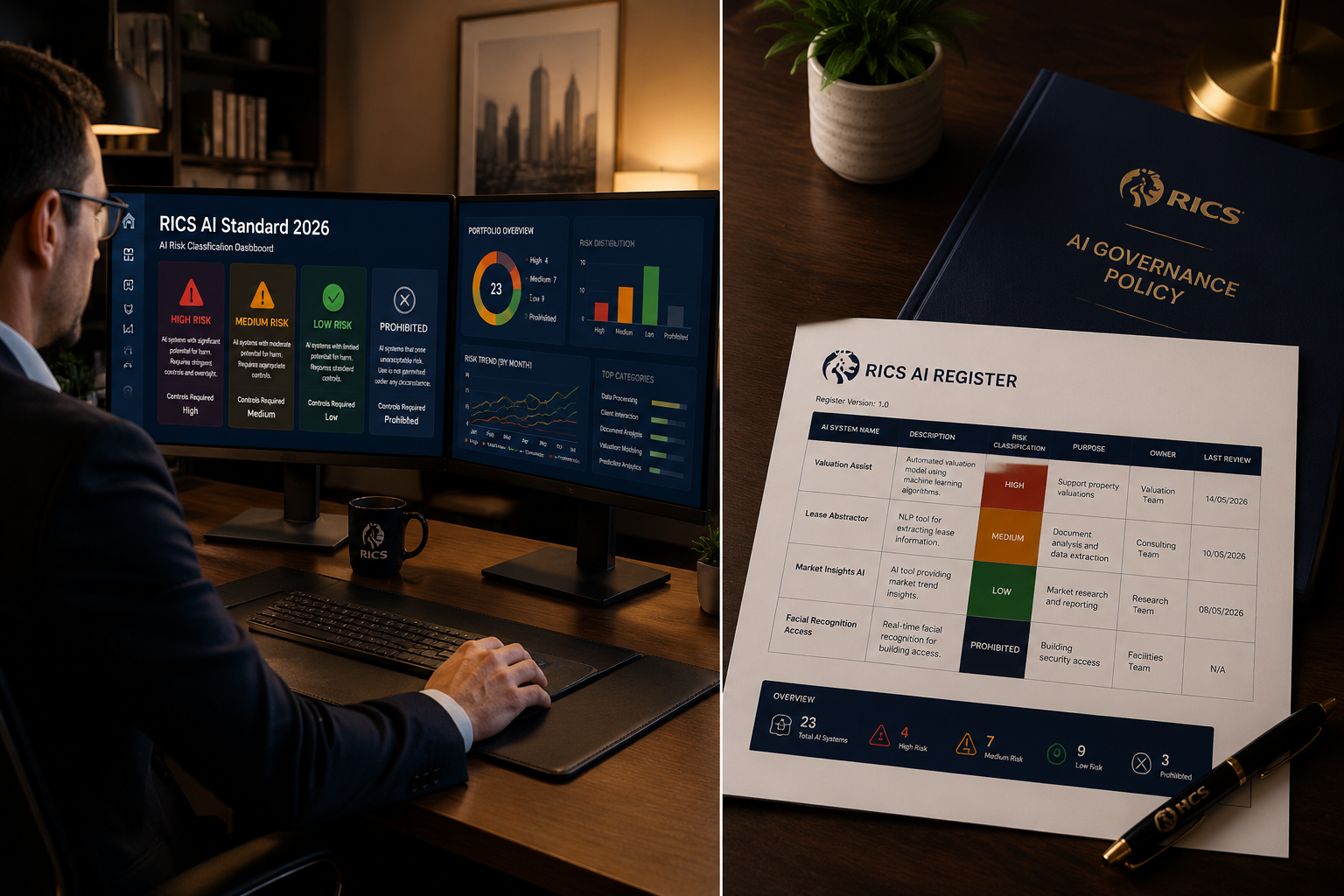
The RICS "Responsible AI" Professional Standard is the most significant regulatory development for the profession in 2026. Expert guidance on implementing the standard outlines six core obligations that every practitioner and firm must address. [2]
Maintain an AI Inventory
Firms must keep a live register of every AI tool in use. This includes off-the-shelf valuation platforms, automated report-drafting tools, drone-data analysis software, and any third-party system that influences a professional output. The register must be maintained and reviewed regularly — not created once and filed away.
Classify AI Systems by Risk Level
Each AI system must be assigned a risk classification: high, medium, low, or prohibited. [2] [3] The classification determines the level of human oversight required. A tool that auto-generates a valuation figure sits in a different risk category from one that simply formats a report template.
| Risk Level | Example Use Case | Required Control |
|---|---|---|
| High | AI-generated valuations or structural risk scores | Mandatory human review before use |
| Medium | Automated defect detection from drone imagery | Verification against site observations |
| Low | Spelling/grammar checking in reports | Standard quality review |
| Prohibited | Fully autonomous client-facing decisions | Not permitted under RICS standard |
Perform Human Review of AI Outputs
AI does not remove professional liability. Surveyors remain personally responsible for every output that carries their name or their firm's credentials, regardless of whether an AI tool contributed to it. [2] This means that human-in-the-loop review is not optional — it is a mandatory control wherever AI has a material impact on service delivery.
Conduct Supplier Due Diligence
Before procuring any third-party AI tool, firms must request written information on accuracy rates, data usage policies, security controls, and bias mitigation measures. [2] [4] This due diligence must be documented. Surveyors who simply adopt a tool because it is popular, without formal evaluation, are exposed to both regulatory and liability risk.
Maintain an AI Policy and Risk Register
Two governance documents are now mandatory artifacts for any firm using AI: an AI policy (setting out how AI will and will not be used) and an AI risk register (tracking identified risks, controls, and review dates). [2] These are not bureaucratic formalities. Regulators and professional indemnity insurers are increasingly asking to see them.
Provide Training for All Relevant Staff
The standard requires that all staff who interact with AI tools have a baseline working knowledge of AI types, limitations, bias risks, data risks, and failure modes. Annual refresher training is recommended as a minimum. [2] [10] This obligation applies to support staff who use AI-assisted tools, not only to senior surveyors.
"The surveyor's professional judgment is the final control. No AI standard, however well-designed, changes the fundamental accountability of the practitioner." [2]
Retrofit Assessment Skills: Meeting the Net-Zero Skills Shortage
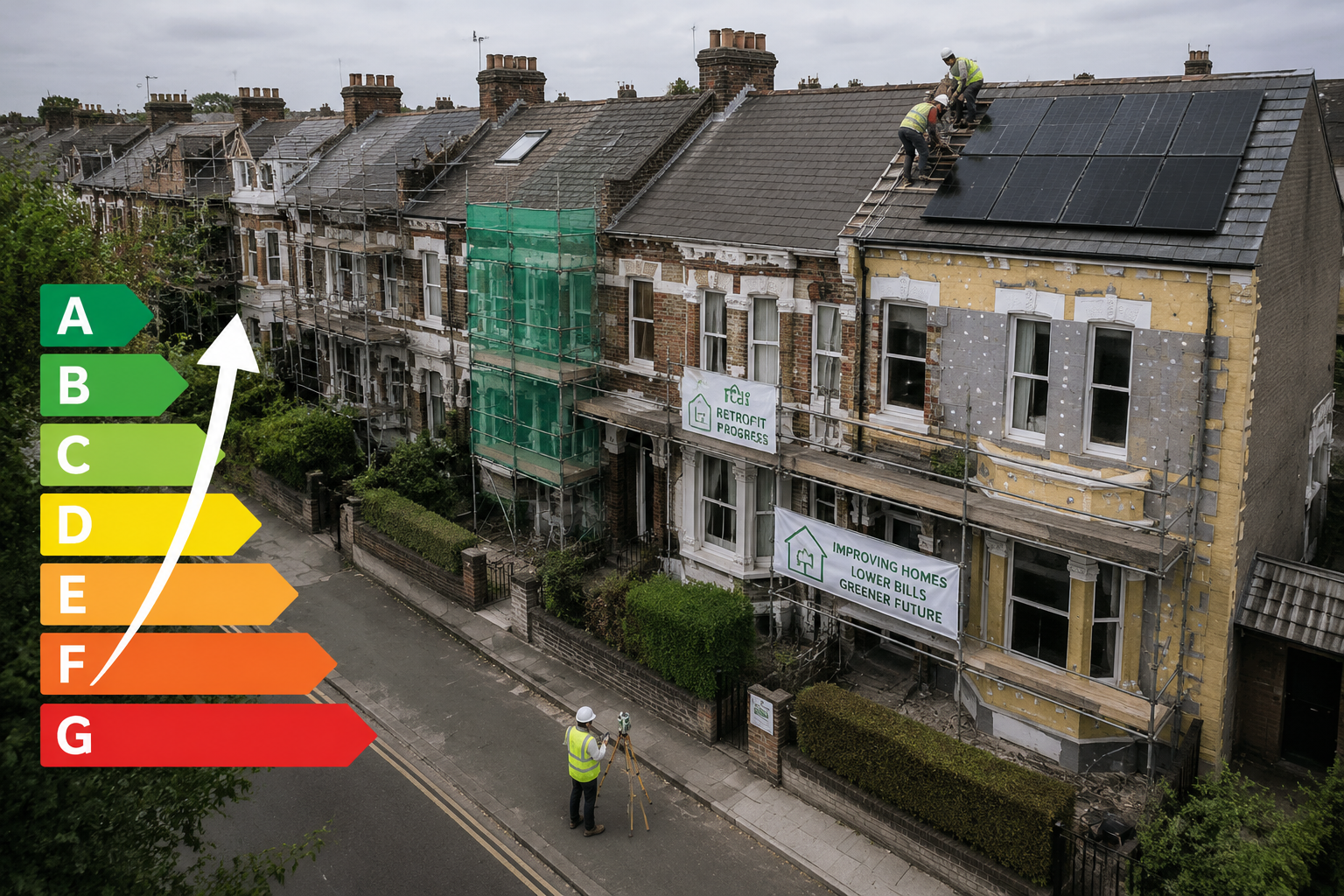
Retrofit is the other major skills frontier for surveyors in 2026. The UK's commitment to net-zero by 2050 requires the decarbonisation of approximately 29 million existing homes, the vast majority of which predate modern energy standards. Surveyors are positioned at the centre of this effort — but the profession is facing a measurable shortage of practitioners with the specialist knowledge to deliver compliant retrofit assessments.
What Retrofit Competency Requires
Retrofit assessment is not simply an extension of a standard building survey. It demands a distinct skill set:
- Fabric-first analysis — understanding how insulation, air-tightness, and thermal bridging interact in older building types
- EPC and SAP methodology — interpreting and challenging energy performance calculations
- Moisture and condensation risk — recognising how retrofit measures can create unintended consequences such as interstitial condensation
- Heritage and planning constraints — advising on permitted development limits for listed buildings and conservation areas
- Whole-house retrofit planning — sequencing measures correctly to avoid locking in inefficiencies
Surveyors conducting Level 3 building surveys on older properties are increasingly expected to comment on retrofit potential and risk, even when a full retrofit assessment is not the primary instruction. Clients buying pre-1919 properties, in particular, need guidance on what future compliance obligations may mean for their investment.
Training Pathways for Retrofit
Several structured routes are available for surveyors seeking to build retrofit competency:
- PAS 2035 Retrofit Assessor qualification — the nationally recognised standard for domestic retrofit assessment, delivered through ABBE and other awarding bodies
- RICS Sustainability and Residential modules — CPD courses covering EPC methodology, net-zero obligations, and green building standards
- Manufacturer and industry body training — practical courses on specific technologies such as heat pump systems, external wall insulation, and mechanical ventilation with heat recovery (MVHR)
For surveyors working on new build inspections, understanding the gap between design-stage energy ratings and as-built performance is equally important. The skills overlap between retrofit and new-build compliance is significant.
Solar Panel and Structural Considerations
Retrofit increasingly includes solar panel installation, which introduces structural loading questions that surveyors must be equipped to address. Roof condition, rafter sizing, and fixings all require assessment before panels are specified. Specialist solar panel roof engineer calculations form part of the growing suite of technical services that clients expect from a modern surveying practice.
Digital Reporting and Data Literacy: The New Core Competency
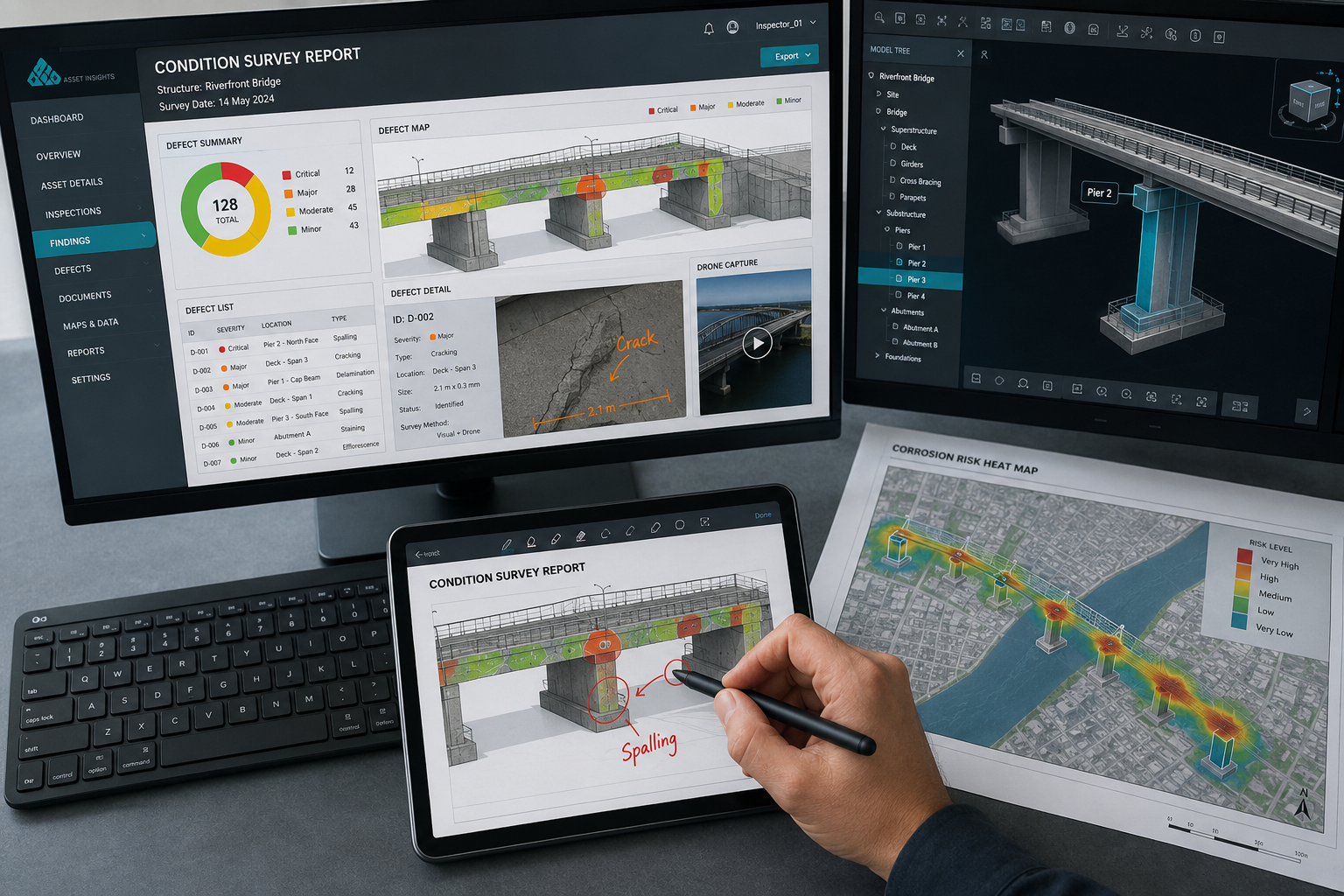
A skills analysis of the surveying profession identifies the ability to interpret, analyse, and communicate digital data as a primary future skill. [1] This is not simply about being comfortable with a laptop. It encompasses a range of technical and analytical capabilities that are now expected across all surveying disciplines.
Key Digital Tools Surveyors Must Master
| Tool/Technology | Primary Application | Regulatory Relevance |
|---|---|---|
| BIM (Building Information Modelling) | Structural and services documentation | Building Safety Act compliance |
| GIS (Geographic Information Systems) | Site analysis, flood risk, planning | Environmental and planning reports |
| Drone/UAV data capture | Roof and facade inspection | Health and safety, access constraints |
| Cloud-based reporting platforms | Standardised electronic reports | Client and lender requirements |
| Digital condition survey software | Defect logging and photographic records | Insurance and dilapidations evidence |
Why Digital Reporting Is Now Mandatory in Practice
Regulatory documentation demands in areas such as building safety, energy performance, and ESG reporting require structured, searchable, and auditable records. [1] A PDF scan of a handwritten schedule is no longer sufficient for many professional contexts. Lenders, institutional clients, and public-sector bodies increasingly specify the format and structure of survey reports they will accept.
For surveyors producing comprehensive condition survey reports, the shift to digital-first reporting means investing in software that supports standardised defect categorisation, photographic annotation, and export to multiple formats. The quality and clarity of the report is itself a compliance matter.
Data Literacy Beyond the Software
Owning a drone or subscribing to a BIM platform is not the same as being data-literate. Surveyors must be able to:
- Critically evaluate data quality — understanding the limitations of automated outputs and sensor data
- Identify bias in AI-generated analysis — particularly relevant when AI tools are used for valuation or risk scoring
- Communicate findings clearly — translating technical data into plain-language recommendations that clients can act on
- Maintain data security — understanding GDPR obligations when handling client property data in cloud systems [8]
These capabilities are increasingly assessed in RICS APC competency interviews and CPD audit reviews.
CPD Priorities and Hiring Trends for Surveyors in 2026
What Employers Are Looking For
The demand for multi-disciplinary surveyors — practitioners who combine traditional inspection skills with AI literacy, retrofit knowledge, and digital reporting capability — is outpacing supply. Firms are actively restructuring their hiring criteria to reflect the new regulatory environment.
Skills most in demand for surveying roles in 2026:
- AI governance knowledge (RICS AI standard compliance)
- PAS 2035 retrofit assessment qualification
- BIM Level 2 proficiency or above
- Experience with cloud-based survey reporting platforms
- Understanding of Building Safety Act obligations
- ESG and energy performance reporting capability
For those exploring the full range of surveyor specialisations, it is worth noting that the skills premium is highest for practitioners who can move across residential, commercial, and retrofit contexts without needing separate teams for each.
Structuring a CPD Plan for 2026 Compliance
RICS requires members to complete a minimum of 20 hours of CPD per year, with a proportion dedicated to mandatory competencies. In 2026, the following CPD priorities reflect the regulatory environment:
- AI governance and the RICS Responsible AI standard — minimum 3-4 hours, including supplier due-diligence and risk classification methodology
- Retrofit assessment and energy performance — minimum 4-6 hours, ideally leading to a formal qualification
- Digital tools and data literacy — minimum 3-4 hours, focused on tools directly used in practice
- Building safety and regulatory updates — minimum 2-3 hours, covering Building Safety Act developments
- Professional ethics and liability — minimum 2 hours, with specific reference to AI liability and data protection
Firms should document CPD completion as part of their AI policy and governance framework — training records are a governance artifact, not just a personal development log.
The Talent Shortage and What It Means for Practitioners
The skills shortage in surveying is significant and well-documented. Practitioners who invest in the competencies outlined above are positioned for stronger career progression, higher instruction volumes, and greater professional resilience. Firms that upskill existing staff rather than waiting to hire qualified candidates will gain a competitive advantage in a tight talent market.
Conclusion
The surveyor skills required for 2026 regulatory compliance span three interconnected domains: AI governance, retrofit assessment, and digital reporting. Each carries mandatory obligations — not aspirational targets — and each demands structured training rather than passive familiarity.
Actionable next steps for surveyors and firms:
- Audit current AI tool usage against the RICS Responsible AI standard. Create or update your AI register, policy, and risk register before your next professional indemnity renewal.
- Identify the retrofit qualification route most relevant to your practice area and enrol in a PAS 2035 or equivalent programme within the next quarter.
- Review your digital reporting capability against what institutional clients and lenders are now specifying. Invest in software that produces structured, auditable reports.
- Build a 2026 CPD plan that allocates hours explicitly to AI governance, retrofit, and digital literacy — not just general professional development.
- Engage with RICS guidance on supplier due diligence before procuring any new AI tool, and document the evaluation process.
For those looking to understand how these competencies apply to specific survey types, the RICS building surveys framework provides a useful reference point for aligning technical skills with professional standards. The profession is changing at pace. The surveyors who thrive will be those who treat regulatory compliance not as a constraint, but as the foundation of a more capable and trusted practice.
References
[1] Future Of The Surveying Profession Skills 2026 – https://goreport.com/future-of-the-surveying-profession-skills-2026/
[2] Watch – https://www.youtube.com/watch?v=xLjqcUZ4K7U
[3] Watch – https://www.youtube.com/watch?v=gnakOvt0FQk
[4] Top 7 Industries With Stringent Ai Compliance Needs In 2026 – https://www.glean.com/perspectives/top-7-industries-with-stringent-ai-compliance-needs-in-2026
[5] Future Compliance 2026 Survey Report – https://www.ncontracts.com/future-compliance-2026-survey-report
[8] 2026 Data Privacy Landscape Strategic Roadmap – https://trustarc.com/resource/2026-data-privacy-landscape-strategic-roadmap/
[10] Rics Brings First Global Ai Standard For Surveyors Into Effect – https://www.associationexecutives.org/resource/rics-brings-first-global-ai-standard-for-surveyors-into-effect.html
