
Net residential sales are running approximately 4.5% below the same period last year, and industry data consistently points to one culprit above all others: late-stage transaction collapses triggered by undisclosed defects. In a market where buyers are scrutinising every line of a survey report before committing, fall-through risk mitigation via pre-exchange building surveys has moved from a sensible precaution to a strategic necessity. Level 3 protocols for 2026's cautious buyer market represent the most robust tool available to buyers, sellers, and their advisers for building the transaction certainty that today's conditions demand.
Key Takeaways
- Over 20% of buyers who commissioned a Level 3 survey in 2026 identified defects serious enough to have caused a transaction failure if left undiscovered [1]
- The 2026 extensions of Awaab's Law have made rigorous building survey protocols a compliance requirement for high-risk properties, not merely best practice [2]
- Third-party inspections became legally mandated in certain transaction contexts from May 2026, reinforcing the independent value of a RICS-regulated Level 3 survey [3]
- RICS AI Standards effective March 2026 have introduced compliance checklists that improve defect detection accuracy and reduce the risk of overlooked issues [6]
- A structured defect-flagging checklist drawn from a Level 3 report gives buyers documented renegotiation leverage before exchange, reducing costly post-completion disputes
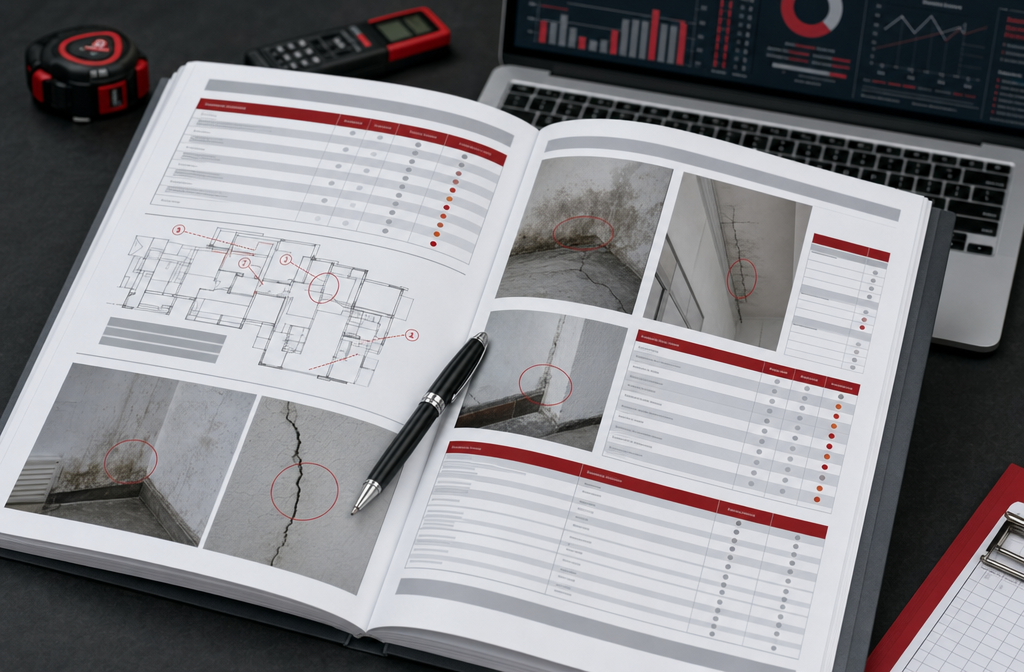
Why 2026's Market Conditions Make Fall-Through Prevention Critical
The phrase "cautious buyer market" is not marketing language. It reflects a measurable shift in buyer behaviour driven by elevated mortgage rates, tighter lending criteria, and a post-pandemic recalibration of property values. When net sales volumes decline, the deals that do proceed carry disproportionate weight for every party involved. A fall-through at the point of exchange costs the average buyer between £2,500 and £3,000 in wasted legal and survey fees alone, to say nothing of the emotional cost and the time lost in a competitive search.
The core problem is information asymmetry. Sellers know the history of a property; buyers do not. A Level 2 homebuyer report provides a useful snapshot, but it stops short of the forensic depth required for older, larger, or structurally complex properties. For those assets, fall-through risk mitigation via pre-exchange building surveys at Level 3 is the only approach that systematically closes the information gap before legal commitment is made.
The updated AHIC 2026 Risk Rating framework has reinforced this view by shifting professional assessment guidance toward a risk-based model [4]. Under this model, the depth of inspection should be proportionate to the risk profile of the asset — and in a market where buyers are withdrawing at higher rates, almost every property now carries elevated transaction risk.
The Cost of Getting It Wrong
Consider the sequence of events when a significant defect surfaces after exchange. The buyer has no legal recourse unless misrepresentation can be proven. Remediation costs for structural movement, penetrating damp, or failed roof structures routinely run into tens of thousands of pounds. In the most serious cases, lenders have withdrawn mortgage offers on the basis of post-exchange survey findings, triggering forced rescissions and legal disputes that can take years to resolve.
For sellers, the picture is equally stark. A fall-through after months of negotiation resets the clock entirely, often at a lower asking price as the property becomes stigmatised in the local market. Commissioning a pre-sale Level 3 survey — or facilitating buyer access to one early in the process — has been shown to accelerate completion timelines by reducing the likelihood of late-stage renegotiation or withdrawal.
Understanding Level 3 Protocols: What the 2026 Standards Require
A Level 3 building survey is the most comprehensive residential inspection available under the RICS classification system. It covers the full construction of the property, all accessible elements of the structure, and provides detailed condition ratings with specific advice on repairs, maintenance priorities, and risk implications. For a thorough grounding in what this involves, the complete guide to Level 3 home surveys sets out the scope in accessible terms.
In 2026, the Level 3 protocol has been materially enhanced by two regulatory developments.
Awaab's Law 2026 Extensions
Originally enacted to address hazardous conditions in social housing, Awaab's Law has been extended to cover a broader range of high-risk property types. The 2026 provisions require that surveys of qualifying properties include detailed assessments of structural collapse risks, damp penetration pathways, and fall hazards including stair geometry and bathroom safety [2][5]. For buyers of pre-1980 properties, converted flats, or any dwelling with a known history of remedial works, these requirements effectively make a Level 3 survey the baseline for legal compliance, not just professional best practice.
RICS AI Standards (March 2026)
The RICS introduced mandatory compliance checklists for Level 3 survey firms in March 2026, governing the use of AI-assisted defect detection tools [6]. These standards require surveyors to document how AI tools have been used, validated, and cross-checked against physical inspection findings. The practical effect is a higher floor of accuracy across the profession, with fewer defects slipping through due to human oversight alone.
The Level 3 vs Level 2 Decision
Not every property warrants a Level 3 survey, and understanding the distinction is important for cost-effective risk management. A comparison of Level 2 and Level 3 surveys makes clear that the key decision factors are property age, construction type, visible condition, and the buyer's intended use. As a general rule, any property built before 1950, any property with non-standard construction, or any property where visible defects are present at viewing should be assessed at Level 3.
"Over 20% of buyers who opted for Level 3 surveys in 2026 identified defects that could have led to transaction failures if undiscovered." [1]
This statistic is significant. It means that for roughly one in five Level 3 surveys commissioned, the report delivered actionable intelligence that changed the trajectory of the transaction — either through renegotiation, remediation, or informed withdrawal.
Fall-Through Risk Mitigation via Pre-Exchange Building Surveys: Level 3 Protocols for 2026's Cautious Buyer Market — A Practical Defect-Flagging Checklist
The value of a Level 3 survey is only fully realised when the buyer and their adviser know how to act on it. The following checklist is drawn from the core scope of a Level 3 inspection and is structured to support both defect prioritisation and renegotiation strategy.
Structural Elements
| Element | What to Look For | Risk Level |
|---|---|---|
| Foundations | Settlement cracks, differential movement, subsidence indicators | High |
| Load-bearing walls | Bulging, leaning, horizontal cracking at mortar joints | High |
| Roof structure | Sagging ridgeline, rafter spread, damaged purlins | High |
| Floors | Excessive deflection, rot in timber joists, concrete carbonation | Medium-High |
| Chimneys | Leaning stacks, failed flaunching, spalled brickwork | Medium |
Fabric and Envelope
- Damp penetration: Rising damp at ground floor level, penetrating damp at parapets and window reveals, condensation risk in poorly ventilated roof voids
- Roof coverings: Missing or slipped tiles, failed flat roof membranes, blocked or defective guttering and downpipes — a specialist roof survey may be warranted for complex roof forms
- External walls: Spalled brickwork, failed pointing, cracked render, cavity wall tie corrosion in properties built between 1920 and 1980
- Windows and doors: Failed double-glazing seals, rotting timber frames, inadequate draught-proofing
Services and Compliance
- Electrical installation: Age of consumer unit, evidence of unregistered works, aluminium wiring in properties built in the 1960s and 1970s
- Heating and hot water: Boiler age and condition, pipe insulation, evidence of leaks at radiator connections
- Drainage: Evidence of blocked or collapsed drains, shared drainage arrangements, proximity of trees to drainage runs
Hazard Assessments Under 2026 Protocols
Under the expanded Awaab's Law provisions, Level 3 surveys conducted in 2026 must now specifically assess [5]:
- Stair geometry and handrail adequacy
- Bathroom slip and fall hazards
- Window fall prevention (particularly in upper-floor rooms)
- Mould and condensation risk pathways
Third-party inspections, now legally mandated in certain transaction contexts from May 2026, add an additional layer of independent verification to these findings [3].
Using the Survey for Renegotiation
A well-documented Level 3 report provides structured renegotiation leverage. The process works as follows:
- Categorise defects by urgency: immediate safety risk, required within 12 months, required within five years, and ongoing maintenance
- Obtain remediation quotes for Category 1 and Category 2 items from qualified contractors before approaching the seller
- Present a costed schedule to the seller or their agent, requesting either a price reduction equivalent to the remediation cost or a retention held by solicitors until works are completed
- Document everything in writing through solicitors to create a clear paper trail
This approach transforms the survey report from a source of anxiety into a negotiating instrument. For buyers who want to understand the full scope of what a structural report covers before commissioning one, reviewing a full structural survey example is a useful preparatory step.
Integrating Level 3 Surveys Into the Pre-Exchange Timeline
Timing is everything in a property transaction. A survey commissioned too late in the process leaves insufficient time to act on findings before exchange pressure builds. The following timeline represents best practice for 2026's market conditions.
Week 1-2 after offer acceptance: Instruct solicitors and commission the Level 3 survey simultaneously. Do not wait for searches to return before booking the survey — the two processes can run in parallel.
Week 2-3: Survey inspection takes place. Understanding how long house surveys take helps buyers set realistic expectations — a Level 3 inspection of a large or complex property can take a full day on site, with the written report typically delivered within five to seven working days.
Week 3-5: Review the report with a qualified surveyor. Many firms offer a follow-up call to walk through findings. Use this time to identify which defects require specialist investigation — for example, a structural survey referral for suspected foundation movement, or a specialist drainage CCTV survey if the main report flags drainage concerns.
Week 5-7: Complete renegotiation or remediation discussions before exchange is formally proposed by solicitors.
This timeline allows the survey findings to be fully integrated into the legal process without creating artificial urgency. Buyers who compress this timeline — particularly by delaying the survey instruction — are the most likely to face the binary choice of proceeding blind or withdrawing entirely.
The Role of Drone and Specialist Surveys
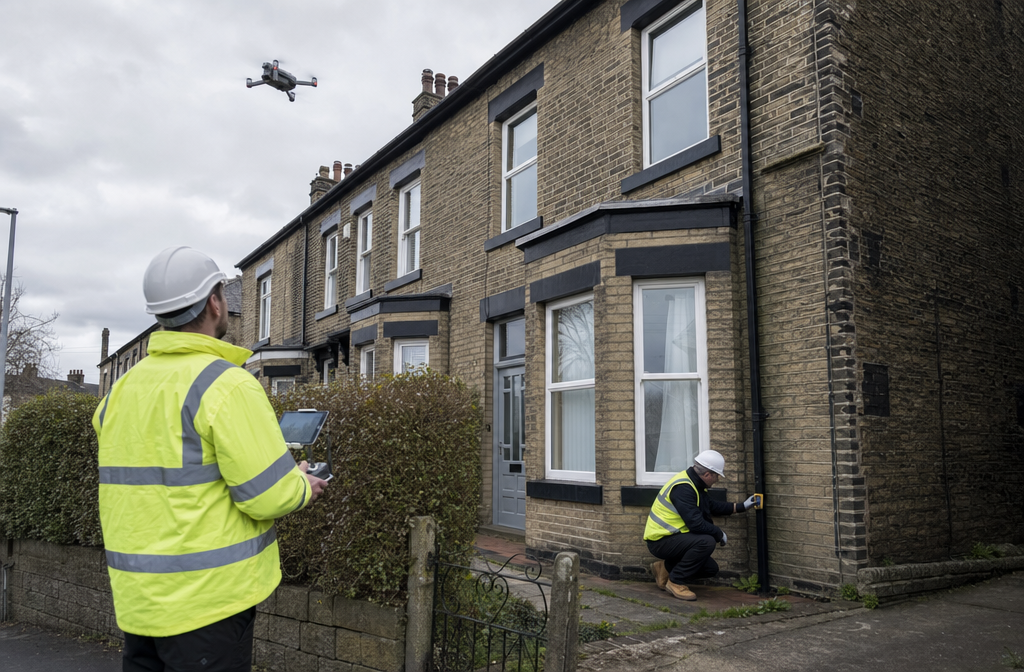
For properties with complex rooflines, large sites, or difficult access, drone surveys have become an increasingly standard supplement to the Level 3 inspection. Drone technology allows surveyors to assess ridge tiles, chimney stacks, flat roof surfaces, and parapet walls without the cost and delay of erecting scaffolding. The imagery produced also provides a permanent photographic record that supports any subsequent insurance or warranty claim.
Fall-Through Risk Mitigation via Pre-Exchange Building Surveys: Level 3 Protocols for 2026's Cautious Buyer Market — Seller-Side Considerations
Fall-through prevention is not solely a buyer-side concern. Sellers who understand the dynamics of the current market can take proactive steps to reduce the risk of a transaction collapsing after their property has been taken off the market.
Pre-marketing surveys: Commissioning a Level 3 survey before listing removes the element of surprise. Sellers who can present a clean or fully remediated survey report to prospective buyers create a significantly stronger basis for achieving and holding the asking price.
Transparent disclosure: Where defects exist, early disclosure — supported by contractor quotes and, where works have been completed, building regulations certificates — is consistently more effective than hoping a buyer's surveyor will not identify the issue. Buyers who discover defects through their own survey, rather than through seller disclosure, are more likely to withdraw or demand larger price reductions.
Pricing strategy: A property priced to reflect its surveyed condition attracts buyers who have done their research and are committed to proceeding. Overpriced properties with concealed defects are disproportionately represented in fall-through statistics.
For buyers and sellers alike, understanding the full house survey checklist — what a thorough inspection covers and what it does not — is a foundation for realistic expectations. The ultimate house survey checklist provides a structured reference for both sides of the transaction.

Conclusion: Actionable Next Steps for Buyers and Sellers in 2026
The data is unambiguous. In a market where net sales volumes are down and buyer caution is high, fall-through risk mitigation via pre-exchange building surveys at Level 3 is the single most effective intervention available. The 2026 regulatory environment — shaped by Awaab's Law extensions, RICS AI Standards, and mandatory third-party inspection requirements — has raised both the floor of survey quality and the consequences of inadequate assessment.
For buyers, the actionable steps are:
- Commission a Level 3 survey immediately after offer acceptance, not after searches return
- Use the defect-flagging checklist above to categorise findings and prepare a costed renegotiation schedule
- Supplement the main survey with specialist inspections (structural, drainage, roof) where the report flags concerns
- Allow five to seven weeks between survey instruction and exchange to act on findings properly
For sellers, the actionable steps are:
- Consider a pre-marketing Level 3 survey to identify and address defects before they become a buyer's renegotiation tool
- Disclose known defects early, with supporting documentation, to build buyer confidence
- Price the property to reflect its surveyed condition, reducing the risk of a post-survey withdrawal
The cautious buyer market of 2026 rewards preparation and transparency. A Level 3 building survey, properly commissioned and intelligently acted upon, does not just protect against fall-throughs — it creates the foundation of trust on which successful transactions are built.
References
[1] Choosing Between Level 2 And Level 3 Building Surveys In 2026 A Decision Guide For Buyers – https://kingstonsurveyors.com/choosing-between-level-2-and-level-3-building-surveys-in-2026-a-decision-guide-for-buyers/?utm_source=openai
[2] Building Survey Protocols For Structural Collapse Risks Awaabs Law 2026 Extensions And High Risk Property Assessments – https://nottinghillsurveyors.com/blog/building-survey-protocols-for-structural-collapse-risks-awaabs-law-2026-extensions-and-high-risk-property-assessments?utm_source=openai
[3] Third Party Inspection Requirements Process And Penalties – https://legalclarity.org/third-party-inspection-requirements-process-and-penalties/?utm_source=openai
[4] Executive Summary 2026 Risk R – https://www.ahic.org/executive_summary_2026_risk_r.php?utm_source=openai
[5] Building Surveys For Bath Stair And Fall Hazards Under Awaabs Law 2026 Level 3 Protocols For Rental Property Compliance – https://wimbledonsurveyors.com/building-surveys-for-bath-stair-and-fall-hazards-under-awaabs-law-2026-level-3-protocols-for-rental-property-compliance/?utm_source=openai
[6] Valuation Impacts Of Rics Ai Standards On Level 3 Building Surveys March 2026 Compliance Checklist – https://kingstonsurveyors.com/valuation-impacts-of-rics-ai-standards-on-level-3-building-surveys-march-2026-compliance-checklist/?utm_source=openai
[9] Level 2 V Level 3 Survey – https://www.canterburysurveyors.com/blog/level-2-v-level-3-survey/?utm_source=openai
