
Nearly half of all owner-occupied homes in the UK and US were constructed before 1980, with homes built between 1960 and 1979 showing a 5% inadequacy rate—representing over 1.6 million properties with moderate to severe structural and systems defects.[1] This staggering statistic reveals a critical challenge facing today's property buyers: the affordable housing stock from this era conceals construction flaws that can cost tens of thousands of pounds to remediate after purchase. Understanding Building Survey Defects in 1960s-1980s Housing Stock: Identifying Hidden Issues Before Purchase has become essential for anyone considering properties from this period, as these homes contain era-specific problems that standard valuations often miss entirely.
The 1960s through 1980s represented a period of rapid housing expansion using experimental construction methods and materials that have not aged well. From high alumina cement failures to cavity wall tie corrosion, these properties present unique challenges that require specialist knowledge to identify. Without a comprehensive building survey, buyers risk inheriting costly structural repairs, hazardous materials, and building envelope failures that can exceed the purchase price savings.
Key Takeaways
- 1.6 million homes built between 1960-1979 are classified as inadequate, with defects ranging from structural concerns to failing building systems that require substantial investment to correct[1]
- Era-specific construction defects include concrete cancer, cavity wall tie corrosion, asbestos contamination, and electrical system failures that are unique to this building period
- Professional building surveys are essential for identifying hidden defects in 1960s-1980s properties, as visual inspections and standard valuations cannot detect subsurface deterioration
- Remediation costs typically range from £20,000-£45,000 for addressing multiple defects in properties from this era, making pre-purchase identification crucial for negotiation
- The median age of owner-occupied homes reached 42 years in 2024, meaning the 1960s-1980s housing stock now requires systematic reinvestment to address aging components[2]
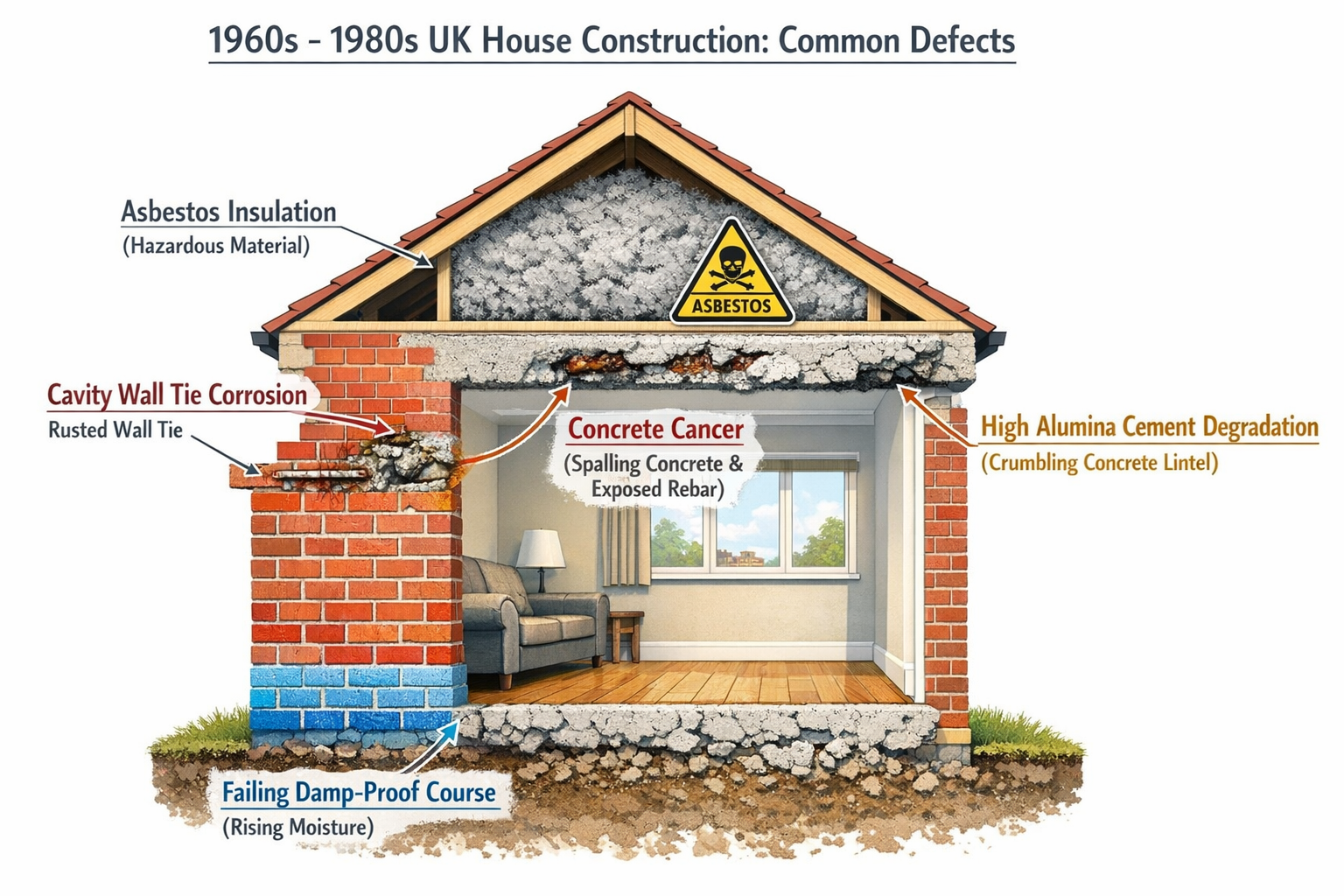
Understanding the 1960s-1980s Construction Era and Its Unique Challenges
The post-war housing boom created unprecedented demand for rapid construction, leading to experimental building methods and cost-cutting measures that have created lasting problems. Between 1960 and 1979, builders constructed millions of homes using innovative but ultimately problematic materials including high alumina cement, asbestos-containing products, and inadequate cavity wall tie systems.[5]
The Rush to Build: Context and Consequences
Government housing targets during this period prioritized speed and affordability over long-term durability. This resulted in:
- Reduced construction standards compared to pre-war building practices
- Experimental concrete formulations that have degraded faster than anticipated
- Inadequate quality control during the construction process
- Limited understanding of long-term material performance
The consequences of these shortcuts are now visible across the housing stock. According to 2023 data, homes from the 1960-1979 period account for 1.2 million moderately inadequate properties and an additional 465,000 severely inadequate homes—the largest absolute number of any construction era.[1]
Common Construction Methods and Their Weaknesses
Properties from this era typically feature several characteristic construction approaches:
Traditional cavity wall construction with metal wall ties connecting inner and outer leaves. However, many ties from this period were made from mild steel with inadequate corrosion protection, leading to widespread failure 40-50 years later.
Concrete frame or panel systems using various cement formulations. High alumina cement (HAC) was particularly popular but has proven susceptible to chemical conversion that dramatically reduces structural strength over time.
Flat or low-pitch roofs with bituminous felt coverings that have limited lifespans of 20-30 years. Many properties from this era now require complete roof replacement.
Single-glazed metal windows with minimal thermal performance and susceptibility to condensation damage. Aluminum window frames from the 1970s-1980s are particularly prone to corrosion and seal failure.
Understanding these construction characteristics is fundamental to Building Survey Defects in 1960s-1980s Housing Stock: Identifying Hidden Issues Before Purchase, as each presents specific inspection challenges and potential failure modes.
Critical Defects Found in 1960s-1980s Housing Stock
Properties from this era harbor several distinctive defect categories that require specialist identification and assessment. These problems rarely present obvious visual symptoms until deterioration has progressed significantly, making professional surveys indispensable.
Concrete-Related Defects 🏗️
Concrete cancer (also known as concrete spalling or delamination) represents one of the most serious structural concerns in 1960s-1980s properties. This progressive deterioration occurs when:
- Carbonation of concrete reduces alkalinity, allowing reinforcement corrosion
- Corroding steel rebar expands, creating internal pressure
- Concrete cover cracks and spalls away from the structure
- Load-bearing capacity progressively diminishes
High alumina cement (HAC) degradation affects properties constructed between 1950-1975. HAC undergoes chemical conversion in damp or warm conditions, losing up to 80% of its original strength. Properties containing HAC may require:
- Structural strengthening or replacement
- Ongoing monitoring programs
- Mortgage lending restrictions
- Reduced property values
A comprehensive RICS building survey can identify concrete deterioration through visual inspection, carbonation testing, and structural assessment.
Cavity Wall and Envelope Failures
Cavity wall tie corrosion has become endemic in properties from this period. Original mild steel ties deteriorate within 40-60 years, causing:
- Horizontal cracking in mortar beds (typically every 450mm vertically)
- Bulging or bowing of external walls
- Structural instability requiring immediate remediation
- Replacement costs of £3,000-£6,000 for typical semi-detached properties
Cavity wall insulation failures present additional concerns. Retrospectively installed insulation (common in the 1980s-1990s) can:
- Bridge the cavity, creating pathways for moisture penetration
- Settle or degrade, reducing thermal performance
- Trap moisture against the inner leaf, causing damp problems
- Require expensive removal and replacement
Render and cladding deterioration affects many properties from this era. Tyrolean render, pebbledash, and early cladding systems often exhibit:
- Loss of adhesion and delamination
- Water ingress behind failed sections
- Structural movement damage
- Biological growth and staining
Asbestos Contamination Risks ⚠️
Asbestos-containing materials (ACMs) were ubiquitous in construction during the 1960s-1980s. Properties from this era commonly contain:
| Location | Material Type | Risk Level | Typical Remediation Cost |
|---|---|---|---|
| Roof sheets | Asbestos cement | Moderate | £2,000-£5,000 |
| Ceiling tiles | Asbestos insulation board | High | £3,000-£8,000 |
| Pipe lagging | Asbestos insulation | High | £1,500-£4,000 |
| Floor tiles | Vinyl asbestos tiles | Low-Moderate | £1,000-£3,000 |
| Textured coatings | Artex with asbestos | Low | £800-£2,500 |
Professional asbestos surveys are essential before any renovation work, as disturbing ACMs without proper controls creates serious health risks and legal liabilities.
Electrical and Plumbing System Obsolescence
Outdated electrical installations present both safety and functionality concerns:
- Aluminum wiring (common in 1960s-1970s) prone to connection failures
- Inadequate circuit protection without RCD devices
- Insufficient capacity for modern electrical loads
- Deteriorated insulation on aging cables
- Non-compliant installations requiring complete rewiring (£4,000-£7,000)
Original plumbing systems from this era typically feature:
- Lead supply pipes requiring replacement for health reasons
- Corroded galvanized steel pipes with restricted flow
- Outdated heating systems with poor efficiency
- Inadequate water pressure for modern fixtures
Subsidence and Foundation Issues
Properties from the 1960s-1980s often have shallow foundations inadequate for modern building standards. Contributing factors include:
- Clay soil shrinkage during dry periods
- Tree root activity affecting foundation stability
- Inadequate foundation depth (often less than 1 meter)
- Poor drainage causing ground movement
Subsidence surveys can identify foundation movement through crack pattern analysis, level surveys, and ground investigation where necessary.
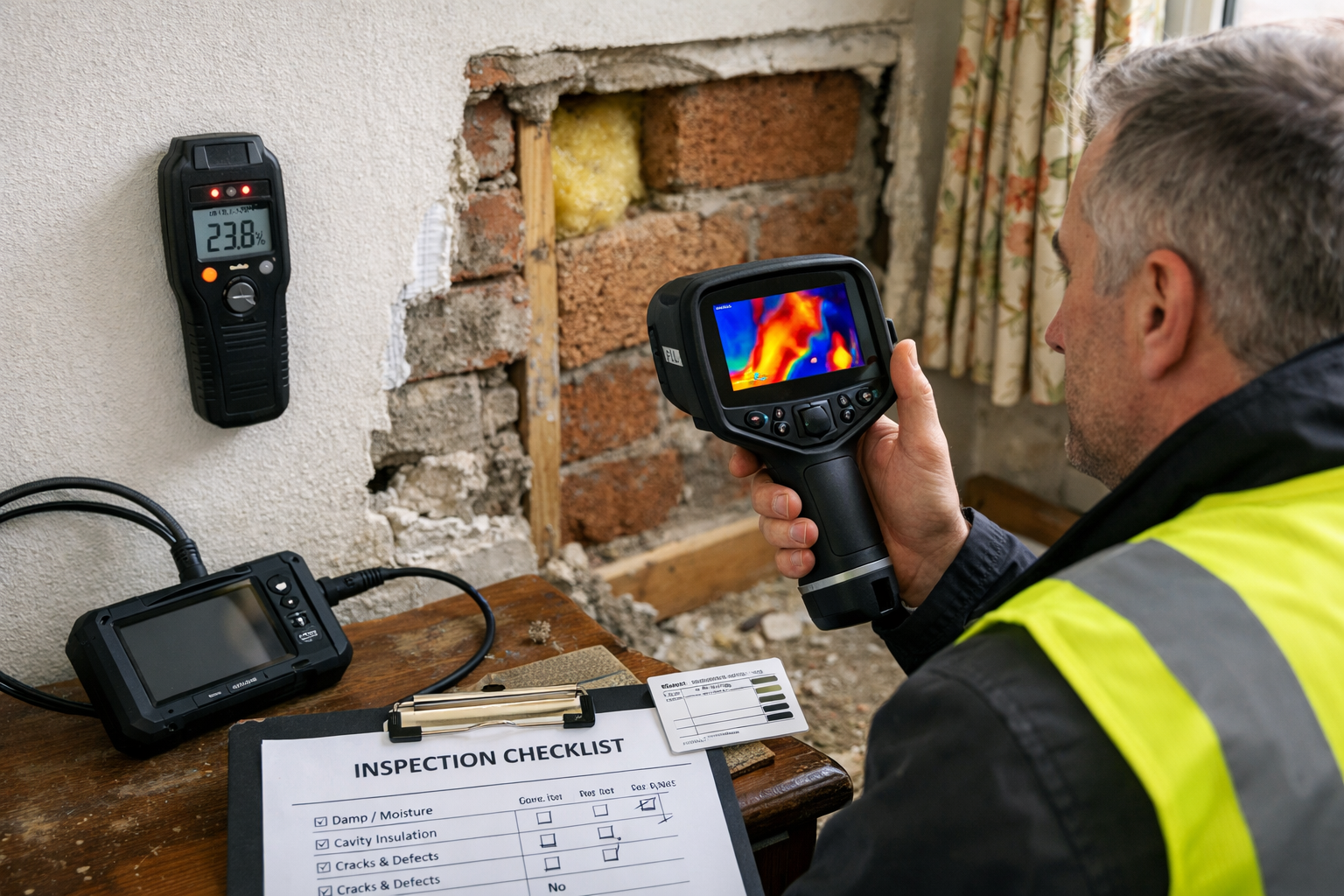
Building Survey Defects in 1960s-1980s Housing Stock: The Essential Inspection Process
Identifying hidden defects in properties from this era requires a systematic and comprehensive approach that goes beyond standard mortgage valuations. Understanding what to expect from professional surveys helps buyers make informed decisions about properties from this challenging construction period.
Types of Surveys and Their Suitability
Different survey levels provide varying degrees of investigation:
RICS Level 2 Survey (HomeBuyer Report) provides a visual inspection suitable for conventional properties in reasonable condition. However, for 1960s-1980s housing stock, this level may be insufficient to identify subsurface deterioration.[7]
RICS Level 3 Survey (Building Survey) offers comprehensive investigation including:
- Detailed inspection of all accessible areas
- Assessment of construction methods and materials
- Identification of defects and their likely causes
- Guidance on repair priorities and approximate costs
- Recommendations for specialist investigations
For properties from this era, a Level 3 survey is strongly recommended. Buyers can compare different types of survey to understand which option best suits their circumstances.
What Surveyors Look For in 1960s-1980s Properties
Professional surveyors conducting Building Survey Defects in 1960s-1980s Housing Stock assessments focus on era-specific concerns:
Structural elements:
- Foundation adequacy and movement evidence
- Concrete deterioration and reinforcement corrosion
- Wall tie condition and cavity wall integrity
- Roof structure condition and load-bearing capacity
- Floor structure and joist condition
Building envelope:
- External wall condition and weather-tightness
- Window and door condition, especially metal frames
- Roof covering condition and remaining lifespan
- Damp penetration pathways
- Thermal performance deficiencies
Building services:
- Electrical installation age and safety
- Heating system condition and efficiency
- Plumbing materials and condition
- Drainage adequacy and condition
Environmental hazards:
- Asbestos-containing materials identification
- Lead paint presence
- Radon risk assessment
- Contaminated land concerns
Specialist Investigations and Testing
Comprehensive assessment of 1960s-1980s properties often requires additional specialist investigations:
Concrete testing including:
- Carbonation depth measurement
- Chloride content analysis
- HAC identification and strength testing
- Reinforcement location and corrosion assessment
Cavity wall inspection using:
- Borescope examination of cavity condition
- Wall tie identification and corrosion assessment
- Insulation type and condition verification
- Moisture content measurement
Electrical testing to determine:
- Installation age and compliance
- Circuit protection adequacy
- Earth bonding effectiveness
- Overall safety and remaining lifespan
Thermal imaging to identify:
- Insulation deficiencies and gaps
- Moisture penetration pathways
- Thermal bridging locations
- Cavity wall insulation failures
These investigations provide definitive evidence of defect presence and severity, supporting informed purchase decisions and price negotiations.
Reading and Understanding Survey Reports
Professional survey reports on 1960s-1980s properties typically categorize defects using a condition rating system:
Condition Rating 1: No repair currently needed (normal maintenance only)
Condition Rating 2: Defects requiring repair or replacement but not urgent
Condition Rating 3: Defects requiring urgent repair or further investigation
Understanding these ratings helps prioritize remediation work and estimate total costs. The most comprehensive surveys also provide:
- Photographic evidence of defects
- Approximate repair cost estimates
- Recommendations for specialist investigations
- Guidance on maintenance requirements
- Assessment of remaining component lifespans
For detailed information about what surveyors examine, review our guide on what surveyors check during inspections.
Financial Implications and Negotiation Strategies
Discovering defects through pre-purchase surveys provides crucial leverage for price negotiation and informed decision-making. Understanding typical remediation costs helps buyers assess whether properties from this era represent good value.
Typical Remediation Costs for Common Defects
Based on 2026 market rates, addressing major defects in 1960s-1980s properties typically involves:
Structural repairs:
- Cavity wall tie replacement: £3,000-£6,000
- Concrete repair and strengthening: £8,000-£15,000
- Foundation underpinning: £10,000-£50,000
- Roof structure repair: £5,000-£12,000
Building envelope:
- Complete rewiring: £4,000-£7,000
- Replacement windows: £5,000-£12,000
- Roof replacement: £6,000-£15,000
- External wall insulation: £8,000-£15,000
Environmental remediation:
- Asbestos removal: £2,000-£8,000
- Damp treatment: £1,500-£5,000
- Lead pipe replacement: £1,000-£3,000
Total typical investment: Properties requiring multiple interventions often need £20,000-£45,000 in remediation work to bring them to acceptable modern standards.
Using Survey Findings in Price Negotiations
Professional survey reports provide objective evidence supporting price reductions:
Immediate safety concerns (electrical hazards, structural instability, asbestos risks) justify substantial reductions or purchase withdrawal.
Significant repair requirements warrant price adjustments reflecting:
- Direct repair costs
- Additional professional fees (10-15% of repair costs)
- Disruption and temporary accommodation costs
- Contingency for unforeseen complications (15-20%)
Deferred maintenance accumulated over decades provides negotiation leverage even for non-urgent repairs.
Successful negotiation strategies include:
- Obtain detailed cost estimates from qualified contractors
- Request price reduction equivalent to repair costs plus contingency
- Negotiate retention of funds until repairs are completed
- Consider walking away if defects are too extensive or costly
- Request seller remediation of critical defects before completion
Mortgage and Insurance Implications
Significant defects identified in 1960s-1980s properties can affect:
Mortgage lending: Lenders may refuse mortgages or require retention of funds until repairs are completed for properties with:
- Structural instability or movement
- High alumina cement construction
- Extensive asbestos contamination
- Inadequate electrical installations
- Significant damp or rot
Building insurance: Insurers may impose exclusions, higher premiums, or refuse cover for properties with:
- Ongoing subsidence or structural movement
- Non-standard construction methods
- Unresolved damp problems
- Defective roof coverings
Understanding these implications before purchase prevents costly surprises and ensures properties are mortgageable and insurable.

Preventive Measures and Long-Term Property Management
For buyers proceeding with 1960s-1980s property purchases despite identified defects, implementing systematic maintenance and remediation strategies protects long-term investment value.
Prioritizing Remediation Work
Immediate priorities (address within 3-6 months):
- Structural safety concerns
- Electrical safety hazards
- Water ingress causing progressive damage
- Asbestos in poor condition
- Heating system failures
Medium-term priorities (address within 1-2 years):
- Cavity wall tie replacement
- Window and door replacement
- Roof covering renewal
- Damp treatment
- Drainage improvements
Long-term planning (address within 3-5 years):
- External wall insulation
- Heating system upgrade
- Kitchen and bathroom modernization
- Energy efficiency improvements
Ongoing Maintenance Requirements
Properties from this era require more intensive maintenance than modern construction:
Annual inspections should include:
- Roof and gutter condition
- External wall and render condition
- Window and door seals
- Drainage system function
- Heating system service
Five-yearly reviews should assess:
- Electrical installation condition
- Structural movement monitoring
- Concrete deterioration progression
- Cavity wall condition
- Roof structure integrity
Professional surveys every 10 years provide comprehensive reassessment of property condition and identification of emerging defects before they become critical.
Building a Maintenance Reserve Fund
The aging nature of 1960s-1980s housing stock requires financial planning for inevitable component replacement:
- Roof covering: 20-30 year lifespan
- Windows: 25-35 year lifespan
- Heating system: 15-20 year lifespan
- Electrical installation: 25-30 year lifespan
- External decoration: 5-8 year cycle
Setting aside £150-£250 monthly creates reserves for major component replacement and prevents financial strain when systems reach end-of-life.
When to Seek Professional Advice
Certain situations require immediate professional assessment:
- New cracks appearing or existing cracks widening
- Doors or windows sticking indicating structural movement
- Damp patches appearing or spreading
- Electrical problems including tripping circuits or burning smells
- Heating system failures or declining performance
- Roof leaks or visible deterioration
Early professional intervention prevents minor issues escalating into major defects requiring extensive remediation.
For comprehensive guidance on property condition assessment, consult our ultimate house survey checklist.
Regional Variations and Local Expertise
Construction practices, materials, and defect prevalence vary significantly by region, making local surveyor expertise particularly valuable for assessing 1960s-1980s properties.
Geographic Construction Differences
Northern regions often feature:
- More cavity wall construction
- Stone or brick external walls
- Pitched slate or tile roofs
- Traditional construction methods
Southern regions typically include:
- Greater use of concrete and non-traditional construction
- Flat or low-pitch roofs
- Render finishes
- Experimental building systems
Urban areas commonly contain:
- High-density housing developments
- System-built construction
- Concrete frame buildings
- More extensive asbestos use
Rural areas generally feature:
- More traditional construction
- Local material usage
- Individual property designs
- Septic tank drainage systems
Finding Qualified Local Surveyors
Selecting surveyors with specific experience in 1960s-1980s housing stock ensures comprehensive defect identification. Consider surveyors offering:
- RICS accreditation and professional indemnity insurance
- Specific experience with properties from this era
- Local market knowledge
- Access to specialist testing services
- Comprehensive reporting standards
Regional surveyor services are available across the UK, including chartered surveyors in West London, North London, and East London, as well as surrounding areas like St Albans, Harpenden, and Hemel Hempstead.
Understanding Local Market Conditions
Regional property markets treat 1960s-1980s housing stock differently:
High-demand areas may see properties sell quickly despite defects, with buyers accepting remediation requirements in exchange for location.
Lower-demand areas may see properties with significant defects languish on the market, creating opportunities for negotiation.
Conservation areas may impose restrictions on external alterations, complicating remediation of envelope defects.
Understanding local market dynamics helps buyers assess whether identified defects represent deal-breakers or negotiation opportunities.
Conclusion
The 1960s-1980s housing stock represents a significant portion of the current property market, with nearly half of all owner-occupied homes dating from before 1980 and the median property age reaching 42 years in 2024.[2] While these properties often offer attractive pricing and established locations, they harbor era-specific construction defects that can transform apparent bargains into financial burdens without proper pre-purchase investigation.
Building Survey Defects in 1960s-1980s Housing Stock: Identifying Hidden Issues Before Purchase requires understanding the unique construction challenges of this period—from concrete cancer and cavity wall tie corrosion to asbestos contamination and obsolete building systems. The 1.6 million inadequate homes from this era demonstrate that these concerns are not theoretical but widespread realities affecting property values, safety, and habitability.[1]
Professional building surveys provide the essential due diligence that protects buyers from inheriting costly remediation projects. With typical repair costs ranging from £20,000-£45,000 for properties requiring multiple interventions, the investment in comprehensive pre-purchase surveys (typically £600-£1,500) represents exceptional value and risk mitigation.
Actionable Next Steps
For anyone considering purchasing a 1960s-1980s property:
- Commission a RICS Level 3 Building Survey rather than basic valuations or Level 2 surveys—the comprehensive investigation is essential for properties from this era
- Request specialist investigations for concrete testing, cavity wall inspection, and asbestos surveys where the initial survey identifies concerns
- Obtain detailed remediation cost estimates from qualified contractors before finalizing negotiations
- Use survey findings strategically in price negotiations, requesting reductions that reflect repair costs plus contingency
- Verify mortgage and insurance availability before proceeding with purchases of properties with significant defects
- Plan for ongoing maintenance with realistic budgets reflecting the higher maintenance requirements of aging properties
- Engage local surveyor expertise familiar with regional construction practices and common defects in your target area
The growing remodeling market signals increasing recognition that 1960s-1980s properties require systematic reinvestment to remain habitable and valuable.[1] With construction constraints limiting new housing supply to only 3.6 million units from 2020-2024, these older properties will remain a substantial portion of available housing stock for decades to come.[2]
Informed buyers who understand era-specific defects, commission appropriate professional surveys, and negotiate realistic purchase prices can successfully acquire and maintain properties from this period. However, those who skip due diligence or underestimate remediation requirements risk substantial financial losses and potential safety hazards.
The key to successful property purchase from this challenging construction era lies in thorough professional investigation, realistic cost assessment, and informed decision-making based on comprehensive survey findings. By following the guidance outlined in this article and engaging qualified professionals, buyers can navigate the complexities of 1960s-1980s housing stock and make confident, well-informed purchase decisions.
References
[1] Top Post Inadequate Shelter Millions Of U S Homes Fail To Meet Standards – https://eyeonhousing.org/2025/12/top-post-inadequate-shelter-millions-of-u-s-homes-fail-to-meet-standards/
[2] Almost Half Of The Owner Occupied Homes Built Before 1980 2 – https://eyeonhousing.org/2026/03/almost-half-of-the-owner-occupied-homes-built-before-1980-2/
[5] Pre Post Era Problems – https://1stassociated.com/pre-post-era-problems/
[7] Defects Decade – https://www.localsurveyorsdirect.co.uk/defects-decade
