
The private rental sector faces its most significant regulatory shift in decades: by May 2026, an estimated 4.6 million rental properties must meet the Decent Homes Standard, a requirement previously limited to social housing. This legislative change under the Renters' Rights Act 2026 creates unprecedented demand for specialist building surveys and transforms the role of chartered surveyors in landlord compliance. Understanding the Renters' Rights Act 2026 Impact on Building Surveys: Surveyor Roles in Decent Homes Standard Compliance for Landlords is now critical for property owners navigating these new obligations.
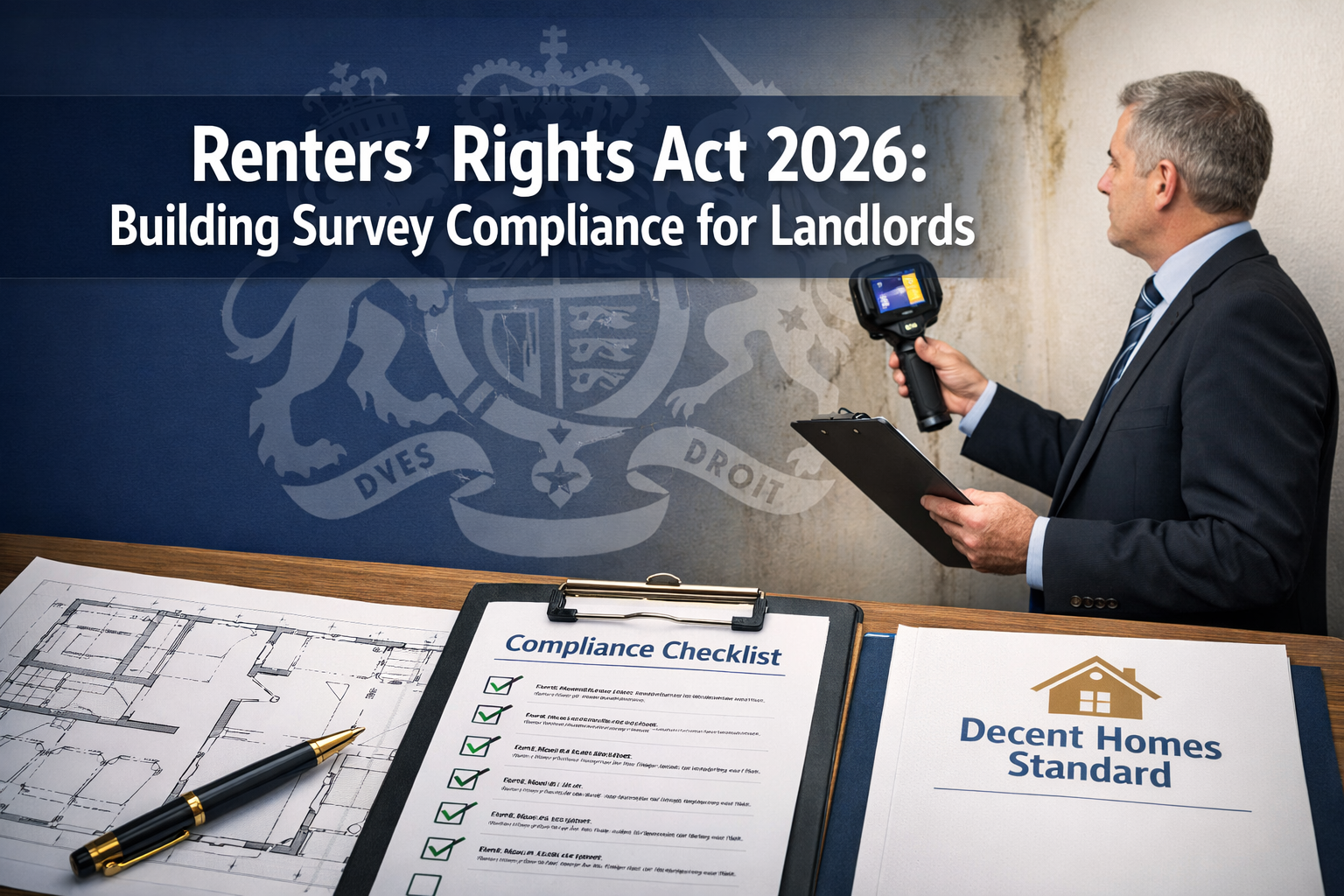
The extension of Decent Homes Standards to private rentals represents more than a policy update—it fundamentally reshapes property valuation, investment decisions, and maintenance strategies. According to RICS guidance, valuations of properties subject to the Renters' Rights Act "are specialist in nature," requiring professionals to exercise "appropriate experience, skill and judgement" when assessing compliance requirements[2]. For landlords, this means engaging qualified surveyors has shifted from optional due diligence to regulatory necessity.
Key Takeaways
- 🏠 Mandatory Compliance Deadline: All private rental properties must meet Decent Homes Standard by May 2026, creating urgent demand for specialist building surveys
- 📋 Enhanced Surveyor Responsibilities: Chartered surveyors now play critical roles in compliance assessment, hazard identification, and remediation planning under new regulatory frameworks
- 💰 Increased Due Diligence Costs: Enhanced compliance requirements related to Decent Homes Standards are expected to significantly increase assessment and remediation costs for landlords[2]
- ⚖️ Specialist Valuation Requirements: Property valuations under the Renters' Rights Act require specialist expertise, with RICS emphasizing appropriate skill and judgement in compliance assessments[2]
- 🔍 Comprehensive Inspection Scope: Building surveys must now evaluate thermal comfort, hazard ratings, facility standards, and repair conditions against specific regulatory benchmarks
Understanding the Decent Homes Standard Requirements for Private Rentals
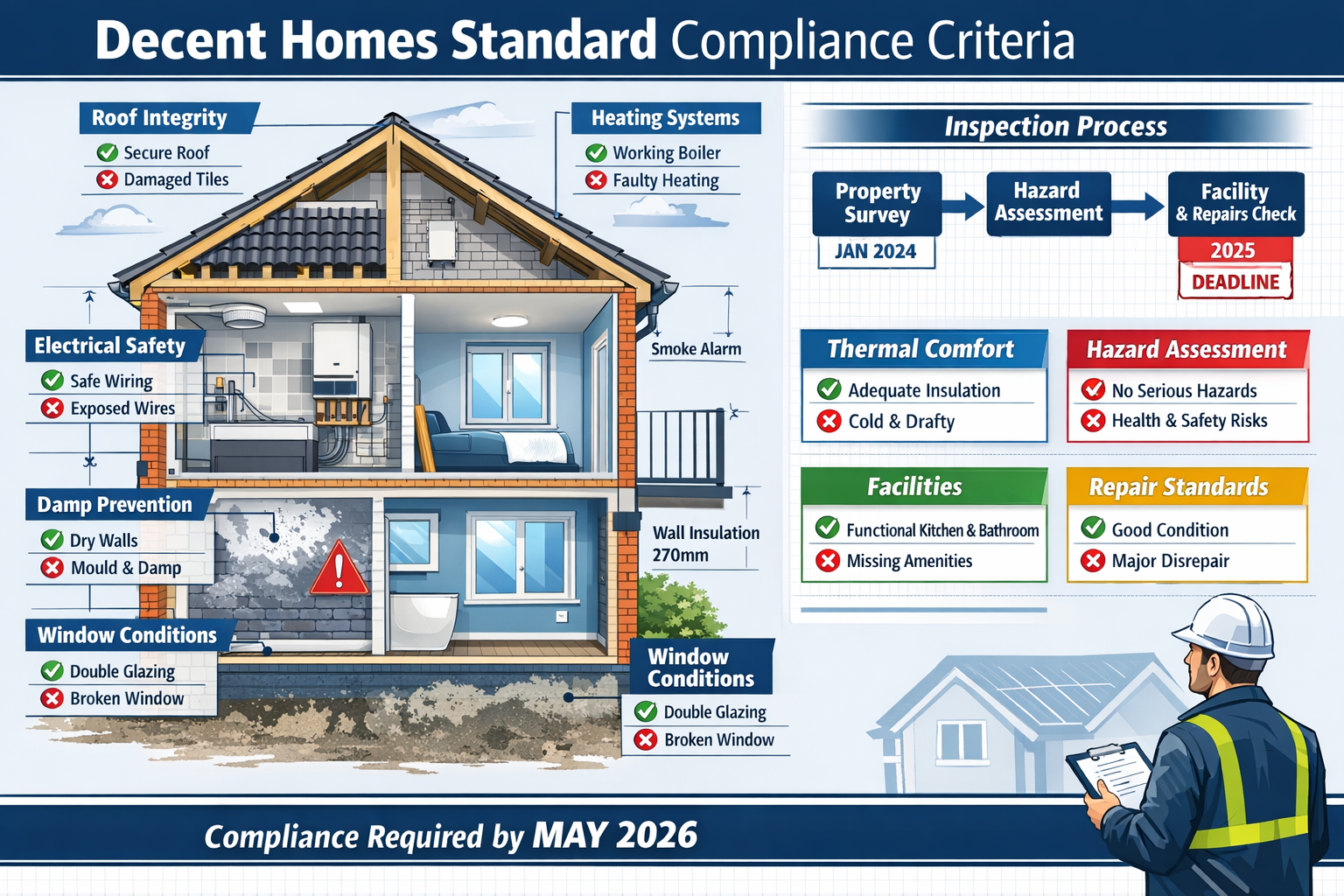
The Decent Homes Standard establishes four fundamental criteria that every private rental property must satisfy. These requirements, previously applied exclusively to social housing, now extend across the entire private rental sector under the Renters' Rights Act 2026.
The Four Pillars of Decent Homes Compliance
1. Meeting the Current Statutory Minimum Standard for Housing
Properties must comply with the Housing Health and Safety Rating System (HHSRS), which assesses 29 potential hazards. These range from damp and mould growth to electrical hazards and structural collapse risks. A property fails this criterion if any Category 1 hazard exists—serious risks requiring immediate attention.
2. Reasonable State of Repair
The dwelling must maintain good repair standards relative to its age, character, and location. This includes:
- Structural elements: walls, roofs, foundations, external doors and windows
- Installations: heating systems, electrical wiring, plumbing, drainage
- Common areas: shared spaces in multi-occupancy buildings
Building components with remaining life expectancy under five years typically require replacement or major repair to meet this standard.
3. Modern Facilities and Services
Properties must provide:
- ✅ Reasonably modern kitchen (less than 20 years old)
- ✅ Kitchen with adequate space and layout
- ✅ Bathroom that is not more than 30 years old
- ✅ Appropriate heating and hot water systems
- ✅ Adequate thermal insulation
4. Efficient Heating and Effective Insulation
The property must offer:
- Efficient and effective heating in every occupied room
- Proper insulation meeting current building regulation standards
- Energy efficiency measures appropriate to the property type
Why Building Surveys Are Essential for Compliance Assessment
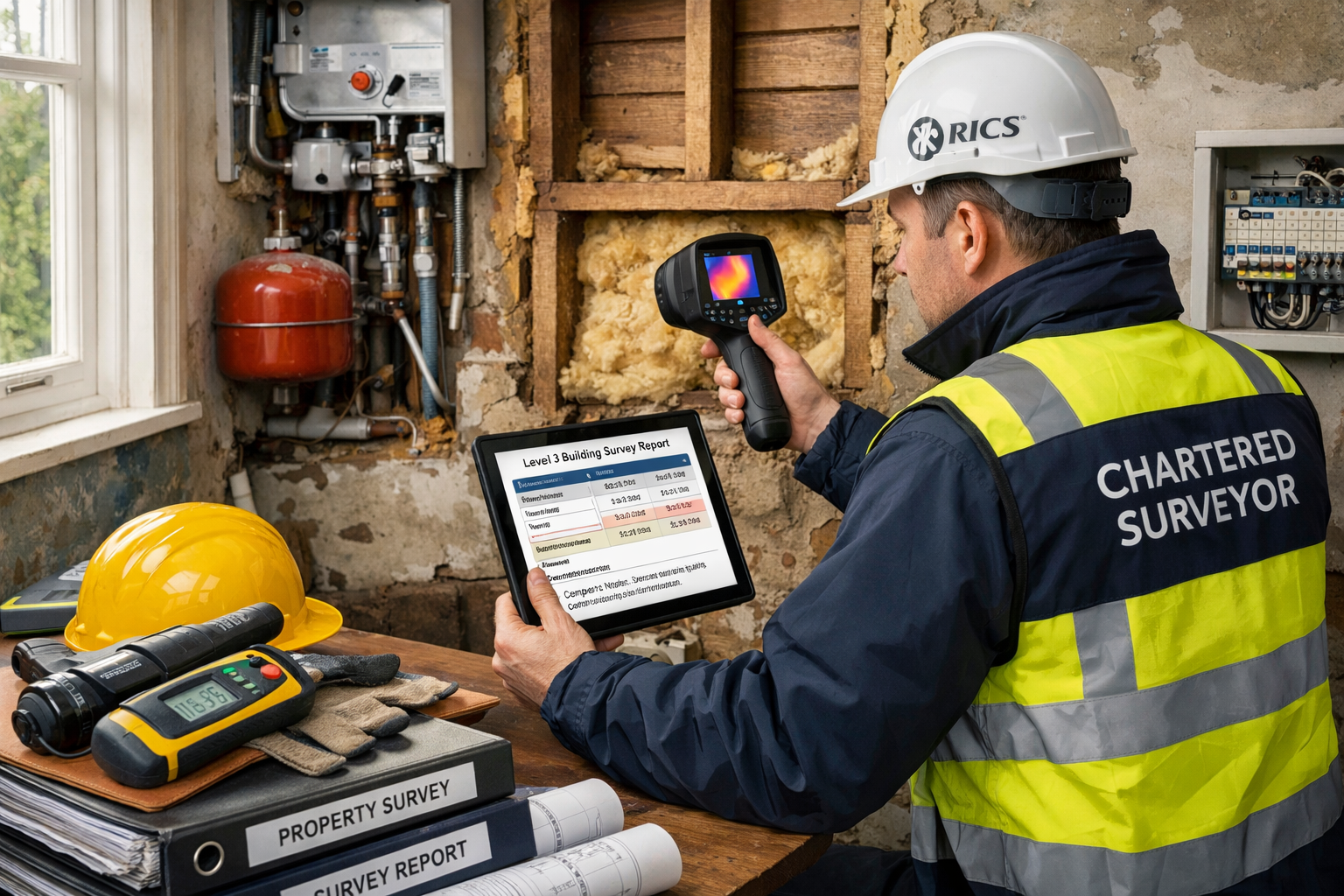
Unlike basic property valuations or mortgage surveys, comprehensive building surveys provide the detailed analysis necessary for Decent Homes Standard compliance. A Level 3 building survey examines every accessible part of the property, identifying defects, assessing repair urgency, and estimating remediation costs—precisely the information landlords need for compliance planning.
Surveyor Roles in Decent Homes Standard Compliance Under the Renters' Rights Act 2026
The Renters' Rights Act 2026 Impact on Building Surveys: Surveyor Roles in Decent Homes Standard Compliance for Landlords extends far beyond traditional property assessment. Chartered surveyors now serve multiple critical functions in the compliance ecosystem.
Pre-Compliance Assessment Surveys
Before the May 2026 deadline, landlords require comprehensive baseline assessments identifying compliance gaps. This involves:
Detailed Property Inspections
Professional surveyors conduct thorough examinations covering:
- Structural integrity assessments
- HHSRS hazard identification and rating
- Heating system efficiency evaluations
- Insulation performance testing
- Electrical and plumbing system reviews
- Damp, condensation, and ventilation analysis
These inspections follow RICS standards and provide documented evidence of property condition—essential for demonstrating compliance or planning remediation work.
Compliance Gap Analysis
Surveyors compare current property conditions against Decent Homes Standard benchmarks, producing detailed reports that:
- Identify specific non-compliance issues
- Prioritize remediation work by urgency and cost
- Estimate total compliance investment required
- Recommend cost-effective improvement strategies
- Project timelines for achieving full compliance
Remediation Planning and Specification
Once compliance gaps are identified, surveyors provide technical specifications for remediation work. This includes:
- Detailed repair schedules: Specifying materials, methods, and standards for each improvement
- Cost estimates: Providing realistic budget projections for compliance work
- Contractor briefings: Preparing technical documentation for builders and specialists
- Project phasing: Recommending efficient sequences for multiple improvements
For landlords managing multiple properties, surveyors can develop portfolio-wide compliance strategies, optimizing resources and scheduling across their rental stock.
Post-Remediation Verification Surveys
After compliance work completion, independent surveyor verification provides:
- ✅ Confirmation that improvements meet Decent Homes Standard requirements
- ✅ Documentation for regulatory authorities
- ✅ Quality assurance for contractor work
- ✅ Updated property condition reports
- ✅ Evidence for insurance and liability purposes
This verification process mirrors the approach used in snagging surveys for new builds, ensuring completed work meets specified standards.
Ongoing Compliance Monitoring
The Renters' Rights Act doesn't establish a one-time compliance requirement. Properties must maintain Decent Homes Standard throughout their use as rentals. Surveyors support this through:
- Periodic condition assessments: Regular inspections identifying emerging issues before they become compliance failures
- Maintenance planning: Scheduled replacement and repair programs maintaining standards
- Tenant change surveys: Condition assessments between tenancies documenting property status
Understanding what surveyors look for in property inspections helps landlords appreciate the thoroughness required for compliance verification.
Practical Compliance Strategies for Landlords: Navigating the May 2026 Deadline
With the compliance deadline approaching, landlords need actionable strategies for meeting Decent Homes Standard requirements efficiently and cost-effectively.
Timeline Planning for Compliance
Immediate Actions (Now – June 2026)
- Commission baseline building surveys: Engage chartered surveyors to assess all rental properties
- Review survey findings: Understand compliance gaps and prioritize remediation work
- Obtain detailed cost estimates: Budget accurately for required improvements
- Schedule remediation work: Book contractors early as demand increases toward the deadline
Q3 2026 – Q4 2026
- Complete priority remediation: Address Category 1 hazards and major deficiencies first
- Conduct interim inspections: Verify work quality as projects progress
- Update property documentation: Maintain comprehensive compliance records
Post-May 2026
- Obtain verification surveys: Secure independent confirmation of compliance
- Implement maintenance programs: Establish systems maintaining standards
- Plan periodic reassessments: Schedule regular compliance reviews
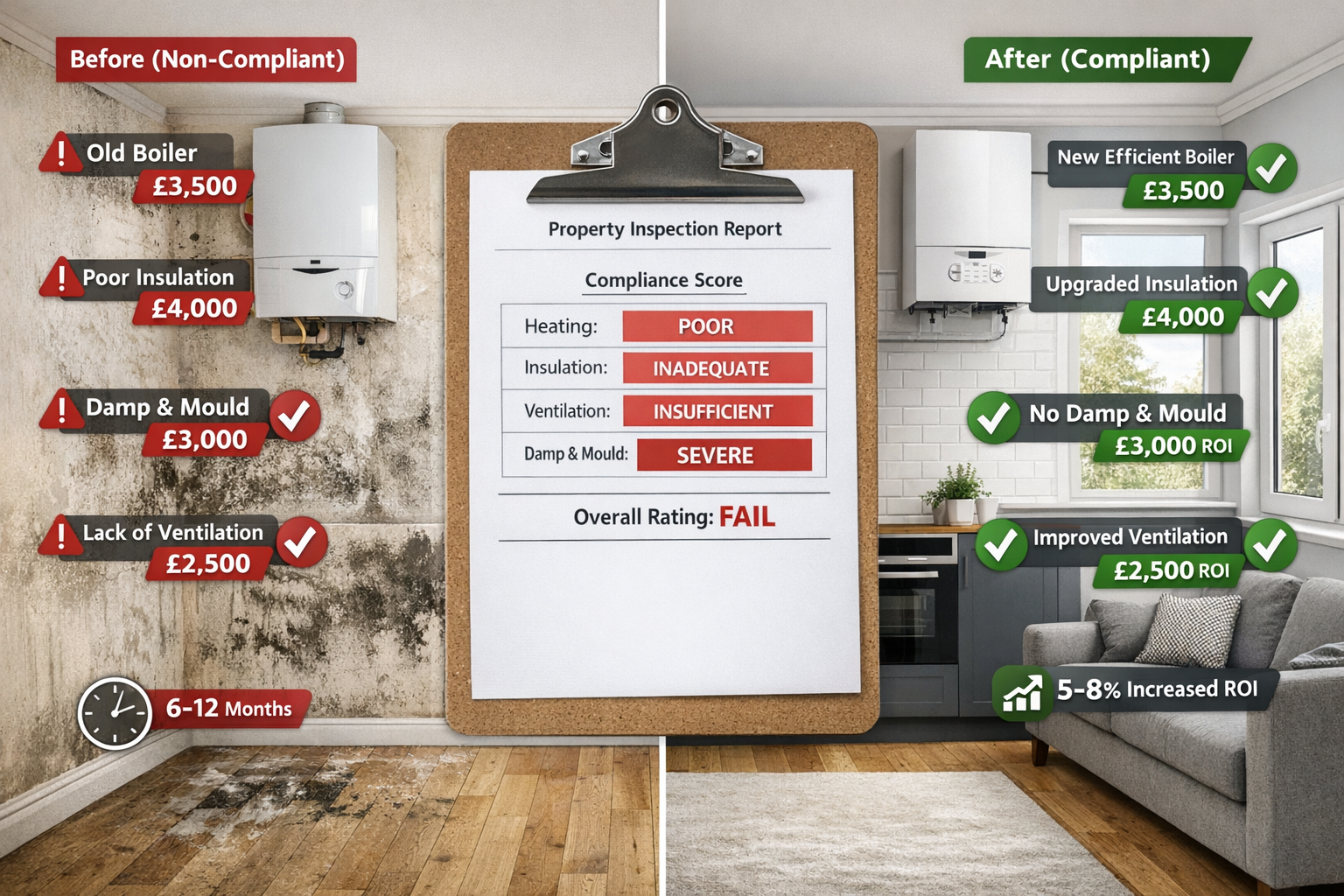
Cost Considerations and Investment Planning
Enhanced due diligence requirements related to Decent Homes Standards compliance are expected to increase costs for landlords[2]. Understanding these financial implications enables better planning:
| Compliance Category | Typical Cost Range | Priority Level |
|---|---|---|
| HHSRS Category 1 Hazard Remediation | £2,000 – £15,000+ | Urgent |
| Heating System Replacement | £3,000 – £8,000 | High |
| Kitchen Modernization | £5,000 – £15,000 | Medium |
| Bathroom Upgrade | £3,000 – £10,000 | Medium |
| Insulation Improvements | £1,500 – £5,000 | High |
| Window Replacement | £4,000 – £12,000 | Medium-High |
| Electrical System Upgrade | £2,500 – £8,000 | High |
| Damp Treatment | £1,000 – £6,000 | Urgent |
Survey costs typically range from £500-£1,500 per property depending on size and complexity, representing a small fraction of total compliance investment but providing essential guidance for efficient spending.
Property-Specific Compliance Challenges
Different property types present unique compliance challenges:
Period Properties and Listed Buildings
Older properties often face:
- Structural issues requiring specialist repair techniques
- Insulation challenges with solid wall construction
- Heating system limitations in historic layouts
- Listed building consent requirements for improvements
Surveyors experienced with non-standard construction provide essential expertise for these properties.
Converted Flats and HMOs (Houses in Multiple Occupation)
Multi-occupancy properties require:
- Individual compliance for each dwelling unit
- Shared facility assessments
- Fire safety evaluations beyond standard Decent Homes criteria
- Common area maintenance standards
Modern Properties with Hidden Defects
Even newer rentals may have:
- Inadequate ventilation causing condensation issues
- Undersized heating systems
- Poor-quality initial construction requiring remediation
A Level 2 home survey may suffice for straightforward modern properties, while older or more complex buildings benefit from comprehensive Level 3 assessments.
Choosing the Right Survey Type for Compliance Assessment
Understanding the difference between Level 2 and Level 3 surveys helps landlords select appropriate assessment levels:
Level 2 Survey (RICS Home Survey)
- Suitable for: Modern properties (post-1980) in reasonable condition
- Coverage: Visual inspection of accessible areas
- Best for: Straightforward compliance verification
- Cost: £400-£800 typically
Level 3 Survey (Building Survey)
- Suitable for: Older properties, those with known issues, or complex buildings
- Coverage: Comprehensive examination of all accessible elements
- Best for: Detailed compliance gap analysis and remediation planning
- Cost: £600-£1,500+ depending on property size
For most landlords facing Decent Homes Standard compliance, the comprehensive nature of a Level 3 survey provides better value by identifying all potential issues in a single assessment.
The Broader Impact: How the Renters' Rights Act 2026 Reshapes Property Investment
Beyond immediate compliance requirements, the Renters' Rights Act 2026 Impact on Building Surveys: Surveyor Roles in Decent Homes Standard Compliance for Landlords fundamentally alters property investment dynamics.
Changes to Property Valuation Practices
RICS guidance emphasizes that property valuations under the Renters' Rights Act require specialist expertise[2]. This reflects several valuation challenges:
Compliance Status as Value Factor
Properties now fall into distinct valuation categories:
- ✅ Compliant properties: Command premium valuations with immediate rental capability
- ⚠️ Non-compliant with minor issues: Valued with deduction for remediation costs
- ❌ Significantly non-compliant: May face substantial value reductions or unmarketability
Enhanced Due Diligence Requirements
Property transactions now require:
- Detailed compliance surveys beyond standard mortgage valuations
- Documentary evidence of Decent Homes Standard compliance
- Clear remediation cost estimates for non-compliant properties
- Specialist surveyor involvement in purchase decisions
Portfolio Management Implications
Landlords with multiple properties face strategic decisions:
Compliance Investment vs. Portfolio Rationalization
Some landlords may find certain properties economically unviable under new standards, leading to:
- Selective property sales (disposing of high-cost compliance cases)
- Portfolio concentration on compliant or easily upgraded properties
- Investment redirection toward newer, standards-compliant acquisitions
Rent Adjustments and Return Calculations
Compliance costs impact rental yields. Landlords must:
- Recalculate investment returns incorporating compliance expenditure
- Adjust rent levels to reflect improved property standards (where market permits)
- Evaluate long-term viability of rental business models
Market-Wide Effects
The legislation creates ripple effects across the rental market:
Increased Demand for Surveying Services
With 4.6 million private rental properties requiring compliance assessment, surveying capacity faces unprecedented demand. This results in:
- Extended booking times for survey appointments
- Potential cost increases for surveying services
- Premium value for surveyors with Decent Homes Standard expertise
Quality Improvements in Rental Stock
Long-term, the legislation should deliver:
- Higher overall quality standards across private rentals
- Reduced health hazards for tenants
- Improved energy efficiency and lower tenant utility costs
- Better maintenance practices industry-wide
Potential Supply Constraints
Some analysts warn that compliance costs may drive landlords from the market, potentially reducing rental property availability. However, this effect remains debated, with others arguing quality standards attract more professional landlords committed to proper property management.
Surveyor Qualifications and Expertise for Decent Homes Compliance
Not all surveyors possess equal expertise for Decent Homes Standard assessments. Landlords should seek professionals with specific qualifications and experience.
Essential Professional Credentials
RICS Chartered Status
Look for surveyors holding RICS (Royal Institution of Chartered Surveyors) membership, indicated by post-nominal letters:
- MRICS: Member of RICS (qualified professional)
- FRICS: Fellow of RICS (senior professional with extensive experience)
RICS members adhere to professional standards and ethical guidelines, providing quality assurance for compliance assessments.
Relevant Specializations
Ideal surveyors for Decent Homes compliance possess:
- Building surveying expertise: Understanding of construction, defects, and repair methodologies
- HHSRS assessment training: Specific knowledge of Housing Health and Safety Rating System
- Residential property experience: Familiarity with typical rental property issues
- Local market knowledge: Understanding of regional construction types and common defects
Understanding what surveyors do and their specific responsibilities helps landlords evaluate professional credentials.
Questions to Ask Prospective Surveyors
When engaging surveyors for compliance assessments, ask:
- Experience with Decent Homes Standard: "How many Decent Homes compliance surveys have you conducted?"
- HHSRS expertise: "Are you trained in Housing Health and Safety Rating System assessments?"
- Report comprehensiveness: "Will your survey report specifically address all four Decent Homes criteria?"
- Remediation guidance: "Do you provide detailed specifications and cost estimates for required improvements?"
- Verification services: "Can you conduct post-remediation verification surveys?"
- Timeline: Understanding how long surveys take helps with compliance planning
Working Effectively with Your Surveyor
Maximize value from compliance surveys by:
Providing Comprehensive Property Information
- Property age and construction type
- Known defect history
- Previous improvement work documentation
- Current tenant reports of issues
- Maintenance records
Arranging Full Property Access
- Ensure surveyors can access all areas, including lofts, basements, and outbuildings
- Coordinate with tenants for convenient inspection times
- Remove obstructions blocking inspection areas
Asking Clarifying Questions
- Request explanations of technical findings
- Seek prioritization guidance for multiple issues
- Discuss cost-effective remediation approaches
- Understand urgency levels for different defects
Conclusion: Preparing for the New Compliance Landscape
The Renters' Rights Act 2026 Impact on Building Surveys: Surveyor Roles in Decent Homes Standard Compliance for Landlords represents a fundamental shift in rental property management. With the May 2026 deadline approaching, proactive compliance planning is essential for landlords seeking to maintain viable rental businesses.
Chartered surveyors have emerged as critical partners in this transition, providing the specialist expertise necessary for compliance assessment, remediation planning, and ongoing property management. Their role extends beyond traditional property valuation to encompass comprehensive regulatory compliance verification—a function that RICS recognizes requires "appropriate experience, skill and judgement"[2].
Immediate Action Steps for Landlords
Before June 2026:
- ✅ Commission comprehensive building surveys for all rental properties
- ✅ Review survey findings and identify compliance gaps
- ✅ Obtain detailed cost estimates for required remediation work
- ✅ Develop property-by-property compliance strategies
- ✅ Budget appropriately for compliance investments
June 2026 – December 2026:
6. ✅ Execute remediation work, prioritizing urgent hazards
7. ✅ Maintain detailed documentation of all improvement work
8. ✅ Conduct interim inspections verifying work quality
9. ✅ Obtain post-remediation verification surveys
Ongoing:
10. ✅ Implement regular maintenance programs maintaining standards
11. ✅ Schedule periodic compliance reassessments
12. ✅ Stay informed about regulatory updates and guidance
The Strategic Advantage of Early Compliance
Landlords who address compliance requirements early gain several advantages:
- Avoiding last-minute contractor capacity constraints as demand peaks near the deadline
- Better negotiating position with contractors when not under time pressure
- Reduced regulatory risk by demonstrating proactive compliance efforts
- Marketing advantage with tenants seeking quality, compliant properties
- Improved property valuations reflecting compliance status
Looking Beyond 2026
The Renters' Rights Act represents more than a one-time compliance hurdle. It signals a permanent elevation of standards in the private rental sector. Successful landlords will view Decent Homes compliance not as a regulatory burden but as an investment in property quality, tenant satisfaction, and long-term business sustainability.
By engaging qualified chartered surveyors, planning strategically, and acting decisively, landlords can navigate this regulatory transition successfully while maintaining profitable rental operations that deliver quality housing to tenants.
For comprehensive building survey services supporting Decent Homes Standard compliance, consult with experienced chartered surveyors who understand both the technical requirements and practical realities of rental property compliance in 2026.
References
[2] Consideration Of Implications Of Renters Rights Act On Valuation – https://www.rics.org/news-insights/consideration-of-implications-of-renters-rights-act-on-valuation
