
As the UK races toward net zero targets and homeowners rush to comply with increasingly stringent Energy Performance Certificate (EPC) requirements in 2026, a critical legal consideration often catches property owners off guard: party wall compliance. Installing heat pumps, solar panels, and other renewable energy systems on or near shared boundaries requires careful navigation of the Party Wall Act 1996—and failure to follow proper procedures can result in costly disputes, project delays, and even legal action.
With retrofit demand surging and new building regulations pushing property owners toward low-carbon heating solutions, understanding Party Wall Surveys for Heat Pump and Solar Retrofit Projects: Navigating 2026 Net Zero Mandates on Shared Boundaries has never been more essential. This comprehensive guide equips surveyors, property owners, and contractors with the knowledge needed to manage party wall obligations while meeting ambitious environmental targets.
Key Takeaways
- 🏠 Heat pump and solar installations frequently trigger Party Wall Act requirements when mounted on or near shared walls, boundaries, or roof structures
- 📋 Proper notice procedures must be followed 2 months before work begins, including detailed technical specifications of the proposed retrofit installations
- ⚖️ Party wall surveyors play a crucial role in documenting pre-installation conditions, agreeing on work scope, and resolving disputes between neighbors
- 🔧 2026 net zero mandates are accelerating retrofit activity, making party wall compliance more critical than ever for avoiding project delays
- 💡 Proactive communication and professional surveys significantly reduce the risk of disputes and ensure smooth installation of renewable energy systems
Understanding Party Wall Act Requirements for Renewable Energy Retrofits
The Party Wall Act 1996 governs building work that affects shared walls, boundaries, and structures between adjoining properties in England and Wales. While originally designed for traditional construction projects, the Act applies equally to modern retrofit installations—particularly heat pumps and solar panels that interact with party walls or shared roof structures.
What Triggers Party Wall Act Obligations?
Several common retrofit scenarios require formal party wall procedures:
Heat Pump Installations:
- Mounting external heat pump units on party walls
- Creating new penetrations through party walls for pipework or cables
- Installing ground source heat pump infrastructure near boundary lines
- Structural modifications to accommodate equipment weight
Solar Panel Projects:
- Installing solar arrays on shared or party roof structures
- Creating roof penetrations that affect the party wall
- Modifying shared chimney stacks for solar equipment
- Adding structural support that connects to party walls
Associated Works:
- Upgrading electrical systems that pass through party walls
- Installing insulation that affects party wall structures
- Removing or modifying shared chimney breasts
- Excavating near foundations for ground source systems
According to understanding the Party Wall Act, property owners must serve formal notice for any work that falls under Sections 1, 2, or 6 of the Act—which includes many renewable energy installations.
The Three Types of Party Wall Notices
Different retrofit scenarios require specific notice types:
| Notice Type | When Required | Typical Retrofit Applications |
|---|---|---|
| Party Structure Notice | Work directly to party walls | Heat pump mounting brackets, solar panel roof penetrations, chimney modifications |
| Line of Junction Notice | Building on boundary line | New structures housing heat pump equipment, boundary wall installations |
| 3/6 Metre Notice | Excavation near boundaries | Ground source heat pump trenches, foundation work for equipment pads |
Each notice must include detailed technical specifications of the proposed work, including equipment weights, mounting methods, and structural implications. For retrofit projects, this means providing manufacturer specifications, installation drawings, and structural calculations.
Party Wall Surveys for Heat Pump and Solar Retrofit Projects: The Survey Process
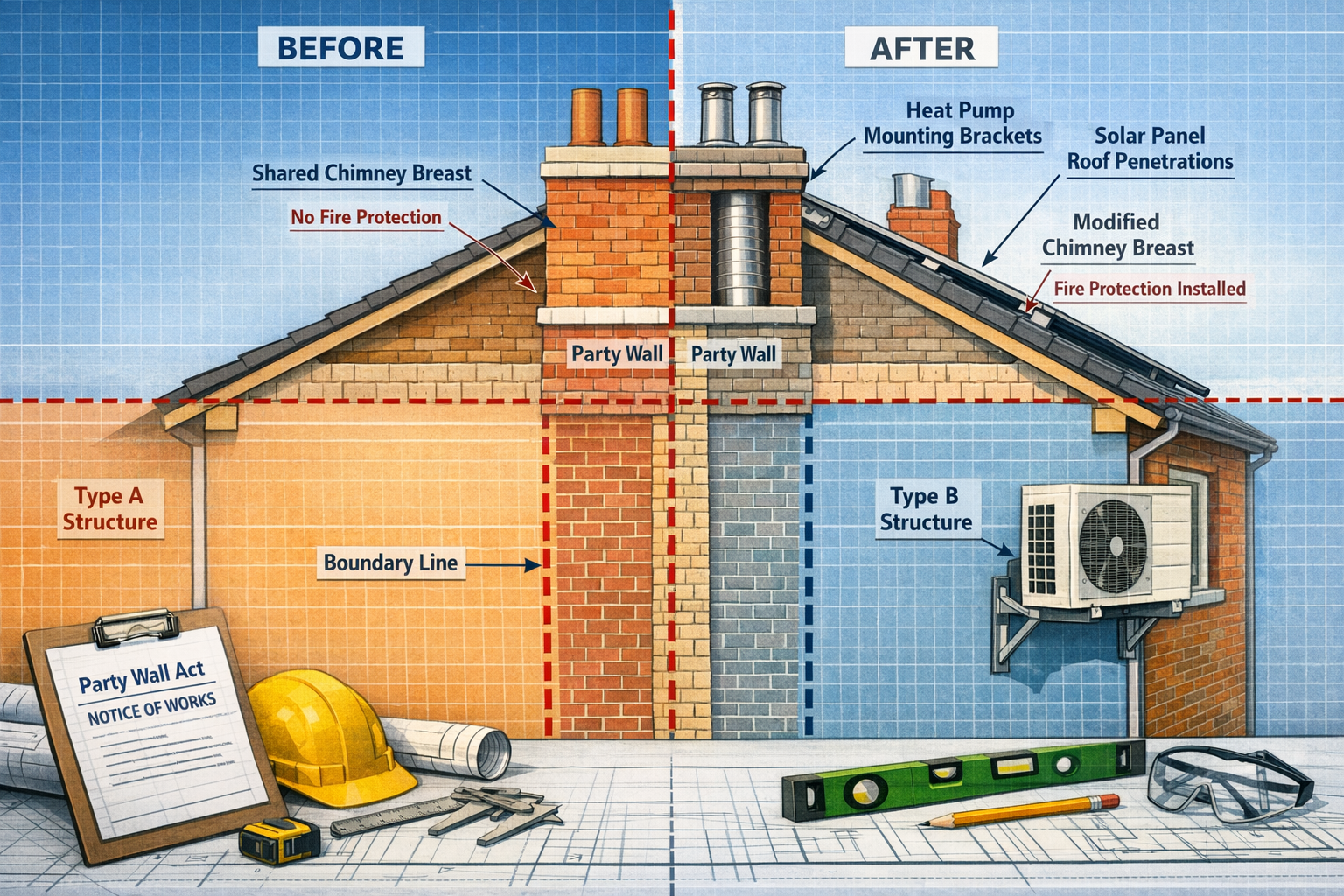
Professional party wall surveys form the foundation of successful retrofit projects on shared boundaries. These surveys serve multiple critical functions: documenting existing conditions, facilitating neighbor agreements, and providing legal protection for all parties involved.
Pre-Installation Condition Surveys
Before any retrofit work begins, a comprehensive condition survey must document the current state of both properties. This baseline record proves invaluable if disputes arise later about alleged damage.
Key Elements of Retrofit Condition Surveys:
✅ Photographic documentation of all party walls, shared structures, and adjacent areas
✅ Structural assessment of wall integrity and load-bearing capacity
✅ Identification of existing defects (cracks, dampness, settlement)
✅ Measurement of wall thicknesses and material composition
✅ Documentation of existing services (pipes, cables, ventilation)
✅ Assessment of roof structure condition for solar installations
✅ Evaluation of foundation depth for ground source heat pumps
For heat pump installations specifically, surveyors should assess whether the party wall structure can support the additional weight of external units (typically 40-100kg) and associated mounting hardware. Solar panel installations require detailed roof structure surveys to ensure adequate load capacity—particularly important for older terraced properties with shared roof timbers.
Technical Specifications for Retrofit Installations
Party wall surveyors must review and approve detailed technical specifications before work proceeds. For renewable energy retrofits, this includes:
Heat Pump Technical Requirements:
- Equipment specifications (weight, dimensions, vibration characteristics)
- Mounting method and structural calculations
- Penetration details for refrigerant lines and electrical connections
- Noise mitigation measures (critical for neighbor relations)
- Drainage arrangements for condensate
Solar Panel Technical Requirements:
- Panel weight distribution across roof structure
- Mounting rail attachment points and load transfer
- Roof penetration waterproofing details
- Electrical conduit routing through party structures
- Wind load calculations for shared roof installations
The surveyor's role extends beyond simple documentation—they must ensure the proposed installation methods comply with building regulations while protecting the structural integrity of party walls. This often requires collaboration with renewable energy installers and structural engineers.
The Role of Appointed Party Wall Surveyors
When neighbors cannot reach agreement, or when the building owner requests formal procedures, party wall surveyors are appointed to produce a Party Wall Award—a legally binding document that governs the work.
For retrofit projects, the Award typically addresses:
- Permitted work scope with detailed specifications
- Working hours and access arrangements
- Condition survey findings and photographic schedules
- Damage resolution procedures and compensation mechanisms
- Monitoring requirements during and after installation
- Cost allocation for surveys and related expenses
"The Party Wall Award provides essential protection for both parties during retrofit installations. It clearly defines what work is permitted, how disputes will be resolved, and what happens if damage occurs—giving everyone peace of mind as we transition to low-carbon heating." — Senior Party Wall Surveyor
Understanding what party wall surveyors do helps property owners appreciate the value these professionals bring to complex retrofit projects.
Navigating 2026 Net Zero Mandates on Shared Boundaries

The convergence of ambitious climate targets and shared property boundaries creates unique challenges in 2026. New regulations are driving unprecedented demand for retrofit installations—but party wall compliance remains a non-negotiable legal requirement that cannot be bypassed, regardless of environmental urgency.
2026 Regulatory Landscape for Retrofits
While the UK has its own trajectory toward net zero, international precedents provide insight into the regulatory direction. California's Title 24 building code, for example, now mandates heat pumps or solar thermal systems as primary heat sources for pool and spa heating[1][5], demonstrating how jurisdictions are using building codes to accelerate renewable energy adoption.
Similarly, California's solar mandate for new residential and commercial construction[3][9] shows the regulatory trend toward mandatory renewable energy systems. The state's updated energy code requirements for multifamily buildings include specific heat pump water heater (HPWH) requirements[6], reflecting a comprehensive approach to building decarbonization.
In the UK context, these international examples foreshadow increasingly stringent EPC requirements that will push more property owners toward retrofit solutions—many of which will trigger party wall obligations.
Common Party Wall Challenges in Retrofit Projects
Challenge #1: Tight Installation Timelines vs. Notice Periods
The Party Wall Act requires a minimum 2-month notice period before work begins. This can conflict with:
- Government grant deadlines for renewable energy installations
- Seasonal installation windows for optimal heat pump performance
- Contractor availability during peak retrofit demand periods
Solution: Start party wall procedures early—ideally 3-4 months before planned installation dates. Writing proper party wall letters with complete technical details expedites the process.
Challenge #2: Neighbor Concerns About Noise and Visual Impact
Heat pumps generate operational noise that concerns adjoining owners, while solar panels alter property appearance. These concerns frequently lead to disputes.
Solution: Include detailed noise mitigation measures in party wall notices, provide manufacturer noise specifications, and offer to position equipment to minimize impact. Professional surveys help demonstrate compliance with planning requirements and building regulations.
Challenge #3: Complex Shared Roof Structures
Victorian and Edwardian terraced properties often have intricate shared roof structures where ownership boundaries are unclear—complicating solar panel installations.
Solution: Engage party wall surveyors early to clarify structural ownership, assess load capacity, and design installation methods that minimize impact on adjoining properties. Comprehensive condition surveys document existing conditions before work begins.
Challenge #4: Neighbor Refusal to Engage
Some adjoining owners ignore party wall notices or refuse to respond, creating legal uncertainty.
Solution: Understand that neighbors cannot legally refuse a party wall agreement—their silence triggers the appointment of surveyors. Following proper procedures protects the building owner's right to proceed.
Best Practices for Retrofit Party Wall Compliance
1. Early Engagement and Communication
Informal discussion with neighbors before serving formal notices builds goodwill and identifies concerns early. Explain the environmental benefits, address noise and visual concerns proactively, and offer to share information about the technology.
2. Comprehensive Technical Documentation
Provide complete specifications with party wall notices:
- Manufacturer data sheets for all equipment
- Installation method statements
- Structural calculations and load assessments
- Noise impact assessments
- Photomontages showing visual impact
3. Professional Survey Involvement
Engage qualified party wall surveyors at project inception, not after disputes arise. Their expertise in resolving party wall disputes prevents costly delays and legal complications.
4. Contractor Coordination
Ensure renewable energy installers understand party wall requirements and can provide necessary technical information. Include party wall compliance clauses in contractor agreements, specifying who bears responsibility for delays caused by non-compliance.
5. Post-Installation Documentation
Complete follow-up surveys after installation to document that:
- Work was completed as specified in the Award
- No damage occurred to adjoining properties
- All agreed-upon mitigation measures were implemented
- Final condition matches pre-work surveys
Dispute Resolution and Party Wall Awards for Retrofit Projects
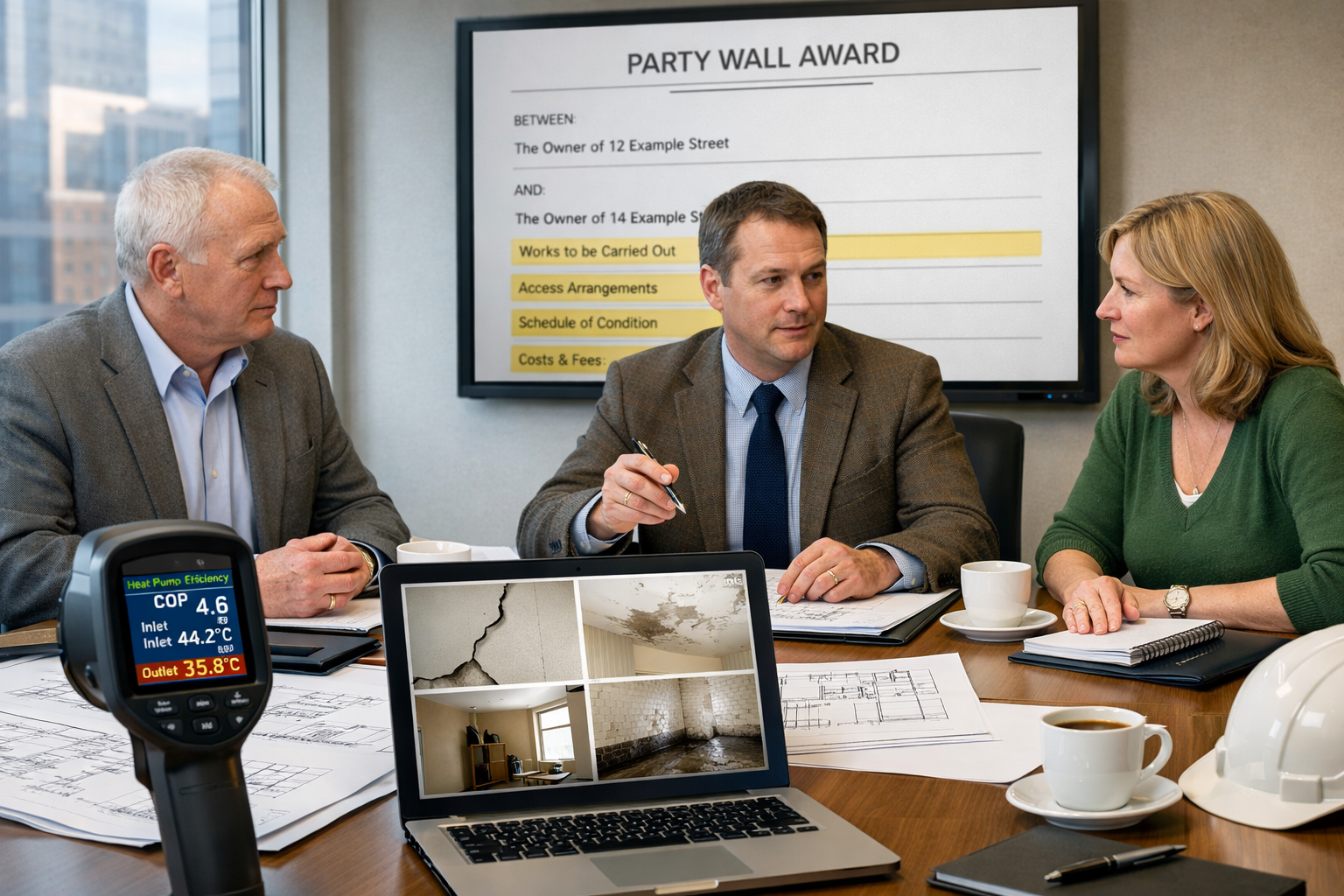
Despite best efforts, disputes sometimes arise during retrofit projects. Understanding resolution mechanisms helps property owners and surveyors navigate conflicts efficiently while keeping installation projects on track.
Common Sources of Retrofit-Related Disputes
Structural Concerns:
- Fears about wall damage from heat pump mounting brackets
- Worries about roof structure integrity with solar panel loads
- Concerns about vibration from heat pump compressors affecting wall stability
Noise and Nuisance Issues:
- Heat pump operational noise affecting adjoining properties
- Installation noise during working hours
- Ongoing maintenance access requirements
Property Value Impacts:
- Visual appearance of external heat pump units
- Perceived negative impact on adjoining property marketability
- Concerns about future maintenance obligations
Access and Logistics:
- Need for scaffolding or access through adjoining property
- Temporary disruption during installation
- Long-term maintenance access arrangements
The Party Wall Award Process for Retrofits
When disputes cannot be resolved through negotiation, the formal Award process provides structure:
Step 1: Surveyor Appointment
Each party appoints a surveyor (or agrees on a single "Agreed Surveyor"). If the adjoining owner fails to appoint within 10 days, the building owner's surveyor can make the appointment on their behalf.
Step 2: Site Inspection and Assessment
Surveyors jointly inspect both properties, assess the proposed retrofit works, and evaluate potential impacts. For heat pump and solar installations, this includes technical review of mounting methods, structural calculations, and noise assessments.
Step 3: Award Preparation
Surveyors prepare a detailed Award document addressing all aspects of the work. For retrofit projects, understanding party wall awards helps parties appreciate what the document covers.
Step 4: Award Service
The completed Award is served on both parties, becoming legally binding. It specifies exactly what work is permitted, under what conditions, and how disputes will be resolved.
Step 5: Work Proceeds Under Award Terms
Installation proceeds according to Award specifications. Surveyors monitor compliance and address any issues that arise during construction.
Protecting All Parties During Retrofit Installations
For Building Owners:
- Obtain comprehensive liability insurance covering party wall work
- Document all communications with neighbors and surveyors
- Ensure contractors understand and comply with Award terms
- Budget for party wall survey costs (typically £700-1,500 per party)
- Allow adequate time for the full process before planned installation dates
For Adjoining Owners:
- Respond promptly to party wall notices to maintain control over the process
- Appoint qualified surveyors to represent your interests
- Document existing property conditions independently
- Understand your rights under the Act—including what happens if no party wall notice is served
- Consider the broader environmental benefits while protecting your property rights
For Surveyors:
- Develop expertise in renewable energy technology specifications
- Build relationships with reputable heat pump and solar installers
- Stay current on building regulations affecting retrofit installations
- Maintain detailed photographic records throughout the process
- Provide clear, jargon-free explanations to non-technical property owners
Case Study: Successful Heat Pump Installation on Party Wall
A terraced property owner in London needed to install an air source heat pump to meet new EPC requirements before selling. The external unit required mounting on the party wall shared with the adjoining property.
The Approach:
- Early engagement: Informal discussion with neighbor 4 months before planned installation
- Professional survey: Appointed party wall surveyor to conduct condition survey and prepare notices
- Technical detail: Provided complete manufacturer specifications, noise data, and vibration isolation details
- Neighbor concerns addressed: Agreed to position unit away from neighbor's bedroom window and install additional acoustic barriers
- Formal Award: Surveyor prepared Award documenting all agreed terms
- Successful installation: Work completed on schedule with no disputes or damage
Result: Heat pump installed successfully, property achieved required EPC rating, and neighbor relationship preserved. The small investment in professional party wall surveys (£1,200) prevented potential disputes that could have cost tens of thousands in legal fees and project delays.
Future-Proofing Retrofit Projects: 2026 and Beyond
As net zero targets drive continued evolution of building regulations, party wall compliance will remain essential for retrofit projects. Several trends will shape this landscape:
Increased Retrofit Volume:
More properties will require renewable energy installations to meet EPC standards, multiplying the number of party wall situations. Surveyors should prepare for sustained high demand for retrofit-related party wall services.
Technology Evolution:
Newer heat pump designs with lower noise levels and more compact footprints will reduce some neighbor concerns, but party wall procedures will still apply. Solar panel technology continues advancing, with lighter panels and innovative mounting systems potentially reducing structural impacts.
Regulatory Harmonization:
Building regulations may eventually incorporate streamlined party wall procedures for standard retrofit installations, though the fundamental legal framework will remain. Professional bodies may develop specific guidance for renewable energy retrofit party wall surveys.
Digital Documentation:
Advanced survey technologies including 3D scanning, thermal imaging, and digital Award management will improve accuracy and efficiency. These tools help document pre- and post-installation conditions more comprehensively than traditional methods.
Practical Checklist: Party Wall Compliance for Retrofit Projects
✅ 3-4 Months Before Installation:
- Identify all party walls and shared structures affected by retrofit
- Engage qualified party wall surveyor
- Conduct preliminary neighbor discussions
- Gather complete technical specifications from installers
✅ 2-3 Months Before Installation:
- Serve formal party wall notices with complete technical details
- Conduct comprehensive condition surveys
- Commission any required structural calculations
- Document existing property conditions photographically
✅ 1-2 Months Before Installation:
- Respond to neighbor questions and concerns
- Appoint surveyors if needed for Award preparation
- Finalize installation method statements
- Confirm contractor understanding of Award terms
✅ During Installation:
- Monitor compliance with Award specifications
- Document work progress photographically
- Address any issues immediately through surveyor
- Maintain communication with all parties
✅ After Installation:
- Conduct post-installation condition survey
- Document completion of all agreed measures
- Resolve any damage claims promptly
- Archive all documentation for future reference
Conclusion
Party Wall Surveys for Heat Pump and Solar Retrofit Projects: Navigating 2026 Net Zero Mandates on Shared Boundaries represents a critical intersection of environmental policy, property law, and practical construction challenges. As the UK accelerates toward net zero targets, thousands of property owners will need to install renewable energy systems on or near shared boundaries—making party wall compliance more important than ever.
The key to successful retrofit projects lies in proactive planning, professional expertise, and respectful neighbor engagement. By starting party wall procedures early, providing comprehensive technical documentation, and engaging qualified surveyors, property owners can navigate legal requirements while meeting environmental obligations.
For surveyors, the retrofit boom presents both opportunity and responsibility. Developing expertise in renewable energy technologies, understanding the unique challenges of heat pump and solar installations, and providing clear guidance to property owners will be essential professional skills in 2026 and beyond.
Next Steps for Property Owners
If you're planning heat pump or solar panel installation on a property with party walls:
- Consult a qualified party wall surveyor before approaching contractors—ideally 3-4 months before planned installation
- Review your party wall FAQs to understand your obligations and rights
- Engage with neighbors early to build goodwill and identify concerns before formal notices
- Budget appropriately for party wall surveys (typically £700-1,500 per adjoining owner)
- Allow adequate time for the full process—rushing leads to disputes and delays
Next Steps for Surveyors
To serve clients effectively in the growing retrofit market:
- Develop technical knowledge of heat pump and solar panel installation methods and requirements
- Build relationships with reputable renewable energy installers in your area
- Stay current on building regulations affecting retrofit projects
- Invest in documentation tools including thermal imaging and 3D scanning technology
- Communicate clearly about timelines, costs, and procedures to manage client expectations
The transition to net zero is not just an environmental imperative—it's a practical challenge that requires careful navigation of property law, neighbor relations, and technical requirements. With proper planning and professional guidance, retrofit installations can proceed smoothly, meeting both environmental targets and legal obligations while preserving positive relationships between neighbors.
For expert guidance on party wall surveys for your retrofit project, consult with local party wall surveyors who understand both the legal framework and the technical requirements of modern renewable energy installations.
References
[1] Comprehensive Analysis Of Title 24 2026 Regulations For Pool And Spa Heating Systems – https://www.maktinta.com/post/comprehensive-analysis-of-title-24-2026-regulations-for-pool-and-spa-heating-systems
[3] California Solar Mandate – https://www.greenlancer.com/post/california-solar-mandate
[5] California Title 24 And The Future Of Pool Construction – https://royalpools.com/expertise/california-title-24-and-the-future-of-pool-construction/
[6] Blueprint 1 – https://www.energy.ca.gov/programs-and-topics/programs/building-energy-efficiency-standards/blueprint-newsletter/blueprint-1
[9] California Solar Building Requirement Crosses Finish Line – https://seia.org/blog/california-solar-building-requirement-crosses-finish-line/
