
As the UK accelerates toward its net zero targets in 2026, property owners face unprecedented pressure to upgrade Energy Performance Certificate (EPC) ratings through extensive retrofit projects. These sustainability-driven improvements—from external wall insulation to solar panel installations—increasingly trigger party wall considerations that can spark disputes between neighbours. Understanding Party Wall Essentials for 2026 Net Zero Compliance Projects: Surveyor Checklists for EPC Retrofit Disputes has become critical for surveyors navigating the complex intersection of environmental mandates and property rights.
The convergence of tightening EPC regulations and traditional party wall procedures creates unique challenges. Recent data from Q1 2026 shows RICS surveyors across Wales reporting a net balance of 21% expecting increased home sales, suggesting heightened surveying activity amid regional housing booms.[6] This surge in property transactions coincides with growing retrofit demands, making proper party wall protocols essential for minimizing neighbour conflicts while achieving sustainability goals.
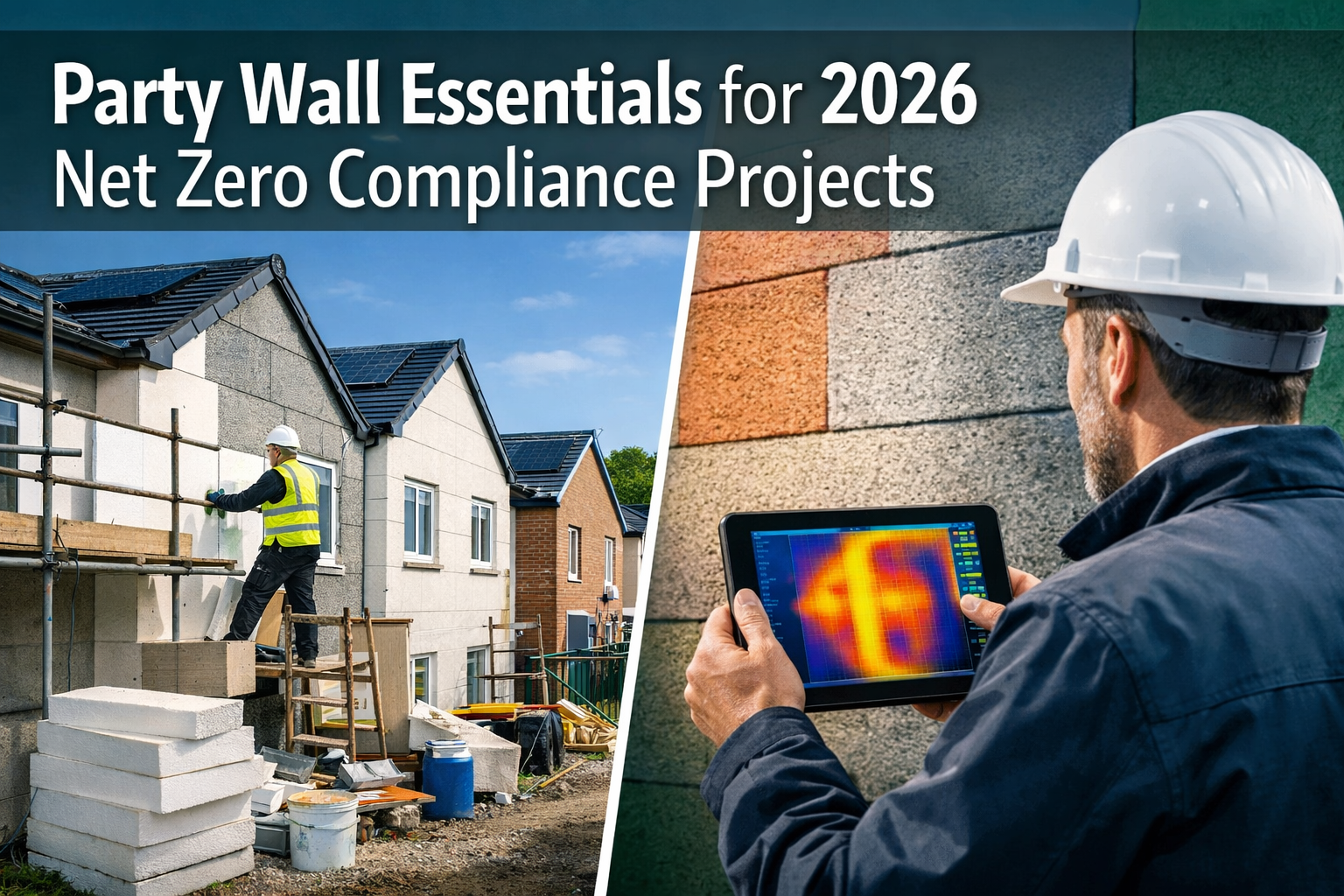
Key Takeaways
- EPC retrofit projects frequently require party wall notices when work affects shared structures, making surveyor expertise essential for compliance
- Comprehensive checklists help surveyors document thermal performance changes, structural impacts, and neighbour consent requirements systematically
- Early engagement with adjoining owners prevents costly disputes and project delays in sustainability-driven developments
- 2026 environmental standards including potential Biodiversity Net Gain requirements add complexity to traditional party wall procedures[2]
- Proper documentation of pre-existing conditions and retrofit specifications protects all parties and ensures regulatory compliance
Understanding Party Wall Requirements in 2026 Net Zero Projects
The Party Wall etc. Act 1996 remains the cornerstone legislation governing work on shared boundaries, but its application to modern energy efficiency retrofits requires careful interpretation. When property owners undertake EPC improvement works—particularly external wall insulation, cavity wall treatments, or solar installations affecting shared structures—they must consider whether party wall notices are necessary.
When EPC Retrofits Trigger Party Wall Procedures
External wall insulation (EWI) represents one of the most common triggers for party wall considerations in 2026 compliance projects. When insulation extends beyond the original building line onto or near a boundary, or when it affects the structural integrity of a party wall, formal notices become mandatory. Similarly, cavity wall insulation may require party wall agreements if the work involves drilling through or affecting shared walls.
For comprehensive guidance on party wall procedures, review our complete guide to party wall surveyors' roles, costs, and legal requirements.
Key retrofit scenarios requiring party wall consideration include:
- 🏠 External wall insulation extending onto shared walls or boundaries
- 🔨 Structural modifications to improve thermal performance
- ⚡ Solar panel installations requiring roof structure alterations on semi-detached or terraced properties
- 💨 Ventilation system upgrades penetrating party walls
- 🌡️ Heating system replacements affecting shared chimney breasts or flues
The 2026 Compliance Landscape
Environmental regulations continue evolving throughout 2026, adding layers of complexity to traditional party wall procedures. BS 5837 (Trees in Relation to Design, Demolition & Construction) is undergoing revision with comment resolution starting February 24, 2026, potentially affecting surveying requirements for construction projects near vegetation.[2] Additionally, Biodiversity Net Gain requirements may become mandatory for major infrastructure projects from May 2026, expanding the scope of development planning and surveying considerations.[2]
These environmental mandates intersect with EPC requirements, creating scenarios where surveyors must balance sustainability objectives with neighbour rights. Understanding how local party wall surveyors simplify property disputes becomes essential when navigating these complex regulatory frameworks.
Surveyor Checklists for EPC Retrofit Party Wall Awards
Professional surveyors require systematic approaches to assess, document, and manage party wall matters arising from energy efficiency projects. The following comprehensive checklists address the unique challenges of Party Wall Essentials for 2026 Net Zero Compliance Projects: Surveyor Checklists for EPC Retrofit Disputes.
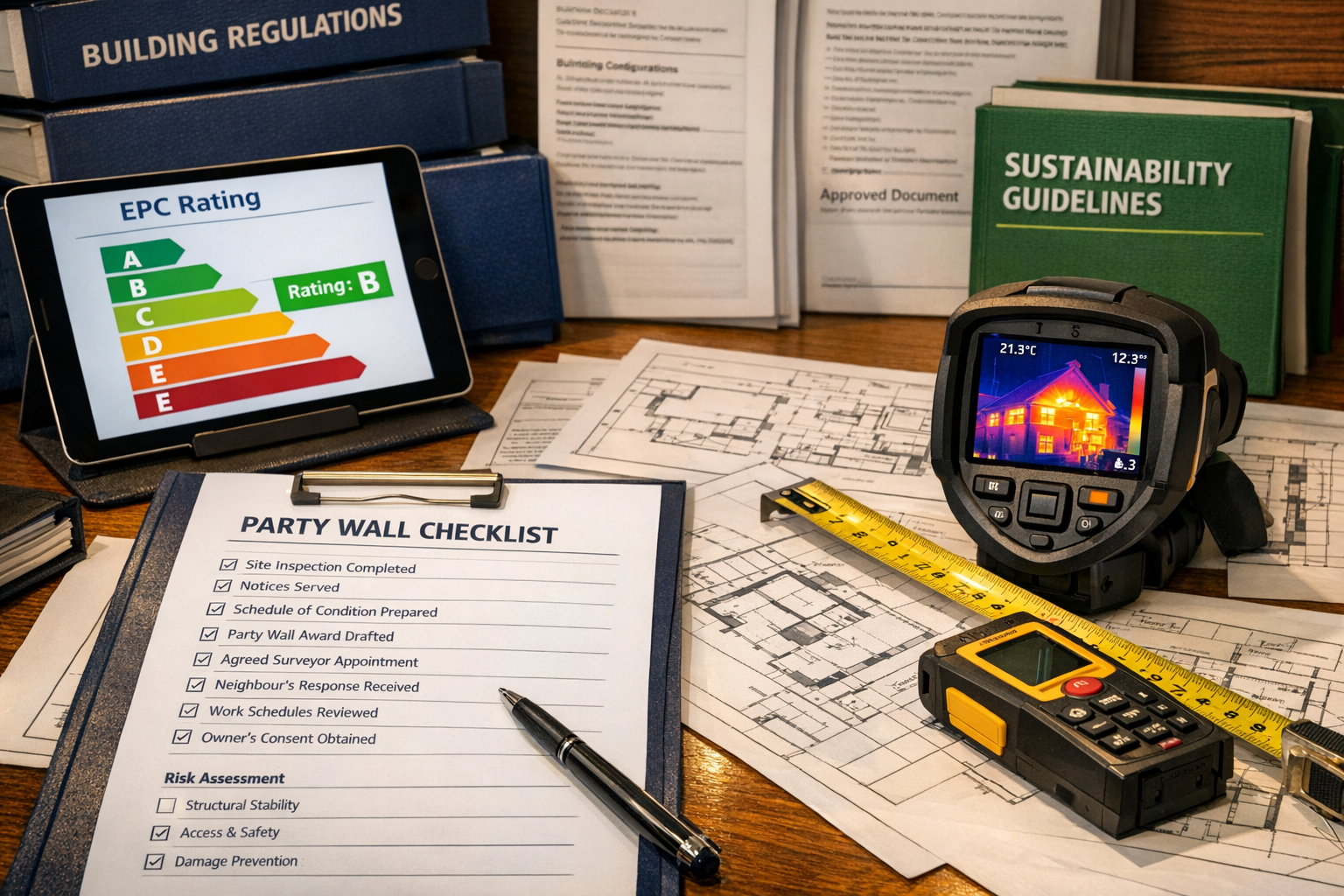
Pre-Work Assessment Checklist
Before any retrofit work commences, surveyors should complete thorough preliminary assessments to identify potential issues and establish baseline conditions.
Property and Boundary Documentation
| Assessment Area | Key Actions | Documentation Required |
|---|---|---|
| Boundary Definition | Survey exact property lines, identify shared structures | Land registry documents, measured surveys, photographs |
| Existing Conditions | Document current state of party walls, adjoining structures | Photographic schedules, structural condition reports, thermal imaging |
| EPC Baseline | Record current energy performance rating | Existing EPC certificate, thermal performance data |
| Structural Assessment | Evaluate load-bearing capacity, dampness, defects | Structural engineer reports, damp surveys |
| Access Requirements | Identify scaffolding needs, temporary works | Site access plans, neighbour access agreements |
Neighbour Engagement Protocol
Early and transparent communication with adjoining owners prevents disputes and facilitates smooth project progression. Surveyors should:
- Identify all affected parties including freeholders, leaseholders, and occupiers
- Prepare comprehensive party wall notices detailing proposed retrofit works
- Schedule pre-work meetings to explain sustainability objectives and construction impacts
- Document neighbour concerns systematically for resolution
- Establish communication channels for ongoing project updates
For detailed guidance on notification procedures, consult our resource on understanding the Party Wall etc. Act 1996.
During-Work Monitoring Checklist
Active monitoring throughout retrofit construction ensures compliance with party wall awards and identifies emerging issues before they escalate into disputes.
Weekly site inspections should verify:
- ✅ Work proceeds according to approved specifications
- ✅ No unauthorized alterations to party structures
- ✅ Temporary protection measures remain effective
- ✅ Noise, dust, and disruption stay within agreed parameters
- ✅ Access arrangements function as planned
Thermal performance monitoring becomes particularly important for EPC retrofit projects:
- Monitor installation quality of insulation materials
- Verify vapor barrier continuity at party wall junctions
- Check for thermal bridging at shared structural elements
- Document any deviations from thermal specifications
"Proactive monitoring during retrofit construction prevents 80% of potential party wall disputes by identifying and resolving issues before they impact neighbours." — RICS Best Practice Guidelines
Post-Completion Verification Checklist
Final verification ensures all work complies with party wall awards, building regulations, and EPC improvement objectives.
Structural and Performance Verification
Surveyors should conduct comprehensive post-completion assessments including:
- Structural integrity checks confirming no damage to party walls or adjoining properties
- Thermal performance testing validating EPC rating improvements
- Moisture and ventilation assessments ensuring no condensation or damp issues at party wall interfaces
- Acoustic performance verifying sound insulation meets or exceeds pre-work conditions
- Visual inspections documenting completed works against approved specifications
Documentation and Award Finalization
Complete documentation protects all parties and provides evidence of compliance:
- Photographic records showing completed works and final conditions
- Test certificates for insulation, airtightness, and thermal performance
- Updated EPC certificate demonstrating rating improvements
- Neighbour sign-off confirming satisfaction with completed works
- Final party wall award incorporating any variations or additional agreements
Learn more about understanding party wall awards and their legal implications.
Minimizing Disputes in Sustainability-Driven Developments
The integration of net zero compliance objectives with traditional party wall procedures requires strategic approaches to prevent and resolve conflicts between neighbours pursuing different sustainability timelines.
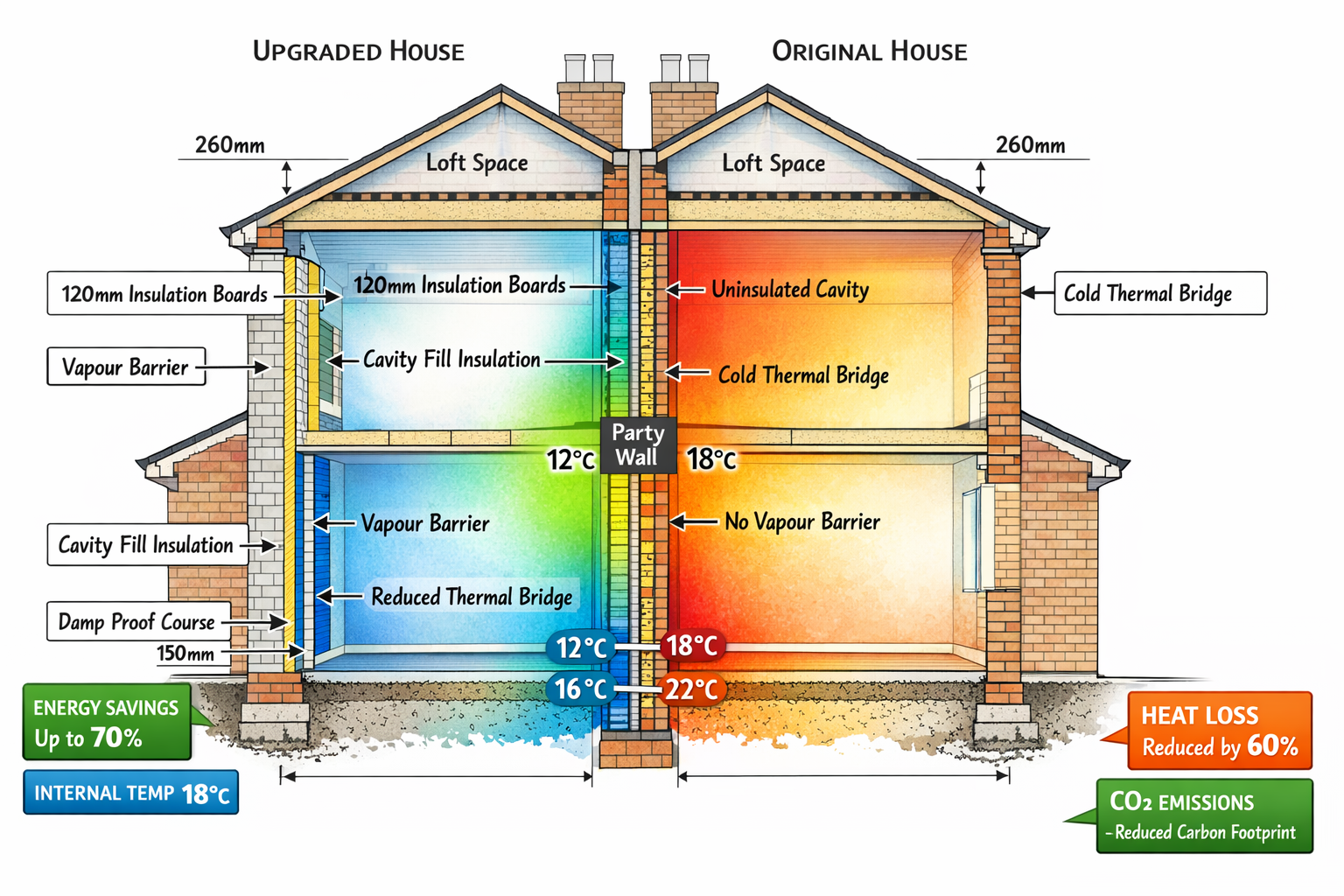
Common Dispute Triggers in EPC Retrofit Projects
Understanding typical conflict sources enables surveyors to implement preventive measures:
Aesthetic concerns often arise when external wall insulation significantly alters property appearance, particularly in conservation areas or period properties. Neighbours may object to changes in building character even when sustainability benefits are substantial.
Construction disruption including scaffolding, noise, and restricted access can strain neighbour relationships, especially when retrofit projects extend over weeks or months. Clear communication about timelines and mitigation measures reduces friction.
Cost allocation disputes emerge when retrofit benefits accrue primarily to one property while both parties share certain expenses. Surveyors must carefully delineate responsibilities according to the Party Wall Act and retrofit project specifics.
Thermal performance concerns may arise if neighbours worry that one property's insulation affects their own heating efficiency or creates condensation issues at shared wall interfaces.
For guidance on cost responsibilities, see our article on who pays for a party wall surveyor.
Dispute Prevention Strategies
Transparent communication forms the foundation of dispute prevention. Surveyors should facilitate open dialogue between property owners, explaining how retrofit works benefit both properties through improved thermal efficiency at shared boundaries.
Phased implementation allows neighbours to observe initial results before committing to extensive works, building confidence in retrofit approaches and reducing resistance.
Shared benefit proposals where both properties coordinate EPC improvements can transform potential conflicts into collaborative sustainability projects, distributing costs and benefits equitably.
Professional mediation by experienced party wall surveyors helps navigate disagreements before they escalate into formal disputes requiring resolution through appointed surveyors or legal proceedings.
Resolution Protocols for Active Disputes
When disputes arise despite preventive efforts, systematic resolution protocols minimize delays and costs:
- Document the dispute precisely, identifying specific concerns and their basis
- Review party wall award terms to determine whether disputes fall within scope
- Engage neutral third-party surveyors when building owner and adjoining owner surveyors cannot reach agreement
- Consider alternative dispute resolution before pursuing formal legal remedies
- Maintain project momentum where possible while disputes resolve
For comprehensive dispute resolution strategies, consult our guide on resolving party wall disputes.
Insulation-Specific Considerations
Party wall insulation projects require particular attention to technical details that prevent future disputes. When installing insulation affecting shared walls, surveyors should verify:
- Moisture management systems preventing condensation at party wall interfaces
- Fire safety compliance ensuring insulation materials meet building regulations for party walls
- Acoustic performance maintaining or improving sound insulation between properties
- Structural loading confirming party walls can support additional insulation weight
Detailed guidance on these technical considerations is available in our party wall insulation resource.
Integrating Environmental Compliance with Party Wall Procedures
The 2026 regulatory environment demands that surveyors consider multiple compliance frameworks simultaneously when managing party wall matters in retrofit projects.
Multi-Layered Compliance Requirements
Modern EPC retrofit projects must satisfy several overlapping regulatory requirements:
Building Regulations govern structural alterations, thermal performance, fire safety, and ventilation standards. Party wall surveyors must ensure retrofit specifications comply with current regulations while documenting how works affect shared structures.
Planning permissions may be required for external alterations, particularly in conservation areas or for listed buildings. Party wall procedures run parallel to but separate from planning processes.
Environmental standards including potential Biodiversity Net Gain requirements affect site preparation and construction methods, particularly for larger developments.[2] These considerations may influence scaffolding placement, material storage, and access routes affecting party walls.
EPC rating targets drive retrofit specifications but must be balanced against party wall obligations and neighbour rights. Surveyors help property owners optimize energy improvements while maintaining positive neighbour relationships.
Checklist Integration Strategies
Effective surveyors develop integrated checklists addressing all compliance dimensions:
Unified documentation systems capture party wall, building regulation, and environmental compliance data in coordinated formats, reducing duplication and ensuring consistency.
Cross-referenced inspection schedules align party wall monitoring with building control inspections and EPC verification testing, maximizing efficiency.
Stakeholder coordination protocols ensure building owners, contractors, building control officers, and party wall surveyors communicate effectively throughout projects.
Digital tools including thermal imaging, moisture meters, and photographic documentation systems provide objective evidence supporting multiple compliance requirements simultaneously.
Future-Proofing Party Wall Awards for Evolving Standards
As environmental regulations continue tightening beyond 2026, party wall awards should incorporate flexibility for future upgrades:
- Provisional clauses allowing additional insulation or renewable energy installations
- Access agreements facilitating future maintenance of retrofit systems
- Performance monitoring provisions enabling ongoing thermal efficiency verification
- Upgrade pathways anticipating further EPC rating improvements
Practical Implementation: Case Study Scenarios
Real-world examples illustrate how surveyors apply Party Wall Essentials for 2026 Net Zero Compliance Projects: Surveyor Checklists for EPC Retrofit Disputes principles effectively.
Scenario 1: Terraced Property External Wall Insulation
A Victorian terraced property owner seeks to improve from EPC rating D to B through external wall insulation. The retrofit affects party walls on both sides and requires scaffolding across neighbour boundaries.
Surveyor approach:
- Conducted pre-work condition surveys of both adjoining properties
- Prepared detailed party wall notices explaining insulation specifications and thermal benefits
- Coordinated with neighbours to schedule works minimizing disruption
- Established thermal bridging prevention measures at party wall junctions
- Documented installation quality through photographic schedules and thermal imaging
- Verified post-completion EPC improvement and neighbour satisfaction
Outcome: Project completed without disputes, achieving target EPC rating while improving thermal performance for adjoining properties at shared wall interfaces.
Scenario 2: Semi-Detached Solar Installation with Roof Modifications
A semi-detached property owner planned solar panel installation requiring structural modifications to shared roof elements and chimney removal affecting party wall stability.
Surveyor approach:
- Engaged structural engineer to assess party wall implications of chimney removal
- Prepared comprehensive party wall award addressing structural support requirements
- Coordinated solar installation with party wall strengthening works
- Monitored construction to verify structural integrity maintenance
- Documented completed works showing no adverse impact on adjoining property
Outcome: Solar installation achieved planned energy generation while maintaining party wall structural integrity and neighbour confidence.
Scenario 3: Cavity Wall Insulation Dispute Resolution
Adjoining owners disagreed about responsibility for addressing pre-existing dampness discovered during cavity wall insulation installation affecting party wall performance.
Surveyor approach:
- Reviewed pre-work condition surveys establishing baseline dampness levels
- Determined dampness pre-dated retrofit works through forensic investigation
- Negotiated cost-sharing arrangement for remedial damp treatment benefiting both properties
- Supervised coordinated damp treatment and insulation installation
- Verified successful moisture management post-completion
Outcome: Dispute resolved through evidence-based assessment and equitable cost allocation, with both properties achieving improved thermal performance and resolved dampness issues.
Professional Resources and Continuing Education
Surveyors managing party wall matters in 2026 net zero projects benefit from ongoing professional development and access to current resources.
Essential Professional Standards
RICS guidance provides authoritative frameworks for party wall surveying practice. Regular updates address emerging issues including sustainability retrofit considerations.
Building Regulations Approved Documents particularly Part L (Conservation of Fuel and Power) and Part C (Site Preparation and Resistance to Contaminants and Moisture) inform retrofit specifications affecting party walls.
Environmental compliance checklists help surveyors track evolving requirements.[2][4] Construction compliance checklists for 2026 emphasize safety, environmental protection, and regulatory adherence.[4]
Technology Tools for Modern Party Wall Surveying
Digital tools enhance surveyor effectiveness in complex retrofit projects:
- Thermal imaging cameras document heat loss and verify insulation performance at party wall interfaces
- Moisture meters identify dampness issues requiring resolution before or during retrofit works
- 3D scanning technology creates precise records of existing conditions and completed works
- Project management software coordinates multiple stakeholders and compliance requirements
- Digital documentation platforms maintain comprehensive photographic and test data records
Finding Qualified Professionals
Property owners undertaking EPC retrofit projects should engage experienced party wall surveyors familiar with sustainability compliance requirements. Our guide on how to find a reliable party wall surveyor near you provides selection criteria and evaluation methods.
Understanding what a party wall surveyor does helps property owners appreciate the value these professionals bring to complex retrofit projects.
Conclusion
As the UK pursues ambitious net zero targets throughout 2026 and beyond, the intersection of sustainability mandates and traditional party wall procedures creates both challenges and opportunities. Party Wall Essentials for 2026 Net Zero Compliance Projects: Surveyor Checklists for EPC Retrofit Disputes provides the framework surveyors need to navigate this complex landscape effectively.
Successful party wall management in EPC retrofit projects requires comprehensive pre-work assessments, systematic monitoring during construction, thorough post-completion verification, and proactive dispute prevention strategies. By integrating environmental compliance requirements with traditional party wall procedures, surveyors protect property owner interests while facilitating essential sustainability improvements.
The systematic checklists and protocols outlined in this guide enable surveyors to document conditions thoroughly, communicate transparently with all stakeholders, and resolve conflicts efficiently when they arise. As environmental regulations continue evolving, these foundational approaches will adapt to accommodate new requirements while maintaining the core principles of fair dealing and neighbour rights protection.
Actionable Next Steps
For property owners planning EPC retrofit projects:
- Engage qualified party wall surveyors early in project planning to identify potential issues
- Communicate proactively with neighbours about sustainability objectives and construction impacts
- Document existing conditions thoroughly before commencing any works
- Implement systematic monitoring throughout construction to verify compliance
- Maintain comprehensive records supporting party wall awards and EPC improvements
For surveyors managing retrofit projects:
- Develop integrated checklists addressing party wall, building regulation, and environmental compliance simultaneously
- Invest in technology tools enhancing documentation quality and efficiency
- Pursue continuing education on evolving environmental standards and retrofit best practices
- Build collaborative relationships with building control officers, structural engineers, and EPC assessors
- Share lessons learned contributing to professional knowledge development
By following these protocols and maintaining focus on both sustainability objectives and neighbour rights protection, surveyors can minimize disputes while facilitating the essential transition to net zero compliance across the UK property sector.
References
[2] 2026 Environmental Compliance Checklist – https://www.designingbuildings.co.uk/wiki/2026_environmental_compliance_checklist
[4] 7 Must Do Compliance Checklists For Construction In 2026 – https://www.cbiz.com/insights/article/7-must-do-compliance-checklists-for-construction-in-2026
[6] Party Wall Surveys For Wales Housing Boom Rics Compliance Amid Accelerating Regional Demand In Q1 2026 – https://nottinghillsurveyors.com/blog/party-wall-surveys-for-wales-housing-boom-rics-compliance-amid-accelerating-regional-demand-in-q1-2026
